


Bỏ qua đến nội dung
Likelier

Hành động vs. không hành động: con số cho từng lựa chọn

Nâng ngực so với không nâng

Nếu bạn hành động

Nâng ngực

7,0%

Nếu bạn không hành động

Không nâng ngực

Không có phép đo trực tiếp

Ít nhất một con số là ước tính gián tiếp, không phải tỷ lệ hối tiếc đã đo. Cách tính từng con số được trình bày bên dưới.


Sức khỏe

Xem xét lần cuối 2026-05-10

Chất lượng bằng chứng 4.25/5

Điểm đánh giá tám chiều theo tiêu chí chất lượng . Mỗi chiều được chấm từ 1–5.

D1 Xác minh nguồn
4/5
D2 Uy tín và tính độc lập của nguồn
5/5
D3 Độ chính xác của tỷ lệ hối tiếc
3/5
D4 Khả năng so sánh nguồn
3/5
D5 Mẫu hình Gilovich
4/5
D6 Chất lượng văn bản
5/5
D7 Tính đầy đủ của lưu ý
5/5
D8 Chất lượng mẫu
5/5
Trung bình 4.25/5
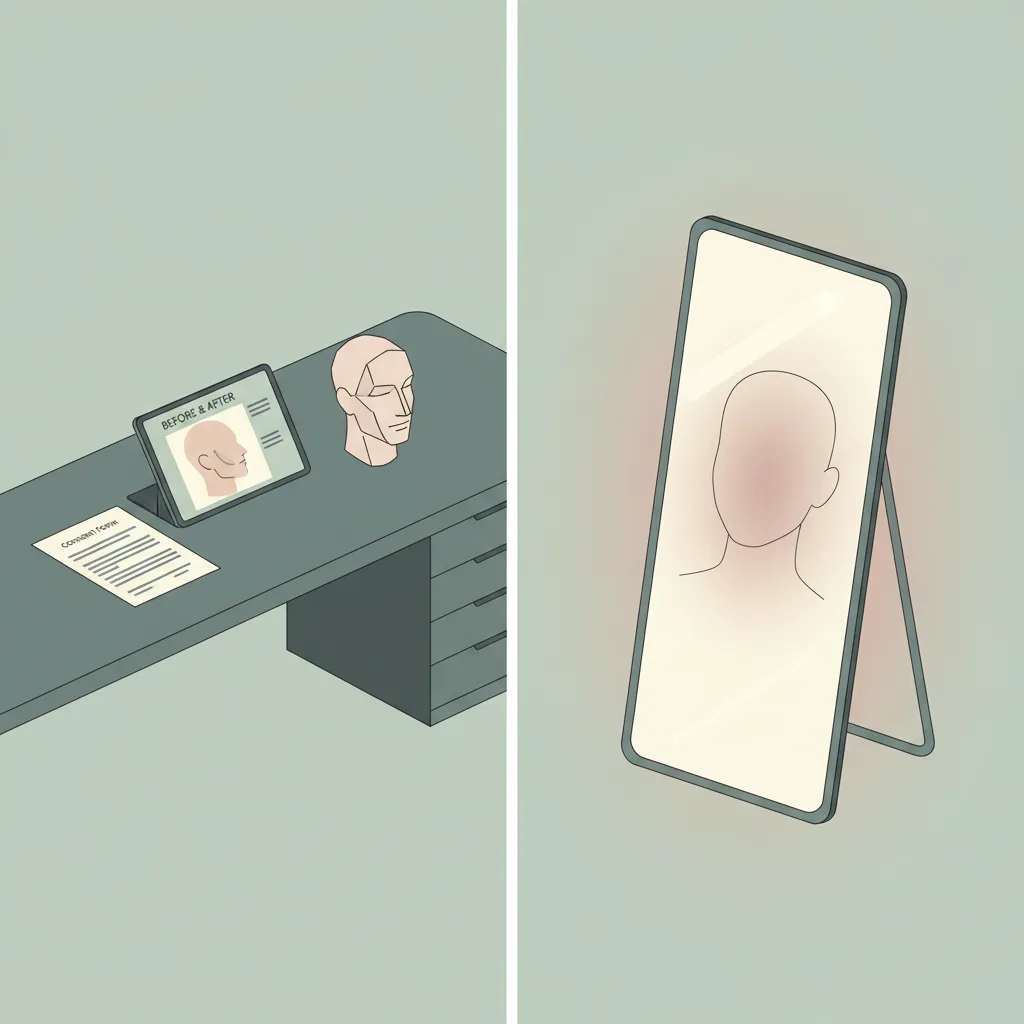
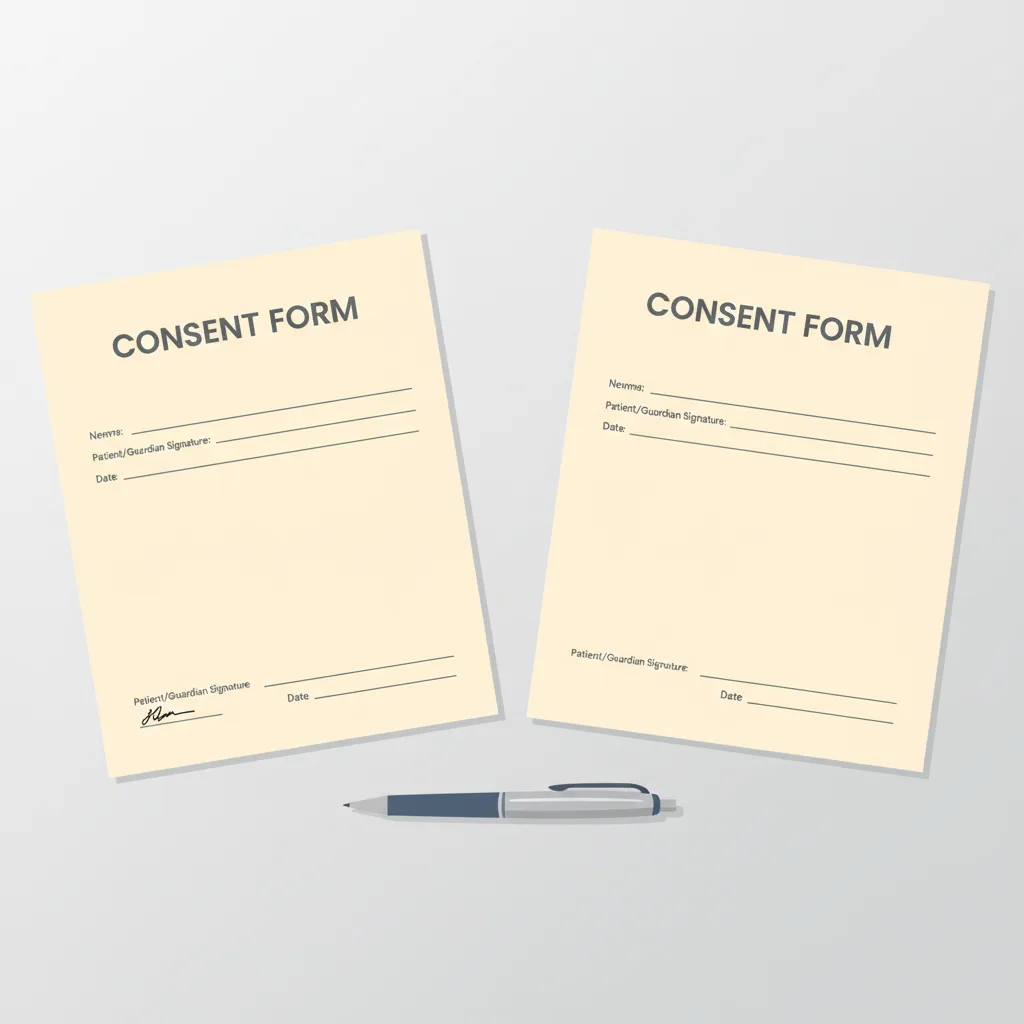
Two identical silhouettes side by side, one with a small surgical consent form resting beneath it, the other bare, on a neutral surface.
Dữ liệu gián tiếp: với quyết định này, ít nhất một con số đến từ thước đo gián tiếp, như hệ quả, mức hài lòng hoặc ý định, hoặc từ ước tính của ban biên tập, chứ không phải từ khảo sát hỏi trực tiếp về sự hối tiếc. Ghi chú cho từng lựa chọn bên dưới cho biết con số được tạo ra như thế nào.

Nếu bạn hành động

Nâng ngực

7,0%

~7% hối tiếc về thủ thuật (khoảng 5,1–9,1% qua các nghiên cứu)

Bệnh nhân nâng ngực thẩm mỹ, đánh giá hệ thống

hồi cứu, thường 1–5 năm sau thủ thuật

Nếu bạn không hành động

Không nâng ngực

Không có phép đo trực tiếp

Không có nguồn nào đưa ra con số cho phía này nên chúng tôi không hiển thị số nào.

Phụ nữ trưởng thành Mỹ cân nhắc nhưng không theo đuổi thủ thuật thẩm mỹ

hồi cứu, không có khung thời gian cố định

Con số cho từng lựa chọn (thước đo được nêu trên trang)

Quyết định liên quan

Các quyết định tương tự về mặt ngữ nghĩa — cùng lĩnh vực, đánh đổi khác nhau.

Sức khỏe

Phẫu thuật thẩm mỹ

Con số cho từng lựa chọn (thước đo được nêu trên trang)

Sức khỏe

Brazilian Butt Lift (BBL)

Con số cho từng lựa chọn (thước đo được nêu trên trang)

Sức khỏe

Cắt bỏ vú giảm nguy cơ so với theo dõi

Con số cho từng lựa chọn (thước đo được nêu trên trang)

Sức khỏe

Xỏ khuyên cơ thể

Con số cho từng lựa chọn (thước đo được nêu trên trang)

Sức khỏe

Hàn Quốc: phẫu thuật thẩm mỹ vs. từ chối

Con số cho từng lựa chọn (thước đo được nêu trên trang)

Sức khỏe

Thắt ống dẫn tinh

Con số cho từng lựa chọn (thước đo được nêu trên trang)

lifestyle

Hình xăm

Con số cho từng lựa chọn (thước đo được nêu trên trang)

Sức khỏe

Trị liệu hay không

Con số cho từng lựa chọn (thước đo được nêu trên trang)

Breast augmentation has one of the lowest regret rates in elective cosmetic surgery. A 2024 systematic review in the American Journal of Surgery — the most comprehensive available, covering regret across surgical subspecialties — places the breast-augmentation-specific range at 5.1–9.1%, with a midpoint around 7%. This is substantially lower than body contouring (11—33%) and far lower than many non-cosmetic elective procedures. A separate 2024 meta-analysis of 18,322 patients using the validated BREAST-Q instrument found large post-operative improvements in psychosocial well-being, sexual well- being, and breast satisfaction — domain gains that explain why regret remains modest despite the physical risks of the procedure.

The complication picture is more sobering than the regret rate suggests. Capsular contracture — abnormal scar tissue that hardens around the implant — is a well-documented long-term risk: the Sientra 10-year cohort reported a 10.8% Kaplan-Meier rate. Implant rupture occurs in approximately 7.8% of patients at 10 years. Both complications can require revision surgery; the FDA maintains a Breast Implant Registry to track long-term outcomes. Among patients who later underwent explant for implant illness, a multicenter longitudinal study of 156 patients found that 83.3% reported retroactive regret about the original augmentation decision — though this population is a small, highly selected subset with unusually severe complications.

On the inaction side, no published survey directly measures regret among women who considered but chose not to get breast augmentation. The ASDS consumer survey (70% of Americans considering some cosmetic procedure) and the Ipsos body-dissatisfaction figure (37% feel dissatisfied whenever they look in the mirror) are too broad to function as inaction-regret proxies: both conflate general appearance concern with surgical-specific regret. The inaction side is a constructed placeholder, not a measurement. No comparison of the two sides should be read as a quantitative claim.

Nguồn: hành động

Sổ cái xác nhận

Mỗi con số dưới đây là những gì mỗi nguồn đã báo cáo, cùng với trích dẫn nguyên văn mà chúng tôi dựa vào và cách chúng tôi đưa ra con số của mình. Nhấp vào bất kỳ liên kết nào để xác minh trực tiếp.

1/3 nguồn được xác minh độc lập đúng từng chữ so với nguồn được trích dẫn

  1. [1] The American Journal of Surgery — A systematic review of patient regret after surgery
    A systematic review of patient regret after surgery

    Xem tất cả 2 mục Likelier trích dẫn nguồn này →

    Thống kê
    Regret after breast augmentation: 5.1–9.1%
    Trích đoạn
    “"The percentage of patients reporting regret ranged from 0 to 47.1 ​% in breast reconstruction, 5.1-9.1 ​% in breast augmentation, and 10.82-33.3 ​% in body contouring." ”
    Dữ liệu nguồn từ
    2024-04-30
    Truy cập
    2026-05-10
    Tính toán
    2024 AJS systematic review of patient regret across surgical subspecialties. Breast augmentation-specific subrange: 5.1–9.1%. We use 7% as the approximate midpoint. This is the most procedure-specific regret figure available in the peer-reviewed literature for cosmetic breast augmentation.
  2. [2] Journal of Plastic, Reconstructive & Aesthetic Surgery — Quality of life and satisfaction after breast augmentation: A systematic review and meta-analysis of Breast-Q patient-reported outcomes Đã xác minh
    Quality of life and satisfaction after breast augmentation: A systematic review and meta-analysis of Breast-Q patient-reported outcomes
    Thống kê
    Significant improvements in psychosocial well-being (+38.10), sexual well-being (+40.20) and satisfaction with breasts (+47.88) after augmentation (39 studies, 18,322 patients); patient-reported physical well-being yielded ambivalent results, varying by technique and follow-up time
    Trích đoạn
    “A total of 39 studies (53 patient cohorts and 18,322 patients) were included in the quantitative synthesis. The pairwise meta-analysis revealed significant improvements in patient-reported psychosocial (MD: +38.10) and sexual well-being (MD: +40.20) as well as satisfaction with breast (MD: +47.88) (all p < 0.00001). … In contrast, patient-reported physical well-being yielded ambivalent results, varying by mammaplasty technique and post-operative follow-up time. ”
    Dữ liệu nguồn từ
    2024-06-01
    Truy cập
    2026-11-16
    Xác minh
    Trích đoạn đã được tải lại độc lập và xác nhận đúng từng chữ so với nguồn được trích dẫn trong quá trình kiểm định căn cứ của chúng tôi.
    Tính toán
    2024 systematic review and meta-analysis of BREAST-Q outcomes. The high post-operative satisfaction scores (medians from 70 to 79 on a 100-point scale) are consistent with the relatively low 7% regret rate. The large magnitude of improvement across psychosocial and sexual well-being domains explains why regret remains modest despite the risks of complications. Used as corroborating context, not the primary regret rate source.
  3. [3] Brazilian Journal of Plastic Surgery (RBCP) — Breast silicone explant: a multicenter longitudinal study
    Breast silicone explant: a multicenter longitudinal study
    Thống kê
    83.3% of patients who underwent breast implant explantation reported regret about the original augmentation decision (n=156)
    Trích đoạn
    “"Of the patients evaluated, 83.3% reported regret having had the implant surgery, while 0.6% regretted having had the explant surgery." ”
    Dữ liệu nguồn từ
    2022-01-01
    Truy cập
    2026-07-03
    Tính toán
    Multicenter longitudinal observational study of 156 patients who underwent breast silicone explantation (Rev Bras Cir Plast 2022;37, DOI 10.5935/2177-1235.2022RBCP0026). Cited in body prose as context for the explant-for-illness subgroup: patients who progress to explant report very high retroactive regret about the original augmentation decision, but this is a small, highly selected, severe-complication subset, not representative of the general augmentation population used for the 5.1–9.1% action-regret range above. Not used to compute the action_side regret_rate (0.07), which remains anchored to the AJS systematic review.

Nguồn: không hành động

Sổ cái xác nhận

Mỗi con số dưới đây là những gì mỗi nguồn đã báo cáo, cùng với trích dẫn nguyên văn mà chúng tôi dựa vào và cách chúng tôi đưa ra con số của mình. Nhấp vào bất kỳ liên kết nào để xác minh trực tiếp.

  1. [1] American Society for Dermatologic Surgery (ASDS) — ASDS Survey: Seven Out of Ten Consumers Considering Cosmetic Procedures
    ASDS Survey: Seven Out of Ten Consumers Considering Cosmetic Procedures
    Thống kê
    70% of consumers considering a cosmetic dermatologic procedure
    Trích đoạn
    “"Seven out of ten consumers are considering cosmetic procedures, according to the ASDS consumer survey. The consideration rate has risen steadily over the past decade." ”
    Dữ liệu nguồn từ
    2025-03-01
    Truy cập
    2026-05-10
    Tính toán
    ASDS annual consumer survey. The 70% figure encompasses all cosmetic procedures including minimally invasive (Botox, fillers), not surgical augmentation specifically. No published survey directly asks women who chose not to pursue breast augmentation whether they regret that inaction. No inaction-regret figure is shown: interest in cosmetic procedures is high, but converting curiosity into sustained inaction regret specific to breast augmentation is much rarer, and that has not been measured.
  2. [2] Ipsos — Most Americans Experience Feeling Dissatisfied with How Their Body Looks from Time to Time
    Most Americans Experience Feeling Dissatisfied with How Their Body Looks from Time to Time

    Xem tất cả 3 mục Likelier trích dẫn nguồn này →

    Thống kê
    37% of Americans feel dissatisfied with their body whenever they look in the mirror
    Trích đoạn
    “"Most Americans experience feeling dissatisfied with how their body looks from time to time, including nearly two in five who feel this way whenever they look in the mirror." ”
    Dữ liệu nguồn từ
    2018-01-10
    Truy cập
    2026-05-10
    Tính toán
    Ipsos nationally representative survey of 1,005 US adults. The 37% body dissatisfaction figure is a broad measure of appearance distress, not a breast-augmentation-specific regret measure. A small fraction of women with persistent chest-related body dissatisfaction who never pursue augmentation may carry lasting inaction regret, but this sub-fraction has not been measured. No inaction-regret figure is shown, because body dissatisfaction is far more common than regret specifically about not pursuing surgery.

Lưu ý

The two sides are not methodologically comparable. The 7% action-regret estimate is drawn from the 5.1–9.1% subrange in a 2024 AJS systematic review -- genuine peer-reviewed data with procedure-specific granularity. The inaction side is a constructed proxy: no large-sample survey has ever asked women who chose not to get breast augmentation whether they regret that decision. The ASDS cosmetic-consideration rate (70%) and Ipsos body-dissatisfaction rate (37%) are far too broad to function as direct inaction-regret measures. The true inaction rate is unknown. Several factors complicate the action rate as well: studies with longer follow-up tend to show higher regret as complications accumulate (capsular contracture rates reach 10.8% at 10 years per the Sientra cohort, and implant rupture reaches 7.8% at 10 years), while studies at 1--2 years report satisfaction rates above 90%. Regret rates should not be extrapolated to populations outside the United States or to non-elective breast surgery (reconstruction, reduction), which carry very different regret profiles.

Dữ liệu thô: /api/decisions.json

Đã xem gần đây trên thiết bị này