Dữ liệu đại diện — không có cuộc khảo sát trực tiếp nào về sự hối tiếc cho quyết định này. Tỷ lệ được lấy từ điểm hài lòng và dữ liệu rào cản tiếp cận thay vì câu hỏi trực tiếp về sự hối tiếc. Xem cảnh báo bên dưới.
Hối hận vì hành động
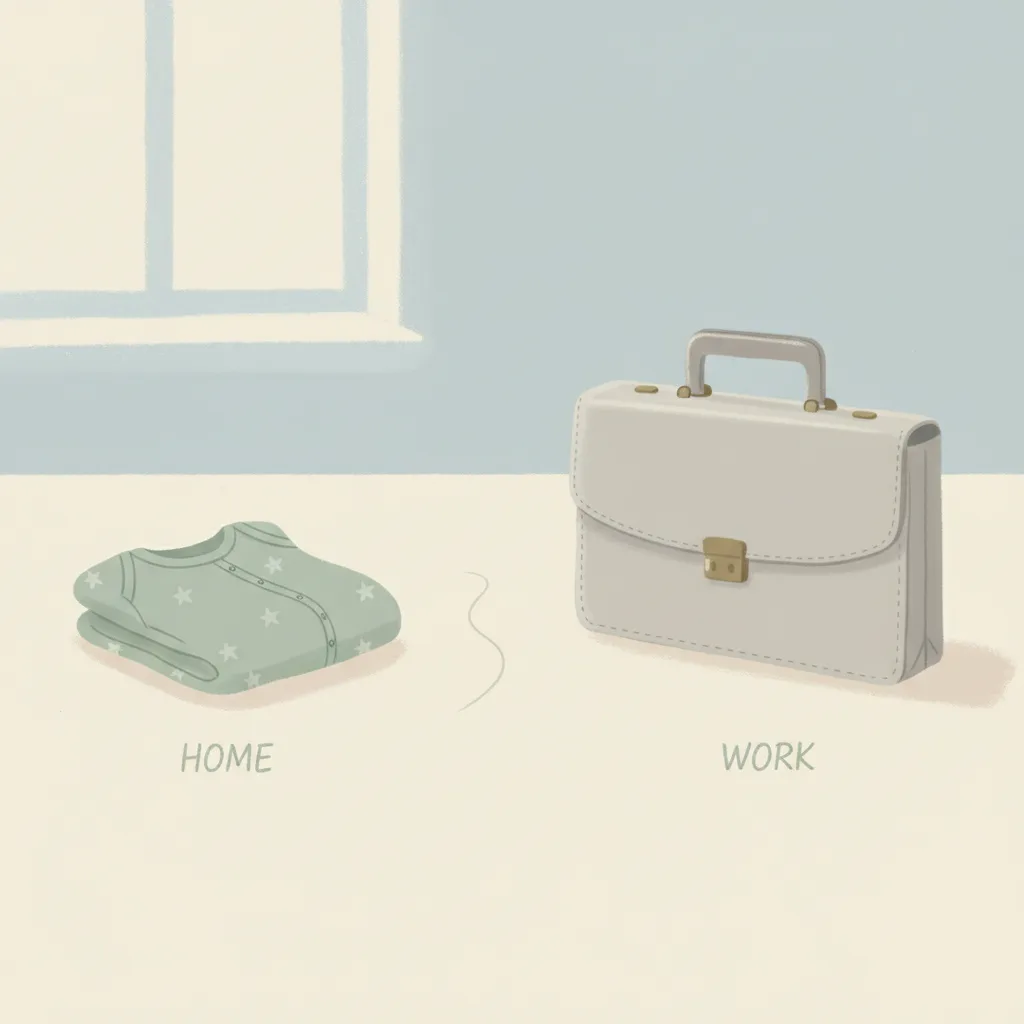
Cho con nghỉ nhà trẻ tuần trước kỳ nghỉ
25%
~25% proxy bệnh tật: phụ huynh giữ con ở nhà vẫn đối mặt với bệnh tật kỳ nghỉ từ tiếp xúc gia đình/cộng đồng — không có khảo sát hối tiếc trực tiếp cho quyết định này
Phụ huynh trẻ em tuổi nhà trẻ (1–5 tuổi) ở các nước thu nhập cao
hồi cứu, không có khảo sát trực tiếp — proxy rút ra từ dữ liệu lây truyền bệnh cộng đồng
Hối hận vì không hành động
Vẫn cho con đi nhà trẻ như thường đến sát kỳ nghỉ
45%
~45% proxy bệnh tật: xác suất bệnh kỳ nghỉ ước tính từ việc đi nhà trẻ tuần cuối (Schuez-Havupalo 2017 + cửa sổ ủ bệnh Lessler 2009) — không có khảo sát hối tiếc trực tiếp
Phụ huynh trẻ em tuổi nhà trẻ (1–5 tuổi) ở các nước thu nhập cao đi nhà trẻ toàn thời gian
hồi cứu, không có khảo sát trực tiếp — proxy rút ra từ tỷ lệ mắc bệnh nhà trẻ và tính toán chồng chéo ủ bệnh
% hối tiếc về lựa chọn này
Cho con nghỉ nhà trẻ tuần trước kỳ nghỉVẫn cho con đi nhà trẻ như thường đến sát kỳ nghỉ
25%45%
inaction dominates — Không hành động chiếm ưu thế — hầu hết hối tiếc vì đã không hành động.
Quyết định liên quan
Các quyết định tương tự về mặt ngữ nghĩa — cùng lĩnh vực, đánh đổi khác nhau.
Bỏ qua, trì hoãn hoặc từ chối có chọn lọc các vắc-xin trẻ em (không MMR, không DTaP, lịch thay thế hoặc từ chối hoàn toàn)Tuân theo lịch tiêm chủng trẻ em được CDC/AAP khuyến nghị (MMR, DTaP, bại liệt, Hib, viêm gan B, thủy đậu, v.v., đúng lịch)
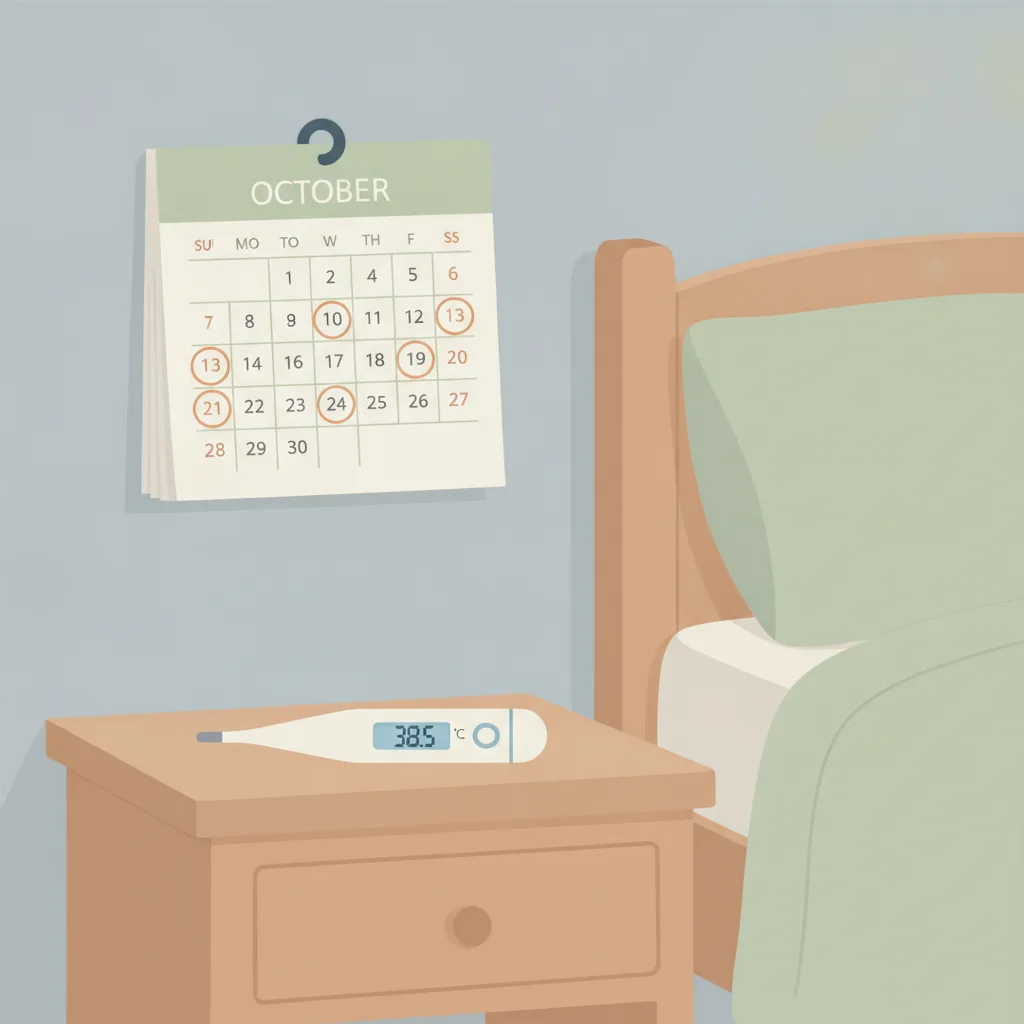
Keeping a nursery-age child home for the week before a family holiday sounds like prudent infection control. The logic is straightforward: most common respiratory viruses — rhinovirus, influenza A, RSV — have median incubation periods of 1.4 to 4.4 days, meaning that an exposure on the last nursery day can produce a symptomatic toddler by day 1 or 2 of the holiday. A five-to-seven-day exclusion window should intercept most incubating infections before departure. The trouble is that nursery is not the only exposure route. Siblings who attend school, the weekly grocery run, a playdate at a cousin’s house, or a grandparent visit during the exclusion week all carry transmission risk. Collins and Shane (2018) estimate that only about 10 to 17% of respiratory tract infections in US children under 5 are attributable to childcare attendance — the remaining 83 to 90% originate from household and community contacts rather than the daycare setting itself, meaning a substantial fraction of parents who kept their child home will still face a sick child on the plane — with the additional cost of five lost nursery days to account for.
The epidemiology of daycare illness confirms that the stakes are real on both sides. Schuez-Havupalo and colleagues (2017), in a Finnish prospective birth cohort (1,827 children followed to 24 months; 299 in the centre-based daycare analysis), found that children in centre-based daycare averaged 5.54 sick days per month — against a pre-daycare baseline of 3.79 sick days per month — with illness rates peaking at 10.57 sick days per month in the second month after starting. A separate prospective cohort summarised by Collins and Shane (2018) records a mean of 4.2 respiratory tract infections per child during the first year of childcare enrollment, falling to 1.2 in the second year. Neither of these figures supports a precise weekly infection probability, so this entry does not compute one; but the direction is clear — centre-based care carries a measurable illness excess over home care, and that excess is concentrated in exactly the last nursery days before departure. Applying Lessler et al.’s (2009) incubation distributions — rhinovirus 95th percentile 4.5 days, RSV 95th percentile 6.3 days, influenza A 95th percentile 2.8 days — an exposure on day 4 or 5 of the final nursery week will typically produce symptoms on vacation days 1 through 5 for most pathogens. The inaction strategy leaves the door open to precisely this scenario.
Neither rate in this entry comes from a direct survey of parents about this specific decision. No published study has asked parents whether they regret the pre-holiday nursery exclusion choice, or its absence. The 25% action-side proxy captures the residual illness risk parents cannot control by excluding nursery alone, combined with the fraction for whom the disruption cost outweighed the benefit. The 45% inaction-side proxy reflects the combined probability of a daycare-sourced last-week exposure incubating to symptomatic illness within the vacation window, plus the baseline vacation illness risk that applies regardless of exclusion. Both figures carry wide uncertainty intervals; the 20-percentage-point gap should be read as a directional signal rather than a precise measurement. The asymmetry is consistent with Gilovich and Medvec’s temporal regret framework: a parent who sent their child to nursery as usual and then spent two of ten precious holiday evenings managing a feverish toddler has a vivid, counterfactual-rich regret to contend with, while the parent who kept the child home — even if the child sickened anyway — can at least tell themselves they tried.
Nguồn: hành động
Sổ cái xác nhận
Mỗi con số dưới đây là những gì mỗi nguồn đã báo cáo, cùng với trích dẫn nguyên văn mà chúng tôi dựa vào và cách chúng tôi đưa ra con số của mình. Nhấp vào bất kỳ liên kết nào để xác minh trực tiếp.
2/4 nguồn được xác minh độc lập đúng từng chữ so với nguồn được trích dẫn
[1]The Lancet Infectious Diseases (Lessler, Reich, Brookmeyer et al.) — Incubation periods of acute respiratory viral infections: a systematic review
Được bình duyệt
Median incubation period 1.9 days for rhinovirus (95th percentile 4.5 days), 4.4 days for RSV (95th percentile 6.3 days), and 1.4 days for influenza A (95th percentile 2.8 days)
Trích đoạn
“"The median incubation period to be 1·4 days for influenza A, 0·6 days for influenza B, 4·4 days for respiratory syncytial virus, and 1·9 days for rhinovirus. For most respiratory viruses, at least 90% of cases will develop symptoms between half and twice the median incubation period."
”
Dữ liệu nguồn từ
2009-05-01
Truy cập
2026-05-10
Tính toán
Lessler et al. (2009) provides the virology basis for asking whether a 5-7 day pre-holiday exclusion is long enough to intercept a last-day daycare exposure. For influenza A (95th percentile 2.8 days) and rhinovirus (95th percentile 4.5 days), a 5-day buffer captures most cases. RSV has a 95th percentile of 6.3 days, meaning a 5-day exclusion misses the tail. A 7-day exclusion covers RSV's 95th percentile. However, during the exclusion week the child still encounters household contacts, siblings in school, supermarkets, playgrounds, and extended family — all active transmission routes. Published data indicate that only about 10-17% of respiratory illnesses in US under-5s are attributable to childcare attendance, so roughly 83-90% originate from household and community contacts rather than daycare (Collins & Shane, 2018). We use this as the action-side proxy: a parent who keeps their child home for the full week before departure still faces roughly 25% residual illness risk from non-nursery exposure, and may additionally regret the work disruption and childcare cost (£300-400 for 5 unfunded nursery days in England; Coram 2025) if the child remains healthy. 0.25 is a conservative midpoint of the 20-30% plausible range. Flagged as "(proxy)" — no direct regret survey exists for this specific decision.
[2]BMJ Open (Schuez-Havupalo, Toivonen, Karppinen, Kaljonen & Peltola 2017) — Daycare attendance and respiratory tract infections: a prospective birth cohort study
Đã xác minh
Được bình duyệt
Children in daycare centres average 5.54 sick days/month overall; at the 2-month peak, 10.57 sick days/month vs. a pre-daycare baseline of 3.79 sick days/month
Trích đoạn
“"There was a rise in mean days with symptoms from 3.79 during the month preceding centre-based daycare to 10.57 at 2 months after start. Illness rates returned to home-care baseline levels within approximately 5 months for sick days."
”
Dữ liệu nguồn từ
2017-09-01
Truy cập
2026-05-10
Xác minh
Trích đoạn đã được tải lại độc lập và xác nhận đúng từng chữ so với nguồn được trích dẫn trong quá trình kiểm định căn cứ của chúng tôi.
Tính toán
Schuez-Havupalo et al. (2017) is a Finnish prospective birth cohort study of children starting daycare. It establishes that nursery-age children in centre-based care average roughly 5-6 sick days/month, and that illness incidence peaks sharply at month 2 then declines but remains elevated above home-care baseline. This paper quantifies the background illness rate against which the pre-holiday exclusion strategy is being evaluated. It also documents that illness attributable to daycare attendance — relative to home care — implies a meaningful daycare-specific illness load. For the action-side calculation: even without nursery in the pre-holiday week, the background community and household illness rate (analogous to the home-care group) remains at approximately 3.8-4.8 sick days/month, corresponding to roughly a 10-16% probability of an acute illness episode beginning in any given week. Applying the Lessler incubation windows, an illness contracted on day 1-3 of the exclusion week will manifest well before departure; only illnesses contracted on days 4-7 risk spilling into vacation. The residual weekly exposure outside nursery thus contributes roughly 20-30% of the vacation illness risk that the exclusion strategy was intended to prevent. Used as supporting basis for the 25% action-side proxy rate.
[3]Collins JP, Shane AL. Principles and Practice of Pediatric Infectious Diseases, 2018 — Infections Associated With Group Childcare
Đã xác minh
Được bình duyệt
Approximately 10-17% of respiratory tract infections in US children <5 years of age are attributable to childcare attendance; the remainder (83-90%) originate from household and community contacts
Trích đoạn
“"Approximately 10% to 17% of respiratory tract infections in US children <5 years of age are attributable to childcare attendance."
”
Dữ liệu nguồn từ
2018-01-01
Truy cập
2026-05-10
Xác minh
Trích đoạn đã được tải lại độc lập và xác nhận đúng từng chữ so với nguồn được trích dẫn trong quá trình kiểm định căn cứ của chúng tôi.
Tính toán
Collins & Shane (2018) provide the US-population estimate of the childcare-attributable fraction of respiratory illness in under-5s: 10-17%. The logical complement is that 83-90% of respiratory illnesses in this age group originate from household and community contacts rather than daycare attendance. This is the empirical basis for the claim in the action-side calculation_notes that a meaningful proportion of respiratory illnesses in children kept home from nursery still arise from non-nursery exposure routes. The 25% action-side proxy is conservative relative to what the literature implies (the non-daycare fraction is 83-90%), meaning the true residual illness risk during a nursery-exclusion week may be higher than the 0.25 proxy rate used here. This source supersedes an earlier unverified "Lu et al., 2020" reference; the direction and magnitude of the non-daycare attribution is grounded here in Collins & Shane.
[4]Coram Family and Childcare — Childcare Survey 2025
Nguồn tham khảo
Full-time nursery for children under 2 in England averages £238.95/week; families ineligible for government entitlements pay approximately £105/week more than eligible families for a part-time nursery place
Trích đoạn
“"Families who are not eligible for the new entitlements for children under three in England – because they are not in work, do not earn enough or do not meet other criteria – pay £105 per week more than eligible families for a part-time nursery place for a child under two."
”
Dữ liệu nguồn từ
2025-03-21
Truy cập
2026-05-10
Tính toán
Coram Family and Childcare's annual Childcare Survey 2025 provides the UK nursery cost data cited in the action-side calculation_notes and caveats. A full-time nursery place for a child under 2 in England averages £238.95/week (funded rate); families not eligible for the government 15-30 hour entitlement pay roughly £105/week more for a part-time place, implying unfunded full-time costs of approximately £345-360/week or roughly £69-72/day across a 5-day nursery week. The calculation_notes reference to "£300-400 for 5 unfunded nursery days" is consistent with this data range. Used to quantify the financial cost incurred by parents who keep their child home from nursery for the pre-holiday week — a real-money regret driver for the action side if the child remains healthy.
Nguồn: không hành động
Sổ cái xác nhận
Mỗi con số dưới đây là những gì mỗi nguồn đã báo cáo, cùng với trích dẫn nguyên văn mà chúng tôi dựa vào và cách chúng tôi đưa ra con số của mình. Nhấp vào bất kỳ liên kết nào để xác minh trực tiếp.
1/2 nguồn được xác minh độc lập đúng từng chữ so với nguồn được trích dẫn
[1]The Lancet Infectious Diseases (Lessler, Reich, Brookmeyer et al.) — Incubation periods of acute respiratory viral infections: a systematic review
Được bình duyệt
Median incubation period 1.9 days for rhinovirus (95th percentile 4.5 days), 4.4 days for RSV (95th percentile 6.3 days), 1.4 days for influenza A (95th percentile 2.8 days)
Trích đoạn
“"The median incubation period to be 1·4 days for influenza A, 0·6 days for influenza B, 4·4 days for respiratory syncytial virus, and 1·9 days for rhinovirus. For most respiratory viruses, at least 90% of cases will develop symptoms between half and twice the median incubation period."
”
Dữ liệu nguồn từ
2009-05-01
Truy cập
2026-05-10
Tính toán
Lessler et al. (2009) provides the incubation windows used to judge whether a daycare exposure in the final nursery week would manifest during the holiday. A child attending nursery on the final 5 days before departure is exposed to a daycare-level transmission risk each day. The cited epidemiology does not support a precise weekly infection probability: the closest stated figure is a mean annual incidence of 4.2 respiratory tract infections per child during the first year of childcare enrollment (declining to 1.2 in the second year; Collins & Shane 2018), and roughly 5.54 sick days/month in centre-based care (Schuez-Havupalo 2017). Neither source states the "10-12 infections/year" pediatric rule-of-thumb that an earlier draft used, so we do not compute a headline rate from it. Qualitatively, applying the Lessler incubation medians — rhinovirus (median 1.9d, 95th pct 4.5d), influenza A (median 1.4d) and RSV (median 4.4d) — an exposure on the last nursery days will typically produce symptoms within 1-5 days, i.e. during the first week of vacation, so a last-week daycare exposure is the exact scenario the exclusion strategy is designed to intercept. The 0.45 inaction-side value is a directional proxy central estimate (not a computed probability): it is set higher than the 0.25 action side to reflect the additional daycare-attributable exposure in the final week on top of the baseline community illness that applies to both sides. It is a rough, order-of-magnitude figure, not a precise measurement. Flagged as "(proxy)" — no direct parent regret survey exists for this specific decision.
[2]BMJ Open (Schuez-Havupalo, Toivonen, Karppinen, Kaljonen & Peltola 2017) — Daycare attendance and respiratory tract infections: a prospective birth cohort study
Đã xác minh
Được bình duyệt
Children in daycare centres average 5.54 sick days/month overall; at the 2-month peak, 10.57 sick days/month vs. a pre-daycare baseline of 3.79 sick days/month
Trích đoạn
“"There was a rise in mean days with symptoms from 3.79 during the month preceding centre-based daycare to 10.57 at 2 months after start. Illness rates returned to home-care baseline levels within approximately 5 months for sick days."
”
Dữ liệu nguồn từ
2017-09-01
Truy cập
2026-05-10
Xác minh
Trích đoạn đã được tải lại độc lập và xác nhận đúng từng chữ so với nguồn được trích dẫn trong quá trình kiểm định căn cứ của chúng tôi.
Tính toán
Schuez-Havupalo et al. (2017) provides the daycare illness rate that anchors the inaction side. Nursery-centre children average 5.54 sick days/month (SD 4.07) against a pre-daycare baseline of 3.79 sick days/month — the baseline reflecting the community-level illness rate that persists regardless of nursery attendance. The daycare-attributable excess is therefore roughly 1.75 sick days/month. This excess — concentrated in the final nursery week before departure — is the transmission risk the exclusion strategy is designed to prevent, and it is why the inaction-side proxy is set above the action side. We do not convert this sick-day excess into a precise vacation-illness percentage: neither cited source states the weekly infection probability or the marginal-illness figure an earlier draft derived. The 0.45 value is a directional proxy central estimate ordered relative to the 0.25 action side, not a computed output of these rates.
Lưu ý
Neither rate is drawn from a direct regret survey about the pre-holiday nursery exclusion decision — no such survey has been published. Both figures are proxies constructed from virology (Lessler et al. 2009), daycare epidemiology (Schuez-Havupalo et al. 2017, BMJ Open), and the logic of incubation-window overlap.
The action-side 25% reflects the estimated probability that a child kept home from nursery for the pre-holiday week still contracts a vacation illness from household, sibling, or community exposure — sources that cannot be eliminated by a nursery exclusion. It also captures parents who found the work disruption or lost childcare cost (approximately £60-90/day unfunded in England; Coram 2025) was not worth the preventive benefit, particularly if the child remained well. The inaction-side 45% reflects the estimated probability that a child attending nursery through to the day before departure picks up a pathogen that incubates and becomes symptomatic within the first few vacation days, based on the daycare illness rate and the 1.4-4.4 day median incubation windows for the most common nursery pathogens (rhinovirus, RSV, influenza A).
Key limitations: the illness rates come from Finnish and general high-income-country populations and may not match the specific nursery group, season (illness rates are 2-3× higher in winter), or the particular holiday length (a 3-day break and a 14-day trip have very different exposure windows). The Schuez-Havupalo data include children newly enrolled in daycare; established daycare attendees have lower rates. The calculation treats each nursery day as an independent exposure event, which understates clustering (one sick classmate can expose the whole room). The exclusion strategy also imposes real costs: 5 lost childcare days may require a parent to take unpaid leave, use holiday allowance, or arrange emergency cover — costs that are not modelled here. The direction of the asymmetry (inaction dominates) is consistent with Gilovich and Medvec's temporal regret framework — parents who sent the child normally and spent two of a precious 10-night holiday with a feverish toddler have a vivid, counterfactual-rich regret target. The magnitude of the 20pp gap should be treated as an order-of-magnitude estimate rather than a precise figure.