
Bỏ qua đến nội dung
Likelier

Hối tiếc khi hành động vs. không hành động

Cho con học trường tư so với trường công

Nếu bạn hành động

Trường tư

13%

Nếu bạn không hành động

Trường công

41%

Tỷ lệ phần trăm người sau này hối tiếc về mỗi lựa chọn. Biểu đồ thanh và bản ghi đầy đủ hiển thị bên dưới.


Gia đình

Xem xét lần cuối 2026-04-26

Chất lượng bằng chứng 4.38/5

Điểm đánh giá tám chiều theo tiêu chí chất lượng . Mỗi chiều được chấm từ 1–5.

D1 Xác minh nguồn
5/5
D2 Uy tín và tính độc lập của nguồn
4/5
D3 Độ chính xác của tỷ lệ hối tiếc
2/5
D4 Khả năng so sánh nguồn
5/5
D5 Mẫu hình Gilovich
5/5
D6 Chất lượng văn bản
5/5
D7 Tính đầy đủ của lưu ý
5/5
D8 Chất lượng mẫu
4/5
Trung bình 4.38/5
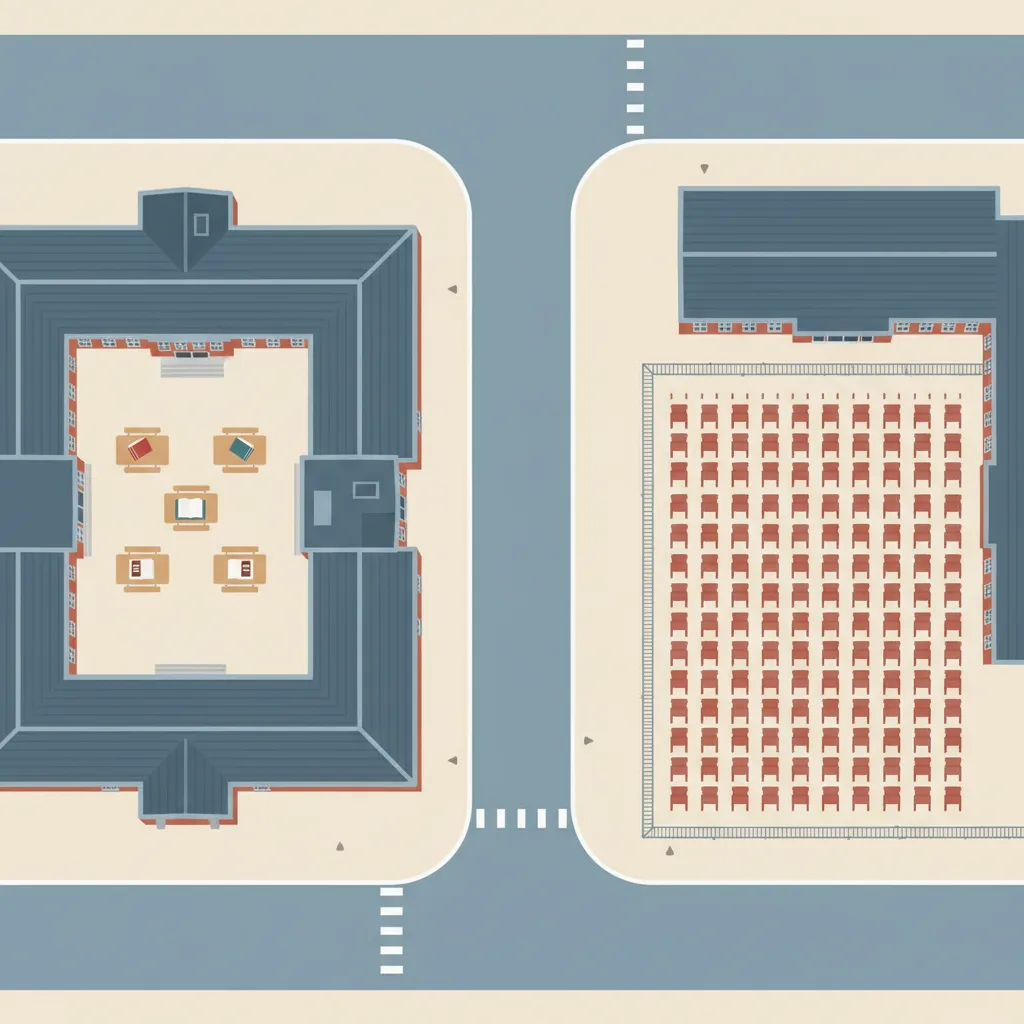
Two school buildings side by side, one with a small class and one with a large crowd, seen from above.

Hối hận vì hành động

Trường tư

13%

13% phụ huynh trường tư sẽ không chọn cùng trường nữa (proxy — khả năng chọn lại)

Phụ huynh Mỹ có học sinh K-12, đại diện toàn quốc

hồi cứu, không có khung thời gian cố định

Hối hận vì không hành động

Trường công

41%

41% phụ huynh trường công sẽ không chọn cùng trường nữa (proxy — khả năng chọn lại)

Phụ huynh Mỹ có học sinh K-12, đại diện toàn quốc

hồi cứu, không có khung thời gian cố định

% hối tiếc về lựa chọn này

inaction dominates — Không hành động chiếm ưu thế — hầu hết hối tiếc vì đã không hành động.

Quyết định liên quan

Các quyết định tương tự về mặt ngữ nghĩa — cùng lĩnh vực, đánh đổi khác nhau.

family

Ở nhà vs đi làm

% hối tiếc về lựa chọn này

Hành động chiếm ưu thế

Hối tiếc vì hành động cao hơn 1.3×

family

Hoạt động có tổ chức vs chơi tự do

% hối tiếc về lựa chọn này

Hành động chiếm ưu thế

Hối tiếc vì hành động cao hơn 2.6×

family

Quy mô gia đình

% hối tiếc về lựa chọn này

Không hành động chiếm ưu thế

Hối tiếc vì không hành động cao hơn 2.6×

family

Can thiệp vs. tự giải quyết

% hối tiếc về lựa chọn này

Hành động chiếm ưu thế

Hối tiếc vì hành động cao hơn 1.2×

family

Bữa cơm gia đình

% hối tiếc về lựa chọn này

Không hành động chiếm ưu thế

Hối tiếc vì không hành động cao hơn 6.9×

family

Cho bỏ cuộc vs. hoàn thành

% hối tiếc về lựa chọn này

Không hành động chiếm ưu thế

Hối tiếc vì không hành động cao hơn 2.3×

familyTrực tiếp

Quyền truy cập mạng xã hội của trẻ

% hối tiếc về lựa chọn này

Hành động chiếm ưu thế

Hối tiếc vì hành động cao hơn 5.4×

family

Tự do vs giám sát chặt chẽ

% hối tiếc về lựa chọn này

Hành động chiếm ưu thế

Hối tiếc vì hành động cao hơn 2.3×

41% of traditional public-school parents say they would not choose the same school again, according to a nationally representative 50CAN/Edge Research survey. Among private-school parents the figure is only 13% — more than three times lower. Pew Research corroborates the gap from a different angle: 79% of private-school families report high satisfaction with educational quality, compared with 55% of public-school families. Neither instrument measures regret directly, but the consistency across surveys and constructs suggests the asymmetry is real, not an artifact of question wording.

The demand-side data makes the inaction story sharper. EdChoice’s 2024 Schooling in America survey found that 36% of parents would prefer private school, yet only 9% actually enroll — a 4:1 gap driven almost entirely by tuition costs and geographic access. That gap complicates the Gilovich framing: most public-school “inaction” is involuntary, constrained by money rather than by indecision. A parent who cannot afford private school and later wishes they could have is experiencing frustrated aspiration, not the freely-chosen inaction that typically intensifies over time in the regret literature.

Selection bias is the largest confounder. Private-school families are wealthier, more likely to have two parents in the household, and more educationally engaged on every metric NCES tracks. Their higher satisfaction may reflect resources and involvement rather than anything intrinsic to private schooling. Randomized voucher studies (e.g., Milwaukee, DC Opportunity Scholarship) show modest academic gains and higher parental satisfaction, but the effect sizes are far smaller than the raw satisfaction gap implies. The directional finding — parents who chose private school regret it less — holds up; the magnitude should be read with the income gradient firmly in mind.

Nguồn: hành động

Sổ cái xác nhận

Mỗi con số dưới đây là những gì mỗi nguồn đã báo cáo, cùng với trích dẫn nguyên văn mà chúng tôi dựa vào và cách chúng tôi đưa ra con số của mình. Nhấp vào bất kỳ liên kết nào để xác minh trực tiếp.

2/2 nguồn được xác minh độc lập đúng từng chữ so với nguồn được trích dẫn

  1. [1] 50CAN / Edge Research — The State of Educational Opportunity in America Đã xác minh
    The State of Educational Opportunity in America
    Thống kê
    87% of private-school parents would choose the same school again, vs 59% of traditional public-school parents
    Trích đoạn
    “"87 percent of private school parents and 82 percent of parochial/religious school parents would make the same choice, while the number drops to 59 percent for traditional public school parents." ”
    Dữ liệu nguồn từ
    2024-10-15
    Truy cập
    2026-04-26
    Xác minh
    Trích đoạn đã được tải lại độc lập và xác nhận đúng từng chữ so với nguồn được trích dẫn trong quá trình kiểm định căn cứ của chúng tôi.
    Tính toán
    50CAN / Edge Research national survey. We derive action-regret as 1 − 0.87 = 0.13 (13% would not choose the same school). This is a proxy for regret — "would not choose again" conflates dissatisfaction, changed circumstances, and active regret.
  2. [2] Pew Research Center — Parents differ sharply by party over what their K-12 children should learn in school Đã xác minh
    Parents differ sharply by party over what their K-12 children should learn in school
    Thống kê
    79% of private-school parents report high satisfaction with the quality of their child's education, vs 55% of public-school parents
    Trích đoạn
    “"About eight-in-ten parents answering about a child in private school (79%) express high levels of satisfaction with the quality of education their child is receiving, compared with a narrower majority (55%) of those answering about a child who is in public school." ”
    Dữ liệu nguồn từ
    2022-10-26
    Truy cập
    2026-04-26
    Xác minh
    Trích đoạn đã được tải lại độc lập và xác nhận đúng từng chữ so với nguồn được trích dẫn trong quá trình kiểm định căn cứ của chúng tôi.
    Tính toán
    Pew Research Center survey of U.S. parents of K-12 children (fielded Oct 2022). The 79% vs 55% satisfaction gap corroborates the 50CAN "would choose again" differential but measures a different construct (satisfaction vs hypothetical re-choice).

Nguồn: không hành động

Sổ cái xác nhận

Mỗi con số dưới đây là những gì mỗi nguồn đã báo cáo, cùng với trích dẫn nguyên văn mà chúng tôi dựa vào và cách chúng tôi đưa ra con số của mình. Nhấp vào bất kỳ liên kết nào để xác minh trực tiếp.

1/2 nguồn được xác minh độc lập đúng từng chữ so với nguồn được trích dẫn

  1. [1] 50CAN / Edge Research — The State of Educational Opportunity in America
    The State of Educational Opportunity in America
    Thống kê
    Only 59% of traditional public-school parents would choose the same school again
    Trích đoạn
    “"87 percent of private school parents would make the same choice, while the number drops to 59 percent for traditional public school parents." ”
    Dữ liệu nguồn từ
    2024-10-15
    Truy cập
    2026-04-26
    Tính toán
    Inaction-regret derived as 1 − 0.59 = 0.41. The 41% includes parents who would switch to private, charter, magnet, or homeschool — not exclusively to private school. This overstates the "wish I'd gone private" sentiment specifically.
  2. [2] EdChoice — Beyond Enrollment: What Parents Really Want from Their Children's Education Đã xác minh
    Beyond Enrollment: What Parents Really Want from Their Children's Education
    Thống kê
    36% of parents would most like to enroll in private school, but only 9% actually do
    Trích đoạn
    “"The most popular schooling option was private schooling, with over a third of parents (36%) stating they would most like to enroll their children that way. This is four times the rate of students enrolled in private schools (9%)." ”
    Dữ liệu nguồn từ
    2024-08-01
    Truy cập
    2026-04-26
    Xác minh
    Trích đoạn đã được tải lại độc lập và xác nhận đúng từng chữ so với nguồn được trích dẫn trong quá trình kiểm định căn cứ của chúng tôi.
    Tính toán
    EdChoice 2024 Schooling in America Survey, n = 2,319 parents. The 4:1 ratio between stated preference and actual enrollment signals a large pool of constrained inaction — parents who want private school but face cost, location, or admissions barriers. This contextualizes but does not directly measure regret.

Lưu ý

Both sides draw on the same 50CAN/Edge Research survey, so the regret-rate comparison is internally consistent, but the question "would you choose the same school again" conflates regret with changed circumstances — a parent who moved neighborhoods may answer "no" without regretting the original decision. The Pew Research satisfaction data (79% vs 55%) uses a different instrument and year (2022 vs 2024), so the two datasets corroborate the direction but not the exact magnitude. Selection bias is the elephant: families who pay private-school tuition are wealthier and more educationally engaged; their higher satisfaction may reflect income and involvement, not school type alone. The EdChoice 36%-want-vs-9%-enrolled gap suggests cost is the primary barrier, meaning inaction here is often involuntary — a departure from Gilovich's framework, which assumes the agent could have acted.

Dữ liệu thô: /api/decisions.json

Đã xem gần đây trên thiết bị này