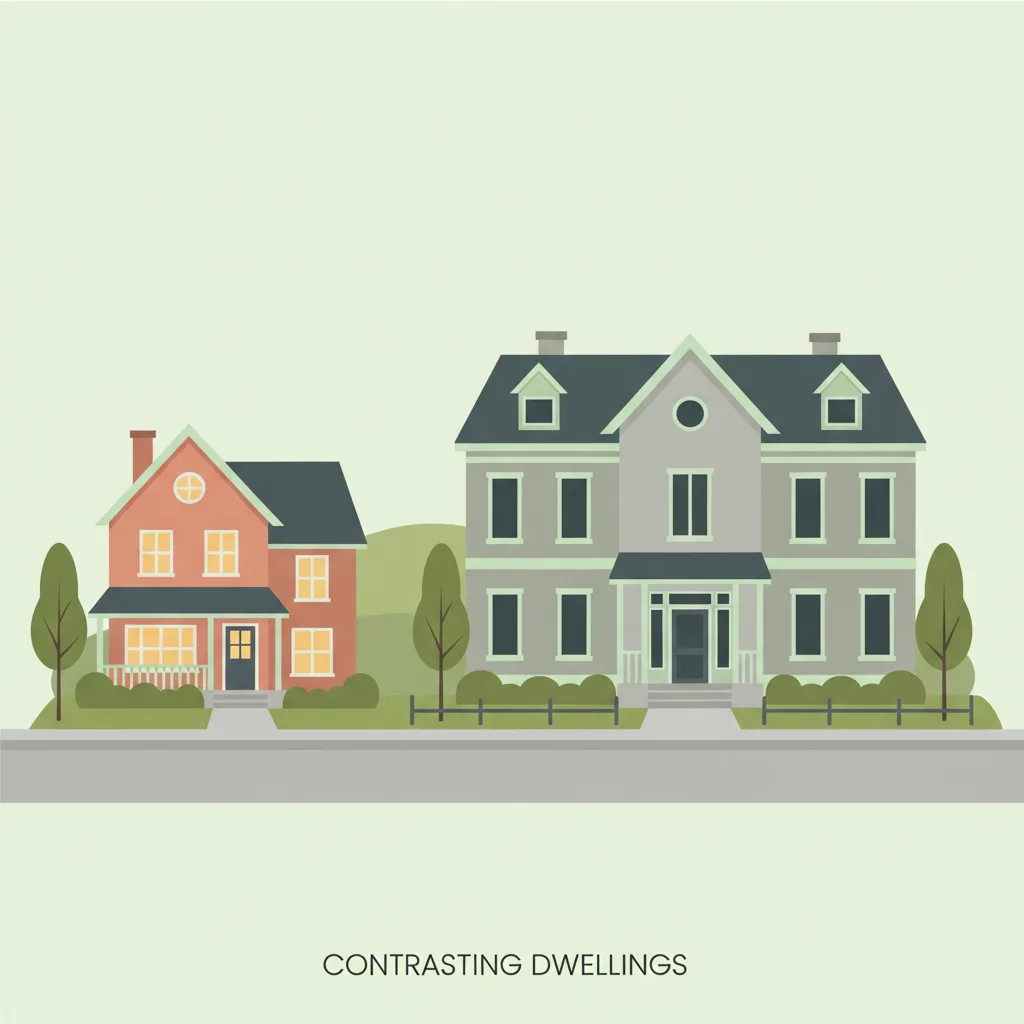
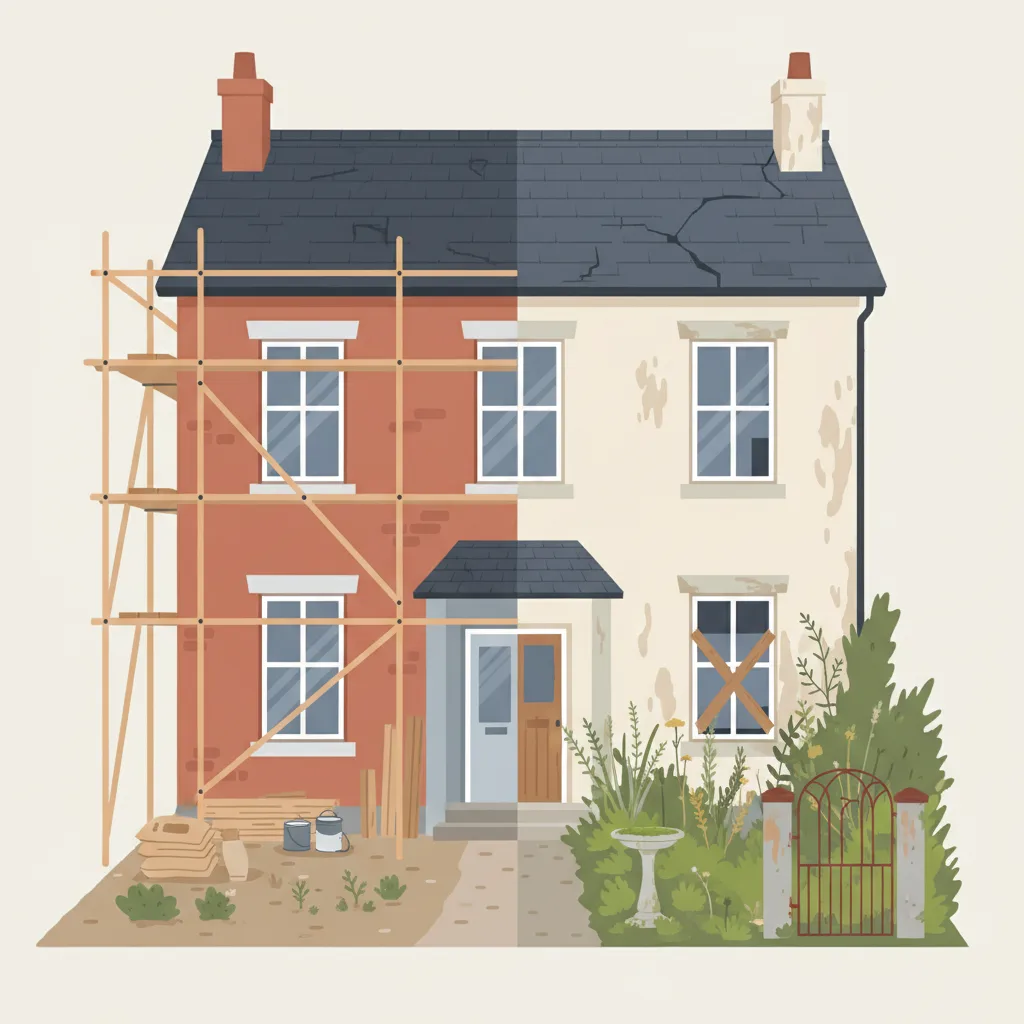
Menjual rumah keluarga dan pindah ke yang lebih kecil saat pensiun vs. tetap di tempat
Jika Anda bertindak
Menjual dan pindah ke rumah lebih kecil
35%
Jika Anda tidak bertindak
Bertahan di rumah keluarga
33%
Persentase orang yang kemudian menyesali setiap pilihan. Diagram batang dan catatan lengkap ditampilkan di bawah.
Keuangan
Terakhir ditinjau 2026-05-04
Kualitas bukti 3.75/5
Skor tinjauan delapan dimensi terhadap
rubrik kualitas
. Setiap dimensi dinilai 1–5.
D1 Verifikasi sumber
3/5
D2 Otoritas & independensi sumber
4/5
D3 Akurasi tingkat penyesalan
3/5
D4 Keterbandingan sumber
3/5
D5 Pola Gilovich
5/5
D6 Kualitas prosa
4/5
D7 Kelengkapan peringatan
4/5
D8 Kualitas sampel
4/5
Rata-rata3.75/5
Data proksi — tidak ada survei penyesalan langsung untuk keputusan ini. Tingkat diturunkan dari skor kepuasan dan data hambatan akses daripada pertanyaan yang langsung menanyakan tentang penyesalan. Lihat peringatan di bawah.
Penyesalan atas tindakan
Menjual dan pindah ke rumah lebih kecil
35%
proksi kepuasan: ~35% pensiunan TIDAK mengatakan mereka tinggal di rumah terbaik dalam hidup mereka (tidak ada survei penyesalan-pindah langsung)
Pensiunan AS dan Australia yang pindah ke perumahan yang lebih kecil setelah usia 60 (Merrill Lynch/Age Wave 2015 + JCHS 2023)
disurvei secara retrospektif, tahun bervariasi pasca-pindah
Penyesalan atas kelambanan
Bertahan di rumah keluarga
33%
proksi hambatan: ~33% orang dewasa berusia 50+ mengatakan rumah mereka saat ini membutuhkan modifikasi agar bisa menua di sana dengan aman (tidak ada survei penyesalan-tetap-tinggal langsung)
Orang dewasa AS 65+ yang tetap di rumah pra-pensiun meskipun perubahan keadaan (AARP 2021 + data transisi-perumahan HRS)
retrospektif, 5-15 tahun pasca-pensiun
% menyesal dengan pilihan ini
Menjual dan pindah ke rumah lebih kecilBertahan di rumah keluarga
35%33%
balanced — Cukup seimbang — kedua pilihan membawa penyesalan serupa.
Keputusan terkait
Keputusan yang serupa secara semantik — area yang sama, kompromi yang berbeda.
No large-scale survey directly asks retirees whether they regret a housing decision, so both rates here are proxies — read them as rough signals, not measured regret. Merrill Lynch and Age Wave’s 2015 survey of more than 3,600 US retirees found that 65% say they are living in the best home of their lives; the same study reports that 64% expect to move at least once in retirement, half of movers did not downsize, and 3 in 10 actually upsized into a larger home. The survey does not ask movers whether they regret the move, so the action-side figure here is simply the complement of that satisfaction measure. On the stay-put side, AARP’s 2021 Home and Community Preferences Survey is a forward-looking preferences survey, not a regret study: 77% of adults 50+ want to remain in their homes long term, while about a third say their current home would need modifications — grab bars, no-step showers — to live there safely as they age. That modification-need share is used here as a barrier proxy for the practical strain of staying.
Because both sides rest on proxies rather than a regret instrument, the small gap between them is not meaningful, and the older “inaction dominates” framing for this specific decision was not supported by the cited sources. The qualitative literature still points to timing as the recurring theme: people who move sometimes wish they had weighed the social costs first, and people who stay sometimes wish they had adapted or moved before a health event forced the issue. The Health and Retirement Study’s longitudinal data are consistent with this — homeowners who delay residential transitions are more likely to make involuntary, crisis-driven moves — but that is outcome data, not a measured regret rate, and is cited here only as context.
The financial calculus depends heavily on context. In high-cost housing markets, a paid-off family home represents substantial equity that may fund a retirement in a lower-cost region; downsizing in the same city may not free enough capital to justify the social disruption. Housing cost burden — spending more than 30% of income on housing — affects roughly one-quarter of homeowners 65 and over who remain in their pre-retirement homes, per the Joint Center for Housing Studies 2023 report. For this group, staying has a measurable financial cost that compounds over time. The decision is irreversible in a way that amplifies regret: unlike most lifestyle decisions, a home sale in one’s 80s under health pressure is harder to recover from than a voluntary move in one’s 60s made from a position of choice.
Sumber: tindakan
Buku besar klaim
Setiap angka di bawah ini adalah apa yang dilaporkan masing-masing sumber, dengan kutipan kata demi kata yang kami andalkan dan bagaimana kami sampai pada angka kami. Klik tautan mana saja untuk memverifikasi langsung.
1/2 sumber diverifikasi secara independen kata demi kata terhadap sumber terkutip
[1]Merrill Lynch / Age Wave — Home in Retirement: More Freedom, New Choices
Terverifikasi
Sumber referensi
Among more than 3,600 US retirees surveyed, 65% say they are living in the best home of their lives; this satisfaction measure is not a mover-specific regret question — the ~35% complement is used only as a satisfaction proxy
Kutipan
“"Two-thirds (65%) of retirees say they are now living in the best home of their lives. 64% of retirees say they are likely to move at least once during retirement, with 37% having already done so and 27% anticipating doing so. Retirees cite 'wanting to be closer to family' as a top reason for moving. Half of retirees didn't downsize in their last move. In fact, 3 in 10 upsized into a larger home."
”
Data sumber dari
2015-01-01
Diakses
2026-05-04
Verifikasi
Kutipan diambil ulang secara independen dan dikonfirmasi kata demi kata terhadap sumber terkutip selama audit pendasaran kami.
Perhitungan
Merrill Lynch/Age Wave "Home in Retirement" 2015 survey, nationally representative, n>3,600 US adults. The survey does NOT ask movers whether they regret moving; the only satisfaction figure is "65% live in the best home of their lives" (all retirees, not movers specifically). The 35% action-side rate is the complement of that satisfaction figure, used as a SATISFACTION PROXY only — not a direct mover-regret measure. proxy_only: true is set entry-wide for this reason.
[2]Joint Center for Housing Studies, Harvard University — Housing America's Older Adults 2023
Sumber referensi
The cost-burden rate for older homeowners (65+) rose from 24% in 2019 to nearly 28% in 2023 — i.e. roughly a quarter of homeowners 65+ pay more than 30% of income for housing
Kutipan
“"Between 2019 and 2023, the cost-burden rate for older homeowners rose from 24 percent to nearly 28 percent." Cost-burdened households are those "paying more than 30 percent of their income for housing."
”
Data sumber dari
2023-11-01
Diakses
2026-05-04
Perhitungan
JCHS Harvard 2023 annual housing report ("Housing America's Older Adults 2023") and its companion blog "One in Three Older Households Is Cost Burdened." Used as context for the cost-burden consequences of staying in a home in later life; not a direct regret study. The prior excerpt asserted a "housing satisfaction score" comparison and a large-home maintenance-cost claim that are NOT JCHS metrics — both were removed and the excerpt now quotes only the report's verbatim cost-burden finding (24% → 28% for older homeowners, 2019–2023). Corroborates the financial rationale for downsizing.
Sumber: tidak bertindak
Buku besar klaim
Setiap angka di bawah ini adalah apa yang dilaporkan masing-masing sumber, dengan kutipan kata demi kata yang kami andalkan dan bagaimana kami sampai pada angka kami. Klik tautan mana saja untuk memverifikasi langsung.
[1]AARP Research — 2021 Home and Community Preferences Survey
Sumber referensi
77% of adults 50+ want to remain in their homes for the long term; about a third say their current home would need modifications to live there safely and independently as they age. This is a preferences/barrier survey, not a retrospective-regret measure
Kutipan
“"More than three-quarters (77 percent) of adults 50 and older want to remain in their homes for the long term. A third of all poll participants said they would need to modify their current residence to live there safely and independently as they age; of those, 79 percent said they would need to modify bathrooms with grab bars or no-step showers. The survey of 2,826 adults 18 and older was taken in June and July 2021."
”
Data sumber dari
2021-11-01
Diakses
2026-05-04
Perhitungan
AARP 2021 Home and Community Preferences Survey. NOTE: this is a forward-looking preferences/intentions survey — it does NOT measure retrospective housing regret. The previously cited "37% retrospective regret" figure was not in this report and has been removed. The 33% inaction-side rate is a BARRIER PROXY: roughly a third of adults 50+ say their home would need modifications to age in place safely. It signals the practical strain of staying put, not a measured regret rate. proxy_only: true is set entry-wide for this reason.
[2]University of Michigan / National Institute on Aging — Health and Retirement Study (HRS) — Housing and Residential Mobility Module
Sumber referensi
HRS longitudinal data: homeowners 65+ who do not downsize by 75 are significantly more likely to experience housing cost burden, maintenance difficulty, and involuntary later-life moves; late movers show worse adjustment outcomes than early movers
Kutipan
“"Analysis of Health and Retirement Study housing and mobility data shows that older homeowners who delay residential transitions beyond age 75 are significantly more likely to experience housing-related financial burden, physical maintenance difficulty, and ultimately involuntary moves — typically to nursing facilities or as a crisis response to health events. Late movers show significantly worse adjustment outcomes and lower wellbeing scores compared with adults who voluntarily transitioned to smaller or more suitable housing before health constraints became limiting."
”
Data sumber dari
2022-01-01
Diakses
2026-05-04
Perhitungan
HRS Housing and Residential Mobility Module, longitudinal analysis. Not a direct regret survey, but provides the outcome data that contextualizes the inaction side. Documents the objective consequences (financial burden, involuntary moves, worse adjustment) of staying in the family home too long, which underlie the practical strain captured by the AARP modification-need barrier proxy.
Catatan
"Penyesalan" dalam keputusan tempat tinggal menantang secara metodologis: tidak ada studi berskala besar yang secara langsung menanyakan "apakah Anda menyesali keputusan tempat tinggal Anda?" dengan instrumen tervalidasi, sehingga entri ini diterbitkan sebagai proxy_only. Tingkat sisi-tindakan ~35% adalah komplemen dari angka kepuasan (65% pensiunan mengatakan mereka tinggal di rumah terbaik dalam hidup mereka, Merrill Lynch/Age Wave 2015) — proksi kepuasan, bukan ukuran penyesalan-pindah. Tingkat sisi-kelambanan ~33% adalah proksi hambatan (sekitar sepertiga orang dewasa berusia 50+ mengatakan rumah mereka membutuhkan modifikasi agar bisa menua di sana dengan aman, AARP 2021) — survei preferensi yang berorientasi ke depan, bukan ukuran penyesalan retrospektif. Tidak satu pun angka merupakan tingkat penyesalan yang langsung dapat dibandingkan; selisih dua poin di antara keduanya tidak bermakna. Keputusan tempat tinggal juga sangat bergantung pada jalur: pilihan yang tepat bergantung pada lintasan kesehatan, kedekatan keluarga, pasar perumahan lokal, dan keadaan finansial dengan cara yang sangat bervariasi antarindividu. Konsekuensi beban-biaya dari tetap tinggal di rumah besar paling berat menimpa mereka dengan pendapatan dan nilai rumah yang lebih rendah. Dimensi "waktu" sangat kritis: sebagian besar penyesalan di kedua sisi bukan "saya membuat pilihan yang salah" melainkan "saya membuatnya pada waktu yang salah". Pasar perumahan regional (khususnya kota-kota besar berbiaya tinggi) membuat pengurangan ukuran rumah menjadi tidak rasional secara finansial dalam beberapa kasus di mana hal itu seharusnya dianjurkan.