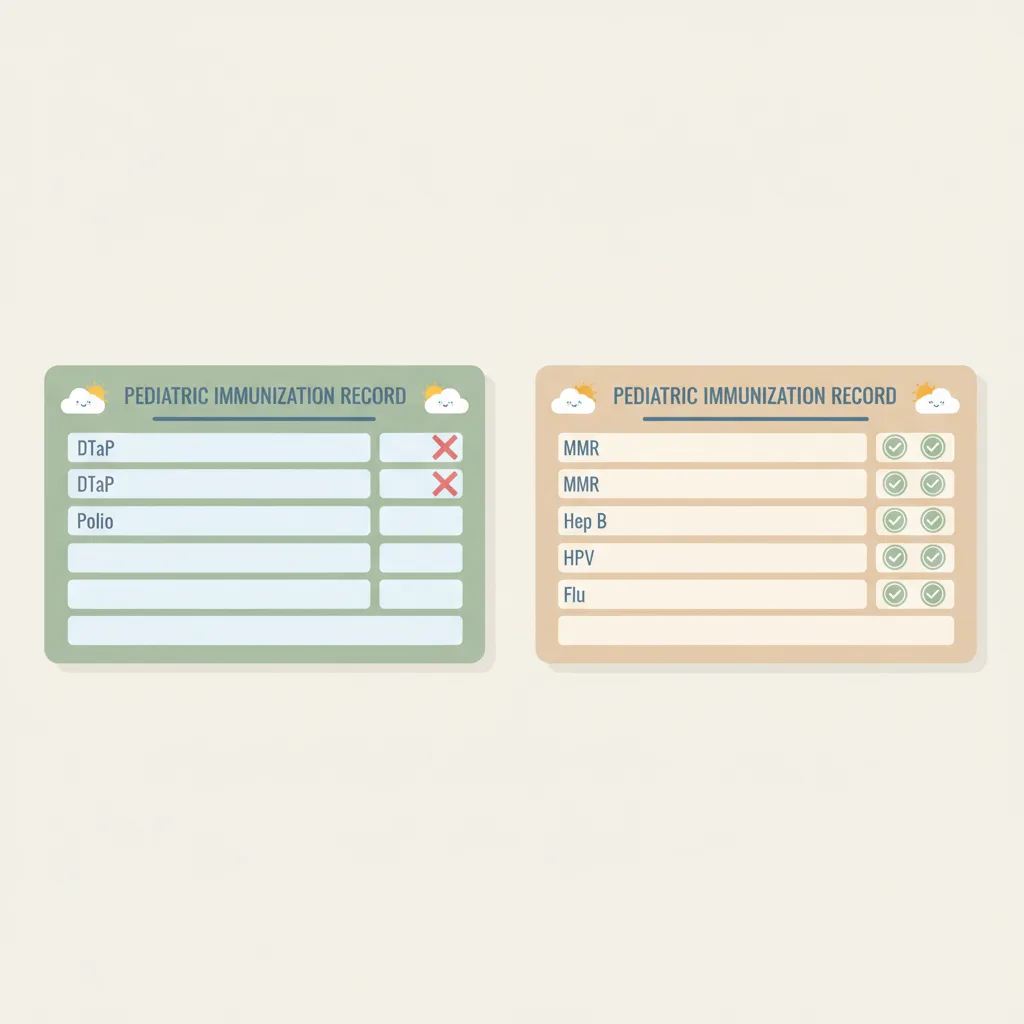
US adults who habitually drink raw milk (~3.2% of the population per CDC/Costard 2017); regret here is proxied by realized foodborne illness, the only outcome-grounded signal available because no regret-framed survey of raw-milk drinkers exists
per-illness risk is acute and recurring (per gallon / per season); the ~10% figure is an order-of-magnitude lifetime-illness estimate over a multi-decade drinking habit
US adults who drink only pasteurized milk (the ~96.8% majority); regret proxied by foregone CLAIMED benefits that evidence does not support, plus minor taste preference
ambient / ongoing; no acute harm event to trigger regret
No one surveys raw-milk drinkers about regret, so this pair is built on the only outcome that leaves a paper trail: foodborne illness. The anchor is Costard et al. 2017, a CDC Emerging Infectious Diseases modeling study covering 2009 to 2014. It found that consumers of unpasteurized milk and cheese, a small slice of the population at 3.2% and 1.6%, were 838.8 times more likely to experience a dairy-related illness and 45.1 times more likely to be hospitalized than people who consumed pasteurized dairy. Unpasteurized products caused 96% of all dairy-outbreak illnesses. That 838.8 figure is a relative risk, not a probability, so it cannot be a regret rate. Translated into a per-drinker lifetime number, roughly 732 outbreak-attributed illnesses a year spread across about ten million raw-milk drinkers is a low annual rate from detected outbreaks alone, but the same study notes outbreak cases are “only a fraction of all dairy-related illnesses.” Scaled for that under-detection and for a multi-decade habit, the lifetime probability of a raw-milk illness lands in the high-single-digit to low-double-digit percent range. The 0.10 used here is an order-of-magnitude proxy, not a measured regret incidence.
The realized-harm signal has stayed warm. Idaho health officials reported at least 23 Campylobacter cases and three Shiga toxin-producing E. coli infections tied to raw milk in late 2025, including six children under twelve and two hospitalizations, then a second cluster from May 2026 in which nearly sixty people fell ill and at least forty-five tested positive for campylobacteriosis from two milking operations. Layered on top of the bacterial baseline is a newer hazard: since the 2024 H5N1 outbreak in US dairy cattle, live infectious avian-influenza virus has turned up in raw milk. FDA and academic labs found infectious H5N1 in 39 of 275 raw samples and confirmed that commercial pasteurization eliminated it in every sample tested, with no viable virus in retail pasteurized milk. The hazard is specific to the active choice, and pasteurization is the line that removes it.
The status-quo side is where the proxy gets thin in the other direction. A pasteurized-milk drinker forgoes only the benefits raw milk is claimed to provide, and the controlled evidence says those benefits are not there. A peer-reviewed review hosted by NIH concludes that claims of improved nutrition, prevention of lactose intolerance, or provision of “good” bacteria “have no scientific basis and are myths,” that pasteurization produces “no significant change in the nutritional quality of milk,” and that a randomized trial found raw milk did not reduce lactose malabsorption versus pasteurized. The CDC puts it plainly: pasteurized milk “offers the same nutritional benefits without the risks.” So the inaction regret floor sits near 2%, reflecting taste preference and belief in unproven benefits rather than any measurable loss. The caveat that keeps this honest is that illness is not the same as regret. Raw-milk drinking is often identity-linked, and a share of drinkers do not regret the choice even after getting sick, while some who never get sick may worry anyway. The pattern is action-dominant on realized harm, but the regret rates are proxies standing in for a survey that does not exist.
Consumers of unpasteurized milk/cheese (3.2% / 1.6% of the population) are 838.8x more likely to experience an illness and 45.1x more likely to be hospitalized than pasteurized-dairy consumers; 87 outbreaks, 750 lab-confirmed illnesses, 215 hospitalizations 2009-2014; unpasteurized products caused 96% of dairy-outbreak illnesses; pasteurizing all dairy would prevent ~732 illnesses/yr.
抜粋
“Consumers of unpasteurized milk and cheese are a small proportion of the US population (3.2% and 1.6%, respectively), but compared with consumers of pasteurized dairy products, they are 838.8 times more likely to experience an illness and 45.1 times more likely to be hospitalized.”
Costard et al. 2017, EID 23(6). The 838.8x is a RELATIVE RISK, not a probability, so it is used as prose color and to justify the action_side >> inaction_side ordering, not mapped to the regret_rate. The regret_rate is built as a per-drinker lifetime illness probability: ~732 outbreak illnesses/yr / ~10M US raw-milk drinkers (3.2% of ~330M) is ~0.007%/yr from OUTBREAK-detected cases only. Costard states outbreak illness is 'only a fraction of all dairy-related illnesses,' so true sporadic illness is materially higher (CDC foodborne underreporting is pathogen-specific and large). Scaling the outbreak floor up by a conservative order of magnitude for under-detection and again for a multi-decade habitual-drinking exposure yields a lifetime illness probability in the high-single-digit to low-double-digit percent range; anchored at 0.10. This is an order-of-magnitude illness PROXY for regret, deliberately not over-precise.
独立性
Peer-reviewed CDC modeling study; independent of the Idaho outbreak and H5N1 sources.
[2]Idaho Department of Health and Welfare — Idaho sees recent increase in reported illnesses associated with raw milk
政府報告書
Since Aug. 1, 2025, at least 23 cases of Campylobacter and three cases of Shiga toxin-producing E. coli (STEC) linked to raw milk, including six children under age 12, with two hospitalizations.
抜粋
“"Since Aug. 1, 2025" Idaho officials identified "at least 23 cases of Campylobacter" and "three cases of Shiga toxin-producing E. coli (STEC)," including "six children under the age of 12," with "two requiring hospitalization after consuming raw milk."”
出典データ
2025-11-25
アクセス日
2026-07-03
計算過程
Idaho DHW press release, Nov 25 2025 -- an earlier and more severe raw-milk outbreak than the May 2026 cluster cited below: 23 Campylobacter cases, 3 STEC cases, 6 children under 12, and 2 hospitalizations since Aug 1 2025. Grounds the body-prose "late 2025" outbreak claim, which previously cited only the June 2026 follow-up notice (that notice does not itself contain these figures). Confirms the recurring 2025-2026 outbreak pattern this entry references.
独立性
State surveillance notice; same publisher as, but a distinct earlier outbreak from, the June 2026 update below.
[3]Idaho Department of Health and Welfare — Idaho Public Health officials are investigating two outbreaks likely associated with raw milk
政府報告書
Since May 19, 2026, nearly 60 people identified as ill after consuming raw milk; at least 45 tested positive for campylobacteriosis; raw milk from two milking operations (one northern, one southern Idaho).
抜粋
“Raw, unpasteurized dairy products can contain bacteria that make people sick, particularly young children, pregnant women, the elderly, and those who are immunocompromised.”
出典データ
2026-06-03
アクセス日
2026-06-13
計算過程
Idaho DHW outbreak notice, June 3 2026 (most recent confirmed outbreak as of today 2026-06-12). Documents realized harm: ~60 ill / ~45 campylobacteriosis from a small local raw-milk drinker base over weeks, consistent with a per-drinker risk far above the all-population outbreak average and supporting the elevated action_side rate. Confirms the recurring 2025-2026 outbreak pattern (this entry's freshness anchor).
独立性
State surveillance, independent of the CDC/EID modeling and the H5N1 lab studies.
[4]CIDRAP, University of Minnesota — More evidence pasteurization inactivates H5N1 avian flu virus in milk
検証済み
信頼できる参考文献
Of 275 raw milk samples tested, 39 had infectious H5N1 virus at an average of 3,000 virus particles/mL; HTST commercial pasteurization eliminated the virus in all samples tested; no retail pasteurized-milk sample contained viable infectious virus.
抜粋
“HTST eliminated the virus in all samples tested.”
Adds a 2024-2026 hazard that is specific to the action_side: live H5N1 in raw milk since the 2024 US dairy-cattle outbreak. Infectious virus in 39/275 raw samples vs zero in pasteurized retail confirms the hazard is unique to raw milk and that pasteurization neutralizes it. Used as a realized-hazard amplifier for the action rate, not as a separate probability. source_date is the approximate CIDRAP publish date for the FDA/academic confirmation studies (Aug 2024); the page itself did not print an explicit date.
独立性
Academic/FDA lab studies, independent of surveillance and modeling sources.
Claimed raw-milk benefits (improved nutrition, prevention of lactose intolerance, provision of 'good' bacteria) have no scientific basis; pasteurization causes no significant change in nutritional quality; a randomized controlled study found raw milk did not reduce lactose malabsorption or intolerance symptoms vs pasteurized milk.
抜粋
“Claims related to improved nutrition, prevention of lactose intolerance, or provision of 'good' bacteria from the consumption of raw milk have no scientific basis and are myths.”
Peer-reviewed review establishing that what the inaction_side gives up is not a real benefit, so foregone-benefit regret has no evidentiary footing. Used to justify the ~0.02 reasoned floor rather than a higher number: a pasteurized-milk drinker is not measurably missing nutrition, immune protection, or lactose relief. The 'no significant change in nutritional quality' and lactose-RCT lines are verbatim on the page.
独立性
Independent NIH-hosted peer-reviewed review.
[2]Centers for Disease Control and Prevention — Raw Milk | Food Safety | CDC
検証済み
政府報告書
Pasteurized milk offers the same nutritional benefits without the risks of raw milk consumption; harmful bacteria (Salmonella, E. coli, Listeria, Campylobacter) are killed by pasteurization.
抜粋
“Pasteurized milk offers the same nutritional benefits without the risks of raw milk consumption.”
CDC food-safety page confirming the inaction_side loses no nutritional benefit by choosing pasteurized. Reinforces the near-zero inaction regret floor (the choice forgoes risk, not benefit). Page references the 1998-2018 outbreak dataset but did not print those counts in the fetched body, so only the verbatim 'same nutritional benefits' sentence is cited. source_date is the page's current-revision year; CDC does not print a precise publish date in the fetched body.
独立性
Federal public-health guidance; independent of the peer-reviewed review.
注意事項
This is a proxy_only entry. No regret-framed survey of raw-milk drinkers exists, so both rates are proxies, not measured regret. The action_side rate (0.10) is an order-of-magnitude estimate of the lifetime probability that a habitual raw-milk drinker suffers a raw-milk foodborne illness, derived from Costard et al. 2017 (732 outbreak illnesses/yr across ~10M drinkers is a ~0.007%/yr OUTBREAK-only floor) scaled up for CDC-acknowledged under-detection of sporadic illness ('only a fraction of all dairy-related illnesses') and for multi-decade habitual exposure. The 838.8x relative risk is prose color, not a probability, and is deliberately not mapped onto the rate. The central assumption -- that foodborne illness proxies regret -- is imperfect in both directions: committed raw-milk advocates often do not regret the choice even after illness (the practice is identity-linked), while a minority of unsickened drinkers may regret on worry alone. The action rate should be read as 'realized-harm exposure,' the strongest available regret proxy, not as a regret incidence. The inaction_side rate (0.02) is a reasoned floor, not a survey: pasteurized-milk drinkers forgo only CLAIMED raw-milk benefits that controlled evidence shows are myths (PMC4890836: no nutrition, lactose, or 'good bacteria' benefit; CDC: 'same nutritional benefits'), so there is little real benefit to miss and the floor captures residual taste preference plus belief in unproven benefits. H5N1 in raw milk (live infectious virus in 39/275 raw samples since the 2024 US dairy-cattle outbreak; neutralized by pasteurization) is a 2024-2026 hazard specific to the action side and pushes the realized-harm signal upward, though it is not yet a major documented source of human illness from milk. Occasional drinkers (the ~60% majority of raw-milk drinkers per the consumer literature) carry lower per-person lifetime exposure than the habitual drinkers this rate is anchored on. Two ScienceDirect consumer-survey sources and the FDA 'Dangers of Raw Milk' / 'Misconceptions' pages were dropped from the packet because they returned 403/404 to WebFetch and could not be verified verbatim.