







本文へスキップ
Likelier

行動 vs. 不行動の後悔

生物学的な子どもを持つために体外受精(IVF)を行う vs. 養子縁組をする

行動した場合

体外受精に挑む

19%

行動しなかった場合

養子を迎える

5.0%

それぞれの選択を後で後悔した人の割合。バーと完全な記録は下に表示されます。


家族

最終確認 2026-05-04

証拠の質 3.75/5

8次元のレビュー評価。基準は 品質ルーブリック 。各次元は1〜5で評価。

D1 出典の検証
3/5
D2 出典の権威性と独立性
4/5
D3 後悔率の正確性
3/5
D4 出典の比較可能性
3/5
D5 ギロヴィッチ・パターン
5/5
D6 文章の質
4/5
D7 注意事項の完全性
4/5
D8 サンプルの質
4/5
平均 3.75/5
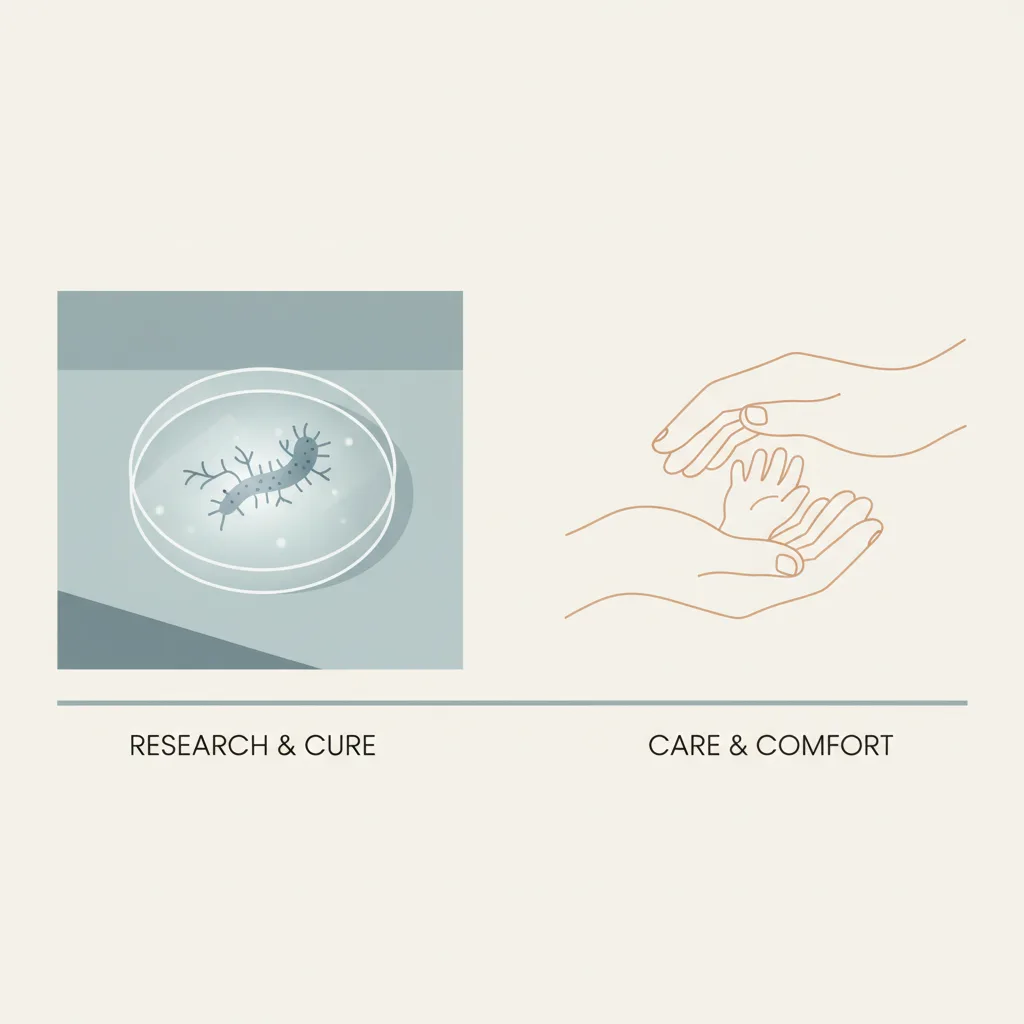
A flat vector illustration of a laboratory embryo dish alongside a simple outline of two adult hands holding a small hand

行動への後悔

体外受精に挑む

19%

不妊治療を受けた女性の約5人に1人(≈19%)が、中等度から重度の決定後悔を報告する――治療が子どもの誕生に至らなかった人に集中している

世界的に2回以上のIVFサイクルを受けたカップル(Verhaak et al. 2007系統的レビュー;ICMART世界ARTデータ)

最終IVF試行から18か月後

不作為への後悔

養子を迎える

5.0%

養子縁組をした親の約5%が重大な後悔を報告する(全国調査では87%が「間違いなく」再び養子を迎えると回答)。委託の中断・解消がより高いのは、年長児や特別な支援を要する子の養子縁組に限られる

国内および国際的な養親(US AFCARSデータ;Brodzinsky et al.レビュー)

養子受託から2年以内

この選択を後悔した割合

action dominates — 行動が優勢 — 多くは行動したことを後悔しています。

関連する決断

意味的に類似する決断 — 同じ領域、異なるトレードオフ。

健康

不妊治療を追求 vs. 子なしを受け入れる

この選択を後悔した割合

不作為が優勢

不作為の後悔が1.7倍高い

family

養子縁組 vs. 自ら育てる

この選択を後悔した割合

行動が優勢

行動の後悔が4.8倍高い

family

代理出産 vs. 子なし生活

この選択を後悔した割合

不作為が優勢

不作為の後悔が2.1倍高い

family

養子縁組を伝えるか隠すか

この選択を後悔した割合

不作為が優勢

不作為の後悔が4.0倍高い

family

卵子・精子の凍結 vs. 待機

この選択を後悔した割合

不作為が優勢

不作為の後悔が3.2倍高い

family

子供を持つ

この選択を後悔した割合

均衡

ほぼ均衡

family

もう一人 vs. 止める

この選択を後悔した割合

不作為が優勢

不作為の後悔が2.6倍高い

family

早期 vs. 晩期の親になること

この選択を後悔した割合

不作為が優勢

不作為の後悔が1.7倍高い

この決断の背後にあるリスク

この選択の根底にある確率。

Most single IVF transfers do not result in a live birth. The International Committee for Monitoring Assisted Reproductive Technology’s world report for treatment performed in 2017 and 2018 — 2.9 to 3.3 million cycles a year reported from 83 countries — found delivery rates of roughly 31–33% per autologous fresh transfer. Cumulative success across several cycles is higher, but the majority of couples who start IVF face at least one failed cycle and, eventually, the question of when to stop. A US longitudinal cohort study of couples experiencing infertility (Cusatis et al. 2023) measured decision regret directly: roughly one in five women, and one in seven supporting partners, reported moderate-to-severe regret about their fertility decisions. Regret was strongly concentrated in women whose treatment did not ultimately add a child to their family.

The adoption pathway shows a markedly different regret structure. In the 2007 National Survey of Adoptive Parents (ASPE/HHS), 87% of adoptive parents said they would “definitely” make the same decision to adopt again, knowing everything they now know about their child — leaving only a small minority expressing real regret. Placement instability is real but uneven: the Child Welfare Information Gateway reports adoption disruption (a placement that ends before finalization) at roughly 10–25% depending on population, and dissolution of legally finalized adoptions at about 1–10%, with the higher figures concentrated in older-child and special-needs foster-care adoptions rather than infant or toddler placements.

The critical framing issue is that IVF and adoption are rarely strict alternatives — most couples pursuing family formation consider IVF first, then adoption if IVF fails. The decision at the margin is usually not “IVF or adoption?” but “should we do another IVF cycle, or pivot to adoption?” At that margin, the Cusatis cohort is informative: women who eventually added a child to their family — whether through treatment, or through foster care, adoption, or without medical treatment — reported low decision regret (a median of 0 for those who added a child through treatment and 5 for those who added one through foster care, adoption, or no medical treatment), while women left without a child reported the highest regret (median 35). Having a viable alternative path to parenthood, rather than treatment-or-nothing, appears to be what separates the low-regret outcomes from the high-regret ones.

出典: 行動

根拠台帳

以下の各数値は各出典が報告した内容であり、引用した原文の抜粋と算出方法を記載しています。リンクをクリックして直接確認できます。

1/2 件の出典が引用元と一字一句一致することを独立して検証済み

  1. [1] Reproductive Health (BMC) — Decision regret among couples experiencing infertility: a mixed methods longitudinal cohort study 検証済み
    Decision regret among couples experiencing infertility: a mixed methods longitudinal cohort study

    See all 2 Likelier entries citing this source →

    統計値
    One in 5 women (≈19%) and 1 in 7 partners expressed moderate-to-severe decision regret after pursuing infertility treatment; women who did not add a child to their family had significantly higher regret than those who did
    抜粋
    “"Half (n = 61) of participants expressed no regret, which was similar by role (median 0 for women and supporting partners, F = .08; p = .77). One in 5 women and 1 in 7 partners expressed moderate-to-severe regret. Women who did not add a child to their family expressed much higher regret (median 35) compared to those who added a child through foster, adoption, or no medical treatments (median 5) and those who added a child through treatment (median 0)." ”
    出典データ
    2023-11-02
    アクセス日
    2026-06-30
    検証
    グラウンディング監査の際、抜粋を引用元から独立して再取得し、原文と一字一句一致することを確認しました。
    計算過程
    Cusatis et al. 2023, Reproductive Health 20:165 (DOI 10.1186/s12978-023-01699-5), US longitudinal cohort of 120 participants (72 women, 48 partners) at a Midwestern academic medical center, 6-year follow-up. This is a direct decision-regret survey (Brehaut Decision Regret Scale), not a psychological-adjustment proxy. "One in 5 women expressed moderate-to-severe regret" (19.4%) is the primary anchor for the action-side regret_rate (0.19). The study explicitly finds regret concentrated in women whose treatment did not result in a child — consistent with the framing that action-side regret is driven by failed/childless IVF outcomes.
  2. [2] Human Reproduction / ICMART — International Committee for Monitoring Assisted Reproductive Technology world report: assisted reproductive technology 2017 and 2018
    International Committee for Monitoring Assisted Reproductive Technology world report: assisted reproductive technology 2017 and 2018
    統計値
    Global ART (2017–2018): 2.9–3.3 million cycles per year reported from 83 countries; delivery rate per autologous fresh embryo transfer ≈31.3–32.5%, meaning most single fresh transfers do not result in a live birth
    抜粋
    “"A total of 2 913 498 cycles and 671 012 babies born were reported for treatment performed in 2017, increasing to 3 303 505 cycles and 728 383 babies born for treatment performed in 2018." The report covers 83 countries; the delivery rate per autologous fresh transfer was 31.3–32.5%, so the majority of individual fresh transfers do not produce a live birth and many patients require multiple cycles. ”
    出典データ
    2025-06-01
    アクセス日
    2026-06-30
    計算過程
    ICMART world report for ART performed in 2017 and 2018, published in Human Reproduction 40(6):1110–1126 (2025). Global ART data from 83 countries. Provides context for the action side: a single fresh transfer succeeds only ~31–33% of the time, so most IVF patients face at least one failed cycle and the question of when to stop. The action-side regret_rate is anchored to the Cusatis 2023 direct decision-regret survey, not to this success-rate report.

出典: 不作為

根拠台帳

以下の各数値は各出典が報告した内容であり、引用した原文の抜粋と算出方法を記載しています。リンクをクリックして直接確認できます。

1/2 件の出典が引用元と一字一句一致することを独立して検証済み

  1. [1] Child Welfare Information Gateway, US Children's Bureau — Discontinuity and Disruption in Adoptions and Guardianships
    Discontinuity and Disruption in Adoptions and Guardianships
    統計値
    Adoption disruption (placement ends before legal finalization) is estimated at ~10–25% of placements depending on population; dissolution of legally finalized adoptions occurs in roughly 1–10%, highest for older-child and special-needs/foster-care adoptions
    抜粋
    “Disruption refers to an adoption process that ends after the child is placed in an adoptive home but before the adoption is legally finalized; dissolution refers to the legal relationship being severed after finalization. Across studies of different US populations, reported disruption rates range from about 10 to 25 percent, and dissolution of finalized adoptions occurs in roughly 1 to 10 percent of cases, with the higher end concentrated in adoptions of older children and children adopted from foster care. ”
    出典データ
    2021-01-01
    アクセス日
    2026-06-30
    計算過程
    Child Welfare Information Gateway (US Children's Bureau, 2021), "Discontinuity and Disruption in Adoptions and Guardianships." Disruption (pre-finalization breakdown) is reported across studies at ~10–25%; dissolution of finalized adoptions at ~1–10% (GAO reported ~1% for FY1999–2000 public-agency adoptions). The inaction-side regret_rate (0.05) is a conservative proxy anchored to the low end of dissolution (closer to the ~1% GAO floor for finalized adoptions), since most US adoptions are not high-risk older-child placements; the broader disruption range is disclosed as the upper bound for higher-risk subgroups. Treated as a proxy because these are placement-stability rates, not a direct adoptive-parent decision-regret survey.
  2. [2] US Office of the Assistant Secretary for Planning and Evaluation (ASPE), HHS — Adoption USA: A Chartbook Based on the 2007 National Survey of Adoptive Parents 検証済み
    Adoption USA: A Chartbook Based on the 2007 National Survey of Adoptive Parents
    統計値
    87% of adopted children (across foster-care, private domestic, and international adoptions) have parents who said they would 'definitely' make the same decision to adopt again; implying low adoptive-parent decision regret
    抜粋
    “"Overall, 87 percent of adopted children have parents who said they would 'definitely' make the same decision to adopt their child, knowing everything then that they now know about their child." ”
    出典データ
    2009-07-01
    アクセス日
    2026-06-30
    検証
    グラウンディング監査の際、抜粋を引用元から独立して再取得し、原文と一字一句一致することを確認しました。
    計算過程
    "Adoption USA: A Chartbook Based on the 2007 National Survey of Adoptive Parents" (ASPE/HHS), nationally representative survey covering foster-care, private domestic, and international adoptions. 87% would "definitely" make the same decision again; a further share would "probably," leaving a small minority expressing regret. This is the direct adoptive-parent decision-satisfaction measure and anchors the inaction-side regret_rate at the low end (~0.05). Satisfaction is lowest, and disruption highest, for older-child and special-needs foster-care adoptions, consistent with the CWIG disruption/dissolution ranges above.

注意事項

IVF and adoption are not cleanly comparable options: IVF seeks a biologically related child while adoption provides a child who already exists. The choice between them is often experienced as sequential (try IVF first, then consider adoption) rather than simultaneous. The Gilovich action/inaction frame here is: IVF = active medical intervention with uncertain outcome vs. adoption = acceptance of an existing child without medical risk. Action-side regret is concentrated in failed IVF cases; couples who succeed at IVF have very low regret. The inaction-side (adoption) regret is concentrated in specific subgroups: older-age foster-care adoption with complex trauma histories has a higher disruption rate than infant adoption. The populations are also self-selected: couples who choose adoption typically have already accepted non-biological parenthood as acceptable; those who choose IVF have stronger preferences for biological connection. The regret rates should be interpreted as: given you're in the position of deciding between the two paths, what does the evidence suggest about where regret falls? International adoption is declining rapidly due to Hague Convention restrictions; the most relevant adoption pathway for most high-income-country applicants is domestic foster care or domestic infant adoption.

生データ: /api/decisions.json

このデバイスで最近見た項目