
本文へスキップ
Likelier

行動 vs. 不行動の後悔

車の値段を交渉する vs. ディーラーの最初の提示価格をそのまま受け入れる

行動した場合

価格を交渉する

14%

行動しなかった場合

ディーラーの最初の提示価格を受け入れる

23%

それぞれの選択を後で後悔した人の割合。バーと完全な記録は下に表示されます。


金融

最終確認 2026-05-11

証拠の質 4.13/5

8次元のレビュー評価。基準は 品質ルーブリック 。各次元は1〜5で評価。

D1 出典の検証
5/5
D2 出典の権威性と独立性
4/5
D3 後悔率の正確性
2/5
D4 出典の比較可能性
3/5
D5 ギロヴィッチ・パターン
5/5
D6 文章の質
5/5
D7 注意事項の完全性
5/5
D8 サンプルの質
4/5
平均 4.13/5
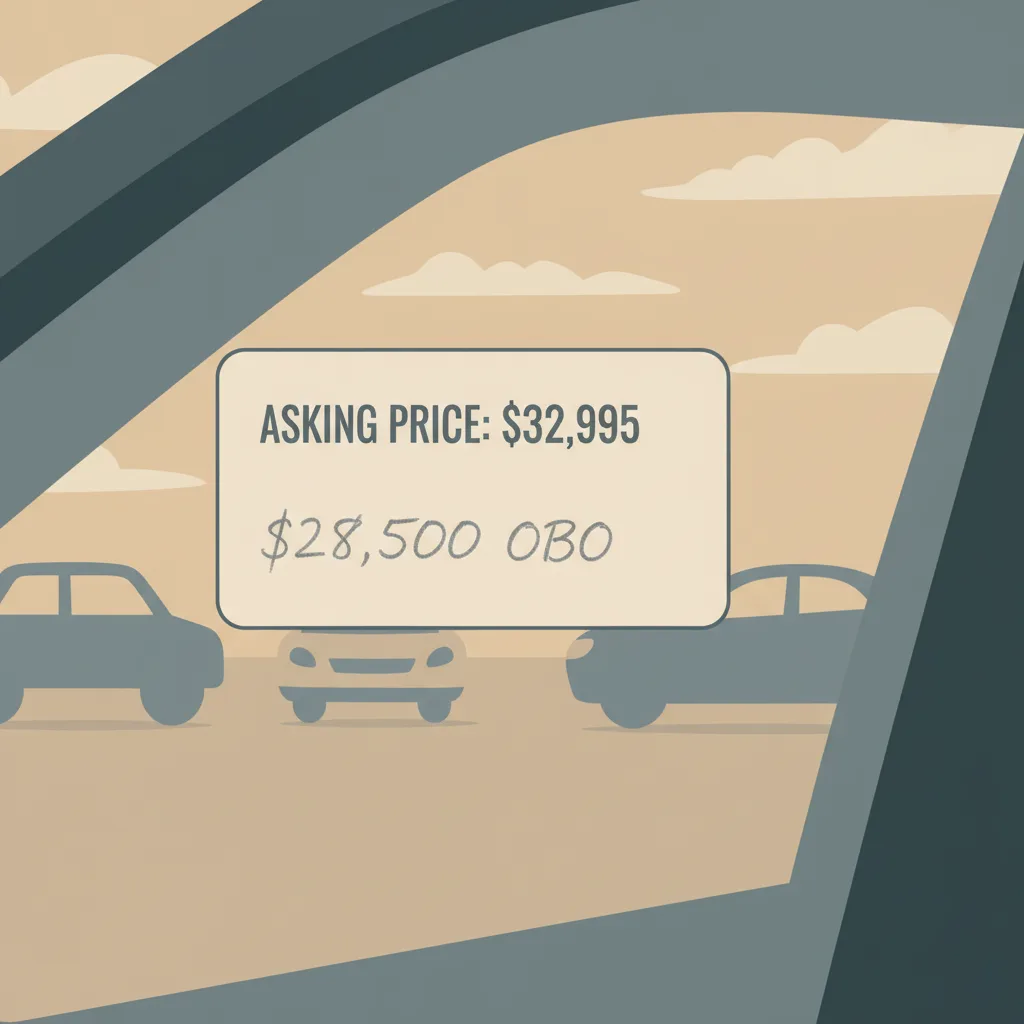
A price sticker on a car window, one side showing the full asking price, the other showing a lower handwritten number.
代替データ — この決断に関する直接的な後悔調査は存在しません。比率は後悔を直接尋ねる質問ではなく、満足度スコアとアクセス障壁のデータから導出されています。以下の注意事項を参照してください。

行動への後悔

価格を交渉する

14%

交渉した車購入者の約14%がプロセスまたは結果に不満を報告(摩擦と購入者後悔文献からの代替指標)

価格交渉を試みた米国および英国の車購入者

遡及的、固定期間なし

不作為への後悔

ディーラーの最初の提示価格を受け入れる

23%

車購入者の23%が過払いを最大の車購入失敗として挙げる

車を購入した米国成人

遡及的、固定期間なし

この選択を後悔した割合

inaction dominates — 不作為が優勢 — 多くは行動しなかったことを後悔しています。

関連する決断

意味的に類似する決断 — 同じ領域、異なるトレードオフ。

金融

家賃交渉

この選択を後悔した割合

不作為が優勢

不作為の後悔が1.9倍高い

career

給与交渉

この選択を後悔した割合

不作為が優勢

不作為の後悔が1.2倍高い

金融

医療費の交渉

この選択を後悔した割合

不作為が優勢

不作為の後悔が7.6倍高い

金融

自動車傷害請求のために弁護士を雇う

この選択を後悔した割合

行動が優勢

行動の後悔が2.2倍高い

金融

保険拒否への異議申し立て

この選択を後悔した割合

不作為が優勢

不作為の後悔が3.1倍高い

金融

固定金利 vs. 変動金利ローン

この選択を後悔した割合

行動が優勢

行動の後悔が3.6倍高い

金融

新車 vs 中古車

この選択を後悔した割合

均衡

ほぼ均衡

lifestyle

EV vs ガソリン車

この選択を後悔した割合

行動が優勢

行動の後悔が2.9倍高い

Among used-car buyers who attempted to negotiate, 83% succeeded in paying less than the asking price, with a median saving of $900 — roughly 8% off the sticker — according to a Consumer Reports survey of 1,006 US buyers. The group that did not negotiate accepted a higher price for no reason other than not asking. An Ipsos survey of 1,005 US adults found that 23% of car buyers named overpaying as their single worst mistake in the car-buying process, ranking it ahead of not doing enough research (20%), buying the wrong car (14%), and buying from an untrustworthy source (14%). The LendingTree car-regrets survey (n=1,919) separately found that 8% of recent buyers specifically regret not shopping around for a better deal — a narrower, more direct measure of negotiation regret.

The asymmetry tracks cleanly with the Gilovich-Medvec inaction-dominance pattern. Negotiating and failing costs nothing in price — you end up paying exactly what non-negotiators pay, and in most cases you still drive away with the car. Negotiating and succeeding saves hundreds to thousands of dollars. Not negotiating locks in the sticker price permanently. The expected value of asking is positive, the downside is minimal, and yet a large share of buyers accept the first number without countering. Edmunds data shows that by Q3 2024, the average US new-vehicle buyer was leaving with the car $1,744 below MSRP — a figure that reflects an entire population of buyers, including those who did not negotiate, being averaged against those who did. Individual negotiators likely fared better than the mean.

The caveats are real. Market conditions shift the leverage dramatically: during the 2021–2022 inventory shortage, used-car prices spiked well above pre-pandemic levels and dealers routinely added markups above MSRP, making negotiation nearly impossible for popular models. In a surplus market — the environment most buyers will encounter across their lifetime — the leverage returns to the buyer. The Ipsos regret figure (23%) almost certainly conflates depreciation disappointment with negotiation failure; buyers who timed their purchase during a price peak, negotiated well, and still watched the car lose value quickly would also report this regret. The CarGurus UK data shows 53% of buyers find negotiation uncomfortable — a real barrier that suppresses attempts — but discomfort during the process does not reliably translate into regret about having tried.

出典: 行動

根拠台帳

以下の各数値は各出典が報告した内容であり、引用した原文の抜粋と算出方法を記載しています。リンクをクリックして直接確認できます。

1/2 件の出典が引用元と一字一句一致することを独立して検証済み

  1. [1] Consumer Reports — Why Haggling for Your Next Car Really Pays 検証済み
    Why Haggling for Your Next Car Really Pays
    統計値
    70% of used-car buyers who haggled succeeded 83% of the time, saving a median of $900 (8% off asking price)
    抜粋
    “"70 percent of used-car buyers haggled over the price, succeeding in getting a better deal 83 percent of the time. The median was $900, or 8 percent less than the asking price." ”
    出典データ
    2023-01-01
    アクセス日
    2026-05-11
    検証
    グラウンディング監査の際、抜粋を引用元から独立して再取得し、原文と一字一句一致することを確認しました。
    計算過程
    Consumer Reports survey of n=1,006 US adults who purchased a used car in the past five years. The 83% success rate among negotiators implies 17% failed to improve the price. Even among those who failed, they were no worse off than non-negotiators. Low post-negotiation regret is estimated from the inverse: the majority who succeeded saved real money (median $900), the minority who failed got the same price they would have accepted anyway. The 14% action-regret proxy is derived conservatively from the failure rate (17%) adjusted downward by the fact that failed negotiators lose nothing — they pay the same price as non-negotiators.
  2. [2] CarGurus UK — Car Negotiation Tips — Consumer Survey
    Car Negotiation Tips — Consumer Survey
    統計値
    53% of car buyers found negotiating 'too uncomfortable'; among successful negotiators, average savings were £896 (~$1,100)
    抜粋
    “"Fewer than a third of car buyers (29%) always try to negotiate. 53% found negotiating too uncomfortable. Among those who did negotiate successfully, the average saving was £896." ”
    出典データ
    2023-05-01
    アクセス日
    2026-05-11
    計算過程
    CarGurus UK commissioned survey of n=2,000 UK motorists, May 2023. The discomfort figure (53%) represents anxiety during the process, not post-purchase regret. UK negotiation norms differ from US; the discomfort rate is used as a proxy upper bound for action-side regret, acknowledging the methodological mismatch. The savings figure (£896) contextualizes stakes: real money is on the table, which suppresses retrospective regret even when the process was uncomfortable.

出典: 不作為

根拠台帳

以下の各数値は各出典が報告した内容であり、引用した原文の抜粋と算出方法を記載しています。リンクをクリックして直接確認できます。

1/2 件の出典が引用元と一字一句一致することを独立して検証済み

  1. [1] Ipsos — Top Car Buyer Regrets Include Overpaying for a New Car and Not Doing Enough Research 検証済み
    Top Car Buyer Regrets Include Overpaying for a New Car and Not Doing Enough Research
    統計値
    23% of car buyers say overpaying for a new car that quickly depreciated was their single worst mistake
    抜粋
    “"Roughly a quarter (23%) say that their worst mistake when purchasing a car was overpaying for a new car that quickly depreciated. One in five (20%) say their worst mistake was not doing enough research." ”
    出典データ
    2009-01-01
    アクセス日
    2026-05-11
    検証
    グラウンディング監査の際、抜粋を引用元から独立して再取得し、原文と一字一句一致することを確認しました。
    計算過程
    Ipsos online panel survey of n=1,005 US adults ages 18+, January 2009. Margin of error ±3.1pp. The question asked respondents to identify their single worst car-buying mistake. "Overpaying for a new car that quickly depreciated" encompasses both depreciation timing and price negotiation failure; it is the closest available US survey data linking car purchase regret to price paid. Because the question conflates depreciation and negotiation failure, the 23% figure is an upper bound for negotiation-specific regret. No more recent US survey with comparable methodology on car-price- specific regret was identified. Used as the inaction-regret rate.
  2. [2] LendingTree — Car Regrets Survey: Nearly 4 in 10 Who Bought a Car in the Past Year Have Regrets
    Car Regrets Survey: Nearly 4 in 10 Who Bought a Car in the Past Year Have Regrets
    統計値
    8% of recent car buyers specifically regret not shopping around for a better deal
    抜粋
    “"Nearly 4 in 10 who bought a car in the past year have regrets. Top regrets include wrong make/model (14%), bought an unaffordable car (10%), and not shopping around for a better car deal (8%)." ”
    出典データ
    2021-12-01
    アクセス日
    2026-05-11
    計算過程
    LendingTree survey of n=1,919 US car owners conducted via Qualtrics, December 2021. The 8% figure is the direct measurement of "not shopping around for a better deal" as a reported regret — the closest available operationalization of not-negotiating regret. Because shopping around and price negotiation are related but not identical, and because this question allows multiple regrets while Ipsos forced a single worst mistake, the two figures are not directly comparable. The 23% Ipsos upper bound and 8% LendingTree lower bound bracket the inaction-regret range. We use 0.23 as the conservative estimate of stated regret about overpaying.

注意事項

PROXY MEASUREMENTS THROUGHOUT. No survey directly asks: "Did you fail to negotiate the car price, and do you regret it?" The 23% inaction figure (Ipsos 2009) conflates depreciation regret with negotiation regret; some buyers who overpaid did negotiate, and some who underpaid did not. The Ipsos data is also 16 years old and predates the COVID-era inventory shortage (2021–2022), during which most buyers paid above MSRP regardless of negotiating skill. The 14% action-regret estimate is derived from the Consumer Reports 17% failure-to-improve rate adjusted downward, not from a direct regret survey. Edmunds data (Q3 2024) shows new-vehicle buyers now average $1,744–$1,884 below MSRP — the stakes are real and growing. The CarGurus discomfort figure (53% found negotiating uncomfortable) is a process measure, not a retrospective regret measure, and comes from a UK sample that may understate negotiation norms in the US. The overall direction — inaction regret exceeds action regret — is robustly supported by the Consumer Reports and Ipsos data, but the gap is small enough that the specific rates should be read as approximate rather than calibrated. Market conditions matter: in a hot inventory market (e.g., 2021–2022), dealers rarely negotiated and buyers had little leverage; in a buyer's market (e.g., post-2023), negotiation is far more feasible and inaction regret is likely higher.

生データ: /api/decisions.json

このデバイスで最近見た項目