


本文へスキップ
Likelier

行動 vs. 不行動の後悔

成人は無症状の親知らずを予防的に抜いたことを後悔するのか、それとも残して経過観察したことを後悔するのか?

行動した場合

無症状の親知らずを予防的に抜歯する

36%

行動しなかった場合

無症状の親知らずを残して経過観察する

64%

それぞれの選択を後で後悔した人の割合。バーと完全な記録は下に表示されます。


健康

最終確認 2026-07-14

証拠の質 4.25/5

8次元のレビュー評価。基準は 品質ルーブリック 。各次元は1〜5で評価。

D1 出典の検証
5/5
D2 出典の権威性と独立性
4/5
D3 後悔率の正確性
3/5
D4 出典の比較可能性
5/5
D5 ギロヴィッチ・パターン
5/5
D6 文章の質
4/5
D7 注意事項の完全性
4/5
D8 サンプルの質
4/5
平均 4.25/5
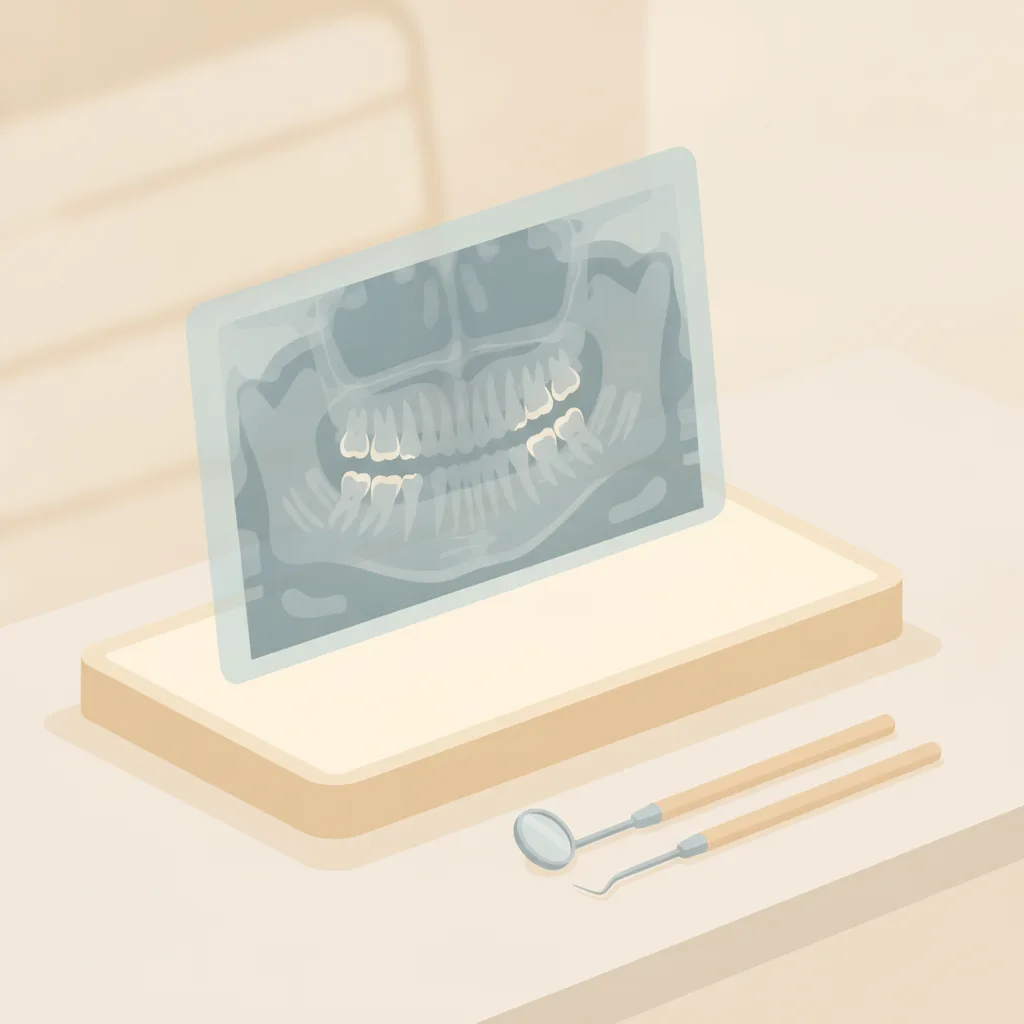
A panoramic dental radiograph propped on a lightbox beside a mirror probe
代替データ — この決断に関する直接的な後悔調査は存在しません。比率は後悔を直接尋ねる質問ではなく、満足度スコアとアクセス障壁のデータから導出されています。以下の注意事項を参照してください。

行動への後悔

無症状の親知らずを予防的に抜歯する

36%

予防的に抜かれた親知らずの約36%は18年以内に抜歯を必要としなかったはず——問題を起こさなかった歯への手術(合併症率約4%)(不要手術の代理指標)

無症状の第三大臼歯を持つ若年成人。18年累積抜歯率の補数

18年の時間軸で

不作為への後悔

無症状の親知らずを残して経過観察する

64%

残された無症状の親知らずの約64%は結局18年以内に抜歯される——経過観察は手術を避けるのではなく先送りにすることが多い(抜歯先送りの代理指標)

無症状の第三大臼歯を残した若年成人。割合は Bouloux 2015 が統合した7研究の累積値(各研究≥50名)に基づき、単一コホートには依拠しない

18年間の追跡での累積値

この選択を後悔した割合

inaction dominates — 不作為が優勢 — 多くは行動しなかったことを後悔しています。

関連する決断

意味的に類似する決断 — 同じ領域、異なるトレードオフ。

健康

疑わしいほくろの切除 対 経過観察

この選択を後悔した割合

不作為が優勢

不作為の後悔が2.7倍高い

健康

リスク低減乳房切除 対 監視

この選択を後悔した割合

均衡

ほぼ均衡

健康

ティーンとして喫煙を始めること

この選択を後悔した割合

行動が優勢

行動の後悔が36.0倍高い

健康

長寿追求 vs 老化受容

この選択を後悔した割合

不作為が優勢

不作為の後悔が1.5倍高い

健康

卵管結紮術

この選択を後悔した割合

行動が優勢

行動の後悔が1.4倍高い

健康

運動習慣

この選択を後悔した割合

不作為が優勢

不作為の後悔が13.4倍高い

健康

扁桃摘出術 対 経過観察

この選択を後悔した割合

不作為が優勢

不作為の後悔が3.1倍高い

健康

LASIK眼科手術

この選択を後悔した割合

不作為が優勢

不作為の後悔が6.3倍高い

Keeping asymptomatic wisdom teeth and watching is the choice that most often fails to close the matter: across seven longitudinal studies, about 64% of retained symptom-free third molars are extracted within 18 years, at a steady rate of roughly 3% per year (Bouloux et al., 2015). A same-era 18-year cohort found 73% of the teeth that were unerupted at baseline came out before follow-up ended (Ventä et al., 2004), though that study’s follow-up window overlaps the period Bouloux pooled, so the two are better read as consistent than as independent. The reasons are ordinary: caries, gum disease, later inflammation, and part of that 64% is care that was simply timed to need rather than regretted. The practical upshot is that watching usually defers the operation rather than avoiding it, and the extraction then falls later in life rather than in early adulthood.

Removing the tooth up front does not escape regret either; it relocates it. Because prophylactic removal is itself an extraction, its regret falls on the mirror-image group: the roughly 36% of removed teeth that would have stayed trouble-free over the same 18 years, operated on for nothing. Every one of those extractions carries about a 4.2% chance of a complication, overwhelmingly dry socket, with infection and jaw-joint symptoms far behind (Chen et al., 2021). The Cochrane review found only two studies and 493 people bearing on whether disease-free impacted wisdom teeth should come out at all, and rated the evidence very low certainty (Ghaeminia et al., 2020). NICE went further in 2000, concluding that prophylactic removal of pathology-free impacted third molars should be discontinued in the NHS — a position US practice frequently sets aside.

The two figures are close on purpose, because the decision is close. Both come from the same fact: about two-thirds of these teeth eventually need removal and about a third do not. Watch, and you carry a 64% chance of the surgery you were trying to avoid; remove, and you carry a 36% chance the surgery was needless. Severity runs opposite to frequency — the deferred operation is common but often appropriate, while the unnecessary one is rarer but incurred up front against a benefit the evidence cannot show. What survives the symmetry is a modest lean, consistent with Gilovich and Medvec’s temporal asymmetry: over a long horizon, more people end up back in the chair than are spared it. Whether that reads as regret or as a reasonable bet that mostly postponed a minor operation is the judgement the evidence declines to settle.

出典: 行動

根拠台帳

以下の各数値は各出典が報告した内容であり、引用した原文の抜粋と算出方法を記載しています。リンクをクリックして直接確認できます。

  1. [1] Journal of Oral and Maxillofacial Surgery (Bouloux et al. 2015) — What is the risk of future extraction of asymptomatic third molars? A systematic review
    What is the risk of future extraction of asymptomatic third molars? A systematic review
    統計値
    Seven longitudinal studies, follow-up 1 to 18 years: cumulative extraction incidence rose from 5% at 1 year to 64% at 18 years — leaving ~36% of retained asymptomatic third molars still not extracted at 18 years
    抜粋
    “"The mean incidence rate for M3 extraction of previously asymptomatic M3s was 3.0% annually (range 1 to 9%). The cumulative incidence rate for M3 removal ranged from 5% at 1 year to 64% at 18 years. ... The cumulative risk of M3 extraction for young adults with asymptomatic M3s is sufficiently high to warrant its consideration when reviewing the risks and benefits of M3 retention as a management strategy." ”
    出典データ
    2015-05-01
    アクセス日
    2026-07-14
    計算過程
    The action-side proxy is the mirror image of the inaction figure. If 64% of retained asymptomatic third molars are extracted by 18 years, then roughly 36% are not — those teeth would have stayed trouble-free over that horizon, so removing them prophylactically was, in hindsight, an operation for nothing. We anchor the action proxy at 0.36, the complement of Bouloux's 64% cumulative extraction rate. This is an "unnecessary-surgery" proxy, not a regret survey, and 0.36 is an upper bound: over a full lifetime the never-needed fraction shrinks, because some of that 36% would eventually have required extraction after 18 years. Using the same dataset for both sides keeps the two proxies on one axis.
  2. [2] National Institute for Health and Care Excellence (NICE), UK — Guidance on the extraction of wisdom teeth (Technology appraisal guidance TA1)
    Guidance on the extraction of wisdom teeth (Technology appraisal guidance TA1)
    統計値
    National guidance: the practice of prophylactic removal of pathology-free impacted third molars should be discontinued in the NHS; surgery limited to teeth with evidence of pathology
    抜粋
    “"The practice of prophylactic removal of pathology-free impacted third molars should be discontinued in the NHS. ... Surgical removal of impacted third molars should be limited to patients with evidence of pathology. ... A first episode of pericoronitis, unless particularly severe, should not be considered an indication for surgery." ”
    出典データ
    2000-03-27
    アクセス日
    2026-07-14
    計算過程
    The policy basis for treating prophylactic removal as regret-prone. A national appraisal body concluded that routinely removing symptom-free impacted third molars should stop, because the benefit is unproven while every extraction carries surgical risk. US practice frequently diverges, which is why this decision is genuinely contested. Establishes the frame; not a rate.
  3. [3] PLOS ONE (Chen, Chi & Lee 2021) — Revisit incidence of complications after impacted mandibular third molar extraction: A nationwide population-based cohort study
    Revisit incidence of complications after impacted mandibular third molar extraction: A nationwide population-based cohort study

    See all 2 Likelier entries citing this source →

    統計値
    Overall cumulative complication rate 4.2% among 16,609 impacted lower-third-molar extractions; dry socket 3.66%, surgical-site infection 0.17%, temporomandibular-joint symptoms 0.41%
    抜粋
    “"The overall cumulative complication rate for iLM3 extraction was 4.2%. ... The incidence of DS was the highest (3.66%) ... the incidence of SSI was very low (0.17%) ... about 4 out of 1000 patients had temporomandibular joint symptoms and sought treatment (0.41%)." ”
    出典データ
    2021-02-22
    アクセス日
    2026-07-14
    計算過程
    Quantifies what an unnecessary extraction costs. Every prophylactic removal — including the ~36% that were never needed — runs about a 4.2% chance of a complication, dry socket being the commonest and generally self-limiting. Permanent nerve injury is rarer, a few per thousand. Note the population: this cohort is all impacted lower-molar extractions, mixed symptomatic and asymptomatic, not solely prophylactic cases, so the 4.2% is a general operative-risk figure, not a rate specific to the unnecessary subset. Supplies the severity of the action harm, not its frequency.
  4. [4] Cochrane Database of Systematic Reviews (Ghaeminia et al. 2020, CD003879) — Surgical removal versus retention for the management of asymptomatic disease-free impacted wisdom teeth
    Surgical removal versus retention for the management of asymptomatic disease-free impacted wisdom teeth
    統計値
    Two included studies (one RCT with 77 adolescent participants analysed; one prospective cohort of 416 healthy males aged 24–84): only low- to very-low-certainty evidence; insufficient to determine whether asymptomatic disease-free impacted wisdom teeth should be removed or retained
    抜粋
    “"This review update includes the same two studies that were identified in our previous version of the review ... We found only low- to very-low-certainty evidence of the effects of removal compared with retention ... Insufficient evidence is available to determine whether asymptomatic disease-free impacted wisdom teeth should be removed or retained." ”
    出典データ
    2020-05-04
    アクセス日
    2026-07-14
    計算過程
    The evidentiary weight behind the action-side regret framing. The benefit a prophylactic extraction is meant to buy — preventing future disease — cannot be demonstrated: the whole randomised-plus-cohort evidence base is two studies and 493 participants, rated low to very low certainty. This is why removing a symptom-free tooth is treated as regret-prone rather than clearly protective. Establishes the strength of the evidence, not a rate.

出典: 不作為

根拠台帳

以下の各数値は各出典が報告した内容であり、引用した原文の抜粋と算出方法を記載しています。リンクをクリックして直接確認できます。

  1. [1] Journal of Oral and Maxillofacial Surgery (Bouloux et al. 2015) — What is the risk of future extraction of asymptomatic third molars? A systematic review
    What is the risk of future extraction of asymptomatic third molars? A systematic review
    統計値
    Seven longitudinal studies, follow-up 1 to 18 years: mean extraction incidence 3.0% per year (range 1–9%); cumulative extraction incidence rose from 5% at 1 year to 64% at 18 years
    抜粋
    “"The mean incidence rate for M3 extraction of previously asymptomatic M3s was 3.0% annually (range 1 to 9%). The cumulative incidence rate for M3 removal ranged from 5% at 1 year to 64% at 18 years. ... The cumulative risk of M3 extraction for young adults with asymptomatic M3s is sufficiently high to warrant its consideration when reviewing the risks and benefits of M3 retention as a management strategy." ”
    出典データ
    2015-05-01
    アクセス日
    2026-07-14
    計算過程
    The inaction-side proxy. Retained asymptomatic third molars are extracted at about 3% per year, so the cumulative share removed climbs to 64% by 18 years. We anchor the inaction proxy at 0.64, taken directly from this figure. The regret construct: watching does not usually spare the surgery, it defers it, and the extraction then happens later in life. (Conventional oral-surgery teaching holds that later extraction in an older patient is harder, though Chen 2021 — cited below — found no age association with complications in its own cohort, so we do not lean on that claim.) This is a "needed extraction anyway" rate, not a survey asking whether people regret having waited, and part of that 64% is appropriately-timed care rather than a mistake.
  2. [2] Journal of Oral and Maxillofacial Surgery (Ventä, Ylipaavalniemi & Turtola 2004) — Clinical outcome of third molars in adults followed during 18 years
    Clinical outcome of third molars in adults followed during 18 years
    統計値
    118 subjects followed from mean age 20 to 39: 73% of initially unerupted third molars and 64% of initially partially erupted third molars were removed during the 18-year follow-up (maxilla and mandible combined)
    抜粋
    “"Most of the initially unerupted third molars were removed during the follow-up period (73%, maxilla and mandible together). ... More than half of the initially partially erupted third molars were removed during the follow-up period (64%, maxilla and mandible together)." ”
    出典データ
    2004-02-01
    アクセス日
    2026-07-14
    計算過程
    A same-order-of-magnitude 18-year cohort: 118 adults tracked from a mean age of 20 to 39, most third molars unerupted at baseline ending up removed (roughly two-thirds to three-quarters over ~18 years). Treat this as consistency, not clean independent replication: Bouloux 2015 is a systematic review whose only 18-year datapoint plausibly draws on this same cohort, so we cannot confirm this is a wholly separate measurement of the 64%. Small sample; supports the direction of the inaction proxy, not an independent rate.

注意事項

どちらの数字も同じ基礎事実——残された無症状の第三大臼歯のおよそ64%が18年以内に抜歯される(Bouloux 2015。Ventä 2004 のコホートとも整合するが、その18年の観察期間は Bouloux が統合した研究と重複している可能性がある)——から導かれた代理指標であり、同じ軸の上にあるが、いずれも後悔の調査ではない。不作為側の64%は「結局は手術が必要だった」率であり、作為側の36%はその補数、すなわち予防的に抜かれた歯のうち同じ期間なら静かなままだったはずの割合——何のためでもなかった手術——である。比較が意図的に接近しているのは、選択そのものが接戦だからだ。予防的抜歯はそれ自体が100%の抜歯なので、「手術を避ける」軸では経過観察が悪化することは決してない——約36%の確率で手術が一度も不要になり、約64%の確率でどのみち受けたはずの手術を、ただ後で受けることになる。だからデルタは一方的ではなく穏やかで、どちらの側もすっきりした勝者にはならない。重症度は頻度と逆に走る。作為の害は前払いで、より若く手術しやすい口に対して被り、その見返りとなる利益は Cochrane レビュー(Ghaeminia 2020——2研究493名のみ、確実性は非常に低い)が示せない。不作為の害はより頻繁だが多くは単なる先送りであり、64%の一部は歯が本当に病変を起こした後の適時のケアであって、後悔された過ちではない。作為側の36%が上限である理由は2つある。第一に、生涯で見れば残された歯のうち抜歯が必要になるものは増え、「一度も不要」の割合は縮む。第二に、この数字は保持コホートの率を借用しているが、実際に予防的抜歯の対象に選ばれる歯は無作為抽出ではない——臨床医はリスクの高い解剖学的条件(深い埋伏、近心傾斜、第二大臼歯との緊密な接触)を持つ歯を抜く傾向があり、そうした歯は後にトラブルを起こしやすい。したがって実際に抜かれる歯のうち「一度も不要」の割合はおそらく36%を下回り、この治療への選択バイアスは作為側に不利に働く。Chen の4.2%の合併症率は、症状の有無を問わないすべての埋伏下顎大臼歯抜歯からのものであり、予防的症例だけのものではない。これは本当に見解の分かれる決定である——NICE は2000年に、病変のない埋伏第三大臼歯の予防的抜歯を NHS では中止すべきと結論づけたが、米国の診療ではしばしば抜歯される。集団は台湾、フィンランド、および国際統合であり、米国ではない。不作為が優勢という方向は Gilovich and Medvec の時間的非対称性の枠組みと整合するが、ここではその差は小さく、よくある先送りと、それよりまれな前払いの不要手術をどう重み付けるかに懸かっている。

生データ: /api/decisions.json

このデバイスで最近見た項目