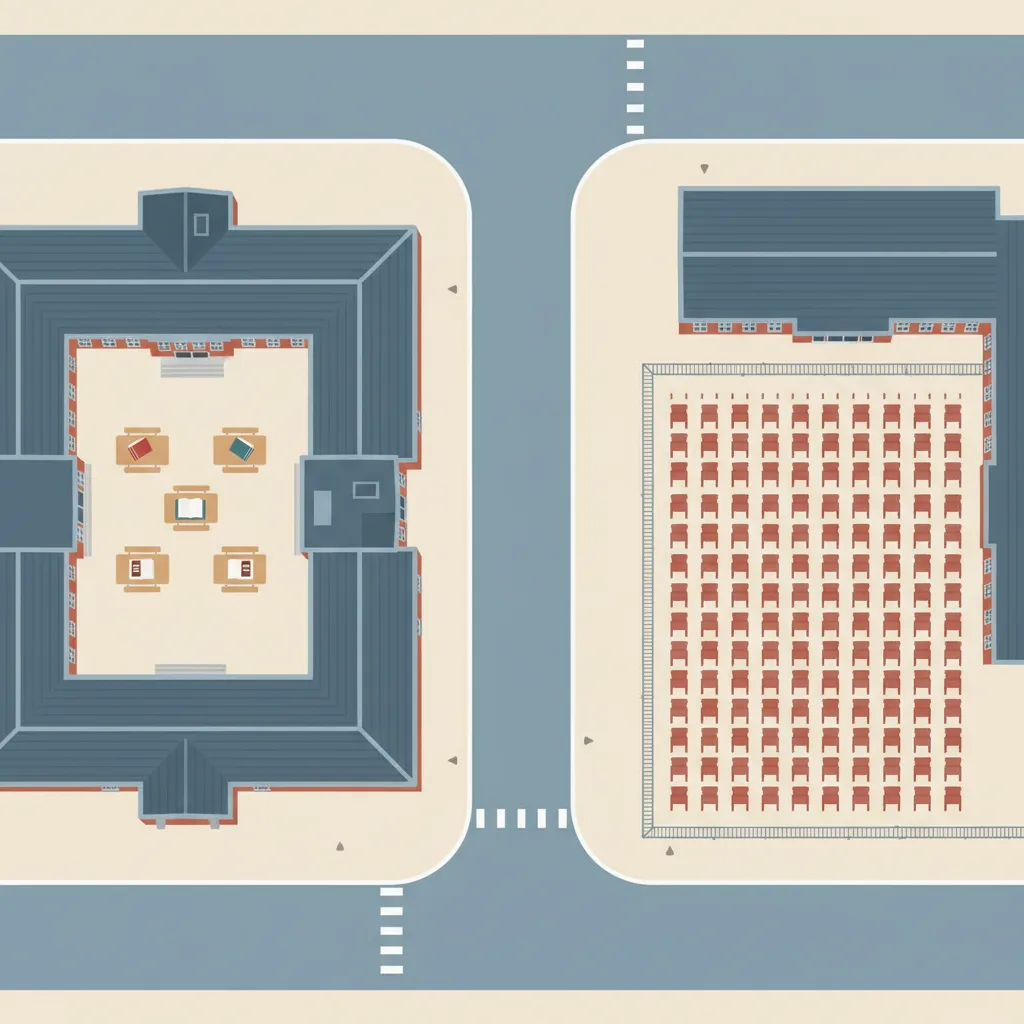
Kinderen veel vrijheid geven om zelfstandig te bewegen en te verkennen vs hun activiteiten en verblijfplaats nauwlettend in de gaten houden
Als je handelt
Nauwe supervisie / helikopterouderschap
45%
Als je niets doet
Vrijgelaten / zelfstandig opvoeden
20%
Percentage dat later spijt heeft van elke keuze. De balken en het volledige overzicht staan hieronder.
Familie
Laatst beoordeeld 2026-06-14
Kwaliteit van bewijs 4.63/5
Beoordelingsscore op acht dimensies volgens de
kwaliteitsrubriek
. Elke dimensie krijgt een score van 1 tot 5.
D1 Bronverificatie
5/5
D2 Autoriteit en onafhankelijkheid van bronnen
5/5
D3 Nauwkeurigheid van spijtcijfer
2/5
D4 Vergelijkbaarheid van bronnen
5/5
D5 Gilovich-patroon
5/5
D6 Prozakwaliteit
5/5
D7 Volledigheid van voorbehouden
5/5
D8 Steekproefkwaliteit
5/5
Gemiddelde4.63/5
Proxygegevens — er bestaat geen directe spijtenquête voor deze beslissing. De percentages zijn afgeleid van tevredenheidsscores en toegangsdrempelgegevens in plaats van vragen die direct naar spijt vroegen. Zie opmerkingen hieronder.
Spijt van handelen
Nauwe supervisie / helikopterouderschap
45%
45% van Amerikaanse ouders identificeren zichzelf als geneigd om overbeschermend te zijn (zelfidentificatie proxy)
Amerikaanse ouders met kinderen onder 18, nationaal representatief
retrospectief, enquête Sept–Okt 2022
Spijt van nalaten
Vrijgelaten / zelfstandig opvoeden
20%
20% van Amerikaanse ouders zeggen dat ze geneigd zijn hun kinderen te veel vrijheid te geven (zelfidentificatie proxy)
Amerikaanse ouders met kinderen onder 18, nationaal representatief
45% of US parents self-identify as tending to be overprotective, per Pew
Research Center’s nationally representative 2023 survey of 3,757 parents — more
than double the 20% who say they tend to give too much freedom. Both figures
emerge from the same instrument and the same sample, making this one of the
cleaner action-vs-inaction comparisons available in the parenting literature.
The outcome research reinforces the direction: McCoy, Dimler, and Rodrigues
(2025) aggregated 53 studies and 111 effect sizes in the Journal of Adult
Development and found helicopter parenting consistently associated with
increased anxiety and depression and reduced self-efficacy, academic adjustment,
and regulatory skills in emerging adults.
The case against excessive independence is real but narrow. A handful of studies
find that extended unsupervised time correlates with modestly elevated risk of
externalizing problems in younger children. Yet Gray, Lancy, and Bjorklund (2023) reviewed
decades of evidence in The Journal of Pediatrics and concluded the opposite
dynamic is the dominant public-health concern: declining opportunities for
independent activity are a primary driver of rising childhood anxiety and
depression. The world has also become objectively safer for children since the
1980s — rates of child abduction and traffic fatalities have fallen substantially
— even as parental supervision has intensified. The gap between objective risk
and perceived risk is itself a well-documented phenomenon in the parenting
literature.
The Pew data capture a self-aware tension that Gilovich’s framework would
predict: action regrets (having hovered too much) tend to feel more acute in
the present because the costs — a child who cannot order at a restaurant,
negotiate a conflict, or tolerate brief discomfort — are visible day to day,
whereas inaction regrets (having allowed too much freedom) are more abstract
and harder to attribute to a specific parenting choice. Neither figure here is
a retrospective regret rate; both are self-identification proxies from a moment
in time, and both undercount the true share of parents who feel some measure
of dissatisfaction with their approach. The C.S. Mott Children’s Hospital
Poll (2023) found that four in five parents of 9–11-year-olds agreed free
time without adult supervision is beneficial, yet fewer than half permitted
unsupervised neighbourhood activities — suggesting a large group of parents
who believe one thing and do another, and who may not yet have labelled
their own behaviour as overprotective.
Bronnen: handelen
Bronnenverantwoording
Elk getal hieronder is wat elke bron rapporteerde, met het letterlijke citaat waarop we ons baseerden en hoe we tot ons cijfer kwamen. Klik op een link om rechtstreeks te verifiëren.
1/2 bronnen onafhankelijk woordelijk geverifieerd tegenover de geciteerde bron
[1]Pew Research Center (Minkin & Horowitz 2023) — Parenting in America Today: A Survey Report (2023)
Geverifieerd
↗ 1 other entry
Primaire studie
More than four-in-ten parents (45%) say they tend to be overprotective, compared with 20% who say they tend to give too much freedom
Fragment
“"More than four-in-ten parents (45%) say they tend to be overprotective, compared with 20% who say they tend to give too much freedom. About half of mothers (51%) say they are the type of parent who tends to be overprotective, compared with 38% of fathers."
”
Brongegevens van
2023-01-24
Geraadpleegd
2026-05-02
Verificatie
Fragment onafhankelijk opnieuw opgehaald en woord voor woord bevestigd tegenover de geciteerde bron tijdens onze onderbouwingsaudit.
Berekening
Pew Research Center nationally representative survey of 3,757 US parents with children under 18, collected Sept 20–Oct 2, 2022. Among all parents, 45% self-describe as tending to be overprotective. We use this as the action-side proxy: parents who recognise their own tendency toward over-supervision — a weaker claim than retrospective regret but the closest available population-level measure. The same instrument, same sample, and same question set also yields the inaction-side figure (20% give too much freedom), making it the cleanest mirror comparison available in the literature.
[2]Journal of Adult Development (McCoy, Dimler & Rodrigues 2025) — Parenting in Overdrive: A Meta-analysis of Helicopter Parenting Across Multiple Indices of Emerging Adult Functioning↗ 1 other entry
Vakgenoten-beoordeeld
Analysis of 53 studies and 111 effect sizes found helicopter parenting associated with increased internalizing behaviors and reduced academic adjustment, self-efficacy, and regulatory skills
Fragment
“"An analysis of 53 studies and 111 effect sizes revealed that helicopter parenting was associated with increased internalizing behaviors and reduced academic adjustment, self-efficacy and regulatory skills. Parent gender did not moderate these associations."
”
Brongegevens van
2024-09-18
Geraadpleegd
2026-05-02
Berekening
McCoy, Dimler & Rodrigues (2024/2025) meta-analysis published in the Journal of Adult Development. This is an outcomes study, not a regret survey; it contextualises why the action-side proxy carries regret-adjacent weight — helicopter-parented children show measurably worse functioning across anxiety, depression, academic adjustment, and self-efficacy, supporting the direction of the action-side interpretation.
Bronnen: niet handelen
Bronnenverantwoording
Elk getal hieronder is wat elke bron rapporteerde, met het letterlijke citaat waarop we ons baseerden en hoe we tot ons cijfer kwamen. Klik op een link om rechtstreeks te verifiëren.
1/2 bronnen onafhankelijk woordelijk geverifieerd tegenover de geciteerde bron
[1]Pew Research Center (Minkin & Horowitz 2023) — Parenting in America Today: A Survey Report (2023)
Geverifieerd
↗ 1 other entry
Primaire studie
20% of parents say they tend to give their children too much freedom, vs 45% who say they tend to be overprotective
Fragment
“"More than four-in-ten parents (45%) say they tend to be overprotective, compared with 20% who say they tend to give too much freedom. About half of mothers (51%) say they are the type of parent who tends to be overprotective, compared with 38% of fathers."
”
Brongegevens van
2023-01-24
Geraadpleegd
2026-05-02
Verificatie
Fragment onafhankelijk opnieuw opgehaald en woord voor woord bevestigd tegenover de geciteerde bron tijdens onze onderbouwingsaudit.
Berekening
Same Pew 2023 nationally representative survey of 3,757 US parents. Among all parents, 20% self-describe as tending to give too much freedom — the mirror counterpart of the action-side 45% from the identical question. The shared instrument and sample eliminate cross-survey framing bias that would otherwise undermine comparison. We use 20% as the inaction-side proxy: parents who recognise their own tendency toward under-supervision — again a weaker claim than direct regret but the cleanest available measure.
[2]The Journal of Pediatrics (Gray, Lancy & Bjorklund 2023) — Decline in Independent Activity as a Cause of Decline in Children's Mental Well-being: Summary of the Evidence↗ 1 other entry
Vakgenoten-beoordeeld
Decades-long decline in children's independent activity is proposed as a primary cause of rising anxiety and depression among children and teens
Fragment
“"A primary cause of the rise in mental disorders is a decline over decades in opportunities for children and teens to play, roam, and engage in other activities independent of direct oversight and control by adults. Although well intended, adults' drive to guide and protect children has deprived them of the independence they need for mental health."
”
Brongegevens van
2023-02-01
Geraadpleegd
2026-05-02
Berekening
Gray, Lancy & Bjorklund (2023) review in The Journal of Pediatrics. This is an outcomes study, not a regret survey; it contextualises the inaction side by showing that reduced adult supervision is associated with better child mental health outcomes, making the inaction-side regret rate structurally lower than the action-side rate. It supports the direction of the inaction-side proxy without providing a head-count.
Kanttekeningen
Geen van beide cijfers is een directe spijtmeting — beide zijn zelfidentificatieproxies, gemarkeerd als zodanig in regret_display. De Pew 2023-vraag vraagt hoe ouders hun eigen neiging beschrijven ("geneigd om overbeschermend te zijn" vs "geneigd om te veel vrijheid te geven"); een neiging herkennen is een zwakkere claim dan er retrospectief spijt van hebben. De spiegelframing van één instrument en 3.757-ouder sample is methodologisch het schoonste beschikbaar: beide percentages zijn afgeleid uit dezelfde vragenset, wat cross-survey framingbias elimineert die de meeste andere entries in deze collectie plaagt. Het 45%-cijfer vertegenwoordigt een opvallende daling van 2015, toen 62% van Amerikaanse ouders zichzelf als ten minste soms overbeschermend beschreven — wat suggereert dat het label gevoelig is voor verschuivende sociale normen rond intensief ouderschap, niet alleen ouderschapsgedrag. Geen grootschalige enquête heeft direct ouders gevraagd of ze spijt hebben van te dicht toezicht of te veel onafhankelijkheid geven; uitgebreide zoeking bevestigt deze kloof in de literatuur. De uitkomstenliteratuur (McCoy et al. 2024 meta-analyse; Gray et al. 2023) toont consistent negatieve gevolgen van helikopterouderschap, wat de actie-domineert richting versterkt, maar uitkomstdata en spijtdata zijn aparte constructen. De C.S. Mott Children's Hospital National Poll (augustus 2023, n=1.044 ouders van kinderen leeftijd 5–11) documenteerde een grote houding-actie kloof — vier op vijf ouders van 9–11-jarigen zijn het ermee eens dat vrije tijd zonder toezicht goed is, maar minder dan de helft staat onbegeleide buurtactiviteiten toe — wat suggereert dat de 20% die zichzelf identificeren als te veel vrijheid gevend mogelijk het werkelijke aandeel wiens gedrag neigt naar onafhankelijkheid ondertelt. Enquêtedata komen uit Amerikaanse samples; ouderschapsnormen, wetgevingskaders op staatsniveau voor kinderonafhankelijkheid en culturele verwachtingen verschillen substantieel tussen landen.