







Ga naar inhoud
Likelier

Handelen vs. niets doen: cijfer voor elke keuze

Een romantische interesse nastreven vs. zich inhouden

Als je handelt

Je gevoelens uitspreken en afgewezen worden

Geen directe meting

Als je niets doet

Je inhouden en nooit iets zeggen

44%

Minstens één cijfer is een indirecte schatting, geen gemeten percentage spijt. Hoe elk getal tot stand kwam, staat hieronder.


Levensstijl

Laatst beoordeeld 2026-05-13

Kwaliteit van bewijs 3.63/5

Beoordelingsscore op acht dimensies volgens de kwaliteitsrubriek . Elke dimensie krijgt een score van 1 tot 5.

D1 Bronverificatie
4/5
D2 Autoriteit en onafhankelijkheid van bronnen
4/5
D3 Nauwkeurigheid van spijtcijfer
2/5
D4 Vergelijkbaarheid van bronnen
2/5
D5 Gilovich-patroon
5/5
D6 Prozakwaliteit
4/5
D7 Volledigheid van voorbehouden
5/5
D8 Steekproefkwaliteit
3/5
Gemiddelde 3.63/5
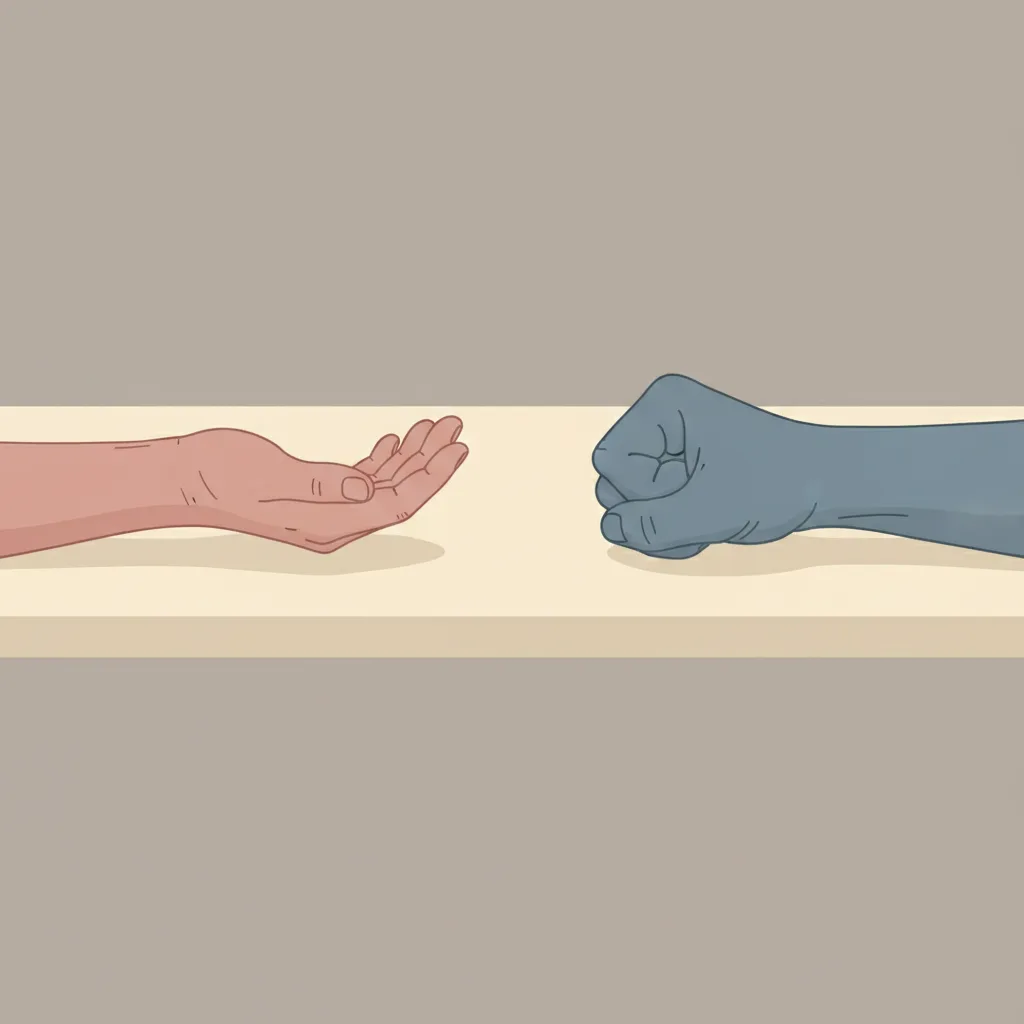
Two paths diverging from a park bench, one leading toward a figure, one away into fog.
Indirecte gegevens: voor deze beslissing komt minstens één cijfer uit een indirecte maat, zoals gevolgen, tevredenheid of intentie, of uit een schatting van de redactie, en niet uit een enquête die rechtstreeks naar spijt vraagt. De toelichting bij elke kant hieronder legt uit hoe het getal tot stand kwam.

Als je handelt

Je gevoelens uitspreken en afgewezen worden

Geen directe meting

Geen bron geeft een cijfer voor deze kant, dus we tonen er geen.

Amerikaanse volwassenen die romantische gevoelens onthulden, diverse samples

variabel; actie-spijt vervaagt sneller dan inactie-spijt over tijd

Als je niets doet

Je inhouden en nooit iets zeggen

44%

44% van vrouwen (19% van mannen) rapporteren romantische inactie-spijt

Amerikaanse volwassenen leeftijd 19-103, Northwestern University / Summerville studie

levenslang retrospectief

Cijfer voor elke keuze (de maat staat op de pagina benoemd)

Gerelateerde keuzes

Semantisch vergelijkbare keuzes — zelfde terrein, andere afwegingen.

lifestyle

Uitstelgedrag

Cijfer voor elke keuze (de maat staat op de pagina benoemd)

lifestyle

Uit de kast komen

Cijfer voor elke keuze (de maat staat op de pagina benoemd)

lifestyle

Vriendschappen bewaren vs. verliezen

Cijfer voor elke keuze (de maat staat op de pagina benoemd)

lifestyle

Verzoening initiëren

Cijfer voor elke keuze (de maat staat op de pagina benoemd)

lifestyle

Gevoelig verhaal openbaar delen vs. privé houden

Cijfer voor elke keuze (de maat staat op de pagina benoemd)

lifestyle

Geloof verlaten

Cijfer voor elke keuze (de maat staat op de pagina benoemd)

family

Eerste partner trouwen vs. meer daten

Cijfer voor elke keuze (de maat staat op de pagina benoemd)

lifestyle

Vergeving

Cijfer voor elke keuze (de maat staat op de pagina benoemd)

Roese and Summerville’s meta-analysis of nine articles (11 data sets) found that romance is the third-most-cited regret domain, accounting for 14.8% of regrets behind education (32.2%) and career (22.3%), and that across regrets generally, those of action are more intense in the short term while those of inaction persist longer and intensify over time. A separate Northwestern/Kellogg study of 370 adults ages 19 to 103 found that 44% of women reported some romance-related regret (versus 19% of men), with those regrets prominently including someone they had feelings for but never pursued — the canonical “one that got away” — and never entering a particular relationship. There is no direct survey asking people who confessed romantic feelings and were rejected whether they regret the disclosure, so the action side has no direct measurement.

The main caveat is that the inaction-regret rate is anchored to the female rate from a single study conducted before app-mediated dating became dominant. Using the blended male-and-female rate from the same study (approximately 30 to 32%) would give a lower inaction-side figure. The action side is estimated from indirect evidence rather than directly measured by a survey asking people who confessed romantic feelings whether they regret having done so. Both primary academic sources are more than 15 years old, and the emotional costs and norms around disclosure may differ for younger cohorts who navigate rejection through digital mediation.

Bronnen: handelen

Bronnenverantwoording

Elk getal hieronder is wat elke bron rapporteerde, met het letterlijke citaat waarop we ons baseerden en hoe we tot ons cijfer kwamen. Klik op een link om rechtstreeks te verifiëren.

1/1 bronnen onafhankelijk woordelijk geverifieerd tegenover de geciteerde bron

  1. [1] Personality and Social Psychology Bulletin (NIH/PMC) — What We Regret Most ... and Why Geverifieerd
    What We Regret Most ... and Why

    Bekijk alle 10 Likelier-items die deze bron citeren →

    Statistiek
    Romance ranks #3 among regret domains (14.8% of all regrets); regrets of action are more intense in the short term while regrets of inaction are more intense over the long term
    Fragment
    “"romance ranked number three (14.8%, SD = 2.34) ... regrets of action are more intense in the short term; regrets of inaction are more intense over the long term ... regrets of inaction persist longer than regrets of action." ”
    Brongegevens van
    2005-09-01
    Geraadpleegd
    2026-05-13
    Verificatie
    Fragment onafhankelijk opnieuw opgehaald en woord voor woord bevestigd tegenover de geciteerde bron tijdens onze onderbouwingsaudit.
    Berekening
    Roese and Summerville (2005), meta-analysis of nine published articles containing 11 data sets on regret domains, plus a college sample. Romance is the third-most-cited regret domain (14.8%), behind education (32.2%) and career (22.3%). There is no direct survey asking people who confessed romantic feelings and were rejected whether they regret the disclosure, so no action-side regret figure is shown. The paper documents a temporal pattern: action regrets are more intense in the short term but fade, while inaction regrets persist and intensify over the long term, which implies durable action-disclosure regret is the minority outcome.

Bronnen: niet handelen

Bronnenverantwoording

Elk getal hieronder is wat elke bron rapporteerde, met het letterlijke citaat waarop we ons baseerden en hoe we tot ons cijfer kwamen. Klik op een link om rechtstreeks te verifiëren.

2/5 bronnen onafhankelijk woordelijk geverifieerd tegenover de geciteerde bron

  1. [1] Association for Psychological Science — Women More Likely Than Men to Have a Love Regret, NU Study Shows Geverifieerd
    Women More Likely Than Men to Have a Love Regret, NU Study Shows
    Statistiek
    44% of women and 19% of men in the sample reported some romance-related regret; women's regrets included 'the one that got away' and never entering a relationship
    Fragment
    “"When asked, about 44 percent of women and 19 percent of men said they regretted something related to romance, according to the study by the Kellogg School of Management in Evanston. … He said regrets women mentioned in the survey of 370 adults ages 19 to 103 included “the one that got away” regrets, as well as regrets that they had never entered into a particular relationship." ”
    Brongegevens van
    2008-07-28
    Geraadpleegd
    2026-05-13
    Verificatie
    Fragment onafhankelijk opnieuw opgehaald en woord voor woord bevestigd tegenover de geciteerde bron tijdens onze onderbouwingsaudit.
    Berekening
    Summerville and Roese study of 370 US adults ages 19-103, drawn from a Northwestern/Kellogg sample. The 44% figure is the women's prevalence of ANY romance-related regret (not an inaction-only subset); the most-discussed themes among those regrets were romantic inaction ones -- "the one that got away" and never entering a particular relationship -- which is why this side is treated as inaction-dominant. The 44% female rate is used in the regret_rate field as the best-documented direct prevalence; the 19% men's rate illustrates the strong gender difference. A composite rate across both sexes would be approximately 30-32%; the gender skew is noted in caveats.
  2. [2] Personality and Social Psychology Bulletin (NIH/PMC) — What We Regret Most ... and Why
    What We Regret Most ... and Why

    Bekijk alle 10 Likelier-items die deze bron citeren →

    Statistiek
    Romance ranks #3 among regret domains (14.8%); regrets of inaction persist longer and are more intense over the long term than regrets of action
    Fragment
    “"regrets of action are more intense in the short term; regrets of inaction are more intense over the long term ... regrets of inaction persist longer than regrets of action." ”
    Brongegevens van
    2005-09-01
    Geraadpleegd
    2026-05-13
    Berekening
    Roese and Summerville (2005), meta-analysis of nine published articles / 11 data sets. Provides the theoretical framework for why inaction regret in romance dominates over time: unexplored counterfactuals remain open-ended and persistent, while action regrets resolve as the emotional valence of the rejection fades. The paper documents this action-short-term / inaction-long-term pattern as a general regret finding (it does not break the temporal pattern out by domain), with romance ranked third (14.8%) among regret domains overall.
  3. [3] Daniel Pink / World Regret Survey — World Regret Survey
    World Regret Survey

    Bekijk alle 3 Likelier-items die deze bron citeren →

    Statistiek
    Daniel Pink's World Regret Survey has gathered more than 26,000 regrets from people in 134 countries and is no longer accepting submissions
    Fragment
    “"the World Regret Survey, which has now gathered more than 26,000 regrets from people in 134 countries. We are no longer accepting submissions." ”
    Brongegevens van
    2022-01-01
    Geraadpleegd
    2026-05-13
    Berekening
    World Regret Survey (worldregretsurvey.com), reported in Daniel Pink, The Power of Regret (2022). The homepage states the dataset is "more than 26,000 regrets from people in 134 countries" (an earlier survey snapshot of ~16,000 regrets cited 105-109 countries; the 134 figure is current). The overall inaction-to-action ratio and the age pattern come from the two interviews listed next, not from the homepage. This is a self-selected internet convenience sample, so the ratios are descriptive of respondents, not a population estimate.
  4. [4] Psychology Today — the 4 major kinds of regret Geverifieerd
    the 4 major kinds of regret
    Statistiek
    Inaction regrets outnumbered action regrets in Pink's survey by two to one
    Fragment
    “"Inaction regrets outnumbered action regrets in Pink's survey by two to one." ”
    Brongegevens van
    2022-02-18
    Geraadpleegd
    2026-11-04
    Verificatie
    Fragment onafhankelijk opnieuw opgehaald en woord voor woord bevestigd tegenover de geciteerde bron tijdens onze onderbouwingsaudit.
    Berekening
    Secondary summary of Daniel Pink's survey. It gives the overall ratio of roughly two to one, not three to one; the three to one figure is specific to people ages 50 to 59 (next source). The ratio describes self-selected respondents, not a population.
  5. [5] Welcome to the Jungle — Why having regrets is healthy... and powerful
    Why having regrets is healthy... and powerful
    Statistiek
    At ages 50 to 59 people have about three times as many regrets of inaction as of action; at ages 20 to 29 the numbers are about equal
    Fragment
    “"People in their 20s had about equal numbers of regrets about what they did and what they didn't do. [...] By our 50s, we tend to have about three times as many regrets of inaction versus regrets of action." ”
    Brongegevens van
    2023-06-28
    Geraadpleegd
    2026-11-04
    Berekening
    Interview with Daniel Pink about The Power of Regret. The age pattern qualifies the overall two to one ratio: the cohort ages 20 to 29 is roughly balanced and the ratio widens with age. Self-selected internet sample, so descriptive of respondents only.

Kanttekeningen

Het inactie-spijt percentage (0,44) komt uit een studie van 370 Amerikaanse volwassenen die het vrouwelijke percentage van romantische spijt mat; het mannelijke percentage in hetzelfde sample was 19%, en een gemengd percentage over beide geslachten zou ongeveer 30-32% zijn. Het vrouwelijke percentage wordt gebruikt als headline cijfer omdat het het preciezer gerapporteerde en breder geciteerde getal is, maar het werkelijke populatie inactie-spijt percentage hangt zwaar af van genderssamenstelling. De actiezijde is een afgeleide schatting, geen direct gemeten cijfer uit een enquête die vraagt "heeft u spijt van het belijden?"; geen dergelijke grootschalige enquête werd geïdentificeerd. Beide primaire bronnen zijn nu meer dan 15 jaar oud; hedendaagse datingnormen (waaronder app-bemiddelde afwijzing) kunnen verschillende spijtprofielen produceren. De World Regret Survey (26.000+ respondenten) is een zelfgeselecteerd internet gemakssample, dat mensen kan oververtegenwoordigen die diep over spijt hebben nagedacht. Het inactiecijfer gebruikt het 44% vrouwelijke inactie-percentage; het gebruik van het gemengde 30-32% percentage zou een lager cijfer geven.

Ruwe data: /api/decisions.json

Recent bekeken op dit apparaat