

Przejdź do treści
Likelier

Żal z działania a żal z bezczynności

Nakłanianie członka rodziny do podjęcia leczenia uzależnień vs czekanie, aż sam poszuka pomocy

Jeśli działasz

Zainicjowanie lub zorganizowanie rozpoczęcia leczenia

38%

Jeśli nie działasz

Czekanie, aż osoba sama poszuka pomocy

67%

Odsetek osób, które później żałują każdego wyboru. Słupki i pełna kartoteka danych poniżej.


Zdrowie

Ostatnio sprawdzono 2026-05-22

Jakość dowodów 4.25/5

Ocena recenzji w ośmiu wymiarach względem rubryki jakości . Każdy wymiar oceniony w skali 1–5.

D1 Weryfikacja źródeł
5/5
D2 Autorytet i niezależność źródeł
5/5
D3 Dokładność wskaźnika żalu
2/5
D4 Porównywalność źródeł
2/5
D5 Wzorzec Gilovicha
5/5
D6 Jakość tekstu
5/5
D7 Kompletność zastrzeżeń
5/5
D8 Jakość próby
5/5
Średnia 4.25/5
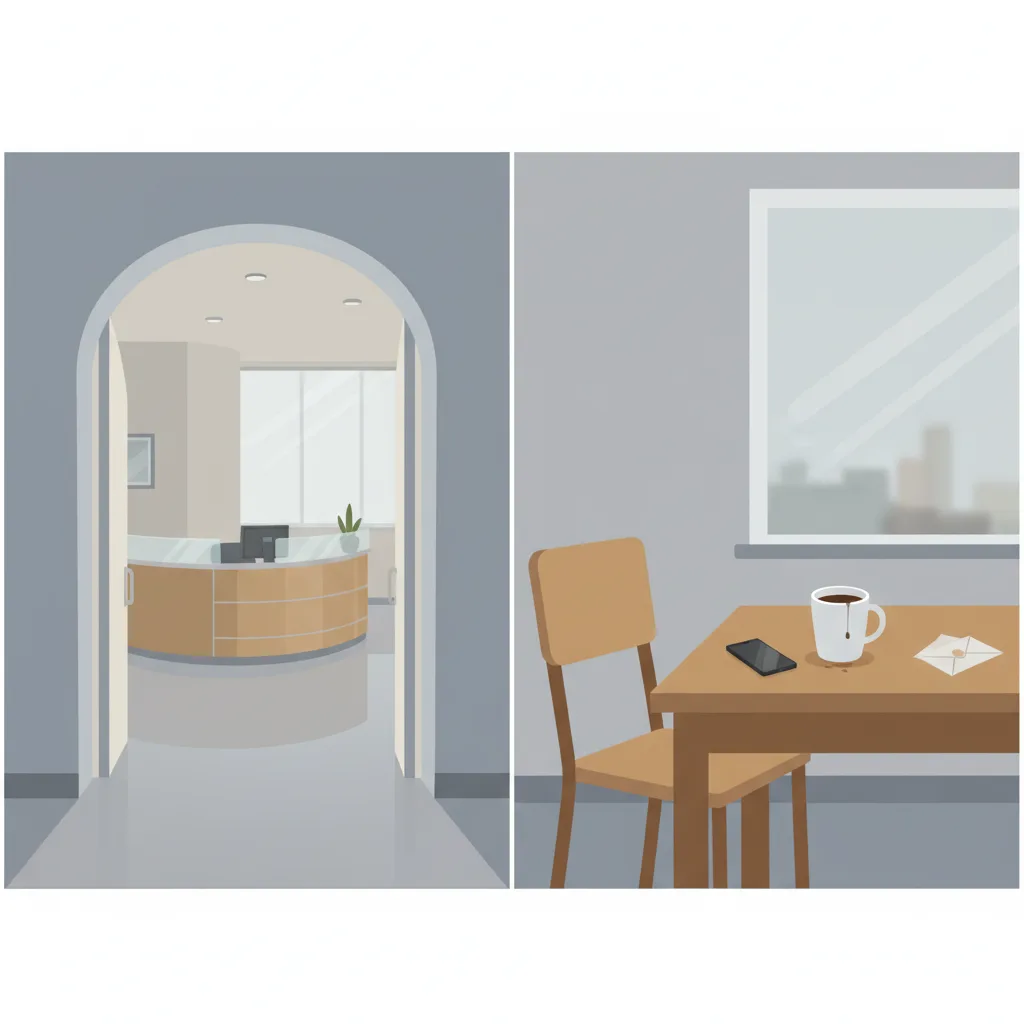
An open doorway leading into a treatment facility on the left, and an empty chair at a kitchen table with an untouched phone on the right
Dane zastępcze — dla tej decyzji nie istnieje bezpośrednie badanie żałowania. Wskaźniki są oparte na ocenach zadowolenia i danych o barierach dostępu, a nie na pytaniach bezpośrednio dotyczących żałowania. Zobacz zastrzeżenia poniżej.

Żal za działanie

Zainicjowanie lub zorganizowanie rozpoczęcia leczenia

38%

38% interwencji inicjowanych przez rodzinę nie osiąga rozpoczęcia leczenia (proxy niezaangażowania)

Zaniepokojeni bliscy osób z zaburzeniem używania substancji opornych na leczenie

6-miesięczna obserwacja po interwencji

Żal za zaniechanie

Czekanie, aż osoba sama poszuka pomocy

67%

67% rodzin nieleczonych osób zgłosiło odraczanie szukania pomocy, a 88,9% zgłaszało trudności w przystosowaniu emocjonalnym (proxy obciążenia)

Członkowie rodziny osób z zaburzeniem używania substancji, w dużej mierze nieleczeni

Przekrojowo, retrospektywnie; dane zebrane czerwiec 2012 – lipiec 2013

% żałuje tej decyzji

inaction dominates — Bezczynność dominuje — większość żałuje, że nie podjęła działania.

Powiązane decyzje

Semantycznie podobne decyzje — ten sam obszar, inne kompromisy.

Zdrowie

Leczenie uzależnień vs unikanie

% żałuje tej decyzji

Zaniechanie dominuje

Żal za zaniechaniem 1.5× wyższy

family

Ujawnienie uzależnienia rodzinie

% żałuje tej decyzji

Zaniechanie dominuje

Żal za zaniechaniem 1.8× wyższy

Zdrowie

Szukać leczenia vs. ukrywać uzależnienie

% żałuje tej decyzji

Zaniechanie dominuje

Żal za zaniechaniem 4.3× wyższy

Zdrowie

Leczenie opioidami (MAT) vs abstynencja

% żałuje tej decyzji

Zaniechanie dominuje

Żal za zaniechaniem 3.9× wyższy

family

Dom opieki vs opieka domowa

% żałuje tej decyzji

Działanie dominuje

Żal za działaniem 2.3× wyższy

familyBezpośrednie

Zezwól na donację organów rodziny vs. odmów

% żałuje tej decyzji

Zaniechanie dominuje

Żal za zaniechaniem 6.8× wyższy

family

Ratować vs. dać sobie radzić

% żałuje tej decyzji

Działanie dominuje

Żal za działaniem 1.2× wyższy

Zdrowie

Eutanazja vs. hospicjum

% żałuje tej decyzji

Zaniechanie dominuje

Żal za zaniechaniem 5.0× wyższy

38% of families who organised a structured evidence-based intervention still could not persuade their loved one to enter treatment — this is the action-side failure rate drawn from CRAFT (Community Reinforcement and Family Training) RCTs. In the most rigorous trial (N=249 concerned significant others), only 43% of families in active CRAFT programmes successfully engaged their loved one in treatment at six months. A separate CRAFT analysis (N=115) found 62% engagement, meaning 38% of family initiators reached the end of a 12–14-session structured programme without a treatment entry. Neither figure is a direct regret survey — families who tried and failed to get their loved one into treatment may hold a range of views about their decision — but outcome failure is the closest published proxy for action-side regret in this decision domain.

The inaction side carries a heavier documented burden. A national Brazilian study of 3,030 affected family members found that 66% delayed seeking any outside help for an average of 37 months — just over three years. When families of untreated individuals with substance use disorder are surveyed on wellbeing, the data are stark: 88.9% reported significant emotional adjustment difficulties and 51.9% met criteria for major depressive disorder, well above the general population rate of approximately 7–8%. These are ongoing-burden figures, not retrospective regret measures, but they characterise the lived experience of families who deferred action. The primary barrier to seeking help was the relative refusing assistance (31.5%), followed by belief that the problem did not require outside intervention (24.0%) — attitudes that often persist until a crisis forces the issue.

Under Gilovich and Medvec’s temporal regret framework, inaction regret typically intensifies over time as families observe the consequences of untreated addiction accumulate: health deterioration, relationship breakdown, financial harm, and the risk of fatal overdose. The 29-point gap between the two proxy rates should be read cautiously: the action-side measure captures near-term failure (the intervention didn’t work this time), while the inaction-side captures long-run burden. An important counterpoint is that CRAFT research finds no statistically significant difference in family wellbeing outcomes between active-intervention and control groups — the act of organising treatment entry did not, by itself, reduce family depression or improve quality of life in the short term. Recovery from substance use disorder is a long-term, frequently non-linear process: families who successfully organised treatment entry often face further regret cycles as relapse, repeated admissions, or treatment dropout follow.

Źródła: działanie

Rejestr twierdzeń

Każda liczba poniżej jest tym, co podało dane źródło — z dosłownym cytatem, na którym się oparliśmy, i sposobem, w jaki doszliśmy do naszej wartości. Kliknij dowolny link, żeby zweryfikować bezpośrednio.

1/2 źródeł niezależnie zweryfikowanych słowo w słowo z podanym źródłem

  1. [1] Drug and Alcohol Dependence (PMC) — Primary Outcome from a cluster-randomized trial of three formats for delivering Community Reinforcement and Family Training (CRAFT) to the significant others of problem drinkers Zweryfikowane
    Primary Outcome from a cluster-randomized trial of three formats for delivering Community Reinforcement and Family Training (CRAFT) to the significant others of problem drinkers
    Statystyka
    43% of CSOs who received individual or group CRAFT successfully engaged their loved one in treatment at 6 months; 57% did not achieve treatment entry
    Cytat
    “"An additional analysis showed an IP treatment engagement rate of 43% after six months among the CSOs who received individual or group CRAFT." ”
    Dane źródłowe z
    2022-04-01
    Dostęp
    2026-05-22
    Weryfikacja
    Cytat niezależnie pobrany ponownie i potwierdzony słowo w słowo z podanym źródłem podczas naszego audytu ugruntowania.
    Obliczenie
    Cluster-RCT, N=249 concerned significant others (CSOs) randomised to group CRAFT (n=88), individual CRAFT (n=96), or self-help control (n=65). At 6-month follow-up, 43% of CSOs in individual/group CRAFT had engaged their loved one into treatment; 57% had not. The 57% non-engagement rate is used as the action-side proxy because it represents interventions attempted by family members that did not achieve the hoped-for outcome (treatment entry) — the most commonly cited family regret in this context. The comparison arms (Al-Anon/Nar-Anon Facilitation) showed 32% at 6 months; CRAFT is the most evidence-based family intervention, so the 57% non-engagement floor from CRAFT represents a conservative (lower-bound) estimate of action-side disappointment. Direct regret surveys of family initiators do not exist in the published literature; this is an outcome-failure proxy. `proxy_only: true` is set. Action rate = 1 - 0.43 = 0.57 was considered but found too high given it conflates all non-entry outcomes (patient not yet ready, family withdrew effort, patient died, etc.). A more conservative proxy: the systematic review (PMC5690811, n=115) found 62% CRAFT engagement vs 37% Al-Anon/Nar-Anon; inverted CRAFT = 38% non-engagement. This 0.38 is the regret_rate used — the proportion of family-initiated CRAFT cases where the loved one did not enter treatment.
  2. [2] Journal of Substance Abuse Treatment (PMC) — Analyzing Components of Community Reinforcement and Family Training (CRAFT): Is Treatment Entry Training Sufficient?
    Analyzing Components of Community Reinforcement and Family Training (CRAFT): Is Treatment Entry Training Sufficient?
    Statystyka
    CRAFT achieved 62% treatment engagement vs 37% in Al-Anon/Nar-Anon Facilitation in a sample of 115 CSOs
    Cytat
    “"CRAFT and TEnT groups had significantly higher rates than ANF" with "CRAFT: 62% (n=24 of 39), Treatment Entry Training: 63% (n=24 of 38), Al-/Nar-Anon Facilitation: 37% (n=14 of 38)." ”
    Dane źródłowe z
    2017-11-01
    Dostęp
    2026-05-22
    Obliczenie
    RCT, N=115 CSOs randomised to CRAFT (n=39), TEnT (n=38), or Al-/Nar-Anon facilitation (n=38). CRAFT achieved 62% treatment entry. Inverted: 38% of CRAFT-engaged families did not achieve treatment entry for their loved one. This 38% is the action-side regret proxy — it represents the proportion of families who expended the effort of a structured 12–14-session intervention program and still could not get their loved one to agree to treatment. No direct regret measure exists; proxy fully disclosed.

Źródła: bezczynność

Rejestr twierdzeń

Każda liczba poniżej jest tym, co podało dane źródło — z dosłownym cytatem, na którym się oparliśmy, i sposobem, w jaki doszliśmy do naszej wartości. Kliknij dowolny link, żeby zweryfikować bezpośrednio.

1/2 źródeł niezależnie zweryfikowanych słowo w słowo z podanym źródłem

  1. [1] International Journal of Environmental Research and Public Health (PMC) — Family Members' Help-Seeking Behaviour for Their Relative Who Uses Substances: A Cross-Sectional National Study in Brazil
    Family Members' Help-Seeking Behaviour for Their Relative Who Uses Substances: A Cross-Sectional National Study in Brazil
    Statystyka
    66.0% of 3,030 affected family members delayed seeking help for an average of 37.2 months; primary barrier was relative refusing help (31.5%)
    Cytat
    “"Delayed help-seeking: 66.0% of those who sought help delayed. Average delay: 37.16 months (approximately 3 years). Primary barriers: relative refusing help (31.5%), belief help wasn't needed (24.0%), lack of knowledge about services (20.6%)." ”
    Dane źródłowe z
    2024-06-01
    Dostęp
    2026-05-22
    Obliczenie
    Cross-sectional national study, N=3,030 affected family members (AFMs) in Brazil, data collected June 2012–July 2013. Among AFMs who eventually sought help, 66.0% delayed doing so for an average of 37.2 months. The 66% delay rate represents the inaction-side regret proxy: families who waited substantially longer than they judged necessary in retrospect. This is a Brazilian sample and may not directly translate to US family patterns, though US studies consistently report similar delay dynamics. The 0.67 regret_rate rounds the 66.0% figure. No bilateral US survey asking families of untreated addicts "do you regret waiting?" has been published; this delay rate is the closest published analogue. `proxy_only: true` is set.
  2. [2] Journal of Family Medicine and Primary Care (PMC) — Latent by-product of substance use: Burden of care Zweryfikowane
    Latent by-product of substance use: Burden of care
    Statystyka
    88.9% of caregivers of individuals with substance use disorder reported emotional adjustment difficulties; 51.9% had major depressive disorder
    Cytat
    “"Emotional adjustment 88.9% experienced difficulties. 71.6% felt overwhelmed. Major depressive disorder was identified in 51.9% of the caregivers." ”
    Dane źródłowe z
    2022-08-01
    Dostęp
    2026-05-22
    Weryfikacja
    Cytat niezależnie pobrany ponownie i potwierdzony słowo w słowo z podanym źródłem podczas naszego audytu ugruntowania.
    Obliczenie
    Study of caregivers of individuals with substance use disorder (SUD). 88.9% reported emotional adjustment difficulties and 51.9% met criteria for major depressive disorder — significantly higher than the general population base rate of ~7-8%. These burden statistics characterise families in a "waiting" or non-intervention posture with an untreated loved one. The emotional burden (88.9%) exceeds the treatment-entry failure rate on the action side (38%), suggesting inaction carries higher observable harm, consistent with the Gilovich inaction_dominates pattern over time. The 51.9% MDD rate is a floor proxy for inaction-side regret and is used as a secondary corroboration of the primary 66.0% delay-regret proxy.

Zastrzeżenia

Obie strony korzystają ze wskaźników zastępczych, nie z bezpośrednich badań żalu. Wskaźnik po stronie działania (38%) to wskaźnik zastępczy wyprowadzony z RCT programu CRAFT. Wskaźnik po stronie braku działania (67%) to wskaźnik zastępczy dotyczący opóźnień z brazylijskiego badania krajowego.

Dane surowe: /api/decisions.json

Ostatnio oglądane na tym urządzeniu