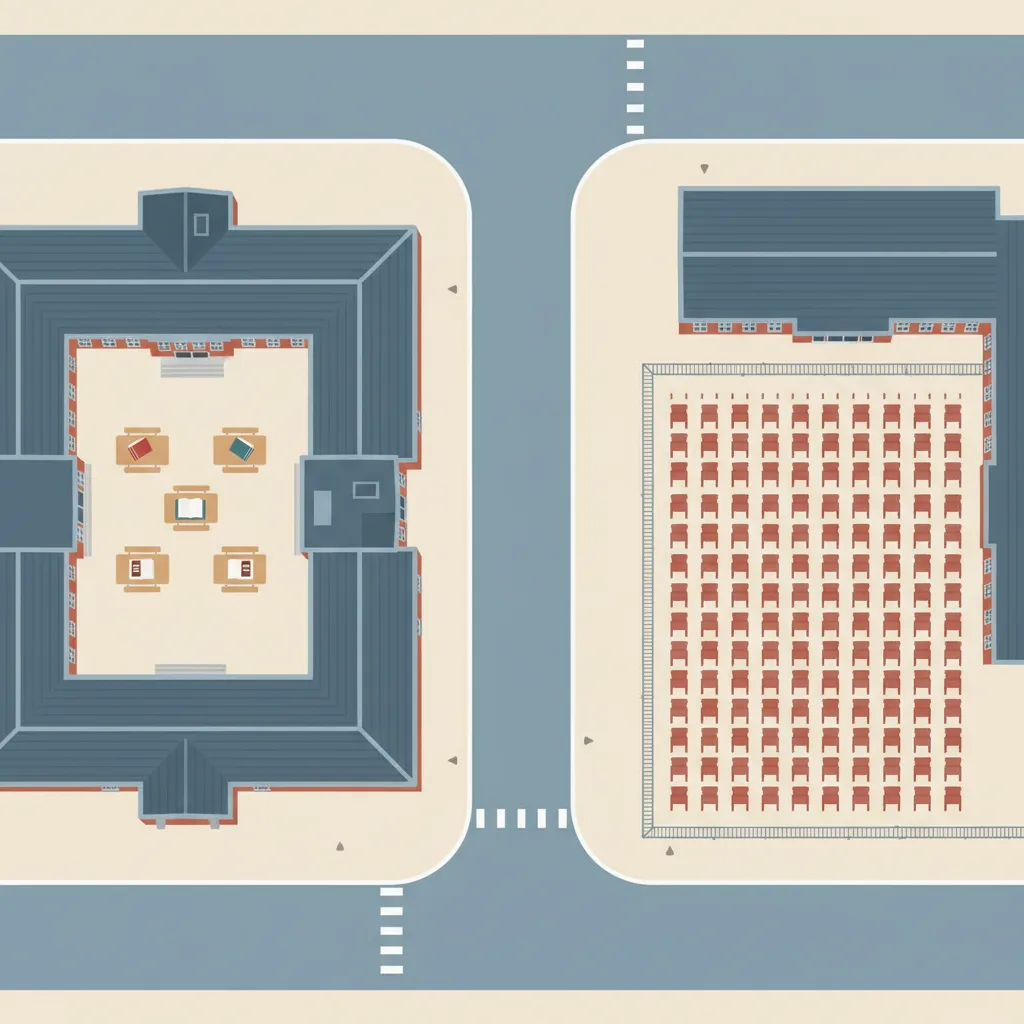
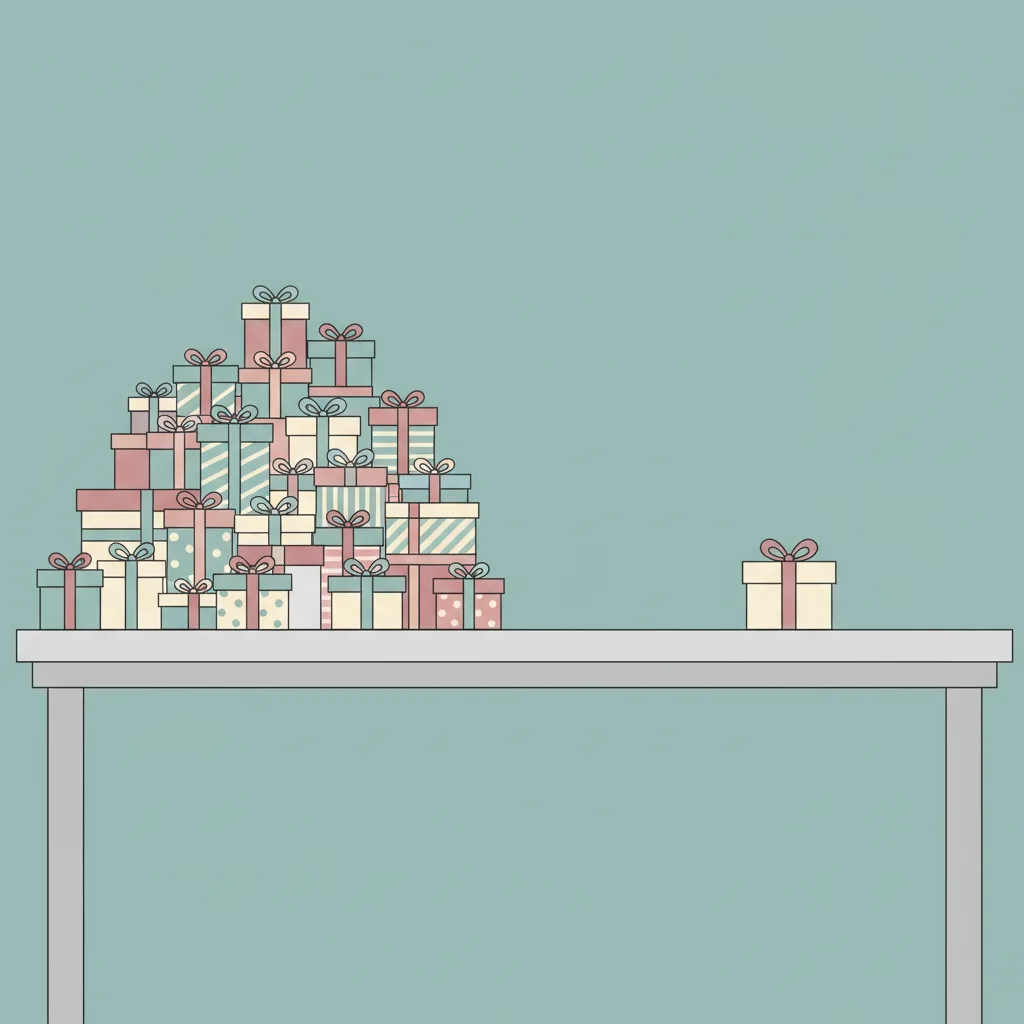
Ingerowanie i pomaganie dziecku, gdy się zmaga z trudnościami, kontra wycofanie się i pozwolenie mu samodzielnie poradzić sobie z frustracją
Jeśli działasz
Ratowanie dziecka
35%
Jeśli nie działasz
Samodzielne radzenie sobie
30%
Odsetek osób, które później żałują każdego wyboru. Słupki i pełna kartoteka danych poniżej.
Rodzina
Ostatnio sprawdzono 2026-05-05
Jakość dowodów 3.63/5
Ocena recenzji w ośmiu wymiarach względem
rubryki jakości
. Każdy wymiar oceniony w skali 1–5.
D1 Weryfikacja źródeł
4/5
D2 Autorytet i niezależność źródeł
3/5
D3 Dokładność wskaźnika żalu
3/5
D4 Porównywalność źródeł
4/5
D5 Wzorzec Gilovicha
4/5
D6 Jakość tekstu
4/5
D7 Kompletność zastrzeżeń
4/5
D8 Jakość próby
3/5
Średnia3.63/5
Dane zastępcze — dla tej decyzji nie istnieje bezpośrednie badanie żałowania. Wskaźniki są oparte na ocenach zadowolenia i danych o barierach dostępu, a nie na pytaniach bezpośrednio dotyczących żałowania. Zobacz zastrzeżenia poniżej.
Żal za działanie
Ratowanie dziecka
35%
35% rodziców z USA samookreśla się jako skłonnych do zbyt szybkiego ustępowania (wobec 30% zbyt sztywno obstających przy swoim) — samodeklarowana skłonność wychowawcza, a nie zmierzony żal
Amerykańscy rodzice z dziećmi poniżej 18 lat, ogólnokrajowo reprezentatywnie
przekrojowo, ankieta wrzesień–październik 2022
Żal za zaniechanie
Samodzielne radzenie sobie
30%
30% rodziców z USA samookreśla się jako niedostatecznie mobilizujących swoje dzieci (wobec 25% mobilizujących zbyt mocno) — samodeklarowana skłonność do wymagania osiągnięć, a nie zmierzony żal
Amerykańscy rodzice z dziećmi poniżej 18 lat, ogólnokrajowo reprezentatywnie
przekrojowo, ankieta wrzesień–październik 2022
% żałuje tej decyzji
Ratowanie dzieckaSamodzielne radzenie sobie
35%30%
action dominates — Działanie dominuje — większość żałuje, że podjęła działanie.
Powiązane decyzje
Semantycznie podobne decyzje — ten sam obszar, inne kompromisy.
35% of US parents say they tend to give in too quickly, while 30% say they fail to push their children hard enough, from the same Pew Research Center survey of 3,757 nationally representative US parents fielded in late 2022. Both figures are self-identification proxies, not retrospective regret rates: parents are recognising a present tendency, not judging a completed childhood in hindsight. The action-side has a slim 5-point lead, distinguishing this question from the more lopsided pattern in the broader helicopter-parenting literature; the margin is narrow enough that both errors are meaningfully represented in parental self-assessment.
The behavioral outcomes literature, however, does identify a directional cost on the rescue side. Leonard, Martinez, Dashineau, Park, and Mackey (2021) published an experimental study in Child Development showing that children assigned to a taking-over condition persisted less on a subsequent task than those in a teaching or baseline condition. The study isolates the micro-behavior that defines this dilemma: the moment a parent steps in while a child is still grappling. The Mott Poll (October 2023, n=1,044 parents of children aged 5–11) found that while nearly 75% of parents say they encourage independence, fewer than half report their children regularly complete age-appropriate tasks alone. For 9–11-year-olds, 80% of parents agreed unsupervised free time is developmentally valuable, but fewer than half allowed their child to walk or bike to a friend’s house independently. The attitude-behavior gap suggests the 35% who acknowledge giving in too quickly may undercount the true share whose rescue impulse is active in practice.
The honest framing, then, is that both errors carry documented costs and roughly equal rates of parental self-recognition, a pattern the Gilovich temporal model would predict as unstable across time. Action regrets (having hovered and solved) tend to feel more acute when visible: a child who cannot tolerate frustration, cannot start a task without help, registers as a present failure. Inaction regrets (not scaffolding enough, watching a child disengage from challenge) tend to crystallize later, when the child avoids hard problems rather than attempting them. The Leonard et al. findings suggest the rescue pathway accumulates its cost earlier and more measurably; the Pew proxies suggest parents sense both errors at roughly comparable rates. The safest reading is that the risk lies not in a single style but in the reflexive quality of the response: intervening before the child has had real time to attempt, or withdrawing support so completely that challenge becomes discouragement.
Źródła: działanie
Rejestr twierdzeń
Każda liczba poniżej jest tym, co podało dane źródło — z dosłownym cytatem, na którym się oparliśmy, i sposobem, w jaki doszliśmy do naszej wartości. Kliknij dowolny link, żeby zweryfikować bezpośrednio.
2/3 źródeł niezależnie zweryfikowanych słowo w słowo z podanym źródłem
[1]Pew Research Center (Minkin & Horowitz 2023) — Parenting in America Today: A Survey Report (2023)
Zweryfikowane
↗ 1 other entry
Badanie pierwotne
35% of US parents say they tend to give in too quickly; 30% stick to their guns too much; 30% don't push their children hard enough; 25% push too hard
Cytat
“"Somewhat larger shares say they tend to give in too quickly (35%) rather than stick to their guns too much (30%), praise their children too much (26%) rather than criticize them too much (20%), and not push their children hard enough (30%) rather than push them too hard (25%)."
”
Dane źródłowe z
2023-01-24
Dostęp
2026-05-04
Weryfikacja
Cytat niezależnie pobrany ponownie i potwierdzony słowo w słowo z podanym źródłem podczas naszego audytu ugruntowania.
Obliczenie
Pew Research Center nationally representative survey of 3,757 US parents with children under 18, collected September 20–October 2, 2022. The 35% who say they give in too quickly is used as the action-side proxy: parents who recognise their own tendency to capitulate when a child pushes back — a behavioural analogue to stepping in before the child has wrestled with a problem. This is a self-identification proxy, not a retrospective regret measure; flagged as "(proxy)". The comparison figure of 30% who say they "stick to their guns too much" confirms the question has a balanced response scale.
[2]Child Development (Leonard, Martinez, Dashineau, Park & Mackey 2021) — Children Persist Less When Adults Take Over
Recenzowane naukowo
Children assigned to a taking-over condition persisted less on a subsequent task than those in a teaching or baseline condition
Cytat
“"Children assigned to a taking over condition persisted less on a subsequent task compared to those in a teaching or a baseline condition."
”
Dane źródłowe z
2021-07-01
Dostęp
2026-05-04
Obliczenie
Leonard, Martinez, Dashineau, Park & Mackey (2021), Child Development 92(4), 1325–1336. This is a behavioral outcomes study, not a regret survey. It directly measures the construct of parental takeover during a child's struggle and finds that takeover reduces the child's subsequent persistence. It contextualizes why parents who give in quickly (action side) accumulate the documented downstream cost — lower child persistence — that would underpin retrospective regret. It does not supply the 35% proxy rate; that comes from Pew 2023 above.
[3]C.S. Mott Children's Hospital National Poll on Children's Health, University of Michigan — Parent efforts insufficient to promote teen independence
Zweryfikowane
Źródło referencyjne
1 in 4 parents (25%) cite themselves as the main barrier to their teen becoming more independent — not taking time or effort to give teens more responsibility
Cytat
“"One quarter of parents cite themselves as the main impediment to their teen becoming more independent, saying it's less time and hassle to do things themselves rather than involve their teen (19%), or that they just don't think about how to give teens more responsibility (7%)."
”
Dane źródłowe z
2019-07-01
Dostęp
2026-05-05
Weryfikacja
Cytat niezależnie pobrany ponownie i potwierdzony słowo w słowo z podanym źródłem podczas naszego audytu ugruntowania.
Obliczenie
C.S. Mott Children's Hospital National Poll on Children's Health, University of Michigan. N=877 parents with at least one child aged 14–18, fielded February 2019. The 25% self-attribution rate is structurally stronger than the Pew "give in too quickly" framing: parents are attributing causal responsibility to themselves (I am the obstacle), not merely describing a stylistic tendency. This is the closest available population-representative estimate to acknowledging that parental over-intervention in independence is a self-owned pattern — an acknowledgment that plausibly precedes retrospective regret. The sample is restricted to parents of teens (ages 14–18); the rate may differ for parents of younger children where intervention is more socially sanctioned. This source does not directly measure regret; like Pew 2023, it is a proxy.
Niezależność
Independent from Pew 2023 and Leonard et al. 2021. Different institution (University of Michigan), different sample (parents of teens 14–18 vs all children under 18), different question frame (self-as-barrier attribution vs stylistic tendency).
Źródła: bezczynność
Rejestr twierdzeń
Każda liczba poniżej jest tym, co podało dane źródło — z dosłownym cytatem, na którym się oparliśmy, i sposobem, w jaki doszliśmy do naszej wartości. Kliknij dowolny link, żeby zweryfikować bezpośrednio.
1/2 źródeł niezależnie zweryfikowanych słowo w słowo z podanym źródłem
[1]Pew Research Center (Minkin & Horowitz 2023) — Parenting in America Today: A Survey Report (2023)
Zweryfikowane
↗ 1 other entry
Badanie pierwotne
30% of US parents say they don't push their children hard enough, vs 25% who say they push too hard
Cytat
“"Somewhat larger shares say they tend to give in too quickly (35%) rather than stick to their guns too much (30%), praise their children too much (26%) rather than criticize them too much (20%), and not push their children hard enough (30%) rather than push them too hard (25%)."
”
Dane źródłowe z
2023-01-24
Dostęp
2026-05-04
Weryfikacja
Cytat niezależnie pobrany ponownie i potwierdzony słowo w słowo z podanym źródłem podczas naszego audytu ugruntowania.
Obliczenie
Same Pew Research Center survey of 3,757 US parents (September–October 2022). The 30% who say they "don't push their children hard enough" is the inaction-side proxy: parents who recognise their own tendency to under- challenge their child. This is the mirror construct to the action side's giving-in-too-quickly: rather than stepping in at the moment of struggle, these parents fail to create challenging situations in the first place. The shared instrument and identical sample make the cross-group comparison internally consistent. Flagged as "(proxy)" because self-identification of a parenting tendency is a weaker claim than retrospective regret.
[2]EurekAlert (University of Michigan C.S. Mott Children's Hospital National Poll on Children's Health, 2023) — Many parents of school-age kids struggle to give them independence
Źródło referencyjne
Nearly 75% of parents say they encourage their child to do things independently, yet fewer than half report their child regularly does tasks like tying shoes or making a simple meal alone; for ages 9-11, 80% agree unsupervised free time is good but fewer than half permit walking or biking to a friend's house
Cytat
“"Nearly three-quarters of parents say they encourage their child to do things independently, yet fewer than half report their child regularly completes age-appropriate independent tasks. For children aged 9–11, 8 in 10 parents agree that free time without adult supervision is good for children, but fewer than half allow their child to walk or bike to a friend's house or play outside unsupervised."
”
Dane źródłowe z
2023-10-02
Dostęp
2026-05-04
Obliczenie
C.S. Mott Children's Hospital National Poll on Children's Health, University of Michigan (October 2023), n=1,044 parents of children aged 5–11. This source documents the attitude-behavior gap on the inaction side: parents know they should let children struggle independently but consistently intervene in practice. The gap between "I encourage independence" (75%) and "my child regularly does independent tasks" (<50%) quantifies the shortfall. It does not supply the 30% proxy rate; that comes from Pew 2023 above. It corroborates that under-challenging (inaction side) is a recognised concern among parents even when they endorse independence in principle.
Zastrzeżenia
Żadna z liczb nie jest bezpośrednim pomiarem żalu — obie są wskaźnikami zastępczymi z samookreślenia z tej samej ankiety Pew Research Center (wrzesień–październik 2022, n=3 757 rodziców z USA) i są oznaczone jako „(wskaźnik zastępczy)" w regret_display. 35% po stronie działania mierzy ustępliwość wychowawczą („ustępowanie zbyt szybko, gdy dziecko sprzeciwia się zasadom"), co jest konstruktem pokrewnym — ale nie tożsamym — z angażowaniem się podczas zmagań z trudnym zadaniem. 30% po stronie zaniechania mierzy postrzegane niedostateczne stawianie wyzwań, co oddaje ducha niedostatecznego wsparcia, ale jest podobnie pośrednie. Żadna zakrojona na szeroką skalę ankieta nie pyta rodziców wprost „czy żałujesz, że zbyt często ratujesz swoje dziecko?" ani „czy żałujesz, że wycofałeś się, gdy twoje dziecko się zmagało?"; takie dane nie istnieją w opublikowanej literaturze wedle stanu na maj 2026 r. Różnica 0,05 punktu między dwoma wskaźnikami zastępczymi plasuje wpis dokładnie na granicy progu action_dominates/balanced (balanced wymaga |delta| ściśle mniejszej niż 0,05) i nie należy jej odczytywać jako znaczącego sygnału kierunkowego w kontekście marginesu błędu pojedynczego kwestionariusza. Leonard et al. (2021) dostarcza dowodów behawioralnych, że przejęcie zadania przez rodzica wymiernie zmniejsza wytrwałość dziecka, co udziela kierunkowego wsparcia kosztowi po stronie działania, ale dowody o wynikach i dowody o żalu to odrębne konstrukty. Mott Poll (2023) dokumentuje dużą lukę postawa–zachowanie, która implikuje, że wielu rodziców niesamookreślających się jako ratujący mimo to interweniuje bardziej, niż akceptują w zasadzie, co sugeruje, że prawdziwy udział po stronie działania może być zaniżony przez wskaźnik zastępczy Pew. Dane ankietowe pochodzą z próbek ze Stanów Zjednoczonych; normy rodzicielskie i oczekiwania kulturowe dotyczące zmagań i niezależności dzieci różnią się znacznie w poszczególnych krajach.