


Przejdź do treści
Likelier

Żal z działania a żal z bezczynności

Zapisywanie dzieci na zorganizowane zajęcia (sport, muzyka, korepetycje) vs pozwolenie im na swobodną zabawę

Jeśli działasz

Zorganizowane zajęcia

57%

Jeśli nie działasz

Swobodna zabawa

22%

Odsetek osób, które później żałują każdego wyboru. Słupki i pełna kartoteka danych poniżej.


Rodzina

Ostatnio sprawdzono 2026-04-26

Jakość dowodów 4.0/5

Ocena recenzji w ośmiu wymiarach względem rubryki jakości . Każdy wymiar oceniony w skali 1–5.

D1 Weryfikacja źródeł
5/5
D2 Autorytet i niezależność źródeł
5/5
D3 Dokładność wskaźnika żalu
2/5
D4 Porównywalność źródeł
2/5
D5 Wzorzec Gilovicha
4/5
D6 Jakość tekstu
5/5
D7 Kompletność zastrzeżeń
5/5
D8 Jakość próby
4/5
Średnia 4.0/5
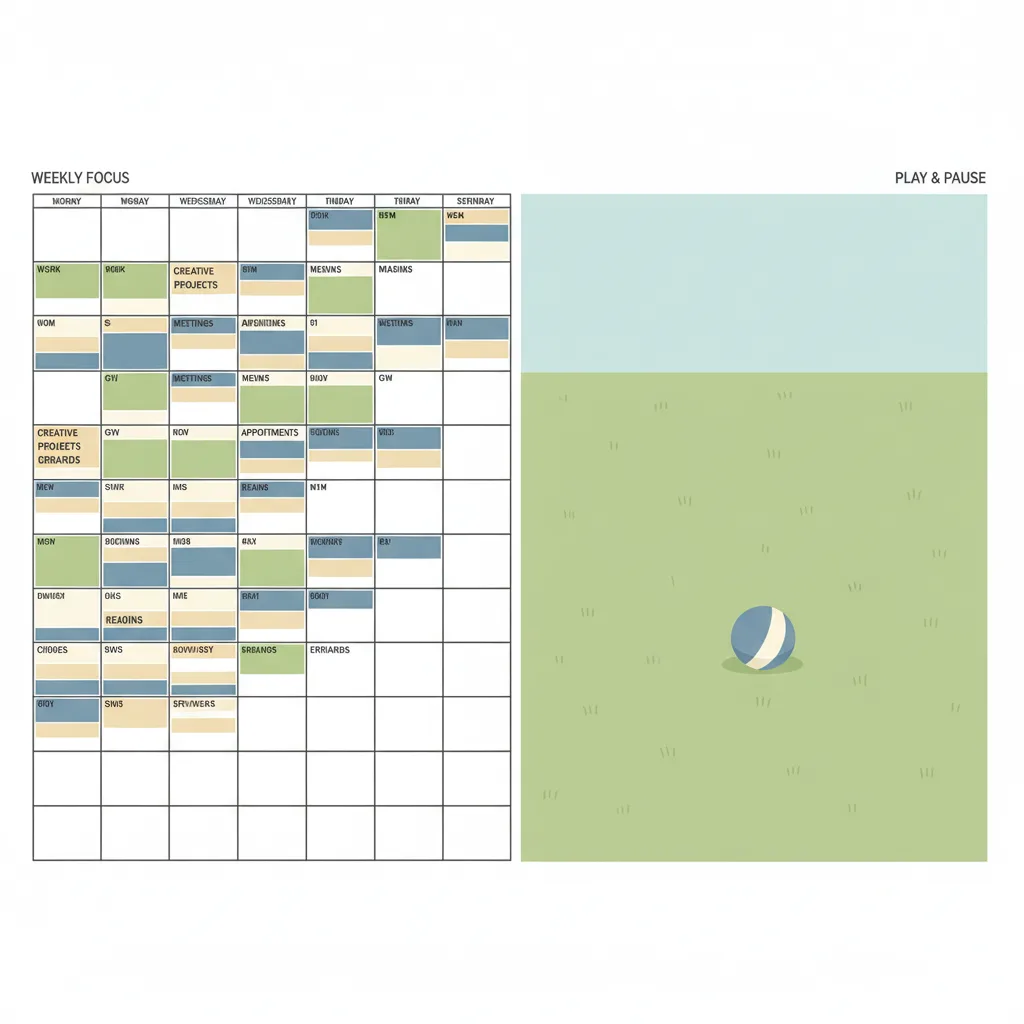
A weekly planner filled with activities next to an empty grass field with a single ball.

Żal za działanie

Zorganizowane zajęcia

57%

57% rodziców zgłasza wypalenie z presji nadmiernego planowania (proxy)

Amerykańscy rodzice, ogólnokrajowy reprezentatywny panel online

retrospektywnie, ankieta czerwiec–lipiec 2023

Żal za zaniechanie

Swobodna zabawa

22%

~22% dzieci życzy sobie mniej zajęć / więcej wolnego czasu (proxy)

Amerykańskie dzieci w wieku 9–13 lat i ich rodzice

przekrojowo, bez stałego horyzontu

% żałuje tej decyzji

action dominates — Działanie dominuje — większość żałuje, że podjęła działanie.

Powiązane decyzje

Semantycznie podobne decyzje — ten sam obszar, inne kompromisy.

family

Swoboda vs nadzor rodzicielski

% żałuje tej decyzji

Działanie dominuje

Żal za działaniem 2.3× wyższy

family

Pozwolić rzucić vs. skończyć

% żałuje tej decyzji

Zaniechanie dominuje

Żal za zaniechaniem 2.3× wyższy

family

Ratować vs. dać sobie radzić

% żałuje tej decyzji

Działanie dominuje

Żal za działaniem 1.2× wyższy

family

Prywatna vs publiczna

% żałuje tej decyzji

Zaniechanie dominuje

Żal za zaniechaniem 3.2× wyższy

family

Rodzic w domu vs pracujący

% żałuje tej decyzji

Działanie dominuje

Żal za działaniem 1.3× wyższy

family

Dyscyplina vs poblazkliwosc

% żałuje tej decyzji

Zaniechanie dominuje

Żal za zaniechaniem 2.4× wyższy

family

Posiłki rodzinne

% żałuje tej decyzji

Zaniechanie dominuje

Żal za zaniechaniem 6.9× wyższy

family

Rozpieszczanie vs. powściągliwość

% żałuje tej decyzji

Działanie dominuje

Żal za działaniem 2.9× wyższy

An Ohio State study of more than 700 US parents found that 57% self-reported burnout, with the pressure to keep children enrolled in the right enrichment activities cited as a leading driver. The same study found that more free play time correlated with fewer mental health issues in children. On the academic side, Caetano, Caetano, and Nielsen (2024) showed in the Economics of Education Review that the marginal hour of structured enrichment yields zero cognitive benefit for high schoolers and actively harms non-cognitive outcomes like emotional regulation. The overscheduling treadmill appears to cost parents their wellbeing and children their resilience, with diminishing returns that turn negative well before most families notice.

The case for free play is real but narrower than its loudest advocates suggest. Gray et al. (2023) argued in The Journal of Pediatrics that decades of declining independent activity are a primary cause of rising childhood anxiety and depression — a plausible thesis, but one built on correlational evidence and no randomized trials. Meanwhile, Mahoney’s (2012) revisit of the overscheduling hypothesis found that fewer than one in ten US children are genuinely overscheduled, and that participation in organized activities up to 10-15 hours per week is almost universally associated with positive developmental outcomes. The popular image of the frazzled overscheduled child describes a real but statistically small group; most children in structured activities are benefiting from them.

The honest answer is that neither extreme maps cleanly onto regret research. No large-scale survey directly asks parents whether they regret overscheduling or under-enriching their children. The available proxies — parental burnout rates on one side, children’s own preference data on the other — are imperfect stand-ins flagged as such. The qualitative evidence (parents in Slate’s 2024 reporting who “pulled back” on packed schedules describe profound relief) supports the action-dominates direction, and Gilovich’s temporal framework would predict the same: action regrets (pushing too hard) feel more acute in the present, though inaction regrets (not enriching enough) may surface later. The safest reading is that moderate structured activity with ample unstructured time is the low-regret path, and that the real risk lies at both tails.

Źródła: działanie

Rejestr twierdzeń

Każda liczba poniżej jest tym, co podało dane źródło — z dosłownym cytatem, na którym się oparliśmy, i sposobem, w jaki doszliśmy do naszej wartości. Kliknij dowolny link, żeby zweryfikować bezpośrednio.

1/2 źródeł niezależnie zweryfikowanych słowo w słowo z podanym źródłem

  1. [1] Ohio State University College of Nursing — Study: Pressure to be 'perfect' causing burnout for parents, mental health concerns for their children Zweryfikowane
    Study: Pressure to be 'perfect' causing burnout for parents, mental health concerns for their children
    Statystyka
    57% of parents self-reported burnout; pressure to provide enrichment activities was a leading contributor; more free play time correlated with fewer child mental health issues
    Cytat
    “"Fifty-seven percent of parents self-reported burnout. The pressure to be a 'perfect parent' — ensuring children are enrolled in the right activities, maintaining packed schedules — was identified as a leading contributor to parental stress and burnout. The more free play time that parents spend with their children and the lighter the load of structured extracurricular activities, the fewer mental health issues children experience." ”
    Dane źródłowe z
    2024-05-08
    Dostęp
    2026-04-26
    Weryfikacja
    Cytat niezależnie pobrany ponownie i potwierdzony słowo w słowo z podanym źródłem podczas naszego audytu ugruntowania.
    Obliczenie
    Ohio State survey of 730+ US parents (June–July 2023). The 57% burnout rate captures parents who self-identified as burned out, with overscheduling of enrichment activities cited as a primary driver. The study also found that lighter activity loads correlated with better child mental health outcomes. We use 57% as the action-regret proxy because burnout from structured-activity pressure is the dominant parental complaint on the action side. This is a burnout rate, not a regret rate — flagged as "(proxy)".
  2. [2] Economics of Education Review (Caetano, Caetano & Nielsen 2024) — Are children spending too much time on enrichment activities?
    Are children spending too much time on enrichment activities?
    Statystyka
    The marginal hour of enrichment activities has zero cognitive benefit and negative non-cognitive effects for high schoolers
    Cytat
    “"We found that the effect of those additional activities on cognitive skills, that last hour, is basically zero. More surprising is that the last hour doing these activities is contributing negatively to the child's non-cognitive skills, making students more anxious, depressed or angry." ”
    Dane źródłowe z
    2024-02-01
    Dostęp
    2026-04-26
    Obliczenie
    Caetano, Caetano & Nielsen (2024) used time-use data to estimate marginal returns of enrichment hours. Finding that the marginal hour harms non-cognitive outcomes supports the action-regret framing: parents who push one more activity are buying zero academic gain and measurable psychosocial cost.

Źródła: bezczynność

Rejestr twierdzeń

Każda liczba poniżej jest tym, co podało dane źródło — z dosłownym cytatem, na którym się oparliśmy, i sposobem, w jaki doszliśmy do naszej wartości. Kliknij dowolny link, żeby zweryfikować bezpośrednio.

  1. [1] Journal of Research on Adolescence (Mahoney 2012) — The Over-Scheduling Hypothesis Revisited: Intensity of Organized Activity Participation During Adolescence and Young Adult Outcomes
    The Over-Scheduling Hypothesis Revisited: Intensity of Organized Activity Participation During Adolescence and Young Adult Outcomes
    Statystyka
    Less than 1 in 10 children could be described as overscheduled; participation up to 10–15 hours/week was almost always associated with positive outcomes
    Cytat
    “"Contrary to popular belief, recent research rejects the notion that most or even many children and youth are over-scheduled and are suffering as a result. In fact, less than one in ten could be described as over-scheduled. Participation up to ten hours per week was almost always positive." ”
    Dane źródłowe z
    2012-09-01
    Dostęp
    2026-04-26
    Obliczenie
    Mahoney (2012) revisited the overscheduling hypothesis using nationally representative US data. The finding that <10% of children are genuinely overscheduled implies that most families choosing free play over structured activities are not rescuing an overscheduled child. However, survey data from KidsHealth (cited in multiple parenting sources) found that 78% of children ages 9-13 wished for more free time. We invert conservatively: ~22% of children do NOT wish for more free time, implying they are content with or want more structure. This 22% is used as the inaction-regret proxy — the share of families where children might benefit from more organized activities.
  2. [2] The Journal of Pediatrics (Gray et al. 2023) — Decline in Independent Activity as a Cause of Decline in Children's Mental Well-being: Summary of the Evidence
    Decline in Independent Activity as a Cause of Decline in Children's Mental Well-being: Summary of the Evidence

    See all 2 Likelier entries citing this source →

    Statystyka
    Decades-long decline in children's independent activity is proposed as a primary cause of rising anxiety and depression
    Cytat
    “"A primary cause of the rise in mental disorders is a decline over decades in opportunities for children and teens to play, roam, and engage in other activities independent of direct oversight and control by adults." ”
    Dane źródłowe z
    2023-02-01
    Dostęp
    2026-04-26
    Obliczenie
    Gray et al. (2023) review in The Journal of Pediatrics. This paper supports the inaction side's legitimacy — free play has real mental-health value — but does not provide a regret rate. It contextualizes why some parents might regret choosing only structured activities at the expense of unstructured time.

Zastrzeżenia

Żadna z liczb nie jest bezpośrednim pomiarem żalu — obie są oznaczone jako „(proxy)” w regret_display. 57% po stronie działania to wskaźnik rodzicielskiego wypalenia (Ohio State 2024), nie wskaźnik żalu o wynikach dziecka; uchwytuje doświadczenie rodzica z bieżni planowania, nie czy wierzy, że zajęcia szkodziły jego dziecku. ~22% po stronie zaniechania wyprowadzono z własnych preferencji dzieci (tych, które nie życzą sobie więcej wolnego czasu), użyte jako przybliżone proxy dla rodzin, które mogłyby skorzystać z większej struktury. Żadna duża ankieta nie pyta wprost rodziców „czy żałujesz nadmiernego planowania dziecka?” lub „czy żałujesz, że nie zapisałeś dziecka na więcej zajęć?”. Ustalenie Caetano i in. (2024) o zerowej krańcowej korzyści poznawczej odnosi się konkretnie do uczniów szkół średnich i może nie uogólniać się na młodsze dzieci. Gray i in. (2023) argumentują za wartością wolnej zabawy, ale polegają na dowodach korelacyjnych; żaden RCT nie porównał dzieciństw obciążonych zajęciami strukturalnymi vs obciążonych wolną zabawą. Wzorzec dominacji działania jest spójny z literaturą jakościową (Slate 2024 raportuje, że rodzice, którzy „się wycofali” z zajęć, opisują ulgę), ale precyzyjna skala delty zależy od tego, które proxy się akceptuje dla strony zaniechania.

Dane surowe: /api/decisions.json

Ostatnio oglądane na tym urządzeniu