
Przejdź do treści
Likelier

Żal z działania a żal z bezczynności

Wysłanie dzieci do szkoły prywatnej vs publicznej

Jeśli działasz

Szkoła prywatna

13%

Jeśli nie działasz

Szkoła publiczna

41%

Odsetek osób, które później żałują każdego wyboru. Słupki i pełna kartoteka danych poniżej.


Rodzina

Ostatnio sprawdzono 2026-04-26

Jakość dowodów 4.38/5

Ocena recenzji w ośmiu wymiarach względem rubryki jakości . Każdy wymiar oceniony w skali 1–5.

D1 Weryfikacja źródeł
5/5
D2 Autorytet i niezależność źródeł
4/5
D3 Dokładność wskaźnika żalu
2/5
D4 Porównywalność źródeł
5/5
D5 Wzorzec Gilovicha
5/5
D6 Jakość tekstu
5/5
D7 Kompletność zastrzeżeń
5/5
D8 Jakość próby
4/5
Średnia 4.38/5
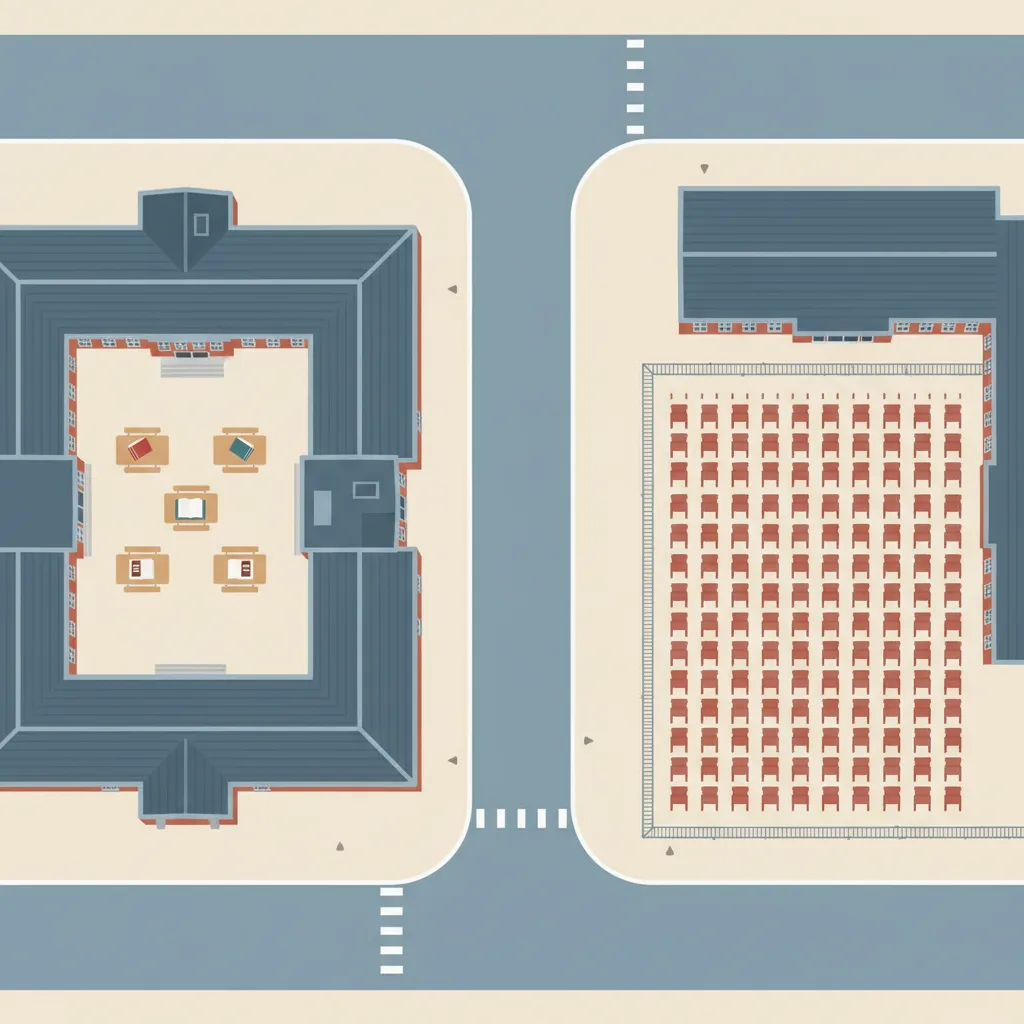
Two school buildings side by side, one with a small class and one with a large crowd, seen from above.

Żal za działanie

Szkoła prywatna

13%

13% rodziców uczniów szkół prywatnych nie wybrałoby ponownie tej samej szkoły (proxy — prawdopodobieństwo ponownego wyboru)

Amerykańscy rodzice uczniów K-12, ogólnokrajowo reprezentatywnie

retrospektywnie, bez stałego horyzontu

Żal za zaniechanie

Szkoła publiczna

41%

41% rodziców uczniów szkół publicznych nie wybrałoby ponownie tej samej szkoły (proxy — prawdopodobieństwo ponownego wyboru)

Amerykańscy rodzice uczniów K-12, ogólnokrajowo reprezentatywnie

retrospektywnie, bez stałego horyzontu

% żałuje tej decyzji

inaction dominates — Bezczynność dominuje — większość żałuje, że nie podjęła działania.

Powiązane decyzje

Semantycznie podobne decyzje — ten sam obszar, inne kompromisy.

family

Rodzic w domu vs pracujący

% żałuje tej decyzji

Działanie dominuje

Żal za działaniem 1.3× wyższy

family

Zajęcia vs swobodna zabawa

% żałuje tej decyzji

Działanie dominuje

Żal za działaniem 2.6× wyższy

family

Wielkość rodziny

% żałuje tej decyzji

Zaniechanie dominuje

Żal za zaniechaniem 2.6× wyższy

family

Ratować vs. dać sobie radzić

% żałuje tej decyzji

Działanie dominuje

Żal za działaniem 1.2× wyższy

family

Posiłki rodzinne

% żałuje tej decyzji

Zaniechanie dominuje

Żal za zaniechaniem 6.9× wyższy

family

Pozwolić rzucić vs. skończyć

% żałuje tej decyzji

Zaniechanie dominuje

Żal za zaniechaniem 2.3× wyższy

familyBezpośrednie

Dostęp dziecka do mediów społecznościowych

% żałuje tej decyzji

Działanie dominuje

Żal za działaniem 5.4× wyższy

family

Swoboda vs nadzor rodzicielski

% żałuje tej decyzji

Działanie dominuje

Żal za działaniem 2.3× wyższy

41% of traditional public-school parents say they would not choose the same school again, according to a nationally representative 50CAN/Edge Research survey. Among private-school parents the figure is only 13% — more than three times lower. Pew Research corroborates the gap from a different angle: 79% of private-school families report high satisfaction with educational quality, compared with 55% of public-school families. Neither instrument measures regret directly, but the consistency across surveys and constructs suggests the asymmetry is real, not an artifact of question wording.

The demand-side data makes the inaction story sharper. EdChoice’s 2024 Schooling in America survey found that 36% of parents would prefer private school, yet only 9% actually enroll — a 4:1 gap driven almost entirely by tuition costs and geographic access. That gap complicates the Gilovich framing: most public-school “inaction” is involuntary, constrained by money rather than by indecision. A parent who cannot afford private school and later wishes they could have is experiencing frustrated aspiration, not the freely-chosen inaction that typically intensifies over time in the regret literature.

Selection bias is the largest confounder. Private-school families are wealthier, more likely to have two parents in the household, and more educationally engaged on every metric NCES tracks. Their higher satisfaction may reflect resources and involvement rather than anything intrinsic to private schooling. Randomized voucher studies (e.g., Milwaukee, DC Opportunity Scholarship) show modest academic gains and higher parental satisfaction, but the effect sizes are far smaller than the raw satisfaction gap implies. The directional finding — parents who chose private school regret it less — holds up; the magnitude should be read with the income gradient firmly in mind.

Źródła: działanie

Rejestr twierdzeń

Każda liczba poniżej jest tym, co podało dane źródło — z dosłownym cytatem, na którym się oparliśmy, i sposobem, w jaki doszliśmy do naszej wartości. Kliknij dowolny link, żeby zweryfikować bezpośrednio.

2/2 źródeł niezależnie zweryfikowanych słowo w słowo z podanym źródłem

  1. [1] 50CAN / Edge Research — The State of Educational Opportunity in America Zweryfikowane
    The State of Educational Opportunity in America
    Statystyka
    87% of private-school parents would choose the same school again, vs 59% of traditional public-school parents
    Cytat
    “"87 percent of private school parents and 82 percent of parochial/religious school parents would make the same choice, while the number drops to 59 percent for traditional public school parents." ”
    Dane źródłowe z
    2024-10-15
    Dostęp
    2026-04-26
    Weryfikacja
    Cytat niezależnie pobrany ponownie i potwierdzony słowo w słowo z podanym źródłem podczas naszego audytu ugruntowania.
    Obliczenie
    50CAN / Edge Research national survey. We derive action-regret as 1 − 0.87 = 0.13 (13% would not choose the same school). This is a proxy for regret — "would not choose again" conflates dissatisfaction, changed circumstances, and active regret.
  2. [2] Pew Research Center — Parents differ sharply by party over what their K-12 children should learn in school Zweryfikowane
    Parents differ sharply by party over what their K-12 children should learn in school
    Statystyka
    79% of private-school parents report high satisfaction with the quality of their child's education, vs 55% of public-school parents
    Cytat
    “"About eight-in-ten parents answering about a child in private school (79%) express high levels of satisfaction with the quality of education their child is receiving, compared with a narrower majority (55%) of those answering about a child who is in public school." ”
    Dane źródłowe z
    2022-10-26
    Dostęp
    2026-04-26
    Weryfikacja
    Cytat niezależnie pobrany ponownie i potwierdzony słowo w słowo z podanym źródłem podczas naszego audytu ugruntowania.
    Obliczenie
    Pew Research Center survey of U.S. parents of K-12 children (fielded Oct 2022). The 79% vs 55% satisfaction gap corroborates the 50CAN "would choose again" differential but measures a different construct (satisfaction vs hypothetical re-choice).

Źródła: bezczynność

Rejestr twierdzeń

Każda liczba poniżej jest tym, co podało dane źródło — z dosłownym cytatem, na którym się oparliśmy, i sposobem, w jaki doszliśmy do naszej wartości. Kliknij dowolny link, żeby zweryfikować bezpośrednio.

1/2 źródeł niezależnie zweryfikowanych słowo w słowo z podanym źródłem

  1. [1] 50CAN / Edge Research — The State of Educational Opportunity in America
    The State of Educational Opportunity in America
    Statystyka
    Only 59% of traditional public-school parents would choose the same school again
    Cytat
    “"87 percent of private school parents would make the same choice, while the number drops to 59 percent for traditional public school parents." ”
    Dane źródłowe z
    2024-10-15
    Dostęp
    2026-04-26
    Obliczenie
    Inaction-regret derived as 1 − 0.59 = 0.41. The 41% includes parents who would switch to private, charter, magnet, or homeschool — not exclusively to private school. This overstates the "wish I'd gone private" sentiment specifically.
  2. [2] EdChoice — Beyond Enrollment: What Parents Really Want from Their Children's Education Zweryfikowane
    Beyond Enrollment: What Parents Really Want from Their Children's Education
    Statystyka
    36% of parents would most like to enroll in private school, but only 9% actually do
    Cytat
    “"The most popular schooling option was private schooling, with over a third of parents (36%) stating they would most like to enroll their children that way. This is four times the rate of students enrolled in private schools (9%)." ”
    Dane źródłowe z
    2024-08-01
    Dostęp
    2026-04-26
    Weryfikacja
    Cytat niezależnie pobrany ponownie i potwierdzony słowo w słowo z podanym źródłem podczas naszego audytu ugruntowania.
    Obliczenie
    EdChoice 2024 Schooling in America Survey, n = 2,319 parents. The 4:1 ratio between stated preference and actual enrollment signals a large pool of constrained inaction — parents who want private school but face cost, location, or admissions barriers. This contextualizes but does not directly measure regret.

Zastrzeżenia

Obie strony czerpią z tej samej ankiety 50CAN/Edge Research, więc porównanie wskaźnika żalu jest wewnętrznie spójne, ale pytanie „czy wybrałbyś tę samą szkołę ponownie” miesza żal ze zmienionymi okolicznościami — rodzic, który przeprowadził się do innej dzielnicy, może odpowiedzieć „nie” bez żałowania pierwotnej decyzji. Dane satysfakcji NCES (79% vs 55%) używają innego instrumentu i roku (2019 vs 2024), więc dwa zbiory danych potwierdzają kierunek, ale nie dokładną skalę. Stronniczość selekcji to słoń: rodziny, które płacą czesne w szkole prywatnej, są zamożniejsze i bardziej zaangażowane edukacyjnie; ich wyższa satysfakcja może odzwierciedlać dochód i zaangażowanie, a nie sam typ szkoły. Luka EdChoice 36%-chce-vs-9%-zapisanych sugeruje, że koszt jest główną barierą, co oznacza, że zaniechanie tutaj jest często mimowolne — odstępstwo od ramy Gilovicha, która zakłada, że aktor mógł działać.

Dane surowe: /api/decisions.json

Ostatnio oglądane na tym urządzeniu