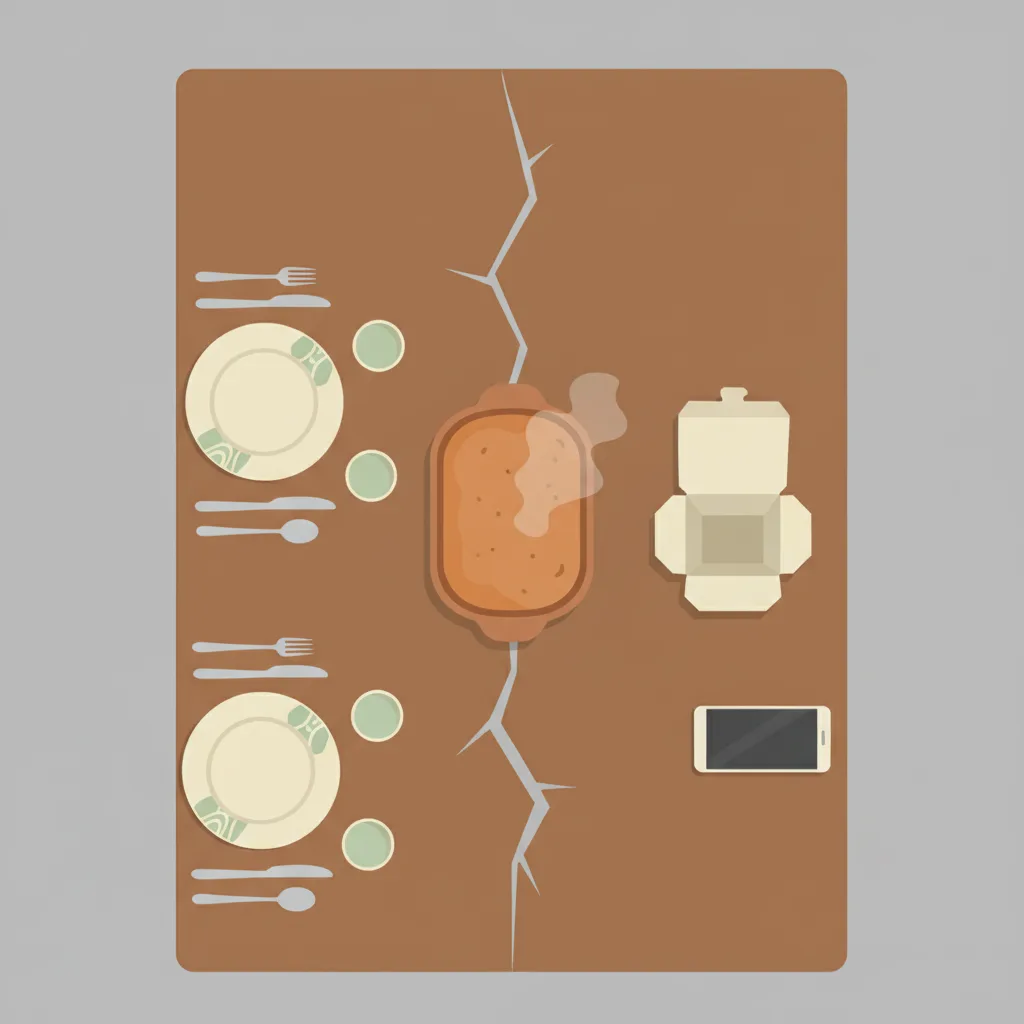
Regularne publikowanie życia dziecka w mediach społecznościowych vs. ochrona jego prywatności cyfrowej
Jeśli działasz
Regularne dzielenie się życiem dziecka w sieci
52%
Jeśli nie działasz
Ochrona cyfrowej prywatności dziecka
8,0%
Odsetek osób, które później żałują każdego wyboru. Słupki i pełna kartoteka danych poniżej.
Rodzina
Ostatnio sprawdzono 2026-05-13
Jakość dowodów 4.38/5
Ocena recenzji w ośmiu wymiarach względem
rubryki jakości
. Każdy wymiar oceniony w skali 1–5.
D1 Weryfikacja źródeł
4/5
D2 Autorytet i niezależność źródeł
5/5
D3 Dokładność wskaźnika żalu
5/5
D4 Porównywalność źródeł
4/5
D5 Wzorzec Gilovicha
4/5
D6 Jakość tekstu
4/5
D7 Kompletność zastrzeżeń
4/5
D8 Jakość próby
5/5
Średnia4.38/5
Dane zastępcze — dla tej decyzji nie istnieje bezpośrednie badanie żałowania. Wskaźniki są oparte na ocenach zadowolenia i danych o barierach dostępu, a nie na pytaniach bezpośrednio dotyczących żałowania. Zobacz zastrzeżenia poniżej.
Żal za działanie
Regularne dzielenie się życiem dziecka w sieci
52%
52% rodziców obawia się, że ich dziecko będzie zawstydzone w przyszłości tym, co udostępniają (zastępcza miara obawy, nie zmierzony żal)
Amerykańscy rodzice regularnie publikujący zdjęcia lub wideo swojego dziecka w mediach społecznościowych
przekrojowo, 2015
Żal za zaniechanie
Ochrona cyfrowej prywatności dziecka
8,0%
Żadne badanie nie mierzy żalu wśród rodziców chroniących prywatność; pokazane ~8% to imputowana wartość zastępcza, a nie zmierzony wskaźnik
Amerykańscy rodzice, którzy aktywnie ograniczają lub unikają publikowania o swoich dzieciach w mediach społecznościowych
przekrojowo, 2019
% żałuje tej decyzji
Regularne dzielenie się życiem dziecka w sieciOchrona cyfrowej prywatności dziecka
52%8,0%
action dominates — Działanie dominuje — większość żałuje, że podjęła działanie.
Powiązane decyzje
Semantycznie podobne decyzje — ten sam obszar, inne kompromisy.
Among US parents of children age four and under, 52% are concerned their child might be embarrassed when older by what is shared about them on social media, and roughly two-thirds are concerned about private information (68%) or photos (67%) being found, according to the C.S. Mott Children’s Hospital National Poll on Children’s Health (fielded 2014, n=569). These are concerns about a hypothetical future, not retrospective regret, and they coexist with continued sharing: a 2020 Pew Research Center survey found that 82% of social-media-using parents have posted photos, videos, or information about their children, yet only 16% say they worry sometimes or often that their child will later be upset about it. On the inaction side, no published survey directly asks non-sharing parents whether they regret their restraint. The ~8% shown for that side is an imputed placeholder, not a measured rate; the entry is flagged as a proxy comparison.
The decision differs structurally from most regret pairs because its full consequences unfold over years, not weeks. A child photographed extensively in infancy cannot consent and may, at age 12 or 16, discover years of publicly archived posts depicting their private developmental milestones, childhood embarrassments, or medical experiences. Once content is indexed, screenshot, or held by third-party data brokers, deletion from the original platform does not reliably remove it. The Mott Poll was fielded in late 2014, before the normalization of Stories, Reels, and TikTok — current sharenting rates are substantially higher, and the volume of archived content per child has grown accordingly.
Gilovich and Medvec’s temporal asymmetry research predicts that action regrets are more vivid in the short term but that inaction regrets accumulate over time. Sharenting is unusual in that the short-term feedback is consistently positive (social validation, likes, grandparent engagement) while the long-term cost accrues to the child, not the parent. This feedback mismatch — positive reinforcement at time of posting, negative consequence to a third party years later — may cause parents to systematically underestimate action-side regret at the moment of decision and encounter it only retrospectively, when the child is old enough to object.
Źródła: działanie
Rejestr twierdzeń
Każda liczba poniżej jest tym, co podało dane źródło — z dosłownym cytatem, na którym się oparliśmy, i sposobem, w jaki doszliśmy do naszej wartości. Kliknij dowolny link, żeby zweryfikować bezpośrednio.
1/2 źródeł niezależnie zweryfikowanych słowo w słowo z podanym źródłem
[1]C.S. Mott Children's Hospital National Poll on Children's Health — Parents on Social Media: Likes and Dislikes of Sharenting
Badanie pierwotne
52% of parents are concerned that, when older, their child might be embarrassed about what has been shared on social media; 68% are concerned about private information about their child being found, and 67% about photos being shared
Cytat
“"More than two-thirds of parents are concerned about someone finding out private information about their child (68%) or sharing photos of their child (67%). Over half (52%) are concerned that, when older, their child might be embarrassed about what is shared on social media."
”
Dane źródłowe z
2015-03-16
Dostęp
2026-06-30
Obliczenie
C.S. Mott Children's Hospital National Poll on Children's Health, Vol. 23 Issue 2 ("Parents on Social Media: Likes and Dislikes of Sharenting"), survey fielded November/December 2014, N=569 parents of children age 4 and under. Nationally representative US sample. The 52% captures parents concerned that their child might be embarrassed about shared content when older -- the side label is a forward-looking concern about future embarrassment, not a direct "I regret what I posted" question. The 0.52 numeral is the poll's verbatim embarrassment-concern reading but is a concern proxy, not measured regret.
[2]Pew Research Center — Parents' attitudes -- and experiences -- related to digital technology
Zweryfikowane
Badanie pierwotne
82% of parents who use social media have posted photos, videos or other information about their children on these sites; 16% say they sometimes or often worry their children might be upset in the future about what was posted (83% rarely or never worry)
Cytat
“"82% of parents who use social media say they have posted photos, videos or other information about their children on these sites. ... The majority of parents who share photos, videos and information about their children on social media say they rarely or never (83%) worry that in the future their children might be upset about the things they posted about them on social media sites. Just 16% say they worry about this sometimes or often."
”
Dane źródłowe z
2020-07-28
Dostęp
2026-06-30
Weryfikacja
Cytat niezależnie pobrany ponownie i potwierdzony słowo w słowo z podanym źródłem podczas naszego audytu ugruntowania.
Obliczenie
Pew Research Center, "Parenting Children in the Age of Screens" (American Trends Panel Wave 63, fielded March 2-15, 2020). Documents that sharenting is near-universal among social-media-using parents (82% have posted about their children) while only a 16% minority worry sometimes/often that their child will later be upset -- a lower self-reported worry rate than the Mott concern figures. Used as corroborating evidence on the action side, not in rate arithmetic.
Źródła: bezczynność
Rejestr twierdzeń
Każda liczba poniżej jest tym, co podało dane źródło — z dosłownym cytatem, na którym się oparliśmy, i sposobem, w jaki doszliśmy do naszej wartości. Kliknij dowolny link, żeby zweryfikować bezpośrednio.
[1]Pew Research Center — Parenting Children in the Age of Screens↗ 1 other entry
Badanie pierwotne
Among parents whose under-12 child uses a voice-activated assistant, about 39% are at least somewhat concerned about the data the assistant collects about their child (11% very concerned)
Cytat
“"About four-in-ten parents of a child age 11 or younger who uses or interacts with a voice-activated assistant (39%) say they are at least somewhat concerned about the data these assistants collect about their child, including 11% who say they are very concerned."
”
Dane źródłowe z
2020-07-28
Dostęp
2026-06-30
Obliczenie
Pew Research Center, "Parenting Children in the Age of Screens" (American Trends Panel Wave 63, fielded March 2-15, 2020). This source documents that parental concern about child data collection is real but partial (39% concerned about voice-assistant data among the relevant subgroup) -- it establishes the motivation behind privacy protection. It does NOT measure regret among privacy-protective parents. No published survey asks non-sharing parents whether they regret their restraint, so the inaction side carries no reliable regret estimate (see regret_display).
Zastrzeżenia
Oba wskaźniki w tym wpisie to miary zastępcze, a nie zmierzony żal — wpis jest oznaczony proxy_only. Figura po stronie działania ujmuje rodzicielską OBAWĘ, a nie retrospektywny żal: 52% rodziców w sondażu C.S. Mott oświadczyło, że obawia się, iż ich dziecko może być zawstydzone w przyszłości tym, co udostępniają, a ten sam sondaż wykazał 68%/67% obawiających się o prywatne informacje lub zdjęcia. To zmartwienia wybiegające w przyszłość, a nie odpowiedzi "żałuję konkretnych postów", i wielu rodziców, którzy je wyrażali, nadal udostępniało (Pew ustala, że 82% rodziców korzystających z mediów społecznościowych opublikowało treści o swoich dzieciach, choć tylko 16% czasem lub często obawia się, że dziecko będzie później niezadowolone). 8% po stronie zaniechania NIE jest zmierzonym wskaźnikiem: żadne opublikowane badanie nie pyta rodziców chroniących prywatność, czy żałują swojej powściągliwości, więc liczba jest imputowaną wartością zastępczą zachowaną jedynie dlatego, że schemat wymaga liczby — stronę zaniechania należy traktować jako pozbawioną wiarygodnego oszacowania żalu. Wyróżniającą cechą tej decyzji jest to, że żal może się nasilać w miarę dorastania dziecka: dzieci obszernie fotografowane we wczesnym dzieciństwie nie mogą wyrazić zgody na swój cyfrowy ślad i mogą później sprzeciwiać się latom publicznie zarchiwizowanych postów. Treści opublikowane na platformach w latach 2010–2025 prawdopodobnie utrzymają się bezterminowo nawet po usunięciu, z uwagi na archiwizację, zrzuty ekranu i zewnętrznych brokerów danych. Sondaż Mott przeprowadzono w 2015 r., przed powszechną normalizacją Instagram Stories, TikToka i spontanicznego udostępniania w stylu BeReal — wskaźniki sharentingu i wynikające z nich obawy prawdopodobnie od tego czasu wzrosły.