Dữ liệu đại diện — không có cuộc khảo sát trực tiếp nào về sự hối tiếc cho quyết định này. Tỷ lệ được lấy từ điểm hài lòng và dữ liệu rào cản tiếp cận thay vì câu hỏi trực tiếp về sự hối tiếc. Xem cảnh báo bên dưới.
Hối hận vì hành động
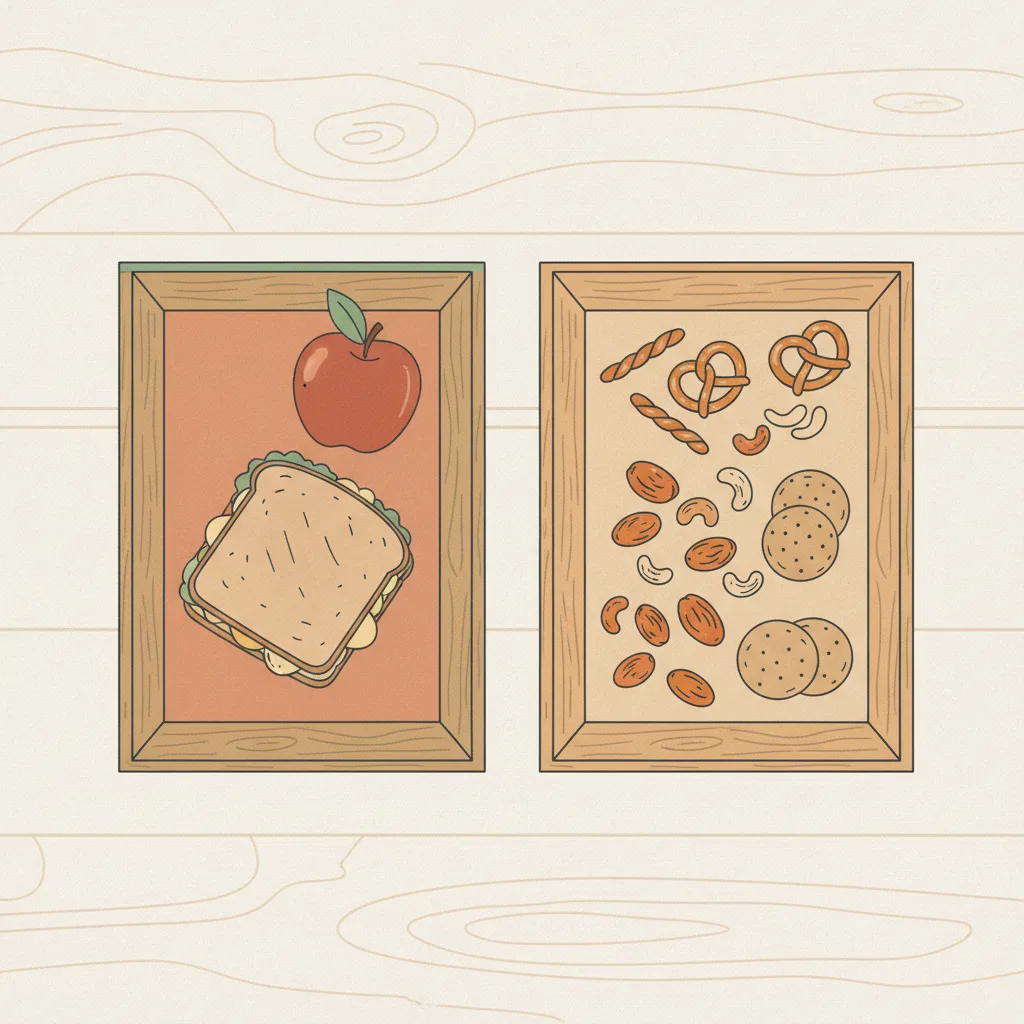
Ăn vặt giữa các bữa
15%
~15% người trưởng thành Mỹ đặt một quyết tâm Năm Mới nhắm vào việc cắt giảm đồ ăn vặt/thực phẩm nhiều đường (tỷ lệ dành riêng cho ăn vặt trong con số 25% có-bất-kỳ-quyết-tâm-về-thực-phẩm của Purdue — ý định tuyên bố trước, không phải hối tiếc hồi tưởng)
Người trưởng thành Hoa Kỳ, đại diện toàn quốc
cắt ngang, thu thập tháng 1 năm 2024
Hối hận vì không hành động
Chỉ ăn 2-3 bữa cố định (không ăn vặt)
27%
27% người trưởng thành Mỹ đang tích cực cố gắng giảm cân (chỉ báo về ý-định-quản-lý-cân-nặng — không phải hối tiếc trực tiếp về mô hình chỉ-ăn-bữa-chính)
Người trưởng thành Hoa Kỳ, đại diện toàn quốc
cắt ngang, thu thập từ 6–20 tháng 11, 2024
% hối tiếc về lựa chọn này
Ăn vặt giữa các bữaChỉ ăn 2-3 bữa cố định (không ăn vặt)
15%27%
inaction dominates — Không hành động chiếm ưu thế — hầu hết hối tiếc vì đã không hành động.
Quyết định liên quan
Các quyết định tương tự về mặt ngữ nghĩa — cùng lĩnh vực, đánh đổi khác nhau.
Twenty-seven percent of US adults are actively working to lose
weight, per Gallup’s November 2024 national poll of 1,001 adults
— the closest available proxy for dissatisfaction with eating patterns
that might motivate adopting a meals-only structure. That figure is
the inaction-side proxy shown above. It falls short of a direct regret
measure: the meals-only pattern is the minority position in the US,
so the question “do you regret not snacking?” is structurally rare,
and most adults who restrict to defined meals do so deliberately as
a weight-management or blood-sugar strategy rather than as a
regret-driven reversal of a prior snacking habit.
On the other side, 25% of US consumers set a food or nutrition-
related New Year’s resolution in 2024, per Purdue’s Consumer Food
Insights survey of 1,200 US adults — up six percentage points from
2023, with “the majority” planning to limit salty snacks, sugary
foods, regular soft drinks and alcohol. That 25% spans many dietary
goals, not snacking, so the action-side proxy is the snacking-specific
slice: roughly 13-18% of all US adults if “the majority” means about
half to two-thirds of those with resolutions, which we set at ~15%.
Even that ~15% is prospective intent to cut snacks, not retrospective
regret about a snacking habit. The structural
backdrop: USDA NHANES 2017-March 2020 data show 95% of US adults
snack on a given day, 78% snack multiple times, and among consumers
snacks contribute 24% of daily energy and 43% of added sugars. The
two figures come from different instruments (Purdue resolution
intent vs Gallup active weight-management) and measure different
constructs (prospective resolution vs current effort), so any
cross-side comparison is approximate.
The meal-frequency question is genuinely contested in the nutrition
literature. Bellisle’s 2014 Physiology & Behavior review concludes
that snacking neither clearly causes obesity nor clearly prevents
it, that eating frequency does not independently predict body weight
when total energy intake is controlled, and that the same eating
pattern can have different effects depending on food quality and
context. That weakens the case for either side carrying strong
regret: most US adults snack, most US adults who snack are not
measurably worse off for it when energy intake is matched, and the
few who reverse to a meals-only pattern do not have unambiguous
evidence that their previous behavior caused them measurable harm.
The ~12-point gap between the ~15% snacking-resolution share and the
27% active weight-management share is a difference between two weak,
non-comparable proxy instruments, not a measured difference in
regret. Readers should treat both figures as proxies for different
constructs and not read the delta as a precise regret comparison.
Nguồn: hành động
Sổ cái xác nhận
Mỗi con số dưới đây là những gì mỗi nguồn đã báo cáo, cùng với trích dẫn nguyên văn mà chúng tôi dựa vào và cách chúng tôi đưa ra con số của mình. Nhấp vào bất kỳ liên kết nào để xác minh trực tiếp.
1/3 nguồn được xác minh độc lập đúng từng chữ so với nguồn được trích dẫn
[1]News-Medical / coverage of Purdue Consumer Food Insights Jan 2024 — Increasing New Year's resolutions for healthier eating, Purdue report finds
Nguồn tham khảo
25% of US consumers had a food/nutrition-related New Year's resolution in 2024 (up 6 pp from 2023); the majority plan to increase fruits, vegetables and water while limiting salty snacks, sugary foods, regular soft drinks and alcohol; 46% anticipate cravings as an obstacle
Trích đoạn
“"25% of consumers responded 'yes' when asked if they had any food or nutrition-related New Year's resolutions, up 6 percentage points from the response to the same question last year... the survey-based report out of Purdue University's Center for Food Demand Analysis and Sustainability...included 1,200 consumers across the U.S."
”
Dữ liệu nguồn từ
2024-02-15
Truy cập
2026-05-30
Tính toán
Purdue Center for Food Demand Analysis and Sustainability, Consumer Food Insights, Volume 3 Issue 1, January 2024, N=1,200 US consumers. The 25% headline is the share of US consumers with ANY food/nutrition-related New Year's resolution, covering many dietary goals (more fruit/veg/water, less salty snacks, sugary foods, soft drinks, alcohol) — it is NOT a snacking-specific figure and NOT a regret measure. Because the report says \"the majority\" of those resolutions target the salty-snacks/sugary-foods/soft-drinks/alcohol basket (not snacking alone), the snacking-targeted share is roughly 0.25 x ~50-70% = 13-18% of all US adults. We therefore set the action-side proxy to the midpoint, ~15% (regret_rate 0.15), and label it explicitly as prospective resolution intent to cut snacks/sugary foods, not retrospective regret about snacking. The earlier 25% figure fused the all-resolutions headline with a snacking claim and overstated the snacking-targeted signal; this has been corrected.
Độc lập
Independent academic survey from Purdue's Center for Food Demand Analysis and Sustainability with publicly disclosed methodology; no commercial sponsorship of the consumer insights series.
[2]USDA Agricultural Research Service / Sebastian, Hoy, Goldman, Moshfegh — Snack Consumption by U.S. Adults: What We Eat in America, NHANES 2017 - March 2020
Báo cáo chính phủ
95% of US adults aged 20+ consume one or more foods or beverages as a snack on the intake day; 78% consume two or more snacks; snacks provide on average 24% of daily energy and 43% of added sugars among consumers
Trích đoạn
“"Among adults aged 20 years and older, 95% consume one or more foods and/or beverages at a snack on the intake day... Currently, consuming multiple snacks is the norm, with 78% consuming two or more on any given day. Among consumers, snacks provide on average 24% of daily intake of energy and 43% of added sugars."
”
Dữ liệu nguồn từ
2024-04-01
Truy cập
2026-05-30
Tính toán
USDA Dietary Data Brief No. 53, based on NHANES 2017-March 2020 nationally representative dietary recall data. Establishes the prevalence baseline: 95% of US adults snack at least once on a given day; 78% snack multiple times; snacks contribute 24% of daily energy and 43% of added sugars on average. Used here on the action side as the govt_report context: snacking is the normal modern US eating pattern, not a deviation. This is NOT the regret-rate figure; that is from Purdue Jan 2024 (see above). The NHANES data establishes that the question \"do you regret snacking?\" applies to nearly all US adults if at all, and that the dietary stakes (43% of added sugars from snacks among consumers) are concrete.
Độc lập
US federal government data (NHANES via USDA ARS) with publicly disclosed methodology; no commercial sponsorship of the survey or analysis. Independent of the Purdue insights series.
[3]Journal of Nutrition / Piernas & Popkin — Snacking Increased among U.S. Adults between 1977 and 2006
Đã xác minh
Được bình duyệt
US adult snacking prevalence increased from 71% to 97% between 1977-78 and 2003-06; contribution of snacks to total energy intake increased from 18% to 24%
Trích đoạn
“"snacking prevalence increased significantly from 71 to 97% in 2003-2006... the percentage of snacking on both d 1 and d 2 increased from 42 to 78%... the contribution of snacks to total energy intake increased from 18 to 24%."
”
Dữ liệu nguồn từ
2010-02-01
Truy cập
2026-05-30
Xác minh
Trích đoạn đã được tải lại độc lập và xác nhận đúng từng chữ so với nguồn được trích dẫn trong quá trình kiểm định căn cứ của chúng tôi.
Tính toán
Piernas & Popkin (J Nutr 2010) established the long-run shift: US adult snacking went from a minority behavior (71% on any given day in 1977-78) to near-universal (97% by 2003-06), with the share of daily energy from snacks rising from 18% to 24%. Used on the action side as the peer-reviewed historical baseline for the prevalence claim above. This is NOT the action-side regret-rate figure; that is the snacking-specific share (~15%) derived from Purdue's January 2024 resolution survey (see above). Snacking-related regret has not been directly surveyed in the US, so the action side relies on a prospective resolution-intent proxy, not a retrospective regret measure.
Độc lập
Independent academic analysis of CDC NHANES data; methodology publicly disclosed. No commercial sponsorship of the analysis.
Nguồn: không hành động
Sổ cái xác nhận
Mỗi con số dưới đây là những gì mỗi nguồn đã báo cáo, cùng với trích dẫn nguyên văn mà chúng tôi dựa vào và cách chúng tôi đưa ra con số của mình. Nhấp vào bất kỳ liên kết nào để xác minh trực tiếp.
2/2 nguồn được xác minh độc lập đúng từng chữ so với nguồn được trích dẫn
[1]Gallup News — 43% of Americans Say They Are Overweight; 55% Want to Slim Down
Đã xác minh
↗ 1 other entry
Nguồn tham khảo
27% of US adults are actively working to lose weight; 55% want to lose weight; 43% view themselves as overweight
Trích đoạn
“"43%, view themselves as overweight... 55%, say they want to lose weight... only 27% report they are actively working toward that goal."
”
Dữ liệu nguồn từ
2024-12-10
Truy cập
2026-05-30
Xác minh
Trích đoạn đã được tải lại độc lập và xác nhận đúng từng chữ so với nguồn được trích dẫn trong quá trình kiểm định căn cứ của chúng tôi.
Tính toán
Gallup national poll, N=1,001 US adults, fielded November 6-20, 2024, margin of error ±4 percentage points. Used here as the inaction-side proxy: 27% of US adults are actively pursuing weight management, a state that implies current dissatisfaction with some aspect of current eating behavior including the absence of structural snacking discipline. This is NOT a direct regret measure about the meals-only pattern; in fact, the meals-only pattern is the minority position (95% of US adults snack daily per NHANES), so the question \"do you regret not snacking?\" is structurally rare. The 27% captures the directional signal: a substantial minority of US adults are actively dissatisfied enough with their current diet to do something about it, and \"cut the snacks\" is one of the most common dietary-change targets in popular guidance.
Độc lập
Independent Gallup national poll using random-digit-dial methodology; no shared sample with USDA NHANES or Piernas & Popkin. Different methodology and different construct.
[2]Physiology & Behavior / France Bellisle — Meals and snacking, diet quality and energy balance
Đã xác minh
Được bình duyệt
Snacking may contribute to excess energy intake and weight gain via context, frequency and food quality; in some reports snacking facilitates energy-intake adjustment to needs, in others (especially obese populations) it contributes energy but little nutrition
Trích đoạn
“"Snacking may contribute to excess energy intake and weight gain through different ways, for example: context/environment of eating, frequency of consumption and quality of food choices. In many reports, snacking appears to facilitate the adjustment of energy intake to needs, and to contribute carbohydrates, rather than fats, to the diet. By contrast, snacking often appears to contribute much energy but little nutrition in the diet of other consumers, particularly obese children and adults."
”
Dữ liệu nguồn từ
2014-07-01
Truy cập
2026-05-30
Xác minh
Trích đoạn đã được tải lại độc lập và xác nhận đúng từng chữ so với nguồn được trích dẫn trong quá trình kiểm định căn cứ của chúng tôi.
Tính toán
Bellisle (Physiology & Behavior 2014) is the canonical peer- reviewed review framing the meal-frequency literature. The critical finding: eating frequency does not independently predict body weight when total energy intake is controlled. Used here on the inaction side as the literature basis for the observation that the case for a meals-only pattern is genuinely contested — snacking neither clearly causes obesity nor clearly prevents it, and the same eating pattern can have different effects depending on food quality and context. This is NOT the regret rate; that is from Gallup 2024. Bellisle's review provides the scientific context that weakens the case for the inaction side carrying strong regret: most US adults snack, most US adults who snack are not measurably worse off for it when energy intake is matched, and the few who reverse to a meals-only pattern do not have unambiguous evidence that their previous behavior was harmful.
Độc lập
Independent peer-reviewed academic review with publicly disclosed methodology; Bellisle has published widely on eating frequency, including some industry-funded studies on snacking listed in her overall body of work but the 2014 P&B review is not directly industry-sponsored.
Lưu ý
Không bên nào đo lường sự hối tiếc trực tiếp, và không có khảo sát Mỹ nào đã công bố hỏi thẳng "bạn có hối tiếc vì ăn vặt giữa các bữa không?" hay "bạn có hối tiếc vì không ăn vặt không?" Câu hỏi về tần suất bữa ăn thực sự còn gây tranh cãi trong tài liệu dinh dưỡng (Bellisle 2014, Physiol Behav): tần suất ăn không dự đoán trọng lượng cơ thể một cách độc lập khi tổng lượng năng lượng nạp vào được kiểm soát. Khảo sát Consumer Food Insights của Purdue tháng 1 năm 2024 phát hiện 25% người tiêu dùng Mỹ có BẤT KỲ quyết tâm Năm Mới nào về thực phẩm/dinh dưỡng; con số 25% đó trải rộng nhiều mục tiêu ăn kiêng, không phải ăn vặt. Vì "phần lớn" các quyết tâm đó nhắm vào nhóm đồ-ăn-mặn/thực-phẩm-nhiều-đường/nước-ngọt/rượu, tỷ lệ dành riêng cho ăn vặt là khoảng 13-18% tổng số người trưởng thành Mỹ, nên chúng tôi đặt chỉ báo phía hành động ở điểm giữa, ~15%. (Một phiên bản trước đó dùng toàn bộ 25%, vốn hợp nhất con số tiêu đề tất-cả-các-quyết-tâm với một tuyên bố về ăn vặt và phóng đại tín hiệu hành động.) Ngay cả ở mức 15% thì đây vẫn là ý định quyết tâm tuyên bố trước, không phải hối tiếc hồi tưởng về việc ăn vặt. Con số 27% ở phía bất động là tỷ lệ người trưởng thành Mỹ đang tích cực cố gắng giảm cân theo Gallup tháng 11 năm 2024 — một tín hiệu có liên quan nhưng gián tiếp, và mô hình chỉ-ăn-bữa-chính tự nó là vị thế thiểu số ở Mỹ (95% người trưởng thành Mỹ ăn vặt hằng ngày theo USDA NHANES 2017-tháng 3 năm 2020), nên câu hỏi "bạn có hối tiếc vì không ăn vặt không?" về mặt cấu trúc là hiếm gặp. Chúng tôi dùng con số 27% nỗ-lực-giảm-cân-tích-cực làm chỉ báo kề-cận-hối-tiếc gần nhất có sẵn. Hai con số đến từ các công cụ và dân số khác nhau (khảo sát ý-định-quyết-tâm của Purdue so với thăm dò quản-lý-cân-nặng-tích-cực của Gallup) và đo lường các khái niệm khác nhau (quyết tâm tương lai so với nỗ lực hiện tại), nên bất kỳ so sánh giữa hai bên nào cũng chỉ là xấp xỉ và không nên được đọc như một khoảng cách hối tiếc chính xác. Con số regret_delta ~12 điểm phản ánh hai công cụ chỉ báo thay thế không thể so sánh, không phải một sự khác biệt được đo lường về hối tiếc. Nằm bên dưới câu hỏi hối tiếc là mối quan hệ nhân quả còn gây tranh cãi: dữ liệu NHANES cho thấy đồ ăn vặt đóng góp 24% năng lượng hằng ngày và 43% lượng đường bổ sung trong số người tiêu dùng, điều này xác lập mô hình ăn vặt như một nhân tố đóng góp lớn vào lượng calo nghèo dinh dưỡng, nhưng bài tổng quan của Bellisle lập luận rằng chiều tần-suất-bữa-ăn phần lớn lệ thuộc vào tổng lượng năng lượng nạp vào và chất lượng thực phẩm.