

Aller au contenu
Likelier

Regret d’agir vs. de ne pas agir

Accorder aux enfants une grande liberté pour explorer versus surveiller de près leurs activités et déplacements

Si vous agissez

Surveillance étroite / parentalité hyperprotectrice

45%

Si vous n’agissez pas

Éducation libre / parentalité autonomisante

20%

Pourcentage de personnes qui regrettent ensuite chaque choix. Les barres et le registre complet s’affichent ci-dessous.


Famille

Dernière révision 2026-06-14

Qualité des preuves 4.63/5

Score d’évaluation en huit dimensions selon la grille de qualité . Chaque dimension notée de 1 à 5.

D1 Vérification des sources
5/5
D2 Autorité et indépendance des sources
5/5
D3 Précision du taux de regret
2/5
D4 Comparabilité des sources
5/5
D5 Motif de Gilovich
5/5
D6 Qualité de la prose
5/5
D7 Complétude des réserves
5/5
D8 Qualité de l’échantillon
5/5
Moyenne 4.63/5
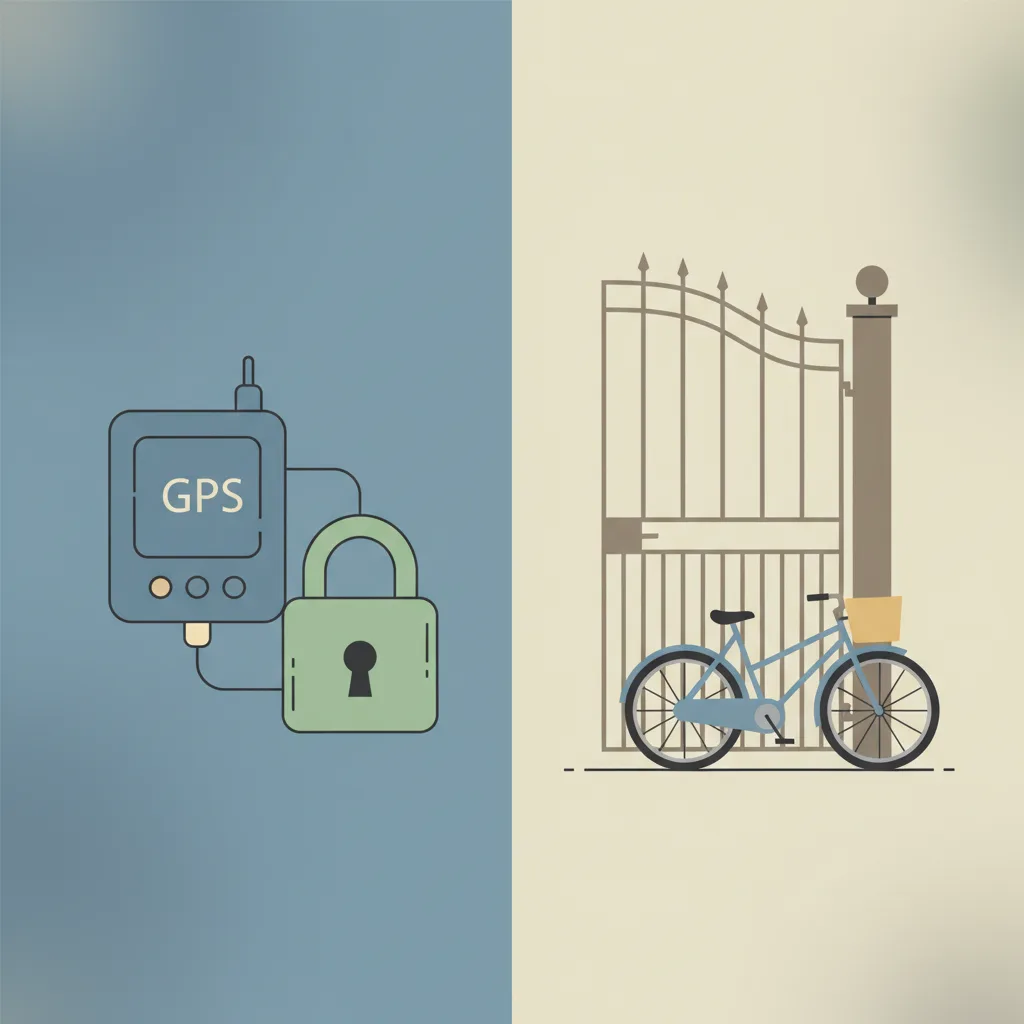
A GPS tracker and a padlock on the left, an open gate with a bicycle on the right
Données de substitution — aucune enquête directe sur les regrets n'existe pour cette décision. Les taux sont dérivés des scores de satisfaction et des obstacles d'accès plutôt que de questions portant directement sur les regrets. Voir les mises en garde ci-dessous.

Regret d'action

Surveillance étroite / parentalité hyperprotectrice

45%

45% des parents américains s'auto-identifient comme tendant à être surprotecteurs (proxy d'auto-identification)

Parents américains avec enfants de moins de 18 ans, représentatifs au niveau national

rétrospective, enquête sept-oct 2022

Regret d'inaction

Éducation libre / parentalité autonomisante

20%

20% des parents américains disent qu'ils tendent à donner trop de liberté à leurs enfants (proxy d'auto-identification)

Parents américains avec enfants de moins de 18 ans, représentatifs au niveau national

rétrospective, enquête sept-oct 2022

% regrettent ce choix

action dominates — L'action domine — la plupart regrettent d'avoir agi.

Décisions associées

Décisions sémantiquement similaires — même terrain, compromis différents.

family

Intervenir vs. laisser chercher

% regrettent ce choix

L'action domine

Regret d'action 1.2× plus élevé

family

Activités vs jeu libre

% regrettent ce choix

L'action domine

Regret d'action 2.6× plus élevé

family

Discipline vs permissivité

% regrettent ce choix

L'inaction domine

Regret d'inaction 2.4× plus élevé

family

Gâter vs. modérer les cadeaux

% regrettent ce choix

L'action domine

Regret d'action 2.9× plus élevé

family

Privé vs public

% regrettent ce choix

L'inaction domine

Regret d'inaction 3.2× plus élevé

family

Parent au foyer vs actif

% regrettent ce choix

L'action domine

Regret d'action 1.3× plus élevé

family

Maison de retraite vs domicile

% regrettent ce choix

L'action domine

Regret d'action 2.3× plus élevé

familyDirecte

Accès de l'enfant aux réseaux sociaux

% regrettent ce choix

L'action domine

Regret d'action 5.4× plus élevé

45% of US parents self-identify as tending to be overprotective, per Pew Research Center’s nationally representative 2023 survey of 3,757 parents — more than double the 20% who say they tend to give too much freedom. Both figures emerge from the same instrument and the same sample, making this one of the cleaner action-vs-inaction comparisons available in the parenting literature. The outcome research reinforces the direction: McCoy, Dimler, and Rodrigues (2025) aggregated 53 studies and 111 effect sizes in the Journal of Adult Development and found helicopter parenting consistently associated with increased anxiety and depression and reduced self-efficacy, academic adjustment, and regulatory skills in emerging adults.

The case against excessive independence is real but narrow. A handful of studies find that extended unsupervised time correlates with modestly elevated risk of externalizing problems in younger children. Yet Gray, Lancy, and Bjorklund (2023) reviewed decades of evidence in The Journal of Pediatrics and concluded the opposite dynamic is the dominant public-health concern: declining opportunities for independent activity are a primary driver of rising childhood anxiety and depression. The world has also become objectively safer for children since the 1980s — rates of child abduction and traffic fatalities have fallen substantially — even as parental supervision has intensified. The gap between objective risk and perceived risk is itself a well-documented phenomenon in the parenting literature.

The Pew data capture a self-aware tension that Gilovich’s framework would predict: action regrets (having hovered too much) tend to feel more acute in the present because the costs — a child who cannot order at a restaurant, negotiate a conflict, or tolerate brief discomfort — are visible day to day, whereas inaction regrets (having allowed too much freedom) are more abstract and harder to attribute to a specific parenting choice. Neither figure here is a retrospective regret rate; both are self-identification proxies from a moment in time, and both undercount the true share of parents who feel some measure of dissatisfaction with their approach. The C.S. Mott Children’s Hospital Poll (2023) found that four in five parents of 9–11-year-olds agreed free time without adult supervision is beneficial, yet fewer than half permitted unsupervised neighbourhood activities — suggesting a large group of parents who believe one thing and do another, and who may not yet have labelled their own behaviour as overprotective.

Sources : action

Registre des sources

Chaque chiffre ci-dessous correspond à ce que la source a rapporté, avec la citation textuelle sur laquelle nous nous sommes appuyés et la méthode de calcul. Cliquez sur un lien pour vérifier directement.

1/2 sources vérifiées de manière indépendante, mot pour mot, par rapport à la source citée

  1. [1] Pew Research Center (Minkin & Horowitz 2023) — Parenting in America Today: A Survey Report (2023) Vérifié
    Parenting in America Today: A Survey Report (2023)

    See all 2 Likelier entries citing this source →

    Statistique
    More than four-in-ten parents (45%) say they tend to be overprotective, compared with 20% who say they tend to give too much freedom
    Extrait
    “"More than four-in-ten parents (45%) say they tend to be overprotective, compared with 20% who say they tend to give too much freedom. About half of mothers (51%) say they are the type of parent who tends to be overprotective, compared with 38% of fathers." ”
    Données source de
    2023-01-24
    Consulté le
    2026-05-02
    Vérification
    Extrait récupéré et confirmé de manière indépendante, mot pour mot, par rapport à la source citée lors de notre audit de vérification.
    Calcul
    Pew Research Center nationally representative survey of 3,757 US parents with children under 18, collected Sept 20–Oct 2, 2022. Among all parents, 45% self-describe as tending to be overprotective. We use this as the action-side proxy: parents who recognise their own tendency toward over-supervision — a weaker claim than retrospective regret but the closest available population-level measure. The same instrument, same sample, and same question set also yields the inaction-side figure (20% give too much freedom), making it the cleanest mirror comparison available in the literature.
  2. [2] Journal of Adult Development (McCoy, Dimler & Rodrigues 2025) — Parenting in Overdrive: A Meta-analysis of Helicopter Parenting Across Multiple Indices of Emerging Adult Functioning
    Parenting in Overdrive: A Meta-analysis of Helicopter Parenting Across Multiple Indices of Emerging Adult Functioning

    See all 2 Likelier entries citing this source →

    Statistique
    Analysis of 53 studies and 111 effect sizes found helicopter parenting associated with increased internalizing behaviors and reduced academic adjustment, self-efficacy, and regulatory skills
    Extrait
    “"An analysis of 53 studies and 111 effect sizes revealed that helicopter parenting was associated with increased internalizing behaviors and reduced academic adjustment, self-efficacy and regulatory skills. Parent gender did not moderate these associations." ”
    Données source de
    2024-09-18
    Consulté le
    2026-05-02
    Calcul
    McCoy, Dimler & Rodrigues (2024/2025) meta-analysis published in the Journal of Adult Development. This is an outcomes study, not a regret survey; it contextualises why the action-side proxy carries regret-adjacent weight — helicopter-parented children show measurably worse functioning across anxiety, depression, academic adjustment, and self-efficacy, supporting the direction of the action-side interpretation.

Sources : inaction

Registre des sources

Chaque chiffre ci-dessous correspond à ce que la source a rapporté, avec la citation textuelle sur laquelle nous nous sommes appuyés et la méthode de calcul. Cliquez sur un lien pour vérifier directement.

1/2 sources vérifiées de manière indépendante, mot pour mot, par rapport à la source citée

  1. [1] Pew Research Center (Minkin & Horowitz 2023) — Parenting in America Today: A Survey Report (2023) Vérifié
    Parenting in America Today: A Survey Report (2023)

    See all 2 Likelier entries citing this source →

    Statistique
    20% of parents say they tend to give their children too much freedom, vs 45% who say they tend to be overprotective
    Extrait
    “"More than four-in-ten parents (45%) say they tend to be overprotective, compared with 20% who say they tend to give too much freedom. About half of mothers (51%) say they are the type of parent who tends to be overprotective, compared with 38% of fathers." ”
    Données source de
    2023-01-24
    Consulté le
    2026-05-02
    Vérification
    Extrait récupéré et confirmé de manière indépendante, mot pour mot, par rapport à la source citée lors de notre audit de vérification.
    Calcul
    Same Pew 2023 nationally representative survey of 3,757 US parents. Among all parents, 20% self-describe as tending to give too much freedom — the mirror counterpart of the action-side 45% from the identical question. The shared instrument and sample eliminate cross-survey framing bias that would otherwise undermine comparison. We use 20% as the inaction-side proxy: parents who recognise their own tendency toward under-supervision — again a weaker claim than direct regret but the cleanest available measure.
  2. [2] The Journal of Pediatrics (Gray, Lancy & Bjorklund 2023) — Decline in Independent Activity as a Cause of Decline in Children's Mental Well-being: Summary of the Evidence
    Decline in Independent Activity as a Cause of Decline in Children's Mental Well-being: Summary of the Evidence

    See all 2 Likelier entries citing this source →

    Statistique
    Decades-long decline in children's independent activity is proposed as a primary cause of rising anxiety and depression among children and teens
    Extrait
    “"A primary cause of the rise in mental disorders is a decline over decades in opportunities for children and teens to play, roam, and engage in other activities independent of direct oversight and control by adults. Although well intended, adults' drive to guide and protect children has deprived them of the independence they need for mental health." ”
    Données source de
    2023-02-01
    Consulté le
    2026-05-02
    Calcul
    Gray, Lancy & Bjorklund (2023) review in The Journal of Pediatrics. This is an outcomes study, not a regret survey; it contextualises the inaction side by showing that reduced adult supervision is associated with better child mental health outcomes, making the inaction-side regret rate structurally lower than the action-side rate. It supports the direction of the inaction-side proxy without providing a head-count.

Réserves

Aucun chiffre n'est une mesure directe de regret — les deux sont des proxies d'auto-identification, signalés comme tels dans regret_display. La question Pew 2023 demande comment les parents décrivent leur propre tendance (« tendre à être surprotecteur » vs « tendre à donner trop de liberté ») ; reconnaître une tendance est une affirmation plus faible que la regretter rétrospectivement. Le cadrage miroir d'un seul instrument et d'un échantillon de 3 757 parents est méthodologiquement le plus propre disponible : les deux taux dérivent du même ensemble de questions, éliminant le biais de cadrage inter-enquêtes qui afflige la plupart des autres entrées de cette collection. Le chiffre de 45% représente un déclin notable par rapport à 2015, lorsque 62% des parents américains se décrivaient comme au moins parfois surprotecteurs — suggérant que l'étiquette est sensible aux normes sociales changeantes autour de la parentalité intensive, pas seulement au comportement parental. Aucune enquête à grande échelle n'a directement demandé aux parents s'ils regrettent d'avoir supervisé trop étroitement ou donné trop d'indépendance ; des recherches approfondies confirment cette lacune dans la littérature. La littérature sur les résultats (méta-analyse McCoy et al. 2024 ; Gray et al. 2023) montre systématiquement les conséquences négatives de la parentalité hélicoptère, renforçant la direction action-domine, mais les données de résultats et les données de regret sont des constructions distinctes. Le sondage national C.S. Mott Children's Hospital (août 2023, n=1 044 parents d'enfants âgés de 5-11 ans) a documenté un grand écart attitude-action — quatre parents sur cinq d'enfants de 9-11 ans conviennent que le temps libre sans supervision est bon, pourtant moins de la moitié permettent des activités de voisinage non supervisées — suggérant que les 20% qui s'auto-identifient comme donnant trop de liberté peuvent sous-compter la véritable part dont le comportement penche vers l'indépendance. Les données d'enquête sont tirées d'échantillons des États-Unis ; les normes parentales, les cadres juridiques au niveau des États pour l'indépendance des enfants et les attentes culturelles diffèrent substantiellement entre les pays.

Données brutes : /api/decisions.json

Récemment consultés sur cet appareil