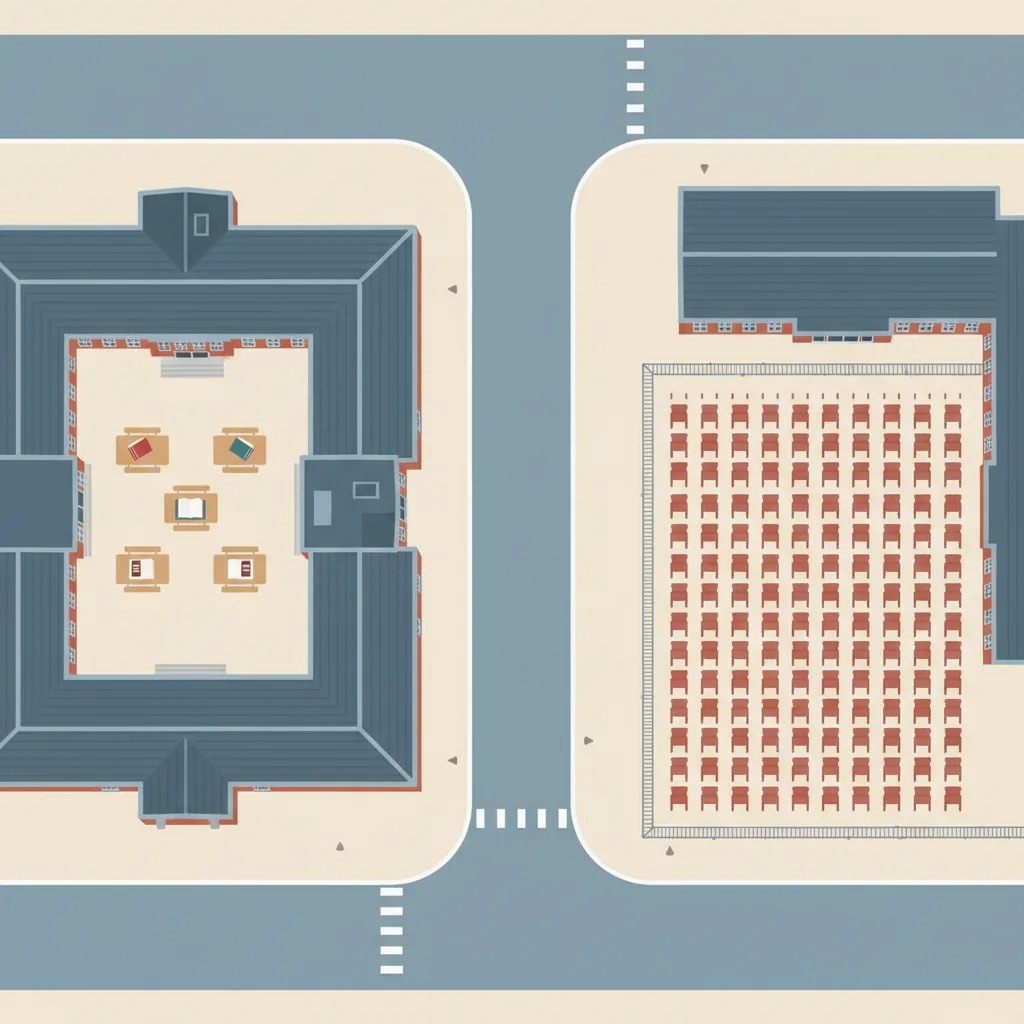
Donner à votre enfant un smartphone personnel avant 12 ans vs. attendre l'adolescence
Si vous agissez
Donner un smartphone tôt (avant 12 ans)
39%
Si vous n’agissez pas
Attendre l'adolescence (12 ans ou plus) pour donner un smartphone
Aucune mesure directe
Au moins un chiffre est une estimation indirecte, et non un taux de regret mesuré. La façon dont chaque chiffre a été obtenu est expliquée plus bas.
Famille
Dernière révision 2026-05-13
Qualité des preuves 4.0/5
Score d’évaluation en huit dimensions selon la
grille de qualité
. Chaque dimension notée de 1 à 5.
D1 Vérification des sources
4/5
D2 Autorité et indépendance des sources
4/5
D3 Précision du taux de regret
2/5
D4 Comparabilité des sources
3/5
D5 Motif de Gilovich
5/5
D6 Qualité de la prose
5/5
D7 Complétude des réserves
5/5
D8 Qualité de l’échantillon
4/5
Moyenne4.0/5
Données indirectes : pour cette décision, au moins un chiffre provient d'une mesure indirecte, comme les conséquences, la satisfaction ou l'intention, ou d'une estimation de la rédaction, et non d'une enquête qui mesure directement le regret. Les notes de chaque côté, plus bas, expliquent comment chaque chiffre a été obtenu.
Si vous agissez
Donner un smartphone tôt (avant 12 ans)
39%
39% des parents qui ont donné un smartphone à leur enfant auraient souhaité ne pas l'avoir fait
Parents américains âgés de 18+ avec au moins un enfant de moins de 18 ans qui avaient déjà donné un smartphone à leur enfant, panel en ligne représentatif au niveau national
transversale, février 2025
Si vous n’agissez pas
Attendre l'adolescence (12 ans ou plus) pour donner un smartphone
Aucune mesure directe
Aucune source ne donne de chiffre pour ce côté, nous n'en affichons donc aucun.
Parents d'enfants ayant reçu un smartphone à 12 ans ou plus tard ; le taux est un plafond proxy conservateur dérivé de la caractérisation secondaire de l'enquête HMD 2024 et des données d'attitude Pew 2020 — aucune enquête directe sur le regret des parents qui retardent n'existe
transversale, juillet 2024 ; estimation proxy
Chiffre pour chaque choix (la mesure est nommée sur la page)
Donner un smartphone tôt (avant 12 ans)Attendre l'adolescence (12 ans ou plus) pour donner un smartphone
39%Aucune mesure directe
Décisions associées
Décisions sémantiquement similaires — même terrain, compromis différents.
39% of parents who gave their child a smartphone before adolescence wish they hadn’t, according to a Harris Poll of 1,013 US parents conducted in February 2025 — the largest directly comparable action-side measure available for this decision. The figure is higher for social media access: 54% of parents who allowed it express the same regret. A separate global survey by HMD and Perspectus Global (July 2024, n=10,092 across five countries) found that more than half of the parents surveyed worldwide said they regret exposing their child to a smartphone at such a young age, and a third of respondents cited negative effects and personality changes as the key reasons. In the same Harris Poll, nearly a quarter of smartphone-giving parents say, with hindsight, they gave the device too young.
The Harris Poll figure carries an important framing caveat: the question asked whether parents wish they hadn’t given a phone “but felt they had to give in because so many of their children’s friends already had one.” This conflates retrospective regret with socially coerced compliance. Parents who gave a phone willingly and remain satisfied do not appear in the 39%, but neither do parents who regret the decision independently of peer pressure effects. The rate captures a specific subset — those experiencing regret-under-social-pressure — rather than all-cause regret. The true magnitude of unprompted parental regret about this decision is not known from existing surveys, though the HMD global figure (54%) using different question wording lands in the same order of magnitude.
What the data does not capture well is the distinction between regretting the device itself and regretting the access that came with it. Parents who gave a basic calling-only phone face different decisions than parents who gave full internet access, but surveys do not distinguish these categories. Sapien Labs’ Global Mind Project dataset (n=27,969, published May 2023) documents that mental wellbeing among 18-24-year-olds consistently improves with a later age of first smartphone or tablet ownership, with a steeper improvement for females than for males — though that is an outcome measure, not a parental-regret measure. Pew’s 2020 survey found that 73% of US parents already believed under-12 smartphone ownership was inappropriate before these outcome findings became widely publicized; the Harris Poll’s post-”Anxious Generation” 2025 data suggests that normative consensus on delayed provision has, if anything, strengthened.
Sources : action
Registre des sources
Chaque chiffre ci-dessous correspond à ce que la source a rapporté, avec la citation textuelle sur laquelle nous nous sommes appuyés et la méthode de calcul. Cliquez sur un lien pour vérifier directement.
2/3 sources vérifiées de manière indépendante, mot pour mot, par rapport à la source citée
[1]The Harris Poll — What Parents Think About Their Kids' Social Media and Smartphone Usage
Vérifié
↗ 1 autre fiche
Source de référence
39% of parents who had already given their child a smartphone said they wish they hadn't but felt they had to give in because so many of their children's friends already had one; 54% of parents who had allowed social media access said the same
Extrait
“"39% of parents who had given their child a smartphone said they wish they hadn't but felt they had to give in because so many of their children's friends already had one. 54% of parents who had allowed access to social media said they wish they hadn't."
”
Données source de
2025-02-27
Consulté le
2026-05-13
Vérification
Extrait récupéré et confirmé de manière indépendante, mot pour mot, par rapport à la source citée lors de notre audit de vérification.
Calcul
Harris Poll, conducted February 21–27, 2025. N=1,013 US parents aged 18+ with at least one child under 18, nationally representative online panel. The 39% is a direct retrospective regret question among parents who had already given their child a smartphone. The question wording conflates regret with social-pressure rationalization ("wish they hadn't but felt they had to give in") — the true uncoerced regret rate may differ in either direction. Survey was commissioned in collaboration with social psychologist Jonathan Haidt, who publicly advocates delaying smartphones for children; this is a commissioning-party consideration, though Harris Poll is an independent polling organization. This is the most methodologically defensible nationally representative US figure for action-side parental regret about early smartphone provision.
[2]HMD / Perspectus Global — The Better Phone Project — Global Parental Survey
Article de presse
More than half of the 10,000 parents surveyed in five countries (UK, US, India, Germany, Australia) said they regret exposing their child to a smartphone at such a young age; a third of respondents cited negative effects of the device and changes in personality as the key reasons
Extrait
“"The worldwide survey of 10,000 parents in the UK, US, India, Germany and Australia found more than half of those questioned said they regret exposing their child to a smartphone at such a young age. A third of those who responded cited the negative effects of the device and changes in personality as the key reasons for this."
”
Données source de
2024-07-01
Consulté le
2026-05-13
Calcul
HMD/Perspectus Global survey, July 2024. N=10,092 parents across UK, US, India, Germany, and Australia. HMD manufactures the "Better Phone Project" kids' handset — this survey directly supports their product premise and cannot be classified above news_article due to commercial conflict of interest. The press release gives no exact figure, only "more than half", which is higher than Harris Poll's 39% US rate; the gap may reflect genuine cross- national variation, question-wording differences, or commercial framing effects. Included as corroborating evidence for scale of action-side regret; the primary rate uses Harris Poll.
[3]Sapien Labs — Age of First Smartphone/Tablet and Mental Wellbeing Outcomes
Vérifié
Étude primaire
Among 27,969 people aged 18-24 surveyed January-April 2023, mental wellbeing consistently improved with older age of first smartphone/tablet ownership, with a steeper improvement in females than males
Extrait
“"Mental wellbeing consistently improved with older age of first ownership of a smartphone or tablet, with a steeper change in females."
”
Données source de
2023-05-15
Consulté le
2026-07-03
Vérification
Extrait récupéré et confirmé de manière indépendante, mot pour mot, par rapport à la source citée lors de notre audit de vérification.
Calcul
Sapien Labs Rapid Report, Global Mind Project MHQ data (n=27,969 18-24-year-olds, collected January-April 2023, published May 15, 2023). This is an outcome measure -- age of first device vs. adult mental wellbeing -- not a parental-regret measure. Included as context for why earlier smartphone provision draws more scrutiny, not as a source of either side's regret rate. The report has not undergone peer review in a journal, so it is classified as primary_study (Sapien Labs' own primary data collection) rather than peer_reviewed.
Sources : inaction
Registre des sources
Chaque chiffre ci-dessous correspond à ce que la source a rapporté, avec la citation textuelle sur laquelle nous nous sommes appuyés et la méthode de calcul. Cliquez sur un lien pour vérifier directement.
1/2 sources vérifiées de manière indépendante, mot pour mot, par rapport à la source citée
[1]The Harris Poll — What Parents Think About Their Kids' Social Media and Smartphone Usage
Vérifié
↗ 1 autre fiche
Source de référence
Just 1% of parents said they wish they had given their child social media and smartphones earlier; by contrast, almost a third of parents whose children have social media, and nearly a quarter whose children have smartphones, say with hindsight they gave these things too young
Extrait
“"Almost a third of parents whose children have access to social media, and nearly a quarter whose children have smartphones, say that with the benefit of hindsight, they gave them these things too young. By contrast, just 1% of parents said they wish they'd given their kids social media and smartphones earlier."
”
Données source de
2025-02-27
Consulté le
2026-07-01
Vérification
Extrait récupéré et confirmé de manière indépendante, mot pour mot, par rapport à la source citée lors de notre audit de vérification.
Calcul
Harris Poll, conducted February 21–27, 2025. N=1,013 US parents aged 18+ with at least one child under 18, nationally representative online panel; same survey as the action-side source. The "just 1% wish they'd given their kids social media and smartphones earlier" figure is a direct retrospective measure of inaction-side regret (parents who wish they had NOT delayed) — the closest available direct measure of regret about waiting. No inaction-side figure is shown: the wording ("earlier" is directional, not an explicit regret question) and parents who delayed but whose regret is unmeasured leave the survey's 1% short of a direct regret rate. Earlier versions of this entry misattributed the 1% figure to an HMD/Perspectus press release, which does not contain it; the figure originates with this Harris Poll.
[2]Pew Research Center — Parenting Children in the Age of Screens↗ 1 autre fiche
Étude primaire
73% of US parents believe it is acceptable for a child to have their own smartphone only after age 12; just 22% think it is OK for a child under age 12 to have one
Extrait
“"A majority of parents (73%) believe it is acceptable for children to have their own phone only after they have reached at least the age of 12. Some 45% say smartphone ownership is acceptable between the ages of 12 and 14, and 28% say it is acceptable between the ages of 15 and 17. Just 22% think it is OK for a child under the age of 12 to have one."
”
Données source de
2020-07-28
Consulté le
2026-05-13
Calcul
Pew Research Center, March 2020. N=3,640 US parents with children under 12. The 73% figure is a prospective attitude about appropriate timing — not a retrospective regret question — but provides strong indirect evidence that regret about waiting is very rare: parents who hold the dominant view that under-12 smartphone ownership is inappropriate are unlikely to subsequently regret having acted on that view. Used as indirect supporting evidence for the low inaction- side proxy rate rather than as a direct regret measure.
Réserves
Le taux côté action (0,39, Harris Poll fév 2025, n=1 013 parents américains) est le chiffre disponible le plus fort pour cette décision, mais porte une mise en garde importante de cadrage : la question d'enquête confond le véritable regret avec la rationalisation sous pression sociale en demandant si les parents « auraient souhaité ne pas l'avoir fait mais ont senti qu'ils devaient céder parce que tant d'amis de leurs enfants en avaient déjà un ». Cette construction mesure le regret sous coercition sociale perçue, pas le regret rétrospectif non coercé. Les parents qui ont donné un téléphone volontairement et sont satisfaits n'apparaîtraient pas dans ce taux ; les parents qui regrettent la décision pour des raisons non liées à la pression des pairs apparaissent également. Le vrai taux de regret isolé peut être plus élevé ou plus bas. Le chiffre global HMD (plus de la moitié, n=10 092) est cohérent en direction mais de qualité inférieure en raison du conflit d'intérêts commercial. Aucune des deux enquêtes ne distingue le regret du timing de l'appareil spécifiquement du regret du volume d'utilisation qui a suivi. Le côté inaction n'a pas de mesure directe : il repose sur un proxy, pas sur un chiffre d'enquête mesuré. Aucune enquête n'a directement demandé aux parents qui ont retenu un smartphone jusqu'à l'adolescence s'ils regrettent le retard. Une distinction critique de population : ces enquêtes mesurent le regret parental d'avoir donné un smartphone, pas le regret parental d'avoir donné un téléphone-sans-accès-internet (une catégorie qui n'existait pas au moment de l'enquête mais qui est maintenant disponible commercialement). Un parent qui a donné un téléphone basique avec appels/SMS uniquement ne serait pas capturé par ces questions, et leur profil de regret peut différer substantiellement. Les données Pew 2020 (maintenant vieilles de cinq ans) précèdent la sensibilisation généralisée à la recherche sur la santé mentale des adolescents liée aux smartphones qui est devenue proéminente après « The Anxious Generation » de Haidt (2024) ; les normes parentales actuelles peuvent avoir évolué davantage vers la fourniture retardée. Les enquêtes de 2024 et 2025 partagent un moment culturel dominé par la sensibilisation post-pandémique aux smartphones ; les données longitudinales sur la persistance ou la disparition du regret parental concernant la fourniture précoce à mesure que les enfants vieillissent n'existent pas encore.