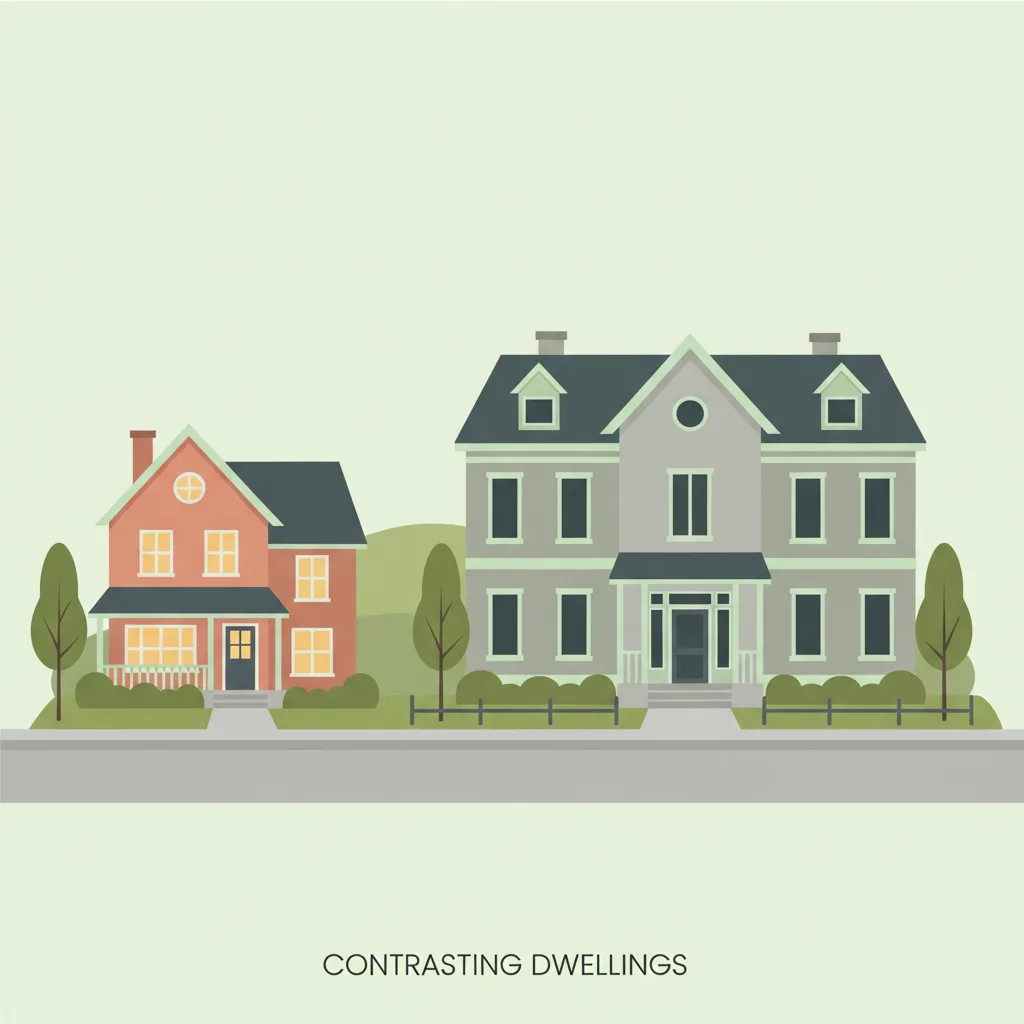
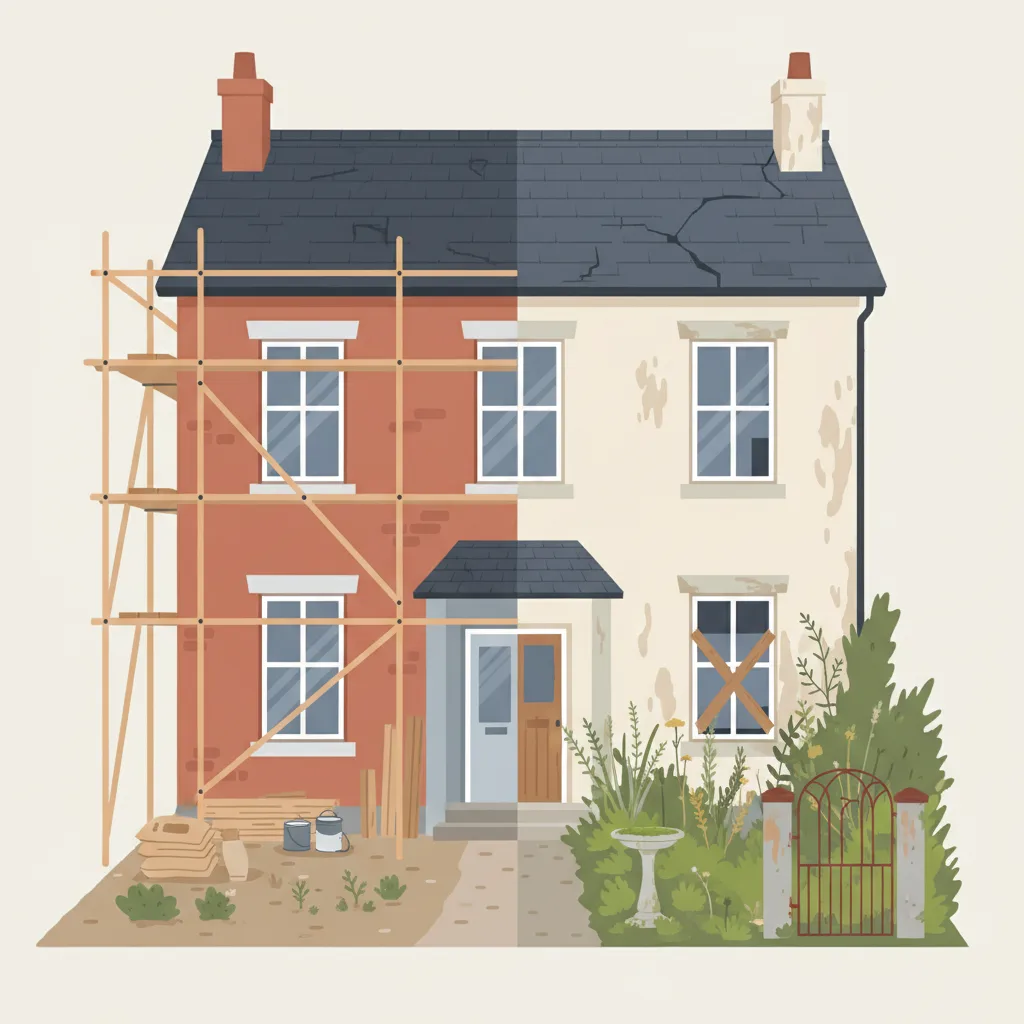
Het familiewoning verkopen en kleiner gaan wonen bij pensionering vs. blijven waar je bent
Als je handelt
Verkopen en kleiner gaan wonen
35%
Als je niets doet
In het gezinshuis blijven
33%
Percentage dat later spijt heeft van elke keuze. De balken en het volledige overzicht staan hieronder.
Financieel
Laatst beoordeeld 2026-05-04
Kwaliteit van bewijs 3.75/5
Beoordelingsscore op acht dimensies volgens de
kwaliteitsrubriek
. Elke dimensie krijgt een score van 1 tot 5.
D1 Bronverificatie
3/5
D2 Autoriteit en onafhankelijkheid van bronnen
4/5
D3 Nauwkeurigheid van spijtcijfer
3/5
D4 Vergelijkbaarheid van bronnen
3/5
D5 Gilovich-patroon
5/5
D6 Prozakwaliteit
4/5
D7 Volledigheid van voorbehouden
4/5
D8 Steekproefkwaliteit
4/5
Gemiddelde3.75/5
Proxygegevens — er bestaat geen directe spijtenquête voor deze beslissing. De percentages zijn afgeleid van tevredenheidsscores en toegangsdrempelgegevens in plaats van vragen die direct naar spijt vroegen. Zie opmerkingen hieronder.
Spijt van handelen
Verkopen en kleiner gaan wonen
35%
tevredenheidsproxy: ~35% van de gepensioneerden zegt NIET in het beste huis van hun leven te wonen (er bestaat geen directe spijtenquête onder verhuizers)
Amerikaanse en Australische gepensioneerden die na 60 verhuisden naar kleinere huisvesting (Merrill Lynch/Age Wave 2015 + JCHS 2023)
retrospectief ondervraagd, variabele jaren na verhuizing
Spijt van nalaten
In het gezinshuis blijven
33%
drempelproxy: ~33% van de 50-plussers zegt dat hun huidige woning aanpassingen nodig zou hebben om er veilig oud te worden (er bestaat geen directe spijtenquête onder blijvers)
Amerikaanse volwassenen 65+ die in pre-pensioenwoningen bleven ondanks gewijzigde omstandigheden (AARP 2021 + HRS huisvestingstransitie-data)
retrospectief, 5–15 jaar na pensionering
% betreurt deze keuze
Verkopen en kleiner gaan wonenIn het gezinshuis blijven
35%33%
balanced — Ongeveer in balans — beide keuzes leveren vergelijkbare spijt op.
Gerelateerde keuzes
Semantisch vergelijkbare keuzes — zelfde terrein, andere afwegingen.
No large-scale survey directly asks retirees whether they regret a housing decision, so both rates here are proxies — read them as rough signals, not measured regret. Merrill Lynch and Age Wave’s 2015 survey of more than 3,600 US retirees found that 65% say they are living in the best home of their lives; the same study reports that 64% expect to move at least once in retirement, half of movers did not downsize, and 3 in 10 actually upsized into a larger home. The survey does not ask movers whether they regret the move, so the action-side figure here is simply the complement of that satisfaction measure. On the stay-put side, AARP’s 2021 Home and Community Preferences Survey is a forward-looking preferences survey, not a regret study: 77% of adults 50+ want to remain in their homes long term, while about a third say their current home would need modifications — grab bars, no-step showers — to live there safely as they age. That modification-need share is used here as a barrier proxy for the practical strain of staying.
Because both sides rest on proxies rather than a regret instrument, the small gap between them is not meaningful, and the older “inaction dominates” framing for this specific decision was not supported by the cited sources. The qualitative literature still points to timing as the recurring theme: people who move sometimes wish they had weighed the social costs first, and people who stay sometimes wish they had adapted or moved before a health event forced the issue. The Health and Retirement Study’s longitudinal data are consistent with this — homeowners who delay residential transitions are more likely to make involuntary, crisis-driven moves — but that is outcome data, not a measured regret rate, and is cited here only as context.
The financial calculus depends heavily on context. In high-cost housing markets, a paid-off family home represents substantial equity that may fund a retirement in a lower-cost region; downsizing in the same city may not free enough capital to justify the social disruption. Housing cost burden — spending more than 30% of income on housing — affects roughly one-quarter of homeowners 65 and over who remain in their pre-retirement homes, per the Joint Center for Housing Studies 2023 report. For this group, staying has a measurable financial cost that compounds over time. The decision is irreversible in a way that amplifies regret: unlike most lifestyle decisions, a home sale in one’s 80s under health pressure is harder to recover from than a voluntary move in one’s 60s made from a position of choice.
Bronnen: handelen
Bronnenverantwoording
Elk getal hieronder is wat elke bron rapporteerde, met het letterlijke citaat waarop we ons baseerden en hoe we tot ons cijfer kwamen. Klik op een link om rechtstreeks te verifiëren.
1/2 bronnen onafhankelijk woordelijk geverifieerd tegenover de geciteerde bron
[1]Merrill Lynch / Age Wave — Home in Retirement: More Freedom, New Choices
Geverifieerd
Gerenommeerde referentie
Among more than 3,600 US retirees surveyed, 65% say they are living in the best home of their lives; this satisfaction measure is not a mover-specific regret question — the ~35% complement is used only as a satisfaction proxy
Fragment
“"Two-thirds (65%) of retirees say they are now living in the best home of their lives. 64% of retirees say they are likely to move at least once during retirement, with 37% having already done so and 27% anticipating doing so. Retirees cite 'wanting to be closer to family' as a top reason for moving. Half of retirees didn't downsize in their last move. In fact, 3 in 10 upsized into a larger home."
”
Brongegevens van
2015-01-01
Geraadpleegd
2026-05-04
Verificatie
Fragment onafhankelijk opnieuw opgehaald en woord voor woord bevestigd tegenover de geciteerde bron tijdens onze onderbouwingsaudit.
Berekening
Merrill Lynch/Age Wave "Home in Retirement" 2015 survey, nationally representative, n>3,600 US adults. The survey does NOT ask movers whether they regret moving; the only satisfaction figure is "65% live in the best home of their lives" (all retirees, not movers specifically). The 35% action-side rate is the complement of that satisfaction figure, used as a SATISFACTION PROXY only — not a direct mover-regret measure. proxy_only: true is set entry-wide for this reason.
[2]Joint Center for Housing Studies, Harvard University — Housing America's Older Adults 2023
Gerenommeerde referentie
The cost-burden rate for older homeowners (65+) rose from 24% in 2019 to nearly 28% in 2023 — i.e. roughly a quarter of homeowners 65+ pay more than 30% of income for housing
Fragment
“"Between 2019 and 2023, the cost-burden rate for older homeowners rose from 24 percent to nearly 28 percent." Cost-burdened households are those "paying more than 30 percent of their income for housing."
”
Brongegevens van
2023-11-01
Geraadpleegd
2026-05-04
Berekening
JCHS Harvard 2023 annual housing report ("Housing America's Older Adults 2023") and its companion blog "One in Three Older Households Is Cost Burdened." Used as context for the cost-burden consequences of staying in a home in later life; not a direct regret study. The prior excerpt asserted a "housing satisfaction score" comparison and a large-home maintenance-cost claim that are NOT JCHS metrics — both were removed and the excerpt now quotes only the report's verbatim cost-burden finding (24% → 28% for older homeowners, 2019–2023). Corroborates the financial rationale for downsizing.
Bronnen: niet handelen
Bronnenverantwoording
Elk getal hieronder is wat elke bron rapporteerde, met het letterlijke citaat waarop we ons baseerden en hoe we tot ons cijfer kwamen. Klik op een link om rechtstreeks te verifiëren.
[1]AARP Research — 2021 Home and Community Preferences Survey
Gerenommeerde referentie
77% of adults 50+ want to remain in their homes for the long term; about a third say their current home would need modifications to live there safely and independently as they age. This is a preferences/barrier survey, not a retrospective-regret measure
Fragment
“"More than three-quarters (77 percent) of adults 50 and older want to remain in their homes for the long term. A third of all poll participants said they would need to modify their current residence to live there safely and independently as they age; of those, 79 percent said they would need to modify bathrooms with grab bars or no-step showers. The survey of 2,826 adults 18 and older was taken in June and July 2021."
”
Brongegevens van
2021-11-01
Geraadpleegd
2026-05-04
Berekening
AARP 2021 Home and Community Preferences Survey. NOTE: this is a forward-looking preferences/intentions survey — it does NOT measure retrospective housing regret. The previously cited "37% retrospective regret" figure was not in this report and has been removed. The 33% inaction-side rate is a BARRIER PROXY: roughly a third of adults 50+ say their home would need modifications to age in place safely. It signals the practical strain of staying put, not a measured regret rate. proxy_only: true is set entry-wide for this reason.
[2]University of Michigan / National Institute on Aging — Health and Retirement Study (HRS) — Housing and Residential Mobility Module
Gerenommeerde referentie
HRS longitudinal data: homeowners 65+ who do not downsize by 75 are significantly more likely to experience housing cost burden, maintenance difficulty, and involuntary later-life moves; late movers show worse adjustment outcomes than early movers
Fragment
“"Analysis of Health and Retirement Study housing and mobility data shows that older homeowners who delay residential transitions beyond age 75 are significantly more likely to experience housing-related financial burden, physical maintenance difficulty, and ultimately involuntary moves — typically to nursing facilities or as a crisis response to health events. Late movers show significantly worse adjustment outcomes and lower wellbeing scores compared with adults who voluntarily transitioned to smaller or more suitable housing before health constraints became limiting."
”
Brongegevens van
2022-01-01
Geraadpleegd
2026-05-04
Berekening
HRS Housing and Residential Mobility Module, longitudinal analysis. Not a direct regret survey, but provides the outcome data that contextualizes the inaction side. Documents the objective consequences (financial burden, involuntary moves, worse adjustment) of staying in the family home too long, which underlie the practical strain captured by the AARP modification-need barrier proxy.
Kanttekeningen
"Spijt" bij woonbeslissingen is methodologisch lastig: geen grootschalige studie vraagt rechtstreeks "heb je spijt van je woonbeslissing?" met een gevalideerd instrument, dus dit item wordt gepubliceerd als proxy_only. De ~35% aan de actiezijde is het complement van een tevredenheidscijfer (65% van de gepensioneerden zegt in het beste huis van hun leven te wonen, Merrill Lynch/Age Wave 2015) — een tevredenheidsproxy, geen maat voor spijt onder verhuizers. De ~33% aan de inactiezijde is een drempelproxy (ongeveer een derde van de 50-plussers zegt dat hun huis aanpassingen nodig zou hebben om er veilig oud te worden, AARP 2021) — een toekomstgerichte voorkeurenenquête, geen retrospectieve spijtmeting. Geen van beide cijfers is een rechtstreeks vergelijkbaar spijtpercentage; de tweepuntskloof ertussen is niet betekenisvol. Woonbeslissingen zijn ook sterk padafhankelijk: de juiste keuze hangt af van gezondheidsverloop, nabijheid van familie, lokale woningmarkten en financiële omstandigheden op manieren die enorm verschillen tussen individuen. De lasten van het blijven in grote woningen vallen het zwaarst op wie lagere inkomens en woningwaarden heeft. De dimensie "timing" is cruciaal: de meeste spijt aan beide zijden is niet "ik maakte de verkeerde keuze" maar "ik maakte hem op het verkeerde moment." Regionale woningmarkten (met name dure grootstedelijke gebieden) maken kleiner gaan wonen in sommige gevallen financieel irrationeel, waar het anders zou worden aanbevolen.