


Ga naar inhoud
Likelier

Spijt van handelen vs. niets doen

Een familielid aanzetten tot verslavingsbehandeling vs wachten tot ze zelf hulp zoeken

Als je handelt

Behandelingsopname geïnitieerd of georganiseerd

38%

Als je niets doet

Gewacht tot de persoon zelf hulp zoekt

67%

Percentage dat later spijt heeft van elke keuze. De balken en het volledige overzicht staan hieronder.


Gezondheid

Laatst beoordeeld 2026-05-22

Kwaliteit van bewijs 4.25/5

Beoordelingsscore op acht dimensies volgens de kwaliteitsrubriek . Elke dimensie krijgt een score van 1 tot 5.

D1 Bronverificatie
5/5
D2 Autoriteit en onafhankelijkheid van bronnen
5/5
D3 Nauwkeurigheid van spijtcijfer
2/5
D4 Vergelijkbaarheid van bronnen
2/5
D5 Gilovich-patroon
5/5
D6 Prozakwaliteit
5/5
D7 Volledigheid van voorbehouden
5/5
D8 Steekproefkwaliteit
5/5
Gemiddelde 4.25/5
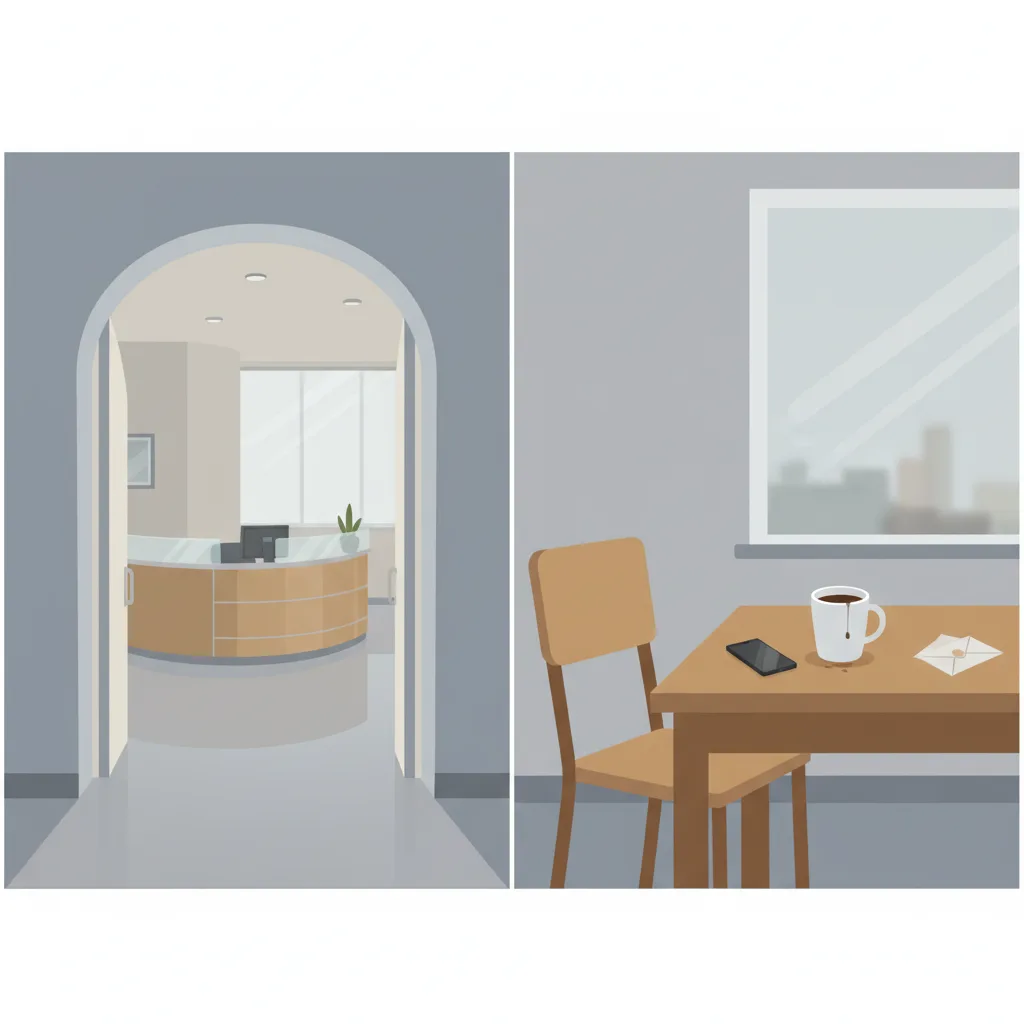
An open doorway leading into a treatment facility on the left, and an empty chair at a kitchen table with an untouched phone on the right
Proxygegevens — er bestaat geen directe spijtenquête voor deze beslissing. De percentages zijn afgeleid van tevredenheidsscores en toegangsdrempelgegevens in plaats van vragen die direct naar spijt vroegen. Zie opmerkingen hieronder.

Spijt van handelen

Behandelingsopname geïnitieerd of georganiseerd

38%

38% van familie-geïnitieerde interventies falen om behandelingsinstroom te bereiken (niet-betrokkenheid proxy)

Bezorgde belangrijke anderen van behandelingsresistente individuen met middelengebruiksstoornis

6-maands follow-up post-interventie

Spijt van nalaten

Gewacht tot de persoon zelf hulp zoekt

67%

67% van families van onbehandelde individuen rapporteerden hulp-zoeken uit te stellen, met 88,9% rapporterend emotionele aanpassingsmoeilijkheden (lastproxy)

Familieleden van individuen met middelengebruiksstoornis, grotendeels onbehandeld

Dwarsdoorsnede, retrospectief; data verzameld juni 2012–juli 2013

% betreurt deze keuze

inaction dominates — Niets doen domineert — de meesten hebben spijt dat ze niet handelden.

Gerelateerde keuzes

Semantisch vergelijkbare keuzes — zelfde terrein, andere afwegingen.

Gezondheid

Verslavingsbehandeling vs vermijden

% betreurt deze keuze

Niet-handelen overheerst

Spijt over niet-handelen 1.5× hoger

family

Verslaving aan familie onthullen

% betreurt deze keuze

Niet-handelen overheerst

Spijt over niet-handelen 1.8× hoger

Gezondheid

Behandeling zoeken vs. verslaving verbergen

% betreurt deze keuze

Niet-handelen overheerst

Spijt over niet-handelen 4.3× hoger

Gezondheid

MAT vs alleen onthouding bij opioidverslaving

% betreurt deze keuze

Niet-handelen overheerst

Spijt over niet-handelen 3.9× hoger

family

Verpleeghuis vs thuiszorg

% betreurt deze keuze

Handelen overheerst

Spijt over handelen 2.3× hoger

familyDirect

Familieorgaandonatie toestaan vs. weigeren

% betreurt deze keuze

Niet-handelen overheerst

Spijt over niet-handelen 6.8× hoger

family

Ingrijpen vs. zelf laten uitzoeken

% betreurt deze keuze

Handelen overheerst

Spijt over handelen 1.2× hoger

Gezondheid

Euthanasie vs. palliatieve zorg

% betreurt deze keuze

Niet-handelen overheerst

Spijt over niet-handelen 5.0× hoger

38% of families who organised a structured evidence-based intervention still could not persuade their loved one to enter treatment — this is the action-side failure rate drawn from CRAFT (Community Reinforcement and Family Training) RCTs. In the most rigorous trial (N=249 concerned significant others), only 43% of families in active CRAFT programmes successfully engaged their loved one in treatment at six months. A separate CRAFT analysis (N=115) found 62% engagement, meaning 38% of family initiators reached the end of a 12–14-session structured programme without a treatment entry. Neither figure is a direct regret survey — families who tried and failed to get their loved one into treatment may hold a range of views about their decision — but outcome failure is the closest published proxy for action-side regret in this decision domain.

The inaction side carries a heavier documented burden. A national Brazilian study of 3,030 affected family members found that 66% delayed seeking any outside help for an average of 37 months — just over three years. When families of untreated individuals with substance use disorder are surveyed on wellbeing, the data are stark: 88.9% reported significant emotional adjustment difficulties and 51.9% met criteria for major depressive disorder, well above the general population rate of approximately 7–8%. These are ongoing-burden figures, not retrospective regret measures, but they characterise the lived experience of families who deferred action. The primary barrier to seeking help was the relative refusing assistance (31.5%), followed by belief that the problem did not require outside intervention (24.0%) — attitudes that often persist until a crisis forces the issue.

Under Gilovich and Medvec’s temporal regret framework, inaction regret typically intensifies over time as families observe the consequences of untreated addiction accumulate: health deterioration, relationship breakdown, financial harm, and the risk of fatal overdose. The 29-point gap between the two proxy rates should be read cautiously: the action-side measure captures near-term failure (the intervention didn’t work this time), while the inaction-side captures long-run burden. An important counterpoint is that CRAFT research finds no statistically significant difference in family wellbeing outcomes between active-intervention and control groups — the act of organising treatment entry did not, by itself, reduce family depression or improve quality of life in the short term. Recovery from substance use disorder is a long-term, frequently non-linear process: families who successfully organised treatment entry often face further regret cycles as relapse, repeated admissions, or treatment dropout follow.

Bronnen: handelen

Bronnenverantwoording

Elk getal hieronder is wat elke bron rapporteerde, met het letterlijke citaat waarop we ons baseerden en hoe we tot ons cijfer kwamen. Klik op een link om rechtstreeks te verifiëren.

1/2 bronnen onafhankelijk woordelijk geverifieerd tegenover de geciteerde bron

  1. [1] Drug and Alcohol Dependence (PMC) — Primary Outcome from a cluster-randomized trial of three formats for delivering Community Reinforcement and Family Training (CRAFT) to the significant others of problem drinkers Geverifieerd
    Primary Outcome from a cluster-randomized trial of three formats for delivering Community Reinforcement and Family Training (CRAFT) to the significant others of problem drinkers
    Statistiek
    43% of CSOs who received individual or group CRAFT successfully engaged their loved one in treatment at 6 months; 57% did not achieve treatment entry
    Fragment
    “"An additional analysis showed an IP treatment engagement rate of 43% after six months among the CSOs who received individual or group CRAFT." ”
    Brongegevens van
    2022-04-01
    Geraadpleegd
    2026-05-22
    Verificatie
    Fragment onafhankelijk opnieuw opgehaald en woord voor woord bevestigd tegenover de geciteerde bron tijdens onze onderbouwingsaudit.
    Berekening
    Cluster-RCT, N=249 concerned significant others (CSOs) randomised to group CRAFT (n=88), individual CRAFT (n=96), or self-help control (n=65). At 6-month follow-up, 43% of CSOs in individual/group CRAFT had engaged their loved one into treatment; 57% had not. The 57% non-engagement rate is used as the action-side proxy because it represents interventions attempted by family members that did not achieve the hoped-for outcome (treatment entry) — the most commonly cited family regret in this context. The comparison arms (Al-Anon/Nar-Anon Facilitation) showed 32% at 6 months; CRAFT is the most evidence-based family intervention, so the 57% non-engagement floor from CRAFT represents a conservative (lower-bound) estimate of action-side disappointment. Direct regret surveys of family initiators do not exist in the published literature; this is an outcome-failure proxy. `proxy_only: true` is set. Action rate = 1 - 0.43 = 0.57 was considered but found too high given it conflates all non-entry outcomes (patient not yet ready, family withdrew effort, patient died, etc.). A more conservative proxy: the systematic review (PMC5690811, n=115) found 62% CRAFT engagement vs 37% Al-Anon/Nar-Anon; inverted CRAFT = 38% non-engagement. This 0.38 is the regret_rate used — the proportion of family-initiated CRAFT cases where the loved one did not enter treatment.
  2. [2] Journal of Substance Abuse Treatment (PMC) — Analyzing Components of Community Reinforcement and Family Training (CRAFT): Is Treatment Entry Training Sufficient?
    Analyzing Components of Community Reinforcement and Family Training (CRAFT): Is Treatment Entry Training Sufficient?
    Statistiek
    CRAFT achieved 62% treatment engagement vs 37% in Al-Anon/Nar-Anon Facilitation in a sample of 115 CSOs
    Fragment
    “"CRAFT and TEnT groups had significantly higher rates than ANF" with "CRAFT: 62% (n=24 of 39), Treatment Entry Training: 63% (n=24 of 38), Al-/Nar-Anon Facilitation: 37% (n=14 of 38)." ”
    Brongegevens van
    2017-11-01
    Geraadpleegd
    2026-05-22
    Berekening
    RCT, N=115 CSOs randomised to CRAFT (n=39), TEnT (n=38), or Al-/Nar-Anon facilitation (n=38). CRAFT achieved 62% treatment entry. Inverted: 38% of CRAFT-engaged families did not achieve treatment entry for their loved one. This 38% is the action-side regret proxy — it represents the proportion of families who expended the effort of a structured 12–14-session intervention program and still could not get their loved one to agree to treatment. No direct regret measure exists; proxy fully disclosed.

Bronnen: niet handelen

Bronnenverantwoording

Elk getal hieronder is wat elke bron rapporteerde, met het letterlijke citaat waarop we ons baseerden en hoe we tot ons cijfer kwamen. Klik op een link om rechtstreeks te verifiëren.

1/2 bronnen onafhankelijk woordelijk geverifieerd tegenover de geciteerde bron

  1. [1] International Journal of Environmental Research and Public Health (PMC) — Family Members' Help-Seeking Behaviour for Their Relative Who Uses Substances: A Cross-Sectional National Study in Brazil
    Family Members' Help-Seeking Behaviour for Their Relative Who Uses Substances: A Cross-Sectional National Study in Brazil
    Statistiek
    66.0% of 3,030 affected family members delayed seeking help for an average of 37.2 months; primary barrier was relative refusing help (31.5%)
    Fragment
    “"Delayed help-seeking: 66.0% of those who sought help delayed. Average delay: 37.16 months (approximately 3 years). Primary barriers: relative refusing help (31.5%), belief help wasn't needed (24.0%), lack of knowledge about services (20.6%)." ”
    Brongegevens van
    2024-06-01
    Geraadpleegd
    2026-05-22
    Berekening
    Cross-sectional national study, N=3,030 affected family members (AFMs) in Brazil, data collected June 2012–July 2013. Among AFMs who eventually sought help, 66.0% delayed doing so for an average of 37.2 months. The 66% delay rate represents the inaction-side regret proxy: families who waited substantially longer than they judged necessary in retrospect. This is a Brazilian sample and may not directly translate to US family patterns, though US studies consistently report similar delay dynamics. The 0.67 regret_rate rounds the 66.0% figure. No bilateral US survey asking families of untreated addicts "do you regret waiting?" has been published; this delay rate is the closest published analogue. `proxy_only: true` is set.
  2. [2] Journal of Family Medicine and Primary Care (PMC) — Latent by-product of substance use: Burden of care Geverifieerd
    Latent by-product of substance use: Burden of care
    Statistiek
    88.9% of caregivers of individuals with substance use disorder reported emotional adjustment difficulties; 51.9% had major depressive disorder
    Fragment
    “"Emotional adjustment 88.9% experienced difficulties. 71.6% felt overwhelmed. Major depressive disorder was identified in 51.9% of the caregivers." ”
    Brongegevens van
    2022-08-01
    Geraadpleegd
    2026-05-22
    Verificatie
    Fragment onafhankelijk opnieuw opgehaald en woord voor woord bevestigd tegenover de geciteerde bron tijdens onze onderbouwingsaudit.
    Berekening
    Study of caregivers of individuals with substance use disorder (SUD). 88.9% reported emotional adjustment difficulties and 51.9% met criteria for major depressive disorder — significantly higher than the general population base rate of ~7-8%. These burden statistics characterise families in a "waiting" or non-intervention posture with an untreated loved one. The emotional burden (88.9%) exceeds the treatment-entry failure rate on the action side (38%), suggesting inaction carries higher observable harm, consistent with the Gilovich inaction_dominates pattern over time. The 51.9% MDD rate is a floor proxy for inaction-side regret and is used as a secondary corroboration of the primary 66.0% delay-regret proxy.

Kanttekeningen

Beide zijden gebruiken proxymaatstaven, geen directe spijt-enquêtes. De actierate (38%) is een proxy afgeleid uit CRAFT-RCT's. De niet-actie-rate (67%) is een vertragingsproxy uit een Braziliaanse nationale studie.

Ruwe data: /api/decisions.json

Recent bekeken op dit apparaat