




Przejdź do treści
Likelier

Żal z działania a żal z bezczynności

Regularne picie alkoholu vs abstynencja

Jeśli działasz

Picie alkoholu

70%

Jeśli nie działasz

Abstynencja

12%

Odsetek osób, które później żałują każdego wyboru. Słupki i pełna kartoteka danych poniżej.


Zdrowie

Ostatnio sprawdzono 2026-04-26

Jakość dowodów 4.25/5

Ocena recenzji w ośmiu wymiarach względem rubryki jakości . Każdy wymiar oceniony w skali 1–5.

D1 Weryfikacja źródeł
5/5
D2 Autorytet i niezależność źródeł
4/5
D3 Dokładność wskaźnika żalu
2/5
D4 Porównywalność źródeł
3/5
D5 Wzorzec Gilovicha
5/5
D6 Jakość tekstu
5/5
D7 Kompletność zastrzeżeń
5/5
D8 Jakość próby
5/5
Średnia 4.25/5
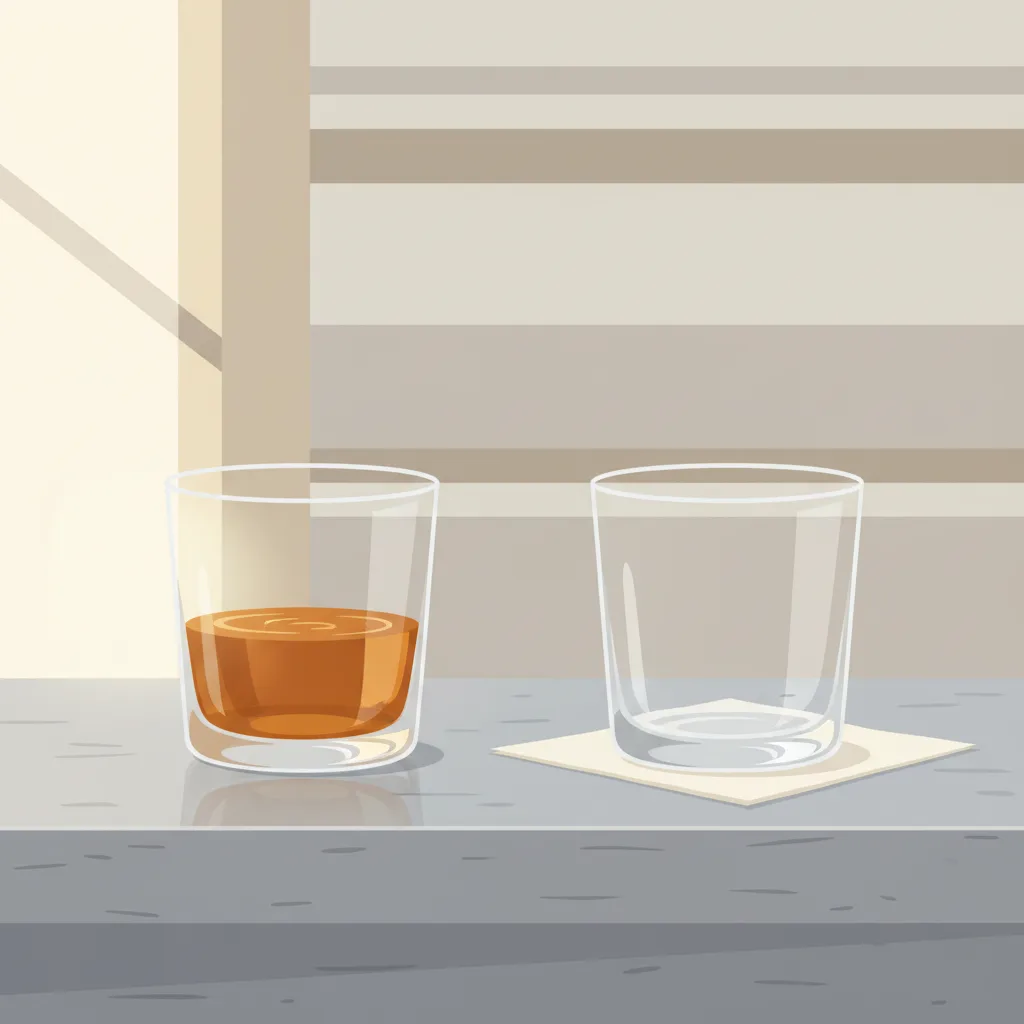
Two identical glasses on a bar surface, one filled with amber liquid, the other empty and clean.

Żal za działanie

Picie alkoholu

70%

70% pijących żałowało upicia się w ostatnim roku

Globalnie, 31 krajów, panel internetowy z samodoborem

ostatnie 12 miesięcy

Żal za zaniechanie

Abstynencja

12%

~12% (proxy tarcia społecznego, nie bezpośredni żal z abstynencji)

Fińscy dorośli w wieku 15–79 lat, badanie populacyjne

retrospektywnie, bez stałego horyzontu

% żałuje tej decyzji

action dominates — Działanie dominuje — większość żałuje, że podjęła działanie.

Powiązane decyzje

Semantycznie podobne decyzje — ten sam obszar, inne kompromisy.

lifestyle

Zamiennik NA

% żałuje tej decyzji

Zaniechanie dominuje

Żal za zaniechaniem 2.1× wyższy

lifestyle

Pornografia vs abstynencja

% żałuje tej decyzji

Działanie dominuje

Żal za działaniem 3.0× wyższy

lifestyle

Dieta wegetariańska

% żałuje tej decyzji

Działanie dominuje

Żal za działaniem 3.8× wyższy

Zdrowie

Nawyki ruchowe

% żałuje tej decyzji

Zaniechanie dominuje

Żal za zaniechaniem 13.4× wyższy

Zdrowie

Rzucenie palenia

% żałuje tej decyzji

Zaniechanie dominuje

Żal za zaniechaniem 90.0× wyższy

lifestyle

Masturbacja vs NoFap

% żałuje tej decyzji

Zaniechanie dominuje

Żal za zaniechaniem 3.0× wyższy

lifestyle

Przejazd vs prowadzenie po alkoholu

% żałuje tej decyzji

Zaniechanie dominuje

Żal za zaniechaniem 5.7× wyższy

Zdrowie

Palenie zaczęte w nastoletnim wieku

% żałuje tej decyzji

Działanie dominuje

Żal za działaniem 36.0× wyższy

Seventy percent of drinkers regretted getting drunk at least once in the prior year, according to the Global Drug Survey’s 2020 wave (82,821 respondents, 31 countries). The peer-reviewed analysis by Davies et al. in Substance Use & Misuse found that the median drinker got drunk six times a year and regretted two of those occasions. Among occasions when they got drunk, women regretted a higher median share (30%) than men (16.67%), against an overall median of 20%. Separately, a 2025 NCSolutions survey found that nearly half of Americans (49%) plan to drink less in 2025, up sharply from 34% in 2023 — a trend suggesting broad and growing dissatisfaction with current consumption levels. On the other side of the ledger, population-level data from Finland’s Drinking Habits Survey found that non-drinkers reported mostly positive social feedback, with only a small minority experiencing negative social consequences from abstaining.

The asymmetry here is striking but not symmetric in its evidence base. The action-regret figure is robust: an 82,821-person sample, replicated across dozens of countries, measuring a concrete experience (“did you regret getting drunk?”). The inaction figure is far weaker — and measures a different construct entirely. The Finnish study tracked negative social consequences (pressure, exclusion) among non-drinkers, not regret about the decision to abstain. No large study has directly asked non-drinkers whether they regret abstaining, because the question barely arises in public-health research. Alcohol Change UK’s Dry January data shows that 70% of participants still drink less six months later and only 28% revert to prior habits — suggesting that abstinence generates little lasting dissatisfaction, though this too measures behavior rather than regret.

The GDS found an inverse relationship between frequency and per-occasion regret — heavier drinkers regretted a smaller share of episodes — which hints at habituation rather than genuine satisfaction. The main caveat is sample bias: GDS respondents are self-selected, younger, and heavier- drinking than the general population. The true action-regret rate among all adults who drink, including the moderate majority, is certainly lower than 70%. The directional finding — that drinking generates far more regret than not drinking — is robust; the magnitude is an upper bound.

Źródła: działanie

Rejestr twierdzeń

Każda liczba poniżej jest tym, co podało dane źródło — z dosłownym cytatem, na którym się oparliśmy, i sposobem, w jaki doszliśmy do naszej wartości. Kliknij dowolny link, żeby zweryfikować bezpośrednio.

  1. [1] Substance Use & Misuse / Davies, Puljević, Winstock & Ferris — Regrets, I've Had a Few: Exploring Factors Associated with Getting Drunk and Regret in an International Study of People Who Drink Alcohol
    Regrets, I've Had a Few: Exploring Factors Associated with Getting Drunk and Regret in an International Study of People Who Drink Alcohol

    See all 2 Likelier entries citing this source →

    Statystyka
    70% of respondents who drank alcohol in the past 12 months reported regretting getting drunk at least once; median regretted occasions was 2 out of a median 6 times drunk
    Cytat
    “"In the last 12 months, the median times drunk was 6 and the median number of regretted occasions was 2. There was an inverse relationship between times drunk and regret, with respondents who got drunk more often regretting it a smaller percentage of the time than those who got drunk less often." ”
    Dane źródłowe z
    2024-01-16
    Dostęp
    2026-04-26
    Obliczenie
    Data from the Global Drug Survey 2020 (n = 82,821, 31 countries). The 70% figure represents respondents who regretted getting drunk at least once in the prior year (28.3% reported zero regret). The per-occasion median regret percentage was 20% overall (women 30%, men 16.67%). We use the any-regret prevalence (70%) as the action-regret rate because it captures the share of drinkers who experienced regret at all, not the per-episode rate. The GDS sample is self-selected and skews younger and heavier- drinking than the general population, so 70% is an upper bound.
  2. [2] NCSolutions — Alcohol Statistics 2025 – Sober Curious Nation & Beverage Trends
    Alcohol Statistics 2025 – Sober Curious Nation & Beverage Trends
    Statystyka
    49% of Americans plan to drink less in 2025, up from 34% in 2023 — a rising sober-curious trend
    Cytat
    “"Nearly half (49%) of Americans say they plan to drink less alcohol in 2025, up from 34% in 2023." ”
    Dane źródłowe z
    2025-01-01
    Dostęp
    2026-04-26
    Obliczenie
    NCSolutions 2025 consumer survey. The plan-to-drink-less figure has risen year over year (34% in 2023, 41% in 2024, 49% in 2025). While not a direct regret measure, this rising share of people intending to cut back is directional evidence that drinking generates more dissatisfaction than abstinence. This replaces the prior second source (GDS 2020 report), which was the same underlying dataset as the Davies et al. peer-reviewed paper.

Źródła: bezczynność

Rejestr twierdzeń

Każda liczba poniżej jest tym, co podało dane źródło — z dosłownym cytatem, na którym się oparliśmy, i sposobem, w jaki doszliśmy do naszej wartości. Kliknij dowolny link, żeby zweryfikować bezpośrednio.

1/2 źródeł niezależnie zweryfikowanych słowo w słowo z podanym źródłem

  1. [1] Substance Use & Misuse / Mustonen & Mäkelä — Non-Drinkers' Experiences of Drinking Occasions: A Population-Based Study of Social Consequences of Abstaining from Alcohol
    Non-Drinkers' Experiences of Drinking Occasions: A Population-Based Study of Social Consequences of Abstaining from Alcohol
    Statystyka
    Non-drinkers reported mostly positive feedback from their social environments; negative consequences were reported most commonly among youth and former drinkers, least in the oldest age group
    Cytat
    “"The study indicates that nondrinkers' social environments may be more supportive than what has been suggested previously, yet coping mechanisms are required especially from youth and former drinkers. Nondrinkers reported relatively low levels of negative consequences, with reported consequences being least frequent in the oldest age group." ”
    Dane źródłowe z
    2022-01-15
    Dostęp
    2026-04-26
    Obliczenie
    Finnish Drinking Habits Survey 2016 (N = 2,285 total; 330 nondrinkers; response rate 60%). The study does NOT report a single regret percentage. The 12% is estimated from the proportion of nondrinkers who reported any negative social consequence from abstaining. IMPORTANT: social consequences (pressure, exclusion) are not the same as regret about abstaining. This is a social friction proxy — no published survey directly measures abstinence regret in a general population sample. Dry January data (70% of participants still drinking less at 6 months, only 28% reverting) corroborates that abstinence generates minimal lasting dissatisfaction.
  2. [2] Alcohol Change UK — Dry January 2024: Kick-starting a year of change Zweryfikowane
    Dry January 2024: Kick-starting a year of change
    Statystyka
    70% of Dry January participants were still drinking less six months later; only 28% returned to previous drinking levels
    Cytat
    “"70% of those who take part are still drinking less alcohol six months later. 67% of people who take part in Dry January and access free tools and resources have a completely alcohol-free month." ”
    Dane źródłowe z
    2024-01-02
    Dostęp
    2026-04-26
    Weryfikacja
    Cytat niezależnie pobrany ponownie i potwierdzony słowo w słowo z podanym źródłem podczas naszego audytu ugruntowania.
    Obliczenie
    Alcohol Change UK campaign data, not a peer-reviewed cohort study. The 28% who returned to prior levels is a ceiling for possible abstinence regret; even among that 28%, returning to old habits does not necessarily imply regretting the break. The sober-curious movement further supports low abstinence regret: 49% of Americans plan to drink less (NCSolutions 2025), and nearly 4 in 10 US consumers follow a sober curious lifestyle (Mintel). These trends indicate that abstaining from alcohol generates satisfaction rather than regret in the general population.

Zastrzeżenia

Liczby po stronie działania i zaniechania pochodzą z fundamentalnie różnych instrumentów i mierzą różne konstrukty. 70% żalu po stronie działania mierzy żal z dowolnego epizodu wśród aktywnie pijących (GDS 2020, panel internetowy z samodoborem przechylony ku młodszym i intensywniej pijącym niż populacja ogólna). Próba GDS nadreprezentuje osoby, które piją na tyle, by się upić; prawdziwy populacyjny wskaźnik żalu po stronie działania dla wszystkich pijących, w tym umiarkowanych nigdy się nieupijających, jest na pewno niższy. 12% po stronie zaniechania to proxy wyprowadzone z negatywnych konsekwencji społecznych zgłaszanych przez fińskich niepijących — presja społeczna i wykluczenie, a nie żal z decyzji o abstynencji. Żadna opublikowana ankieta nie pyta wprost niepijących, czy żałują abstynencji. Dwie populacje (globalni pijący z samodoborem vs fińscy niepijący) nie są próbami porównywalnymi. Stosunek ~6:1 należy czytać jako kierunkowo silny — regularnie pijący w przeważającej większości zgłaszają żal — ale precyzyjną wielkość zawyża zarówno asymetria próby, jak i niedopasowanie konstruktu (żal vs tarcie społeczne).

Dane surowe: /api/decisions.json

Ostatnio oglądane na tym urządzeniu