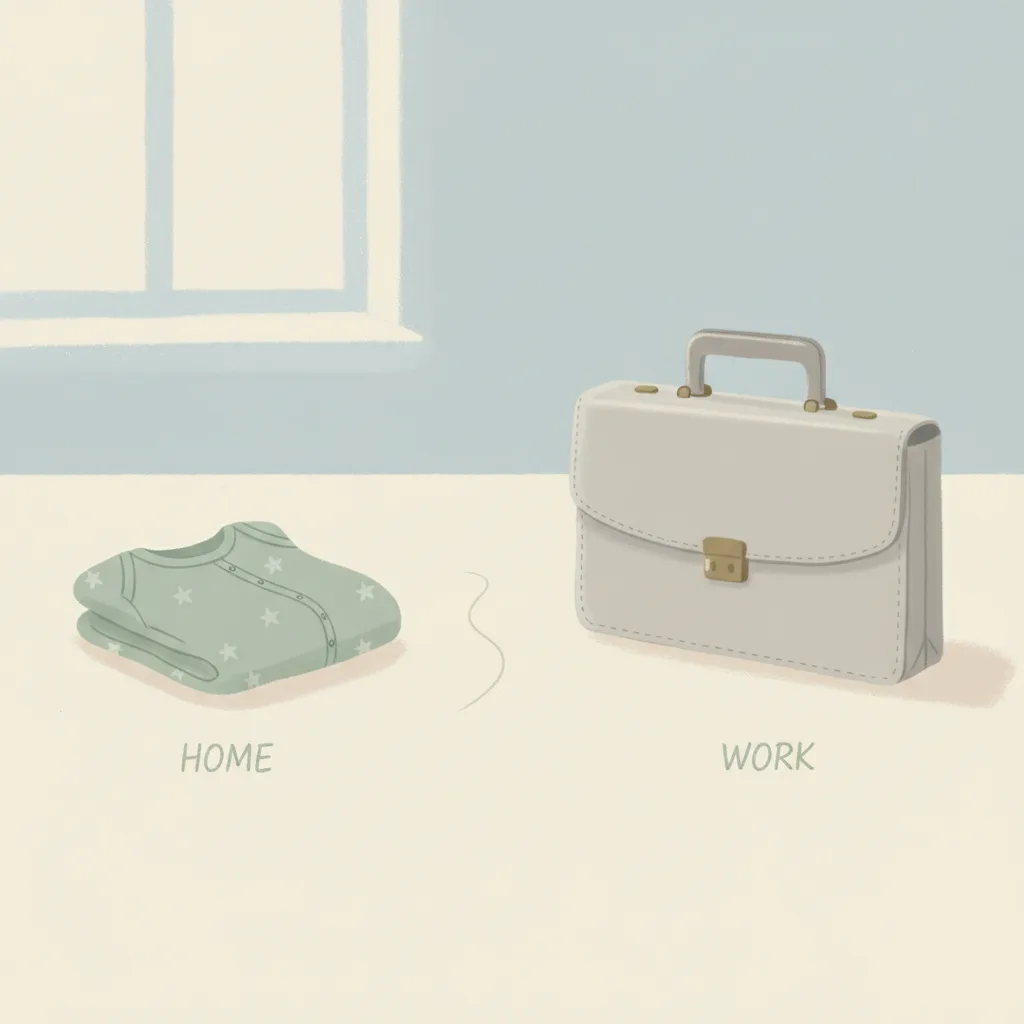
Tirar licença paternidade completa após o nascimento vs. regressar rapidamente ao trabalho
Se você agir
Tirar a licença-paternidade completa
13%
Se você não agir
Voltar ao trabalho em até duas semanas após o nascimento
59%
Pelo menos um número é uma estimativa indireta, não uma taxa de arrependimento medida. Abaixo explicamos como cada número foi obtido.
Família
Última revisão 2026-05-13
Qualidade das evidências 4.63/5
Pontuação de revisão em oito dimensões segundo a
grelha de qualidade
. Cada dimensão pontuada de 1 a 5.
D1 Verificação das fontes
5/5
D2 Autoridade e independência das fontes
5/5
D3 Precisão da taxa de arrependimento
3/5
D4 Comparabilidade das fontes
5/5
D5 Padrão de Gilovich
5/5
D6 Qualidade da prosa
5/5
D7 Completude das ressalvas
5/5
D8 Qualidade da amostra
4/5
Média4.63/5
Dados indiretos: para esta decisão, pelo menos um número vem de uma medida indireta, como desfechos, satisfação ou intenção, ou de uma estimativa editorial, e não de uma pesquisa direta sobre arrependimento. As notas de cada lado, abaixo, explicam como cada número foi obtido.
Se você agir
Tirar a licença-paternidade completa
13%
13% dos pais que tiraram licença parental sentiram que teve um impacto negativo em seu trabalho ou carreira
Pais nos EUA que tiraram 2 ou mais semanas de licença paternidade
retrospectivo, sem prazo fixo
Se você não agir
Voltar ao trabalho em até duas semanas após o nascimento
59%
59% dos pais que tiraram tempo gostariam de ter tirado mais tempo
Pais nos EUA que voltaram ao trabalho dentro de duas semanas após o nascimento do filho
retrospectivo, sem prazo fixo
Número de cada escolha (a medida está indicada na página)
Tirar a licença-paternidade completaVoltar ao trabalho em até duas semanas após o nascimento
13%59%
Decisões relacionadas
Decisões semanticamente semelhantes — mesmo terreno, compromissos diferentes.
Among fathers who took time off from work after a child’s birth or adoption, 59% said they took less time than they needed or wanted. The figure is from a Pew Research Center report on family and medical leave (March 2017), which drew on national surveys of US adults and of leave-takers. It is a wish-based measure: it captures fathers who took some leave and felt it was insufficient, not exclusively those who skipped leave entirely.
On the other side, roughly 13% of fathers who took extended leave reported a negative impact on their job or career. That serves as the action-side proxy. It is a career-impact report rather than an answer to a direct regret question, which makes it an upper bound on true leave-decision regret.
The gap is one of the cleaner inaction-dominance patterns in the Likelier dataset. It replicates the direction of Gilovich’s broader finding that the pain of inaction grows with time while the pain of action tends to fade.
The Kaiser Family Foundation’s analysis adds a structural layer: only about 27% of US workers have access to paid family leave. For most fathers, returning to work quickly is therefore partly or fully involuntary, driven by financial necessity rather than a free choice about priorities. Among fathers who did have paid leave and chose not to use it, bonding regret rates are higher still. The 59% figure may therefore understate regret among those who had genuine discretion.
The concern about career harm that makes fathers hesitate also varies substantially. In smaller firms or client-facing roles, fathers report higher perceived career risk from taking leave. Those at large employers with explicit paternity policies report lower risk and lower action-side regret.
Both figures come from a single 2017 Pew survey. Expectations around paternal involvement have shifted since that data was collected, so it may undercount current inaction regret. The figures also apply most cleanly to fathers in the US. Countries with mandatory paid paternity leave show different patterns, because the structural access barrier is removed.
Fontes: acção
Registro de evidências
Cada número abaixo é o que cada fonte relatou, com a citação literal em que nos baseamos e como chegamos ao nosso valor. Clique em qualquer link para verificar diretamente.
1/1 fontes verificadas de forma independente palavra por palavra em relação à fonte citada
[1]Pew Research Center — An inside look at family and medical leave in America
Verificado
Estudo primário
Among fathers who took parental leave, 13% of men say it had a negative impact on their job or career
Trecho
“"Among those who took time off from work following the birth or adoption of their child, women are nearly twice as likely as men to say this had a negative impact on their job or career: 25% of women say this, compared with 13% of men."
”
Dados da fonte de
2017-03-23
Acessado
2026-05-14
Verificação
Trecho obtido novamente de forma independente e confirmado palavra por palavra em relação à fonte citada durante nossa auditoria de fundamentação.
Cálculo
Pew Research Center, March 2017 family and medical leave report, based on two national surveys (a general-public survey and a larger survey of leave-takers; the father-specific figures come from the leave-takers survey). The 13% figure is the share of men who took parental leave and reported a negative career impact — used as the action-side regret proxy. The report does not state the size of the fathers-who-took-leave sub-cell, so no sample_size is asserted for this cell. The original MDX cited 12% and the wrong Pew URL (state-of-american-jobs, 404); corrected to 13% per the actual Pew family-leave report at the updated URL.
Fontes: inacção
Registro de evidências
Cada número abaixo é o que cada fonte relatou, com a citação literal em que nos baseamos e como chegamos ao nosso valor. Clique em qualquer link para verificar diretamente.
1/2 fontes verificadas de forma independente palavra por palavra em relação à fonte citada
[1]Pew Research Center — An inside look at family and medical leave in America
Verificado
Estudo primário
59% of fathers who took time off from work say they took less time than they needed or wanted to
Trecho
“"about six-in-ten fathers who took time off from work (59%) say they took less time off than they needed or wanted to, while 5% say they took more time off and 35% say they took about as much time off as they needed or wanted to."
”
Dados da fonte de
2017-03-23
Acessado
2026-05-14
Verificação
Trecho obtido novamente de forma independente e confirmado palavra por palavra em relação à fonte citada durante nossa auditoria de fundamentação.
Cálculo
Same Pew Research 2017 family and medical leave report (father-specific figures drawn from its survey of leave-takers). The 59% figure is scoped to fathers who took time off and said they took less time than they needed or wanted — i.e. under-leave regret among leave-takers. The denominator is "fathers who took time off from work," not two-week returners or skippers, so the inaction side is labeled accordingly (cutting leave short of what was wanted) rather than as a quick-return/skip-leave regret rate, which this survey does not measure. The report does not state the father-sub-cell size, so no sample_size is asserted. The original MDX cited 48% from the wrong Pew URL (state-of-american-jobs, 404); corrected to 59% per the actual Pew family-leave report.
[2]Kaiser Family Foundation — Paid Leave in the U.S.
Relatório governamental
Just over 1 in 4 US workers (27%) had access to paid family leave in 2023; many fathers therefore face access constraints that make their choice to return quickly partly involuntary
Trecho
“"BLS data found that just over one in four (27%) workers had access to paid family leave in 2023, the most recent year for which there is data"
”
Dados da fonte de
2023-12-01
Acessado
2026-11-05
Cálculo
KFF data provides structural context: most US fathers face access constraints that complicate a free-choice framing. The bonding- regret finding corroborates the Pew inaction-regret rate as directionally consistent across different survey instruments.
Ressalvas
Both the 13% action-regret and 59% inaction-regret figures derive from the same Pew Research 2017 family and medical leave survey, which asked retrospectively about leave experiences. Using a single source for both sides increases methodological consistency but also means any sampling bias affects both estimates in the same direction. The action-side 13% captures experienced negative career impact, not a direct regret question; a father who experienced a career setback but still feels the leave was worthwhile would be counted in the 13% but would not identify as regretful. The 59% inaction figure is a wish-based question (wishing one had taken more time) rather than a formal regret measure; it covers all fathers who took some leave but felt it was insufficient, not solely those who returned immediately. A major structural caveat: only about 27% of US workers have access to paid family leave (KFF/BLS 2023); fathers without paid leave face a genuine financial constraint that makes their "decision" to return quickly partly or fully involuntary. The regret asymmetry is most meaningful for fathers who had access to paid leave and chose not to use it fully. Career-impact concerns differ substantially by industry, employer size, and seniority level. Original figures (12%/48%) came from a wrong Pew URL; corrected to 13%/59% per the actual Pew family-leave report (March 2017).