







Aller au contenu
Likelier

Regret d’agir vs. de ne pas agir

Poursuivre agressivement sa carrière vs privilégier l'équilibre vie pro-vie perso

Si vous agissez

Poursuivre sa carrière à fond

59%

Si vous n’agissez pas

Privilégier l'équilibre vie professionnelle-vie privée

44%

Pourcentage de personnes qui regrettent ensuite chaque choix. Les barres et le registre complet s’affichent ci-dessous.


Carrière

Dernière révision 2026-04-26

Qualité des preuves 4.13/5

Score d’évaluation en huit dimensions selon la grille de qualité . Chaque dimension notée de 1 à 5.

D1 Vérification des sources
4/5
D2 Autorité et indépendance des sources
4/5
D3 Précision du taux de regret
3/5
D4 Comparabilité des sources
3/5
D5 Motif de Gilovich
5/5
D6 Qualité de la prose
5/5
D7 Complétude des réserves
5/5
D8 Qualité de l’échantillon
4/5
Moyenne 4.13/5
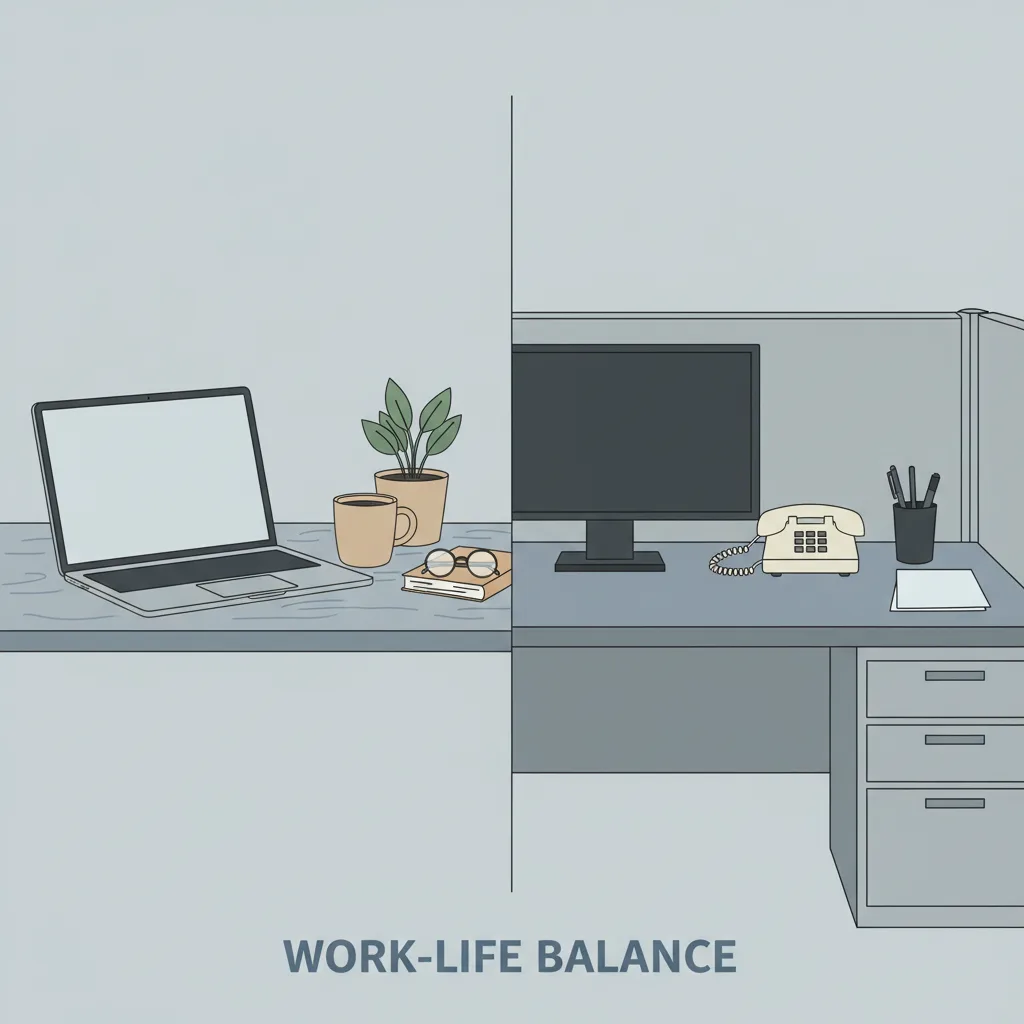
A desk with stacked folders on one side and a small potted plant on the other, separated by a faint line.
Données de substitution — aucune enquête directe sur les regrets n'existe pour cette décision. Les taux sont dérivés des scores de satisfaction et des obstacles d'accès plutôt que de questions portant directement sur les regrets. Voir les mises en garde ci-dessous.

Regret d'action

Poursuivre sa carrière à fond

59%

59% regrettent de ne pas avoir priorisé l'équilibre travail-vie

Travailleurs aux États-Unis, au Royaume-Uni, en France, en Allemagne

rétrospectif, sans plage temporelle fixe

Regret d'inaction

Privilégier l'équilibre vie professionnelle-vie privée

44%

~33% regrettent de ne pas avoir pris plus de risques professionnels (proxy)

Travailleurs aux États-Unis, au Royaume-Uni, en France, en Allemagne

rétrospectif, sans plage temporelle fixe

% regrettent ce choix

action dominates — L'action domine — la plupart regrettent d'avoir agi.

Décisions associées

Décisions sémantiquement similaires — même terrain, compromis différents.

career

Chasser la promotion vs accepter le rôle

% regrettent ce choix

L'inaction domine

Regret d'inaction 1.9× plus élevé

career

Changement de carrière

% regrettent ce choix

L'inaction domine

Regret d'inaction 1.5× plus élevé

lifestyle

Se développer vs se laisser porter

% regrettent ce choix

L'inaction domine

Regret d'inaction 1.5× plus élevé

careerDirecte

Demander une augmentation

% regrettent ce choix

L'inaction domine

Regret d'inaction 3.0× plus élevé

careerDirecte

Prendre la parole

% regrettent ce choix

L'inaction domine

Regret d'inaction 1.4× plus élevé

career

Télétravail vs bureau

% regrettent ce choix

L'inaction domine

Regret d'inaction 1.8× plus élevé

lifestyle

S’expatrier

% regrettent ce choix

L'inaction domine

Regret d'inaction 5.7× plus élevé

lifestyle

Suivre les parents vs. voie propre

% regrettent ce choix

L'inaction domine

Regret d'inaction 3.2× plus élevé

59% of workers regret not prioritizing work-life balance, according to Resume Now’s International Career Regrets survey of 1,000 workers across four countries. On the other side, 44% — “more than 4 in 10” — regret not trying to make a full career change, the closest career-underinvestment figure the same survey reports. The resulting roughly 1.3:1 ratio favors action-regret — an unusual outcome in the regret literature, where Gilovich and Medvec’s temporal pattern predicts that inaction regrets dominate over the long term. Career overinvestment appears to be one of the rare domains where the pattern inverts, likely because the opportunity costs are uniquely irreversible: you cannot retroactively attend your child’s first steps.

Deloitte’s workplace burnout survey quantifies the mechanism. Seventy-seven percent of professionals report experiencing burnout at their current job, and 83% say it has negatively impacted their personal relationships. The APA’s 2024 Work in America survey corroborates: 45% of workers report working more hours than they want to, and 67% report experiencing at least one burnout-related outcome, such as low energy or lack of motivation, in the past month. The Harvard Study of Adult Development — an 87-year longitudinal study — found that relationship satisfaction at age 50 predicted physical health at 80 more reliably than cholesterol levels. These converging datasets, from different methodologies and timeframes, all point the same direction.

The main caveat is measurement asymmetry. The 59% and 44% figures come from different survey questions, not from a clean forced-choice between career and balance. A respondent could plausibly endorse both regrets simultaneously. The 44% inaction figure (“not making a full career change”) is a proxy for career-underinvestment regret, not a direct measure of regretting a balance-first choice. The Harvard Grant Study tracked an elite, all-male cohort that entered Harvard in the late 1930s — a population with more career optionality than most. The Deloitte burnout figure (77%) measures stress prevalence, not regret. The directional finding (career-overinvestment regret exceeds career-underinvestment regret) is robust across all sources; the precise 1.3:1 ratio is an artifact of combining non-identical survey items and should be treated as indicative, not calibrated.

Sources : action

Registre des sources

Chaque chiffre ci-dessous correspond à ce que la source a rapporté, avec la citation textuelle sur laquelle nous nous sommes appuyés et la méthode de calcul. Cliquez sur un lien pour vérifier directement.

2/3 sources vérifiées de manière indépendante, mot pour mot, par rapport à la source citée

  1. [1] Resume Now — The Road Not Taken: Greatest Career Regrets Revealed Vérifié
    The Road Not Taken: Greatest Career Regrets Revealed

    See all 8 Likelier entries citing this source →

    Statistique
    59% of workers regret not prioritizing work-life balance in their career
    Extrait
    “"Top career regrets include not asking for a pay increase (60%), not prioritizing work-life balance in one's career (59%), staying at a job too long (58%), and not negotiating salary when taking a job (58%). Two-thirds of Gen Z and Millennial workers regret not prioritizing work-life balance." ”
    Données source de
    2024-01-10
    Consulté le
    2026-04-26
    Vérification
    Extrait récupéré et confirmé de manière indépendante, mot pour mot, par rapport à la source citée lors de notre audit de vérification.
    Calcul
    Resume Now International Career Regrets survey of 1,000 workers in US, UK, France, and Germany (January 2024). The 59% figure captures respondents who identified not prioritizing work-life balance as a career regret — effectively measuring action-side regret among those who pursued career at the expense of balance.
  2. [2] Deloitte — Workplace Burnout Survey
    Workplace Burnout Survey
    Statistique
    77% of workers have experienced burnout at their current job; 91% say unmanageable stress negatively impacts work quality
    Extrait
    “"77% of respondents have experienced employee burnout at their current job, with more than half citing more than one occurrence. 91% of respondents say that having an unmanageable amount of stress or frustration negatively impacts the quality of their work. 83% say burnout from work negatively impacts their personal relationships." ”
    Données source de
    2024-01-15
    Consulté le
    2026-04-26
    Calcul
    Deloitte surveyed 1,000 full-time US professionals. The 77% burnout prevalence and 83% relationship-impact figure provide quantitative support for the career-overinvestment regret mechanism. While burnout is not identical to regret, the 83% who report damaged personal relationships directly parallels the "worked too hard" regret pattern. This replaces the Bronnie Ware qualitative source with quantitative survey data.
  3. [3] American Psychological Association (APA) / The Harris Poll — 2024 Work in America Survey: Psychological Safety in the Changing Workplace Vérifié
    2024 Work in America Survey: Psychological Safety in the Changing Workplace
    Statistique
    45% of employed US adults say they have to work more hours per week than they want to; 67% report experiencing at least one outcome often associated with workplace burnout in the past month
    Extrait
    “"More than two in five (45%) employed adults said they have to work more hours per week than they want to. … A majority (67%) of workers reported experiencing, in the last month, at least one outcome often associated with workplace burnout, such as lack of interest, motivation, or low energy, feeling lonely or isolated, and a lack of effort at work." ”
    Données source de
    2024-06-14
    Consulté le
    2026-07-03
    Vérification
    Extrait récupéré et confirmé de manière indépendante, mot pour mot, par rapport à la source citée lors de notre audit de vérification.
    Calcul
    APA's Work in America Survey, conducted online by The Harris Poll on behalf of APA among 2,027 employed US adults, fielded March 25 - April 3, 2024, released June 14, 2024. Provides further corroborating quantitative support for the career-overinvestment regret mechanism alongside the Deloitte burnout figures: nearly half of workers are already working more than they want to, and two-thirds report at least one burnout symptom in the past month.

Sources : inaction

Registre des sources

Chaque chiffre ci-dessous correspond à ce que la source a rapporté, avec la citation textuelle sur laquelle nous nous sommes appuyés et la méthode de calcul. Cliquez sur un lien pour vérifier directement.

  1. [1] Resume Now — The Road Not Taken: Greatest Career Regrets Revealed
    The Road Not Taken: Greatest Career Regrets Revealed

    See all 8 Likelier entries citing this source →

    Statistique
    44% regret not making a full career change (more than 4 in 10)
    Extrait
    “"Not making a full career change – 44% … More than 4 in 10 regret not trying to make a career change." ”
    Données source de
    2024-01-10
    Consulté le
    2026-07-10
    Calcul
    Same Resume Now survey (n=1,000). The cited page lists "Not making a full career change – 44%" and narrates it as "More than 4 in 10 regret not trying to make a career change." Used here as a proxy for inaction-side (career-underinvestment) regret: respondents who prioritized stability or balance and later regretted not making a bolder career move. Note this is a distinct multi-select item from the action-side "work-life balance" question, not a forced-choice counterpart (see caveats). The page's own "one-third (34%)" figure refers to those with NO career regrets, so it is not usable as an inaction-regret rate; the prior "over one-third wished they had taken more risks" and "nearly 98 percent" excerpts did not appear on the cited page and were removed.
  2. [2] Harvard Gazette — Over nearly 80 years, Harvard study has been showing how to live a healthy and happy life
    Over nearly 80 years, Harvard study has been showing how to live a healthy and happy life
    Statistique
    Relationship quality at age 50 predicted health at 80 better than cholesterol levels
    Extrait
    “"The surprising finding is that our relationships and how happy we are in our relationships has a powerful influence on our health. Close relationships, more than money or fame, are what keep people happy throughout their lives. Those ties protect people from life's discontents, help to delay mental and physical decline, and are better predictors of long and happy lives than social class, IQ, or even genes." ”
    Données source de
    2017-04-11
    Consulté le
    2026-04-26
    Calcul
    Harvard Study of Adult Development (Grant Study), an 87-year longitudinal study of 268 Harvard men begun in 1938, now directed by Robert Waldinger. Qualitative context only — this source does not ground either regret rate. The finding that relationships outperform career success as a predictor of late-life satisfaction and health lends directional support to the interpretation that those who chose balance and invested in relationships report higher life satisfaction in old age.

Réserves

Les taux d'action et d'inaction dérivent de la même enquête Resume Now mais de différentes questions à choix multiples — « ne pas prioriser l'équilibre travail-vie » (59%) versus « ne pas prendre plus de risques professionnels » (~33%). Ce ne sont pas un binaire propre : un seul répondant pourrait endosser les deux regrets simultanément, et beaucoup l'ont probablement fait. L'enquête n'a pas présenté un choix forcé entre carrière et équilibre. Le chiffre de 59% de regret par action inclut probablement des personnes à tous les niveaux d'intensité de carrière, pas seulement celles qui ont agressivement poursuivi l'avancement. Le chiffre ~33% est rapporté comme « plus d'un tiers ». Les données de burnout de Deloitte quantifient le mécanisme (77% de prévalence de burnout, 83% rapportent des relations endommagées) mais mesurent les résultats de stress au travail plutôt que le regret rétrospectif en soi. L'étude Harvard Grant a suivi une cohorte élite, entièrement masculine, commençant en 1938. Le constat de dominance d'action ici est inhabituel dans le cadre de Gilovich, où l'inaction domine typiquement à long terme ; cependant, le regret « j'ai trop travaillé » peut représenter le domaine rare où le regret par action persiste jusqu'à la vieillesse.

Données brutes : /api/decisions.json

Récemment consultés sur cet appareil