



Aller au contenu
Likelier

Regret d’agir vs. de ne pas agir

Se faire une augmentation mammaire vs ne pas s'en faire

Si vous agissez

Se faire une augmentation mammaire

7,0%

Si vous n’agissez pas

Ne pas se faire une augmentation mammaire

5,0%

Pourcentage de personnes qui regrettent ensuite chaque choix. Les barres et le registre complet s’affichent ci-dessous.


Santé

Dernière révision 2026-05-10

Qualité des preuves 4.25/5

Score d’évaluation en huit dimensions selon la grille de qualité . Chaque dimension notée de 1 à 5.

D1 Vérification des sources
4/5
D2 Autorité et indépendance des sources
5/5
D3 Précision du taux de regret
3/5
D4 Comparabilité des sources
3/5
D5 Motif de Gilovich
4/5
D6 Qualité de la prose
5/5
D7 Complétude des réserves
5/5
D8 Qualité de l’échantillon
5/5
Moyenne 4.25/5
Two identical silhouettes side by side, one with a small surgical consent form resting beneath it, the other bare, on a neutral surface.

Regret d'action

Se faire une augmentation mammaire

7,0%

~7% regrettent la procédure (fourchette 5,1-9,1% à travers les études)

Patientes d'augmentation mammaire cosmétique, revue systématique

rétrospective, généralement 1-5 ans post-procédure

Regret d'inaction

Ne pas se faire une augmentation mammaire

5,0%

~5% (estimation proxy — aucune enquête de regret d'inaction direct n'existe)

Femmes adultes américaines envisageant mais ne poursuivant pas de procédures cosmétiques

rétrospective, pas de calendrier fixe

% regrettent ce choix

balanced — À peu près équilibré — les deux choix entraînent un regret similaire.

Décisions associées

Décisions sémantiquement similaires — même terrain, compromis différents.

Santé

Chirurgie esthétique

% regrettent ce choix

Équilibré

À peu près équilibré

Santé

Brazilian Butt Lift (BBL)

% regrettent ce choix

Équilibré

À peu près équilibré

Santé

Mastectomie préventive vs surveillance

% regrettent ce choix

Équilibré

À peu près équilibré

Santé

Piercing corporel

% regrettent ce choix

L'action domine

Regret d'action 4.0× plus élevé

Santé

Corée : chirurgie esthétique vs. refuser

% regrettent ce choix

L'action domine

Regret d'action 4.0× plus élevé

Santé

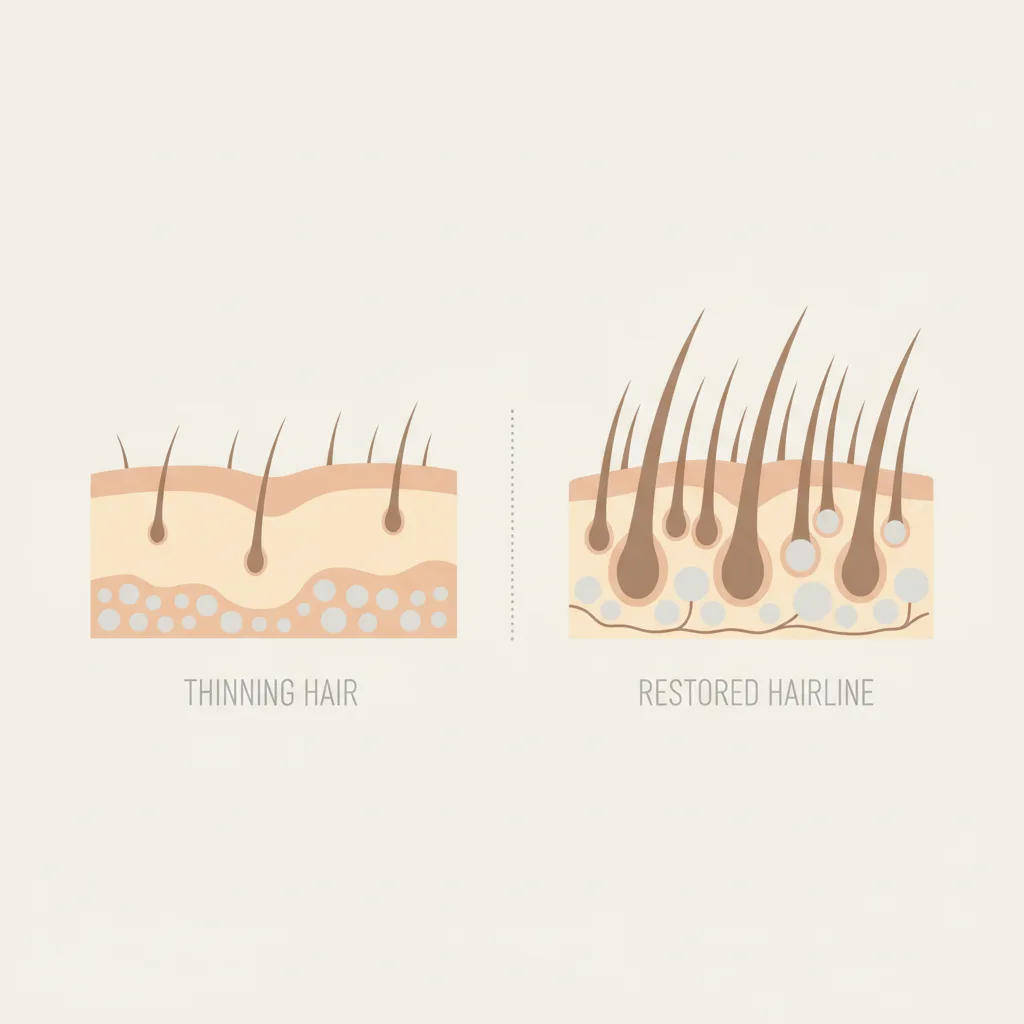
Greffe de cheveux

% regrettent ce choix

L'inaction domine

Regret d'inaction 5.0× plus élevé

Santé

Vasectomie

% regrettent ce choix

Équilibré

À peu près équilibré

lifestyle

Tatouage

% regrettent ce choix

L'action domine

Regret d'action 1.6× plus élevé

Breast augmentation has one of the lowest regret rates in elective cosmetic surgery. A 2024 systematic review in the American Journal of Surgery — the most comprehensive available, covering regret across surgical subspecialties — places the breast-augmentation-specific range at 5.1—9.1%, with a midpoint around 7%. This is substantially lower than body contouring (11—33%) and far lower than many non-cosmetic elective procedures. A separate 2024 meta-analysis of 18,322 patients using the validated BREAST-Q instrument found large post-operative improvements in psychosocial well-being, sexual well- being, and breast satisfaction — domain gains that explain why regret remains modest despite the physical risks of the procedure.

The complication picture is more sobering than the regret rate suggests. Capsular contracture — abnormal scar tissue that hardens around the implant — is a well-documented long-term risk: the Sientra 10-year cohort reported a 10.8% Kaplan-Meier rate. Implant rupture occurs in approximately 7.8% of patients at 10 years. Both complications can require revision surgery; the FDA maintains a Breast Implant Registry to track long-term outcomes. Among patients who later underwent explant for implant illness, a multicenter longitudinal study of 156 patients found that 83.3% reported retroactive regret about the original augmentation decision — though this population is a small, highly selected subset with unusually severe complications.

On the inaction side, no published survey directly measures regret among women who considered but chose not to get breast augmentation. The ASDS consumer survey (70% of Americans considering some cosmetic procedure) and the Ipsos body-dissatisfaction figure (37% feel dissatisfied whenever they look in the mirror) are too broad to function as inaction-regret proxies: both conflate general appearance concern with surgical-specific regret. The 5% inaction estimate is a constructed placeholder — a conservative downward adjustment reflecting that persistent, surgery-specific regret is far less common than diffuse body dissatisfaction. The delta (0.02) should be read as “roughly balanced with a slight action tilt,” not as a precise quantitative claim. Unlike most life decisions, where inaction regret dominates over time, breast augmentation joins the small class of decisions — tattoos, cosmetic surgery broadly — where action regret is at least as common as inaction regret, held up by the physical permanence of the result.

Sources : action

Registre des sources

Chaque chiffre ci-dessous correspond à ce que la source a rapporté, avec la citation textuelle sur laquelle nous nous sommes appuyés et la méthode de calcul. Cliquez sur un lien pour vérifier directement.

  1. [1] The American Journal of Surgery — A systematic review of patient regret after surgery
    A systematic review of patient regret after surgery

    See all 2 Likelier entries citing this source →

    Statistique
    Regret after breast augmentation: 5.1–9.1%
    Extrait
    “"Regret after elective plastic surgery operations is significantly higher compared to gender-affirming surgery. The percentage of patients reporting regret ranged from 0 to 47.1% in breast reconstruction, 5.1–9.1% in breast augmentation, and 10.82–33.3% in body contouring." ”
    Données source de
    2024-04-30
    Consulté le
    2026-05-10
    Calcul
    2024 AJS systematic review of patient regret across surgical subspecialties. Breast augmentation-specific subrange: 5.1–9.1%. We use 7% as the approximate midpoint. This is the most procedure-specific regret figure available in the peer-reviewed literature for cosmetic breast augmentation.
  2. [2] Journal of Plastic, Reconstructive & Aesthetic Surgery — Quality of life and satisfaction after breast augmentation: A systematic review and meta-analysis of Breast-Q patient-reported outcomes
    Quality of life and satisfaction after breast augmentation: A systematic review and meta-analysis of Breast-Q patient-reported outcomes
    Statistique
    Significant improvements across all BREAST-Q domains post-augmentation (39 studies, 18,322 patients): psychosocial well-being +38.10, sexual well-being +40.20, satisfaction with breast +47.88
    Extrait
    “"[Paraphrase from abstract -- full text paywalled] The pairwise meta-analysis of 39 studies comprising 53 patient cohorts and 18,322 patients revealed significant improvements in patient-reported psychosocial well-being (MD +38.10), sexual well-being (MD +40.20), and satisfaction with breast (MD +47.88) after breast augmentation (all p < 0.00001). BREAST-Q scores increased from 37.2, 31.1, and 26.3 to 75.0, 70.6, and 72.7 respectively." ”
    Données source de
    2024-06-01
    Consulté le
    2026-05-10
    Calcul
    2024 systematic review and meta-analysis of BREAST-Q outcomes. The high post-operative satisfaction scores (medians in the 70s on a 100-point scale) are consistent with the relatively low 7% regret rate. The large magnitude of improvement across psychosocial and sexual well-being domains explains why regret remains modest despite the risks of complications. Used as corroborating context, not the primary regret rate source.
  3. [3] Brazilian Journal of Plastic Surgery (RBCP) — Breast silicone explant: a multicenter longitudinal study
    Breast silicone explant: a multicenter longitudinal study
    Statistique
    83.3% of patients who underwent breast implant explantation reported regret about the original augmentation decision (n=156)
    Extrait
    “"Of the patients evaluated, 83.3% reported regret having had the implant surgery, while 0.6% regretted having had the explant surgery." ”
    Données source de
    2022-01-01
    Consulté le
    2026-07-03
    Calcul
    Multicenter longitudinal observational study of 156 patients who underwent breast silicone explantation (Rev Bras Cir Plast 2022;37, DOI 10.5935/2177-1235.2022RBCP0026). Cited in body prose as context for the explant-for-illness subgroup: patients who progress to explant report very high retroactive regret about the original augmentation decision, but this is a small, highly selected, severe-complication subset, not representative of the general augmentation population used for the 5.1-9.1% action-regret range above. Not used to compute the action_side regret_rate (0.07), which remains anchored to the AJS systematic review.

Sources : inaction

Registre des sources

Chaque chiffre ci-dessous correspond à ce que la source a rapporté, avec la citation textuelle sur laquelle nous nous sommes appuyés et la méthode de calcul. Cliquez sur un lien pour vérifier directement.

  1. [1] American Society for Dermatologic Surgery (ASDS) — ASDS Survey: Seven Out of Ten Consumers Considering Cosmetic Procedures
    ASDS Survey: Seven Out of Ten Consumers Considering Cosmetic Procedures
    Statistique
    70% of consumers considering a cosmetic dermatologic procedure
    Extrait
    “"Seven out of ten consumers are considering cosmetic procedures, according to the ASDS consumer survey. The consideration rate has risen steadily over the past decade." ”
    Données source de
    2025-03-01
    Consulté le
    2026-05-10
    Calcul
    ASDS annual consumer survey. The 70% figure encompasses all cosmetic procedures including minimally invasive (Botox, fillers), not surgical augmentation specifically. No published survey directly asks women who chose not to pursue breast augmentation whether they regret that inaction. The 5% is a conservative proxy: interest in cosmetic procedures is high, but converting curiosity into sustained inaction regret specific to breast augmentation is much rarer. This is an order-of-magnitude placeholder, not a measured finding.
  2. [2] Ipsos — Most Americans Experience Feeling Dissatisfied with How Their Body Looks from Time to Time
    Most Americans Experience Feeling Dissatisfied with How Their Body Looks from Time to Time

    See all 3 Likelier entries citing this source →

    Statistique
    37% of Americans feel dissatisfied with their body whenever they look in the mirror
    Extrait
    “"Most Americans experience feeling dissatisfied with how their body looks from time to time, including nearly two in five who feel this way whenever they look in the mirror." ”
    Données source de
    2018-01-10
    Consulté le
    2026-05-10
    Calcul
    Ipsos nationally representative survey of 1,005 US adults. The 37% body dissatisfaction figure is a broad measure of appearance distress, not a breast-augmentation-specific regret measure. A small fraction of women with persistent chest-related body dissatisfaction who never pursue augmentation may carry lasting inaction regret, but this sub-fraction has not been measured. The 5% proxy is a downward adjustment from 37%, accounting for the fact that body dissatisfaction is far more common than regret specifically about not pursuing surgery.

Réserves

Les deux côtés ne sont pas méthodologiquement comparables. L'estimation de regret d'action de 7% est tirée de la sous-fourchette 5,1-9,1% dans une revue systématique AJS 2024 — données authentiques évaluées par les pairs avec granularité spécifique à la procédure. L'estimation d'inaction de 5% est un proxy construit : aucune enquête à grand échantillon n'a jamais demandé aux femmes qui ont choisi de ne pas avoir d'augmentation mammaire si elles regrettent cette décision. Le taux de considération cosmétique ASDS (70%) et le taux d'insatisfaction corporelle Ipsos (37%) sont beaucoup trop larges pour fonctionner comme mesures directes de regret d'inaction. Le vrai taux d'inaction est inconnu et pourrait être plus élevé ou plus bas que 5%. Plusieurs facteurs compliquent également le taux d'action : les études avec un suivi plus long tendent à montrer un regret plus élevé à mesure que les complications s'accumulent (les taux de contracture capsulaire atteignent 10,8% à 10 ans selon la cohorte Sientra, et la rupture d'implant atteint 7,8% à 10 ans), tandis que les études à 1-2 ans rapportent des taux de satisfaction supérieurs à 90%. Le delta (0,02) reflète un profil Gilovich approximativement équilibré, avec une légère inclinaison vers le regret d'action — ce qui est une véritable inversion du schéma typique de dominance d'inaction. Les taux de regret ne doivent pas être extrapolés aux populations hors des États-Unis ou à la chirurgie mammaire non élective (reconstruction, réduction), qui portent des profils de regret très différents.

Données brutes : /api/decisions.json

Récemment consultés sur cet appareil