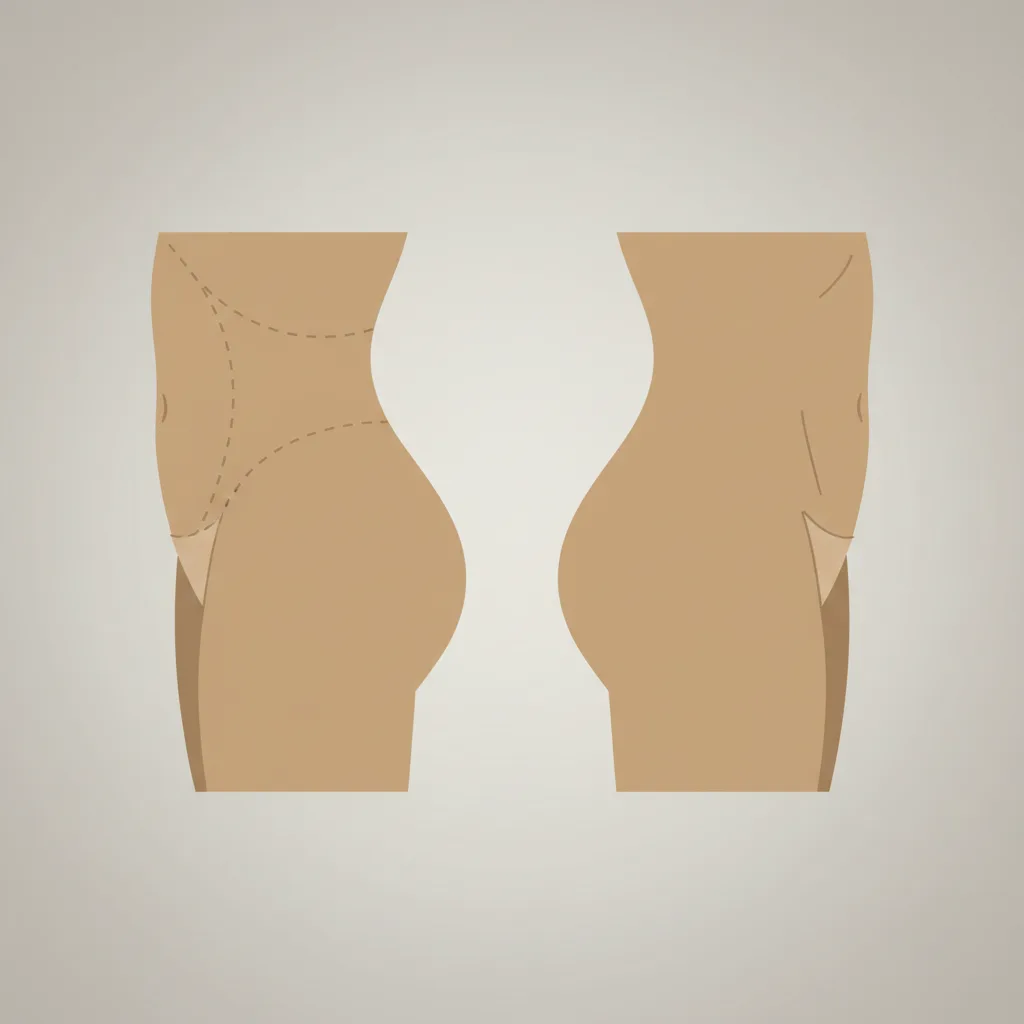
Sottoporsi a un Brazilian Butt Lift (BBL) vs. non farlo
Se agisci
Sottoporsi a un BBL
14%
Se non agisci
Non sottoporsi a un BBL
8,0%
Percentuale di chi poi rimpiange ciascuna scelta. Le barre e il registro completo dei dati compaiono sotto.
Salute
Ultima revisione 2026-05-10
Qualità delle prove 3.38/5
Punteggio di revisione su otto dimensioni rispetto alla
griglia di qualità
. Ogni dimensione valutata da 1 a 5.
D1 Verifica delle fonti
4/5
D2 Autorità e indipendenza delle fonti
4/5
D3 Precisione del tasso di rimpianto
1/5
D4 Comparabilità delle fonti
2/5
D5 Schema di Gilovich
3/5
D6 Qualità della prosa
5/5
D7 Completezza degli avvertimenti
5/5
D8 Qualità del campione
3/5
Media3.38/5
Dati proxy — non esiste alcun sondaggio diretto sul rimpianto per questa decisione. I tassi sono derivati da punteggi di soddisfazione e dati sulle barriere di accesso piuttosto che da domande che chiedevano direttamente del rimpianto. Vedi avvertenze di seguito.
Rimpianto per azione
Sottoporsi a un BBL
14%
~14% (proxy di soddisfazione inversa — non esiste un'indagine diretta sul rimpianto)
The Brazilian Butt Lift occupies an unusual position in elective cosmetic
surgery: it carries the highest reported mortality rate of any aesthetic
procedure while simultaneously producing high patient satisfaction among
survivors. A 2024 retrospective cohort of 3,000 BBL patients (Güzey &
Ergan Şahin, Aesthetic Plastic Surgery) reported 86% satisfaction, implying
roughly 14% not satisfied. Crucially, no peer-reviewed study has applied a
validated decision-regret instrument specifically to BBL patients, so the
14% action-regret estimate is a satisfaction inverse — a proxy with an
inherent upward bias on the regret direction, since dissatisfaction and
regret are related but distinct constructs.
The mortality data provides essential context for why regret data is
structurally incomplete. Before the ASERF Multi-Society Task Force published
guidelines in 2018, the estimated BBL mortality rate was approximately
1:3,000 procedures — the highest ever recorded for elective cosmetic
surgery, driven by fat embolism when injected material entered the gluteal
venous plexus. Following adoption of subcutaneous-only injection techniques,
the 2019 follow-up survey reported a rate of approximately 1:14,952. The
implication is that any satisfaction or regret figure drawn from survivor
cohorts is subject to survivorship bias: patients who died or suffered
severe complications cannot report their preferences. Studies conducted
almost entirely at accredited facilities by board-certified surgeons further
select against the highest-risk surgical settings, where outcomes and
potential regret would almost certainly differ.
On the inaction side, no survey exists that directly measures regret among
people who considered but did not get a BBL. The same 2018 Ipsos survey
reports that 8% of respondents “always feel dissatisfied with how they
look,” regardless of setting — the most chronic, cross-situational tier of
body dissatisfaction it measures, distinct from the 37% who feel this way
specifically in front of a mirror. This entry uses that directly-reported 8%
as the inaction-side proxy, on the reasoning that persistent,
situation-independent dissatisfaction is a closer analogue to durable regret
than transient, situational dissatisfaction — though it remains a general
body-dissatisfaction measure, not a rate specific to foregoing this
procedure. Both the 8% inaction estimate and the 14% action estimate should
be treated as proxy constructs rather than directly measured regret rates.
The delta (0.06) and the “balanced” Gilovich pattern label reflect this
uncertainty: it is possible that, once properly measured with a validated
regret instrument, the pattern would shift in either direction. This entry’s
primary purpose is to surface the mortality risk context and the absence of
rigorous regret literature for one of the most socially prominent elective
procedures of the 2010s and 2020s.
Fonti: azione
Registro delle fonti
Ogni numero qui sotto è ciò che ciascuna fonte ha riportato, con la citazione testuale su cui ci siamo basati e come siamo arrivati alla nostra cifra. Clicca su qualsiasi link per verificare direttamente.
[1]Aesthetic Plastic Surgery (Springer) — Brazilian Butt Lift: An Experience Over 3000 Patients
Articolo peer-reviewed
86% of patients satisfied with outcomes; ~14% not satisfied
Estratto
“"[Paraphrase from abstract -- full text paywalled] Of 3000 patients who underwent BBL between 2018 and 2022, 86% expressed satisfaction with their outcomes. The study concluded that BBL is a safe and satisfactory surgery when performed by experienced surgeons who adhere to fundamental principles, with 70% of transferred fat surviving in the buttocks."
”
Dati originali da
2024-04-01
Consultato
2026-05-10
Calcolo
Güzey and Ergan Şahin (2024) retrospective cohort of 3000 BBL patients. 86% satisfaction rate used as the inverse proxy for regret: 100% - 86% = 14%. This is NOT a direct regret-framed question; it measures general satisfaction. Dissatisfied patients are not necessarily regretful (they may intend revision surgery), and satisfied patients may still report some regret. The 14% is used as an upper-bound proxy for action regret, likely overstating true decision regret. No peer-reviewed study has applied a validated Decision Regret Scale specifically to BBL patients.
[2]Aesthetic Surgery Journal / ASERF — Report on Mortality from Gluteal Fat Grafting: Recommendations from the ASERF Task Force
Articolo peer-reviewed
BBL career mortality rate estimated between 1:6,214 and 1:2,351; total fatal-or-nonfatal pulmonary fat embolism rate 1:1,473 over a career
Estratto
“"The calculated total rate of having either a fatal or a nonfatal PFE over a career is therefore 1:1473. ... The Task Force stresses that none of these estimates be construed as the actual rate." The survey, autopsy, and AAAASF-facility methodologies yielded death-rate estimates of 1:6214, ~1:4000, and 1:2351 respectively.
”
Dati originali da
2018-03-01
Consultato
2026-05-10
Calcolo
ASERF task force anonymous survey of 4,843 plastic surgeons worldwide. Establishes baseline mortality context (not the regret rate). Post- guideline data (2019 ASERF follow-up published in Aesthetic Surgery Journal) showed the rate fell to approximately 1:14,952 after adoption of subcutaneous-only injection technique. Mortality is cited here as context for why complications drive regret, not as the regret rate itself. Cited to establish why action regret may be underreported: patients who died cannot report regret, and survivors with complications may not be captured in satisfaction surveys.
Fonti: inazione
Registro delle fonti
Ogni numero qui sotto è ciò che ciascuna fonte ha riportato, con la citazione testuale su cui ci siamo basati e come siamo arrivati alla nostra cifra. Clicca su qualsiasi link per verificare direttamente.
[1]Ipsos — Most Americans Experience Feeling Dissatisfied with How Their Body Looks from Time to Time↗ 2 other entries
Studio primario
8% of Americans always feel dissatisfied with their body regardless of location/situation; 37% feel dissatisfied specifically when looking in a mirror; 79% experience dissatisfaction at times (vs 21% never)
Estratto
“"Most Americans experience feeling dissatisfied with how their body looks from time to time, including nearly two in five who feel this way whenever they look in the mirror." ... "For another 8% of those surveyed, it doesn't matter where they are - they always feel dissatisfied with how they look."
”
Dati originali da
2018-01-10
Consultato
2026-07-07
Calcolo
Ipsos survey of 1,004 US adults (RiverMend Health, Jan 3-5, 2018). The survey directly reports that 8% of respondents "always feel dissatisfied with how they look" regardless of setting -- the most chronic, cross-situational tier of dissatisfaction the survey measures, distinct from the 37% who are dissatisfied specifically when looking in a mirror and the 79% who are dissatisfied in at least one surveyed situation (vs 21% never). This entry uses that directly-reported "always, regardless of location" 8% figure as the inaction-side proxy, reasoning that persistent, situation- independent dissatisfaction is a closer analogue to durable inaction regret than the broader mirror-specific or at-least-sometimes figures -- though it remains a general body-dissatisfaction measure, not a rate specific to foregoing this procedure. No survey asks people who considered but did not get a BBL whether they regret that inaction; BBLs are a niche procedure, and the true share of the population whose lasting regret concerns specifically foregoing this surgery is unknown and could sit anywhere in the general body-dissatisfaction range (8%-37%) or outside it.
[2]International Society of Aesthetic Plastic Surgeons (ISAPS) — ISAPS Global Survey 2024: Full Report
Fonte di riferimento
Body and extremities procedures (the category that includes gluteal augmentation) totalled ~6 million worldwide in 2024, the largest surgical category, though volume fell 14.8% year-on-year
Estratto
“"There were 3.9 million breast procedures (-14.1%) and 6 million body and extremities procedures (-14.8%)."
”
Dati originali da
2024-12-01
Consultato
2026-05-10
Calcolo
ISAPS annual global survey of member plastic surgeons. The body-and- extremities category (which includes gluteal augmentation) was the largest surgical category at ~6 million procedures worldwide in 2024, confirming that demand for body-contouring surgery is real and substantial and that a plausible pool of people consider but do not proceed. Note the category declined 14.8% year-on-year in the 2024 survey, so this is a demand-level (not a growth) claim; earlier reports do NOT place gluteal fat grafting in the global top-10 surgical procedures. Volume data does not translate to inaction-regret data. Cited to establish demand context, not as a regret measure.
Avvertenze
Sia le cifre lato azione che lato inazione per questa voce sono costrutti proxy, non tassi di rimpianto misurati. Nessuno studio sottoposto a revisione paritaria ha applicato uno strumento validato di rimpianto decisionale specificamente ai pazienti BBL. Il 14% lato azione è l'inverso dell'86% di soddisfazione in una coorte turca di 3.000 pazienti (Güzey & Ergan Şahin, 2024) — soddisfazione e rimpianto misurano costrutti correlati ma distinti, e questa conversione sovrastima il vero rimpianto decisionale sotto l'interpretazione più generosa. L'8% lato inazione non ha alcuna base evidenziale diretta; è un proxy speculativo dai dati generali di insoddisfazione corporea. Il delta (0,06) e l'etichetta gilovich_pattern ("balanced") dovrebbero essere trattati come stime editoriali, non come risultati empirici. Una complicazione secondaria è il bias di sopravvivenza: la BBL ha il più alto tasso di mortalità riportato di qualsiasi procedura cosmetica elettiva (1:3.000 nell'era pre-2018; circa 1:14.952 post-linee guida). I pazienti che hanno subito complicazioni fatali o gravi non possono riferire il loro rimpianto, deprimendo sistematicamente il tasso di rimpianto dall'azione misurato nelle coorti di sopravvissuti. Inoltre, gli esiti BBL variano drammaticamente in base al setting chirurgico e all'esperienza del chirurgo: procedure eseguite al di fuori di strutture accreditate da chirurghi non certificati dal consiglio comportano tassi di complicazione e mortalità sostanzialmente più alti rispetto alle cifre dei centri accademici riportate negli studi sottoposti a revisione paritaria. La letteratura sulla soddisfazione cattura quasi esclusivamente esiti da setting chirurgici regolamentati. La domanda guidata dai social media — in particolare tra le donne più giovani esposte all'estetica del "corpo BBL" — introduce effetti di selezione che complicano ulteriormente qualsiasi tentativo di generalizzare i tassi di rimpianto attraverso la popolazione di pazienti BBL.