






Vai al contenuto
Likelier

Rimpianto per l’azione vs. l’inazione

Frequentare un'università privata vs scegliere un'università pubblica paragonabile

Se agisci

Università privata

17%

Se non agisci

Università pubblica

14%

Percentuale di chi poi rimpiange ciascuna scelta. Le barre e il registro completo dei dati compaiono sotto.


Carriera

Ultima revisione 2026-05-01

Qualità delle prove 4.38/5

Punteggio di revisione su otto dimensioni rispetto alla griglia di qualità . Ogni dimensione valutata da 1 a 5.

D1 Verifica delle fonti
5/5
D2 Autorità e indipendenza delle fonti
4/5
D3 Precisione del tasso di rimpianto
2/5
D4 Comparabilità delle fonti
5/5
D5 Schema di Gilovich
5/5
D6 Qualità della prosa
5/5
D7 Completezza degli avvertimenti
5/5
D8 Qualità del campione
4/5
Media 4.38/5
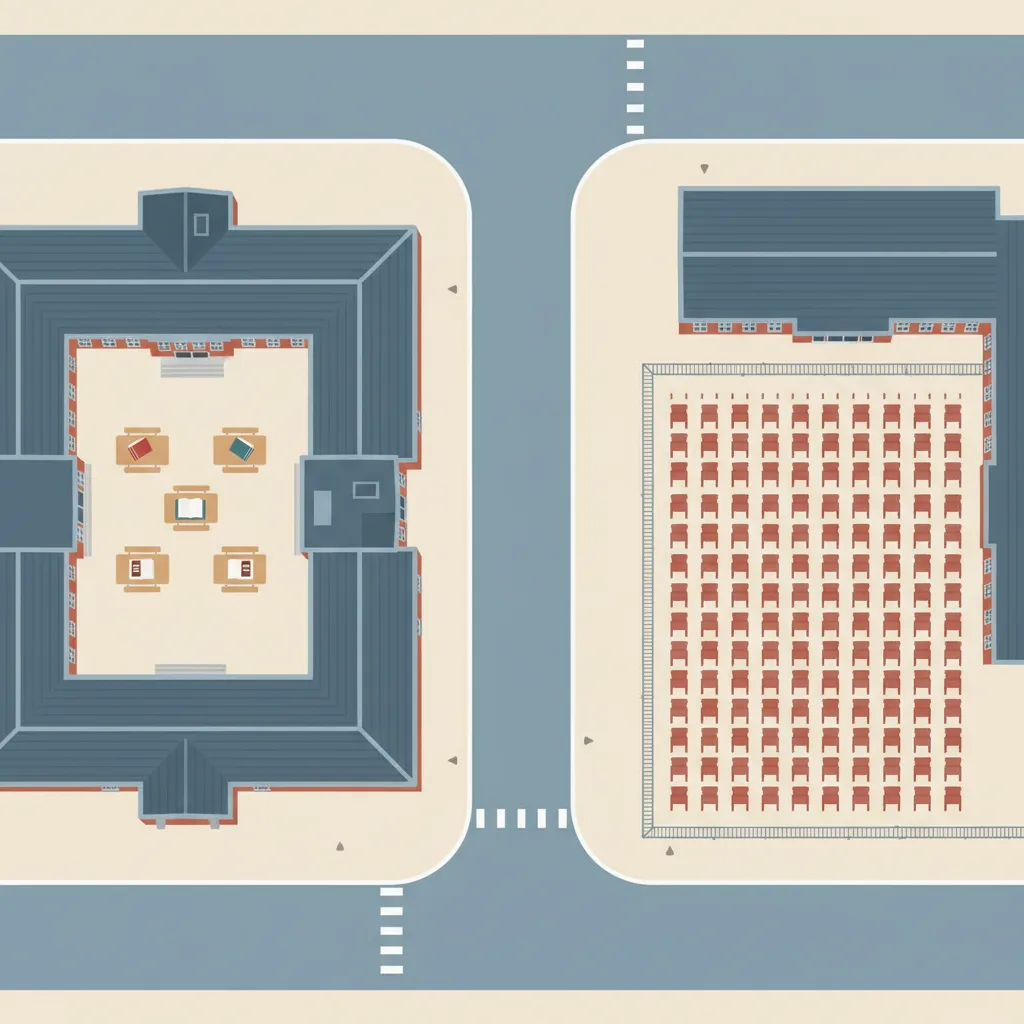
Two university campuses seen from above, one with a manicured courtyard and one with a sprawling modern campus.

Rimpianto per azione

Università privata

17%

Il 17% dei laureati di college privati dice che la loro laurea non valeva il costo finanziario (proxy)

Adulti statunitensi che hanno frequentato un college privato non-profit di quattro anni, rappresentativo a livello nazionale

retrospettivo, nessun arco temporale fisso

Rimpianto per inazione

Università pubblica

14%

Il 14% dei laureati di college pubblici dice che la loro laurea non valeva il costo finanziario (proxy)

Adulti statunitensi che hanno frequentato un college pubblico di quattro anni, rappresentativo a livello nazionale

retrospettivo, nessun arco temporale fisso

% rimpiange questa scelta

balanced — Approssimativamente equilibrato — entrambe le scelte comportano un rimpianto simile.

Decisioni correlate

Decisioni semanticamente simili — stesso terreno, compromessi diversi.

careerDiretta

Abbandono vs. completamento laurea

% rimpiange questa scelta

L'azione prevale

Rimpianto per l'azione 1.1× maggiore

careerDiretta

Scelta della facoltà

% rimpiange questa scelta

L'inazione prevale

Rimpianto per l'inazione 1.6× maggiore

career

Decisione universitaria

% rimpiange questa scelta

L'azione prevale

Rimpianto per l'azione 1.2× maggiore

Finanza

Debito studentesco vs. percorso più economico

% rimpiange questa scelta

L'inazione prevale

Rimpianto per l'inazione 1.3× maggiore

career

Compiti scritti dall'IA

% rimpiange questa scelta

Equilibrato

Approssimativamente equilibrato

family

Privata vs pubblica

% rimpiange questa scelta

L'inazione prevale

Rimpianto per l'inazione 3.2× maggiore

career

Negoziazione stipendio

% rimpiange questa scelta

L'inazione prevale

Rimpianto per l'inazione 1.2× maggiore

career

Corea: pubblica amm. vs. settore privato

% rimpiange questa scelta

L'azione prevale

Rimpianto per l'azione 1.6× maggiore

Only 17% of private-university graduates had not yet seen a financial payoff from their degree, compared with 14% of public-university graduates, according to a 2014 Pew Research Center survey of 2,002 US adults. The difference is three percentage points — within the margin of error — making this one of the clearest “balanced” findings in the regret literature. This is a payoff-to-date question, not a direct “was it worth the cost” regret item: of the 17% of private graduates without a payoff yet, a further 5% told Pew they expect their education to pay off in the future, leaving only about 12% who said it will not pay off or were unsure (about 7% for public graduates). Both groups overwhelmingly report that college paid off, and neither camp shows the sustained, growing regret that Gilovich and Medvec associate with the inaction side of most long-term dilemmas.

A useful corroborating data point comes from the Strada-Gallup Education Consumer Pulse survey of approximately 90,000 US adults: 28% of respondents said they would choose a different institution if they could decide again, compared with 36% who would choose a different field of study. The survey does not break its findings out by public-versus-private attendance, so it cannot confirm or refute an asymmetry between the two — but it does suggest that institution-choice regret is real yet secondary to field-of-study regret, which is consistent with the Pew finding that the public/private gap is small enough to sit inside the margin of error.

Three limitations shape how this entry should be read. First, the primary data are from 2013, before the steepest phase of private-tuition growth and the student-debt expansion of the late 2010s; contemporary graduates carrying larger private-school debt loads may show a larger asymmetry. Second, both figures measure satisfaction retrospectively from a population that successfully graduated; students who enrolled at private universities and did not complete their degree are absent and likely report higher regret. Third, this entry is specific to the United States, where a sharp public/private cost divide exists. In most of Europe, the financial and prestige gap between private and public higher education is structured differently, and these numbers do not transfer.

Fonti: azione

Registro delle fonti

Ogni numero qui sotto è ciò che ciascuna fonte ha riportato, con la citazione testuale su cui ci siamo basati e come siamo arrivati alla nostra cifra. Clicca su qualsiasi link per verificare direttamente.

  1. [1] Pew Research Center — Public and private college grads about equal in satisfaction with their lives
    Public and private college grads about equal in satisfaction with their lives
    Statistica
    83% of private college graduates and 86% of public college graduates said they had already seen a payoff from their education
    Estratto
    “"Roughly equal shares of 83% among private school graduates and 86% among public school graduates said they had already seen a payoff." ”
    Dati originali da
    2014-05-19
    Consultato
    2026-05-01
    Calcolo
    Pew Research survey of 2,002 US adults conducted Oct 7-27, 2013. Action proxy derived as 1 - 0.83 = 0.17 (17% of private-college graduates had not yet seen a financial payoff from their education). This is a payoff-to-date perception, NOT a direct "was it worth the cost" regret measure. The 17% is not all dissatisfied: Pew reports a further 5% of private graduates "expect to see their educations pay off in the future", so the share who said it will not pay off or are unsure is the remainder, roughly 12%. Survey covered all college graduates; selection between private and public was not controlled. Subgroup sample sizes for private-college and public-college respondents within the n=2,002 survey are not separately reported; per-subgroup margin of error is wider than the approximately plus-or-minus 2.5 pp noted for the full sample.
  2. [2] Gallup / Strada Education Network — Half of U.S. Adults Would Change at Least One Education Decision
    Half of U.S. Adults Would Change at Least One Education Decision

    See all 4 Likelier entries citing this source →

    Statistica
    51% of US adults would change at least one aspect of their education experience; 28% would select a different institution
    Estratto
    “"Fifty-one percent of U.S. adults would change at least one aspect of their education experience. Significantly fewer (28%) would select a different institution." ”
    Dati originali da
    2017-06-01
    Consultato
    2026-05-01
    Calcolo
    Strada-Gallup Education Consumer Pulse survey, n approximately 90,000 US adults, June 2016 through March 2017. Report does not isolate private-4yr vs public-4yr regret rates as separate figures; used here as corroboration that institution-choice regret exists but is secondary to field-of-study regret.

Fonti: inazione

Registro delle fonti

Ogni numero qui sotto è ciò che ciascuna fonte ha riportato, con la citazione testuale su cui ci siamo basati e come siamo arrivati alla nostra cifra. Clicca su qualsiasi link per verificare direttamente.

  1. [1] Pew Research Center — Public and private college grads about equal in satisfaction with their lives
    Public and private college grads about equal in satisfaction with their lives
    Statistica
    83% of private college graduates and 86% of public college graduates said they had already seen a payoff from their education
    Estratto
    “"Roughly equal shares of 83% among private school graduates and 86% among public school graduates said they had already seen a payoff." ”
    Dati originali da
    2014-05-19
    Consultato
    2026-05-01
    Calcolo
    Same Pew 2013/2014 survey as action_side (n = 2,002). Inaction proxy derived as 1 - 0.86 = 0.14 (14% of public-college graduates had not yet seen a financial payoff from their education). This is a payoff-to-date perception, NOT a direct "was it worth the cost" regret measure. A further 7% of public graduates "expect to see their educations pay off in the future", so the share who said it will not pay off or are unsure is the remainder, roughly 7%. Subgroup sample sizes for private-college and public-college respondents within the n=2,002 survey are not separately reported; per-subgroup margin of error is wider than the approximately plus-or-minus 2.5 pp noted for the full sample.
  2. [2] Gallup / Strada Education Network — Half of U.S. Adults Would Change at Least One Education Decision
    Half of U.S. Adults Would Change at Least One Education Decision

    See all 4 Likelier entries citing this source →

    Statistica
    51% of US adults would change at least one aspect of their education experience; 36% would choose a different field of study; 28% would select a different institution
    Estratto
    “"Fifty-one percent of U.S. adults would change at least one aspect of their education experience. Thirty-six percent of U.S. adults who pursued or completed a postsecondary degree would choose a different field of study. Significantly fewer (28%) would select a different institution." ”
    Dati originali da
    2017-06-01
    Consultato
    2026-05-01
    Calcolo
    The 28% who would choose a different institution includes all institution-type switches and is not specific to public-to-private transitions. Used here to establish that institution-choice regret exists but is secondary to major/field regret.

Avvertenze

Entrambi i lati attingono alla stessa indagine Pew 2014, rendendo il confronto internamente coerente, ma quell'indagine ha misurato "ne valeva la pena l'investimento finanziario" piuttosto che chiedere direttamente del rimpianto. Il divario di 3 punti percentuali è entro il margine di errore dell'indagine (circa ±2,5 pp per il campione completo) e non dovrebbe essere letto come prova che i laureati di università private si pentano della loro scelta di più; la lettura onesta è che i tassi di soddisfazione sono statisticamente indistinguibili. I dati sono del 2013 e precedono l'accelerazione 2015-2025 delle tasse di iscrizione delle istituzioni private e la crescita del debito studentesco; i tassi di rimpianto attuali nelle istituzioni private possono essere più alti. Il bias di selezione è il più grande confondente: gli studenti che frequentano università private differiscono sistematicamente dalle controparti universitarie pubbliche per reddito familiare, preparazione accademica e reti professionali, quindi qualsiasi differenza di esito può riflettere quei vantaggi preesistenti piuttosto che il tipo di scuola. Il risultato Strada-Gallup che la selettività piuttosto che il tipo pubblico/privato è il predittore dominante della soddisfazione educativa si allinea con le dimensioni di effetto modeste della letteratura sui voucher randomizzati. La portata geografica è limitata agli Stati Uniti; nel Regno Unito, nella maggior parte dell'Europa continentale e in Australia la distinzione tra università private e statali porta diverso peso finanziario e sociale che queste indagini non catturano.

Dati grezzi: /api/decisions.json

Visti di recente su questo dispositivo