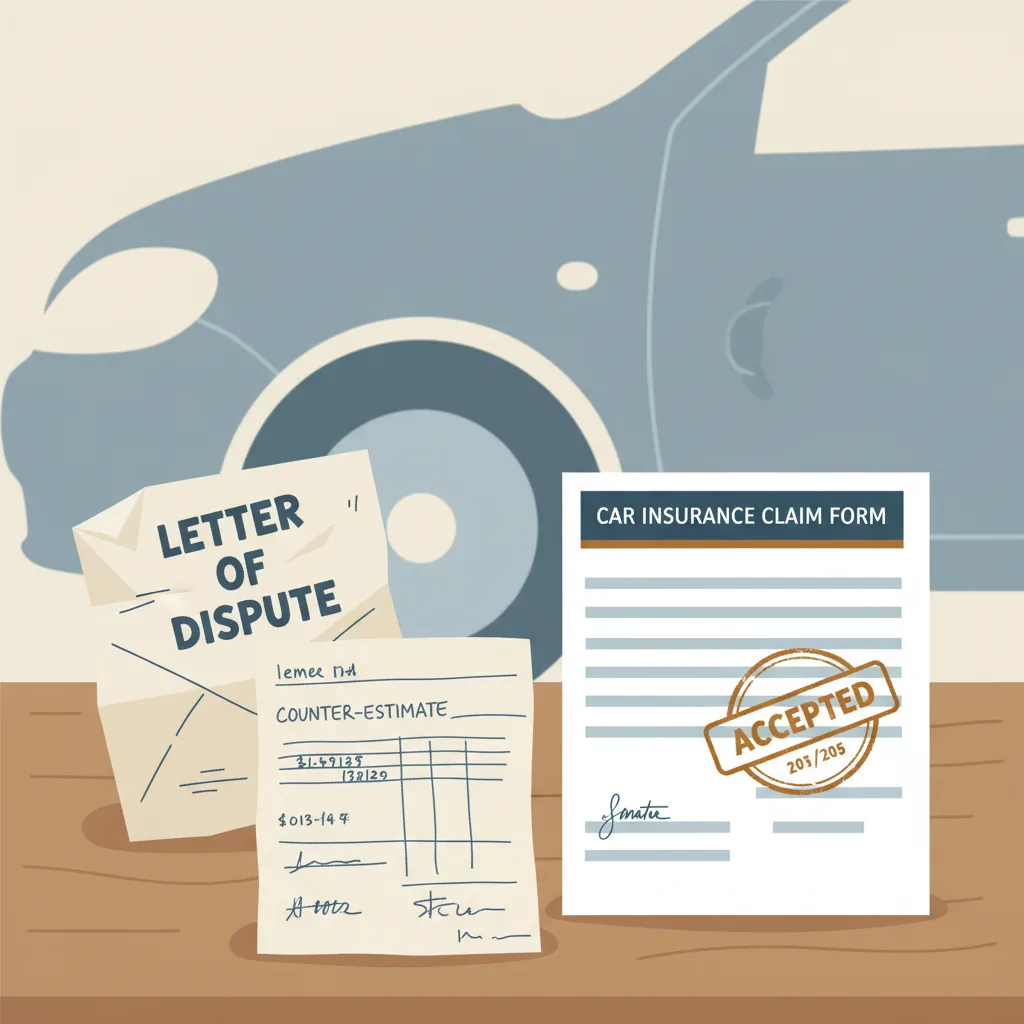
Een advocaat inhuren voor een letselclaim na een auto-ongeval versus het aanbod van de schaderegelaar accepteren zonder vertegenwoordiging
Als je handelt
Een advocaat inhuren
55%
Als je niets doet
Accepteren zonder vertegenwoordiging
25%
Percentage dat later spijt heeft van elke keuze. De balken en het volledige overzicht staan hieronder.
Financieel
Laatst beoordeeld 2026-05-11
Kwaliteit van bewijs 4.13/5
Beoordelingsscore op acht dimensies volgens de
kwaliteitsrubriek
. Elke dimensie krijgt een score van 1 tot 5.
D1 Bronverificatie
4/5
D2 Autoriteit en onafhankelijkheid van bronnen
4/5
D3 Nauwkeurigheid van spijtcijfer
2/5
D4 Vergelijkbaarheid van bronnen
3/5
D5 Gilovich-patroon
5/5
D6 Prozakwaliteit
5/5
D7 Volledigheid van voorbehouden
5/5
D8 Steekproefkwaliteit
5/5
Gemiddelde4.13/5
Proxygegevens — er bestaat geen directe spijtenquête voor deze beslissing. De percentages zijn afgeleid van tevredenheidsscores en toegangsdrempelgegevens in plaats van vragen die direct naar spijt vroegen. Zie opmerkingen hieronder.
Spijt van handelen
Een advocaat inhuren
55%
Meer dan de helft van de eisers die een advocaat inhuurden was ontevreden over hun totale uitkering — het IRC-consumentenpanel meldde dat minder dan de helft van de vertegenwoordigde eisers tevreden was (proxy: ontevredenheid over de uitkering, geen directe spijt-enquête)
Amerikaanse auto-verzekering letselclaimanten die een advocaat inhuurden
ongevalsclaims 1999–2002, onderzocht in 2002
Spijt van nalaten
Accepteren zonder vertegenwoordiging
25%
Ongeveer één op de vier eisers die geen advocaat inhuurden was ontevreden over hun totale uitkering — het IRC-consumentenpanel meldde dat bijna driekwart van de niet-vertegenwoordigde eisers tevreden was (proxy: ontevredenheid over de uitkering; wie zelf schikt kan het contrafeitelijke scenario vaak niet zien)
Amerikaanse auto-verzekering letselclaimanten die zelf schikten zonder vertegenwoordiging
ongevalsclaims 1999–2002, onderzocht in 2002
% betreurt deze keuze
Een advocaat inhurenAccepteren zonder vertegenwoordiging
55%25%
action dominates — Handelen domineert — de meesten hebben spijt dat ze handelden.
Gerelateerde keuzes
Semantisch vergelijkbare keuzes — zelfde terrein, andere afwegingen.
Onderhandelen over de huurDe gevraagde prijs accepteren
18%35%
Niet-handelen overheerst
Spijt over niet-handelen 1.9× hoger
In bodily injury auto insurance claims, claimants who self-settled without legal representation received only about 15% of total dollars paid out — while represented claimants received the other 85%, according to the Insurance Research Council’s closed-claim study of more than 80,000 claims. Represented claimants received settlements averaging 3.5 times higher in gross terms than unrepresented claimants. After the average 32% contingency fee, the net advantage narrows but remains substantially positive for claims with significant injuries. The IRC’s 2004 consumer panel (n > 3,000) adds an uncomfortable counter-signal: despite higher gross payouts, fewer than 40% of represented high-loss claimants reported satisfaction with their total payment, compared with two-thirds of similarly injured unrepresented claimants — a satisfaction inversion the IRC attributes to the fee drain, extended timelines, and higher reported medical expenses among represented claimants.
The inaction pattern here is structurally different from most negotiation contexts. Self-settling claimants are often unaware of what represented claimants receive — the counterfactual is invisible until someone tells them. Two-thirds of high-loss self-settlers reported satisfaction with their payments in the IRC consumer panel, not because they received fair value but because they had no information that they hadn’t. This is uninformed satisfaction, not informed contentment: the absence of perceived alternatives suppresses both regret and the motivation to dispute. The adjuster’s first offer is framed as an assessment, not a negotiation — a framing that significantly differs from how the same transaction appears from the insurer’s side.
The caveats are substantial. The IRC is funded by the insurance industry and has an institutional interest in findings that discourage attorney involvement. The gross settlement multiplier (3.5×) confounds injury severity with representation: more seriously injured claimants are more likely to hire attorneys regardless of negotiation potential, and even the IRC’s severity-adjusted analyses are not independently replicable from public data. For minor injuries — soft-tissue whiplash with short treatment courses — self-settlement is often financially appropriate and the contingency fee makes representation net-negative. This entry is most relevant to moderate-to-severe injury claims where the stakes justify representation costs. The satisfaction inversion (represented claimants less satisfied despite higher gross payouts) is real but not evidence that disputing was wrong — it reflects fee drag and process friction, not that the additional recovery wasn’t worth having.
Bronnen: handelen
Bronnenverantwoording
Elk getal hieronder is wat elke bron rapporteerde, met het letterlijke citaat waarop we ons baseerden en hoe we tot ons cijfer kwamen. Klik op een link om rechtstreeks te verifiëren.
1/2 bronnen onafhankelijk woordelijk geverifieerd tegenover de geciteerde bron
[1]Insurance Research Council (IRC) — Attorney Involvement in Auto Injury Claims
Gerenommeerde referentie
Claimants with attorneys received settlements 3.5× higher (gross); 85% of all bodily injury dollars went to represented claimants; average contingency fee was 32% of total payment
Fragment
“"Claimants represented by an attorney received settlements 3.5 times higher than those without attorneys in 2017 closed claims. 85 percent of all dollars paid in bodily injury claims went to represented claimants. The average contingency fee paid was 32 percent of the total payment."
”
Brongegevens van
2017-01-01
Geraadpleegd
2026-05-11
Berekening
IRC closed-claim study, n > 80,000 bodily injury claims. The IRC is funded by the insurance industry, which has an institutional interest in findings that discourage attorney representation; this should be noted when interpreting the satisfaction data. This source supplies the gross-outcome context only — the 3.5× gross multiplier, the 85% dollar share, and the 32% average contingency fee. After the 32% fee, net settlement advantage remains positive but narrows considerably. This source does NOT state a regret or dissatisfaction rate; the action-side regret_rate is taken from the IRC 2004 consumer panel satisfaction data (below), not from this closed-claim study.
[2]Claims Journal (reporting on IRC consumer panel study) — IRC Study: Paying for Auto Injuries
Geverifieerd
Gerenommeerde referentie
Almost three-fourths of unrepresented claimants were satisfied with their total payment, compared to less than half of those who hired an attorney; among high-loss claimants, fewer than four in ten represented were satisfied vs two-thirds of unrepresented
Fragment
“"Almost three-fourths of those without an attorney were reportedly satisfied with their total payment, compared to less than half of those who hired an attorney. Among people with the highest losses who retained an attorney, fewer than four in ten were satisfied, while two-thirds of those who did not hire an attorney were satisfied with their total payment."
”
Brongegevens van
2004-08-19
Geraadpleegd
2026-05-11
Verificatie
Fragment onafhankelijk opnieuw opgehaald en woord voor woord bevestigd tegenover de geciteerde bron tijdens onze onderbouwingsaudit.
Berekening
IRC consumer panel of more than 3,000 responses (3,478 individuals from 2,866 households), covering accidents between Jan. 1, 1999 and June 30, 2002 and fielded June–July 2002, published in the 2004 "Paying for Auto Injuries" study. The source states directly that "less than half of those who hired an attorney" were satisfied with their total payment; the action-side regret_rate of 0.55 is the complement of that stated satisfaction ("less than half satisfied" ⇒ more than half — i.e. > 0.50 — dissatisfied), read conservatively just above the 0.50 boundary rather than at the higher high-loss dissatisfaction figure ("fewer than four in ten satisfied" ⇒ more than six in ten dissatisfied). This is a dissatisfaction proxy for regret, not a direct "do you regret hiring an attorney?" survey. The IRC attributes the lower represented satisfaction to 32% contingency fees, higher reported medical expenses, and longer settlement timelines. Note: IRC is insurer-funded; the satisfaction measure may reflect the contingency-fee drain and process length rather than a genuine argument against representation.
Bronnen: niet handelen
Bronnenverantwoording
Elk getal hieronder is wat elke bron rapporteerde, met het letterlijke citaat waarop we ons baseerden en hoe we tot ons cijfer kwamen. Klik op een link om rechtstreeks te verifiëren.
[1]Insurance Research Council (IRC) — Attorney Involvement in Auto Injury Claims
Gerenommeerde referentie
Unrepresented bodily injury claimants received only ~15% of total dollars paid out in bodily injury claims; the represented minority received ~85%
Fragment
“"Claimants who did not hire an attorney received approximately 15 percent of all dollars paid in bodily injury claims, while represented claimants received 85 percent of total payments."
”
Brongegevens van
2017-01-01
Geraadpleegd
2026-05-11
Berekening
IRC closed-claim study, n > 80,000. The 15%/85% dollar-share figure is outcome context only: unrepresented claimants received a disproportionately small share of total dollars. This is an outcome distribution, not a regret survey, and it implies systematic undervaluation for self-settlers — but whether self-settlers knew they were undervaluing their claims and regret it is unknown, and the source states no such rate. The inaction-side regret_rate is NOT derived from this dollar-share figure; it is taken from the IRC 2004 consumer panel satisfaction data (below). The high satisfaction yet low dollar share is the "invisible counterfactual" dynamic — see the caveats.
[2]Claims Journal (reporting on IRC consumer panel study) — IRC Study: Paying for Auto Injuries
Gerenommeerde referentie
Almost three-fourths of unrepresented claimants were satisfied with their total payment; among high-loss claimants, two-thirds of unrepresented were satisfied despite receiving far less than represented claimants
Fragment
“"Almost three-fourths of those without an attorney were reportedly satisfied with their total payment, compared to less than half of those who hired an attorney. Among people with the highest losses, two-thirds of those who did not hire an attorney were satisfied with their total payment, despite receiving substantially lower amounts than represented claimants in the same loss category."
”
Brongegevens van
2004-08-19
Geraadpleegd
2026-05-11
Berekening
IRC consumer panel of more than 3,000 responses, fielded 2002, published in the 2004 "Paying for Auto Injuries" study. The source states directly that "almost three-fourths of those without an attorney were reportedly satisfied with their total payment"; the inaction-side regret_rate of 0.25 is the complement of that stated satisfaction (roughly one in four dissatisfied). This is a dissatisfaction proxy for regret, not a direct "do you regret accepting the first offer?" survey. Important caveat: this high satisfaction among unrepresented claimants is consistent with not knowing what they were entitled to — uninformed satisfaction is not the same as informed contentment. Two-thirds of high-loss self-settlers were satisfied despite receiving substantially lower amounts, the "invisible counterfactual" dynamic: you cannot regret a better outcome you were never aware of. The regret_rate therefore reflects surveyed dissatisfaction, which likely understates the opportunity cost self-settlers bore without knowing it.
Kanttekeningen
PROXY-METINGEN DOORHEEN. Geen enquête vraagt auto-eisers direct "heeft u spijt van het accepteren van het eerste aanbod?" Beide spijtcijfers hier zijn het complement van een TEVREDENHEIDS-maat uit het IRC-consumentenpanel van 2004 — ontevredenheid over de totale uitkering gebruikt als vervanger voor spijt — geen directe spijtvraag. De tevredenheidscijfers die het panel rapporteert zijn grof ("minder dan de helft", "bijna driekwart"), dus de cijfers van 0,55 en 0,25 worden conservatief gelezen dicht bij die genoemde grenzen, niet precies gemeten. De IRC-data komt van een door verzekeraar gefinancierde organisatie met een institutioneel belang bij bevindingen die advocaatvertegenwoordiging en rechtszaken ontmoedigen. Cruciaal is dat de tevredenheidsmaat het puur-geld verhaal OMKEERT: vertegenwoordigde eisers ontvingen veel hogere bruto schikkingen (3,5×) maar rapporteerden LAGERE tevredenheid, en daarom is de bevraagde spijt-proxy hoger voor betwisten dan voor het aanbod accepteren. Die omkering wordt toegeschreven aan de 32% honorariumtrek op no-cure-no-pay basis, langere schikkingstermijnen en hogere gerapporteerde medische kosten — het is geen bewijs dat betwisten een slechter financieel resultaat opleverde. Omgekeerd is de hoge tevredenheid onder zelf-schikkende eisers deels niet-geïnformeerde tevredenheid: twee derde van de zelf-schikkende eisers met hoge schade was tevreden ondanks aanzienlijk minder te ontvangen, omdat het contrafeitelijke scenario onzichtbaar is. Dus het lage inactie-spijtcijfer onderschat waarschijnlijk de gedragen opportuniteitskosten. De 3,5× bruto multiplier vermengt ook letselernst met vertegenwoordiging: eisers met ernstigere letsels hebben meer kans om advocaten in te huren. Het 32% honorarium op no-cure-no-pay basis reduceert significant het netto voordeel: voor een $30.000 bruto schikking laat het 32% honorarium $20.400, versus een hypothetische $10.000 zelfschikking — een 2× netto voordeel in plaats van 3,5× bruto. Voor lichte letsels (zachte weefsels, korte behandelcursussen) is zelfschikking vaak gepast en maakt het honorariumtrek vertegenwoordiging netto-negatief; deze entry is het meest toepasselijk op matige tot ernstige letselclaims. De J.D. Power 2024 Auto Claims Satisfaction Study meet algemene verzekeraarsservice-tevredenheid maar rapporteert niet eerste-aanbod-acceptatie of spijtcijfers en kan daardoor deze schattingen niet direct bevestigen of weerleggen.