






Ga naar inhoud
Likelier

Spijt van handelen vs. niets doen

Stoppen met roken vs. doorgaan met roken

Als je handelt

Stoppen met roken

1,0%

Als je niets doet

Blijven roken

90%

Percentage dat later spijt heeft van elke keuze. De balken en het volledige overzicht staan hieronder.


Gezondheid

Laatst beoordeeld 2026-04-25

Kwaliteit van bewijs 4.5/5

Beoordelingsscore op acht dimensies volgens de kwaliteitsrubriek . Elke dimensie krijgt een score van 1 tot 5.

D1 Bronverificatie
5/5
D2 Autoriteit en onafhankelijkheid van bronnen
5/5
D3 Nauwkeurigheid van spijtcijfer
3/5
D4 Vergelijkbaarheid van bronnen
3/5
D5 Gilovich-patroon
5/5
D6 Prozakwaliteit
5/5
D7 Volledigheid van voorbehouden
5/5
D8 Steekproefkwaliteit
5/5
Gemiddelde 4.5/5
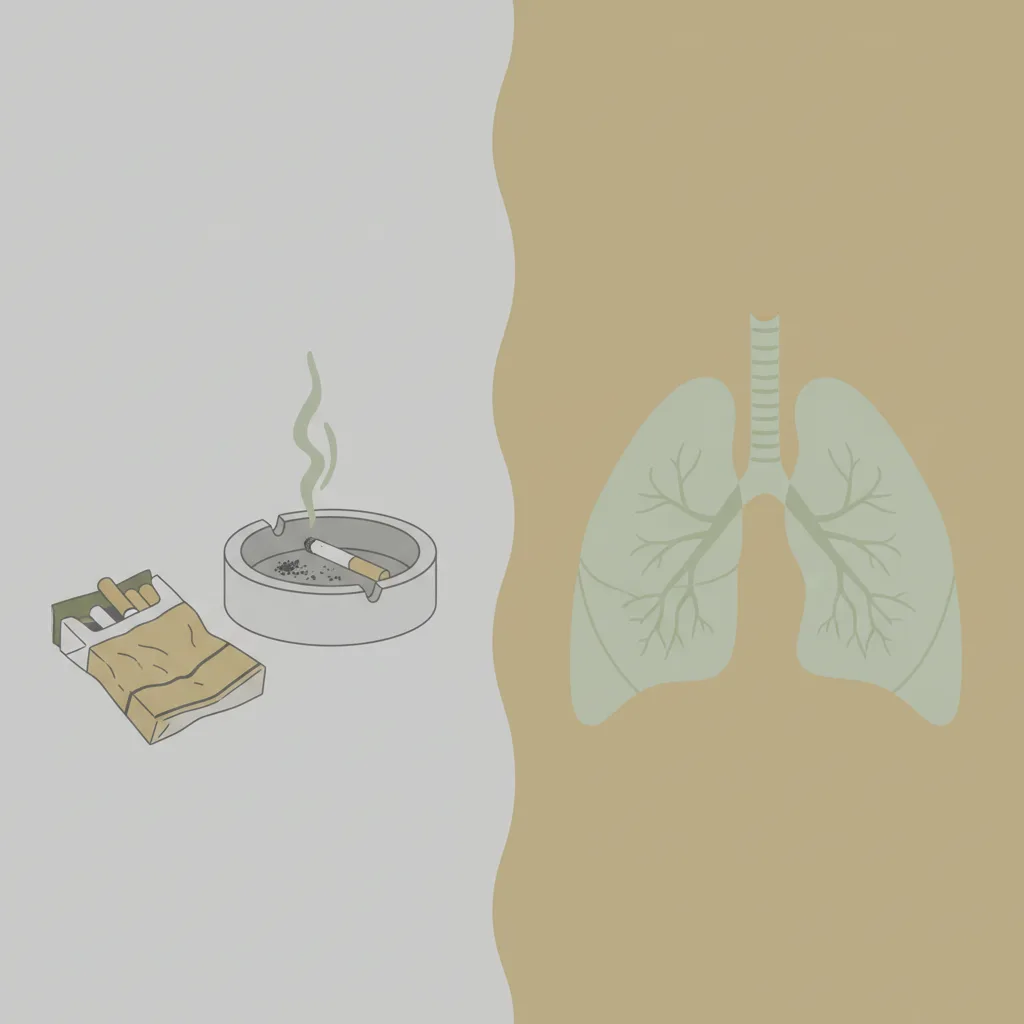
Two diverging paths, one fading into haze, the other leading into clear open air.

Spijt van handelen

Stoppen met roken

1,0%

~1% van ex-rokers hebben spijt van stoppen (vloer-schatting — geen gepubliceerde enquête heeft een hoger percentage gemeten)

Amerikaanse en UK volwassen ex-rokers

retrospectief, geen vast tijdsbestek

Spijt van nalaten

Blijven roken

90%

90% van rokers in westerse landen

Huidige rokers in VS, UK, Canada, Australië (ITC-4)

retrospectief, geen vast tijdsbestek

% betreurt deze keuze

inaction dominates — Niets doen domineert — de meesten hebben spijt dat ze niet handelden.

Gerelateerde keuzes

Semantisch vergelijkbare keuzes — zelfde terrein, andere afwegingen.

Gezondheid

Als tiener beginnen met roken

% betreurt deze keuze

Handelen overheerst

Spijt over handelen 36.0× hoger

Gezondheid

Bewegingsgewoonten

% betreurt deze keuze

Niet-handelen overheerst

Spijt over niet-handelen 13.4× hoger

lifestyle

Vegetarisch dieet

% betreurt deze keuze

Handelen overheerst

Spijt over handelen 3.8× hoger

Financieel

Doorgaan vs stoppen met gokken

% betreurt deze keuze

Handelen overheerst

Spijt over handelen 11.2× hoger

Gezondheid

Therapie of geen therapie

% betreurt deze keuze

In evenwicht

Grotendeels in evenwicht

Gezondheid

Levensduur vs veroudering accepteren

% betreurt deze keuze

Niet-handelen overheerst

Spijt over niet-handelen 1.5× hoger

GezondheidDirect

Vroege diagnose

% betreurt deze keuze

Niet-handelen overheerst

Spijt over niet-handelen 1.3× hoger

Gezondheid

Lichaamspiercings

% betreurt deze keuze

Handelen overheerst

Spijt over handelen 4.0× hoger

The most lopsided regret asymmetry in the dataset sits here. Approximately 90% of current smokers in the US, UK, Canada, and Australia agree they would not start smoking if they could do it over, according to the ITC Four Country Survey. The figure is consistent across sex, age, education, and (with minor variation) culture — Asian ITC surveys find 74-93% depending on the country. On the quitting side, no published survey of former smokers has identified a measurable regret rate for having quit. The CDC tracks cessation extensively and does not even include a quitting-regret item, because the phenomenon is too rare to study.

This makes smoking the closest thing to a one-way door in the regret literature. Gilovich and Medvec’s temporal theory predicts that inaction regrets dominate over time, and smoking is the extreme case: the longer someone continues, the deeper the regret about not having quit sooner. The 0.01 floor used for action-side regret is almost certainly an overestimate — it exists only because no study can report a true zero from survey data. Former smokers overwhelmingly describe relief, improved health, and financial savings, not second thoughts.

The caveat that matters is agency. Nicotine dependence means that “continuing to smoke” is not a simple preference for most smokers — it is a behavior sustained by addiction against expressed wishes. Framing it as “inaction” understates the pharmacological lock-in. The 90% regret figure is itself a measure of how deeply smokers feel trapped: they know they would choose differently, and most of them cannot.

Bronnen: handelen

Bronnenverantwoording

Elk getal hieronder is wat elke bron rapporteerde, met het letterlijke citaat waarop we ons baseerden en hoe we tot ons cijfer kwamen. Klik op een link om rechtstreeks te verifiëren.

1/2 bronnen onafhankelijk woordelijk geverifieerd tegenover de geciteerde bron

  1. [1] CDC — Smoking Cessation: Fast Facts
    Smoking Cessation: Fast Facts
    Statistiek
    67.7% of US adult smokers want to quit; 53.3% made a quit attempt in 2022; regret about quitting is essentially unmeasured because it is so rare
    Fragment
    “"In 2022, approximately two thirds (67.7%) of the 28.8 million U.S. adults who currently smoked cigarettes reported that they wanted to stop smoking." ”
    Brongegevens van
    2024-01-11
    Geraadpleegd
    2026-04-25
    Berekening
    CDC cessation data does not report a regret-about-quitting figure because it is vanishingly rare. No peer-reviewed survey of former smokers has found a measurable regret rate for quitting. We use 0.01 (1%) as a conservative floor, acknowledging that no study has placed it above zero in any large sample.
  2. [2] Nicotine & Tobacco Research / Soulakova et al. — Regretting Ever Starting to Smoke: Results from a 2014 National Survey Geverifieerd
    Regretting Ever Starting to Smoke: Results from a 2014 National Survey

    See all 2 Likelier entries citing this source →

    Statistiek
    71.5% of current smokers regret ever starting; among former smokers, regret about starting is even higher, and regret about quitting is not reported because it is too rare to measure
    Fragment
    “"The majority of smokers (71.5%) regretted starting to smoke. Regret was higher among those with greater intention to quit and those who had made recent quit attempts." ”
    Brongegevens van
    2017-04-06
    Geraadpleegd
    2026-04-25
    Verificatie
    Fragment onafhankelijk opnieuw opgehaald en woord voor woord bevestigd tegenover de geciteerde bron tijdens onze onderbouwingsaudit.
    Berekening
    The study measures regret about starting, not regret about quitting. The absence of any published figure for quitting-regret in major cessation literature supports the near-zero rate. Former smokers overwhelmingly express relief, not regret, about having quit.

Bronnen: niet handelen

Bronnenverantwoording

Elk getal hieronder is wat elke bron rapporteerde, met het letterlijke citaat waarop we ons baseerden en hoe we tot ons cijfer kwamen. Klik op een link om rechtstreeks te verifiëren.

  1. [1] Nicotine & Tobacco Research / Fong et al. — The near-universal experience of regret among smokers in four countries: findings from the International Tobacco Control Policy Evaluation Survey
    The near-universal experience of regret among smokers in four countries: findings from the International Tobacco Control Policy Evaluation Survey

    See all 2 Likelier entries citing this source →

    Statistiek
    89-90% of smokers in US, UK, Canada, and Australia agreed or strongly agreed 'If you had to do it over again, you would not have started smoking'
    Fragment
    “"Across the four countries, the prevalence of regret ranged from 89% to 90%. Regret was near-universal among smokers, with minimal variation by country, age, sex, or education." ”
    Brongegevens van
    2004-12-01
    Geraadpleegd
    2026-04-25
    Berekening
    Direct survey item; 90% is the headline figure for Western countries. The ITC 4-country survey is the canonical source for smoker regret. We use 0.90 as the regret_rate.
  2. [2] Nicotine & Tobacco Research / Sansone et al. — Comparing the Experience of Regret and Its Predictors Among Smokers in Four Asian Countries
    Comparing the Experience of Regret and Its Predictors Among Smokers in Four Asian Countries
    Statistiek
    Regret among smokers in South Korea 87%, Thailand 93%, Malaysia 77%, China 74% — corroborating the near-universal pattern
    Fragment
    “"Prevalence of regret in 3 countries was South Korea = 87%, Malaysia = 77%, and China = 74%, which was lower than that found in the United States, Australia, Canada, and the United Kingdom (89%-90%); but was higher in Thailand at 93%." ”
    Brongegevens van
    2013-10-01
    Geraadpleegd
    2026-04-25
    Berekening
    Asian-country extension of the ITC survey. Even in lower-regret markets (China), three quarters of smokers wish they had never started. The cross-cultural consistency strengthens the 90% Western figure.

Kanttekeningen

Het actie-zijde cijfer van ~0% is een vloer-schatting, geen gemeten waarde: geen gepubliceerde enquête heeft een cohort gevonden van voormalige rokers die spijt hebben van stoppen in aantallen groot genoeg om te rapporteren. Het inactie-zijde cijfer vangt spijt over beginnen, niet over falen om te stoppen — maar de overlap is bijna totaal, aangezien praktisch alle rokers die spijt hebben van beginnen ook willen stoppen. Nicotine-afhankelijkheid compliceert de "keuze" framing: doorgaan met roken is geen vrij gekozen inactie voor de meeste. Het 90% cijfer kan ook ondertellen, aangezien sommige rokers cognitieve dissonantie verminderen door spijt te ontkennen.

Ruwe data: /api/decisions.json

Recent bekeken op dit apparaat