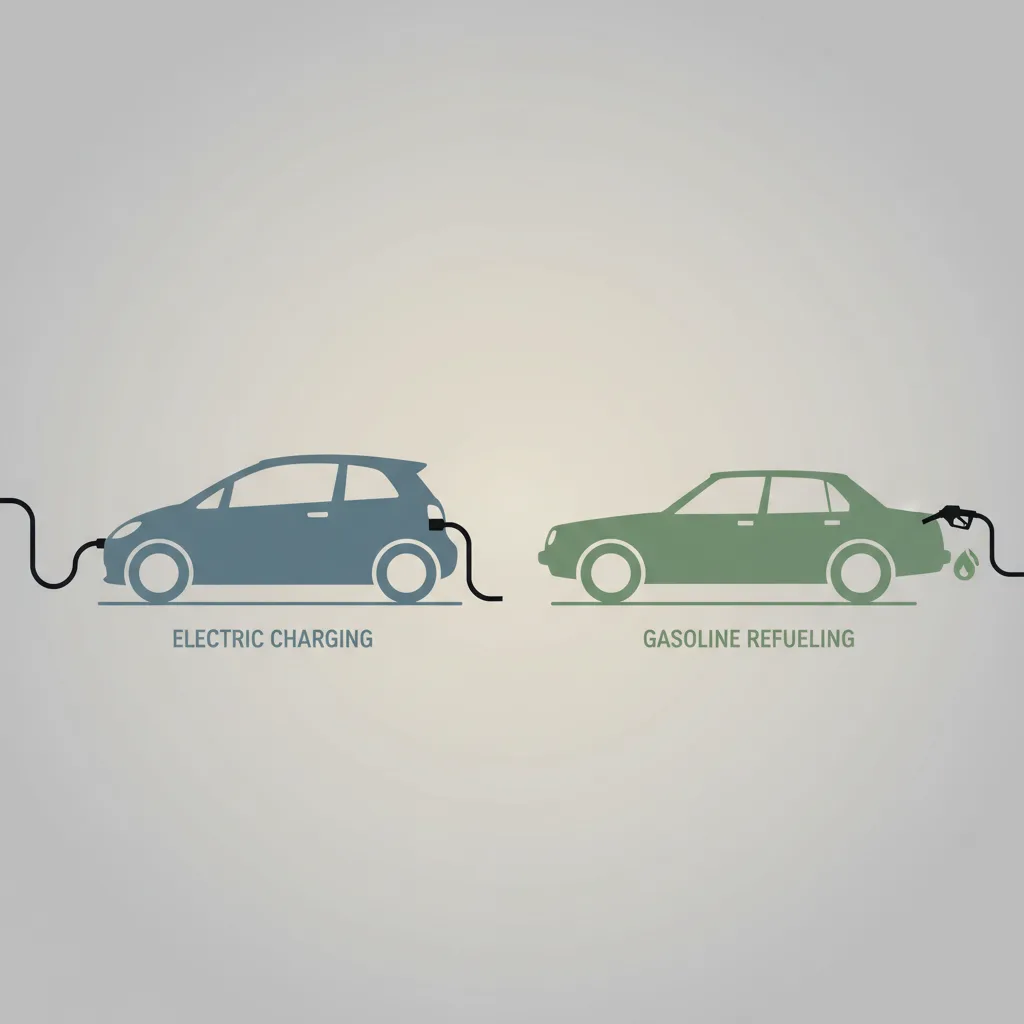
Nearly 46% of American EV owners say they are “very likely” to switch
back to a gas-powered vehicle, according to McKinsey’s 2024 Mobility
Consumer Pulse survey of over 4,000 US respondents. The top complaints
are predictable infrastructure gripes: inadequate public charging (35%),
high total ownership costs (34%), and the logistical headache of planning
long trips (32%). On the other side, only 16% of US adults say they
are likely to buy an EV as their next car, per AAA’s 2025 survey — a
figure that has been falling, not rising. Both figures are intent proxies,
not direct regret measures, which makes the 30-point delta less certain
than it appears.
The McKinsey number deserves heavy caveats. InsideEVs and other analysts
noted that the survey’s “switch back” framing may capture people who want
to add a gas car to their household fleet, not necessarily abandon
electric entirely. The respondent pool skewed toward newer, non-Tesla
owners — people who bought affordable EVs on lease deals but lack home
charging and rely on patchy public networks. J.D. Power’s competing 2025
EVX study found that only 12% of EV owners would consider an ICE
replacement — implying action regret closer to 4–12%, not 46%.
The 2026 J.D. Power study raised BEV repurchase intent to 96%, leaving only about 4% who would not consider another EV. The gulf between 46% wanting to “switch back”
and the 4-12% who won’t consider another EV or lean toward ICE suggests the McKinsey question is
measuring something broader than pure regret.
The asymmetry may also be transient. Early adoption of any technology
produces higher buyer’s remorse because infrastructure, pricing, and
product quality are still maturing. Gas cars benefit from a century of
sunk-cost infrastructure that makes inaction nearly frictionless. If
charging networks densify and battery costs continue falling, the action-
regret rate will likely compress. For now, the data says what it says:
most gas-car owners feel no pull toward EVs, and a large minority of EV
owners express interest in returning to gas — though whether that
constitutes regret or merely flexibility remains genuinely unclear.
Bronnen: handelen
Bronnenverantwoording
Elk getal hieronder is wat elke bron rapporteerde, met het letterlijke citaat waarop we ons baseerden en hoe we tot ons cijfer kwamen. Klik op een link om rechtstreeks te verifiëren.
1/3 bronnen onafhankelijk woordelijk geverifieerd tegenover de geciteerde bron
[1]McKinsey & Company — New twists in the electric-vehicle transition: A consumer perspective
Primaire studie
46% of US EV owners said they were 'very likely' to switch back to a gas-powered vehicle for their next purchase
Fragment
“"Forty-six percent of battery electric vehicle owners in the United States said they were 'very likely' to switch back to owning an internal-combustion-engine vehicle for their next purchase. Thirty-five percent cited inadequate public charging infrastructure, 34% said total costs were too high, and 32% said long-trip planning was too difficult."
”
Brongegevens van
2024-06-18
Geraadpleegd
2026-04-26
Berekening
McKinsey Mobility Consumer Pulse, February 2024. Surveyed 36,954 mobility users across nine countries; US subsample N = 4,112. The 46% figure reflects those selecting "very likely" to switch back to ICE. This measures switching intent, not regret directly — some respondents may want to add a gas car while keeping their EV, not abandon electric entirely.
[2]InsideEVs — Are Half Of EV Owners Really 'Switching Back' To Gas? It's Complicated.
Nieuwsartikel
The 46% figure includes new EV owners who lack home charging, bought non-Tesla EVs with weaker charging networks, and may be considering adding a gas car rather than fully abandoning EVs
Fragment
“"Those new owners surveyed are increasingly moving away from the profile that long-defined EV life: upper-income or wealthy, probably a single-family homeowner and probably buying a Tesla. Instead, they're buying from other brands at more affordable prices, often enticed by aggressive leasing and financing deals for EVs. But that also means that they're living without Tesla's robust and reliable fast-charging network; may live in apartments without easy access to charging; and are less willing to put up with the kinds of EV-related headaches that many early adopters took in stride."
”
Brongegevens van
2024-06-25
Geraadpleegd
2026-04-26
Berekening
InsideEVs contextual analysis. Notes that "switch back" may include adding a gas vehicle to the household fleet rather than pure abandonment. The McKinsey methodology was not fully disclosed, and the question wording may conflate fleet diversification with outright regret.
[3]J.D. Power — 2025 U.S. Electric Vehicle Experience (EVX) Ownership Study
Geverifieerd
Primaire studie
94% of BEV owners are likely to consider purchasing another BEV; only 12% likely to consider replacing EV with ICE
Fragment
“"94% of pure EV (BEV) owners are likely to consider purchasing another BEV for their next vehicle. Only 12% of BEV owners are likely to consider replacing their EV with an internal combustion engine-powered vehicle during their next purchase."
”
Brongegevens van
2025-03-12
Geraadpleegd
2026-04-26
Verificatie
Fragment onafhankelijk opnieuw opgehaald en woord voor woord bevestigd tegenover de geciteerde bron tijdens onze onderbouwingsaudit.
Berekening
J.D. Power 2025 EVX Ownership Study provides a contradicting data point. The 12% ICE-switch rate vs McKinsey's 46% likely reflects differences in question wording, sample composition, and what "switch back" means. J.D. Power's 2026 study raised BEV repurchase intent to 96%. The true action-regret rate likely falls between 12% and 46% depending on how strictly one defines "regret."
Bronnen: niet handelen
Bronnenverantwoording
Elk getal hieronder is wat elke bron rapporteerde, met het letterlijke citaat waarop we ons baseerden en hoe we tot ons cijfer kwamen. Klik op een link om rechtstreeks te verifiëren.
2/2 bronnen onafhankelijk woordelijk geverifieerd tegenover de geciteerde bron
[1]AAA — AAA: Americans Slow to Adopt Electric Vehicles
Geverifieerd
Primaire studie
Only 16% of US adults said they were 'very likely' or 'likely' to purchase an EV as their next vehicle; 63% said they were 'unlikely' or 'very unlikely'
Fragment
“"Only 16% of U.S. adults report being 'very likely' or 'likely' to purchase a fully electric vehicle (EV) as their next car. The percentage of consumers indicating they would be 'unlikely' or 'very unlikely' to purchase an EV rose to 63%, the highest since 2022."
”
Brongegevens van
2025-06-12
Geraadpleegd
2026-04-26
Verificatie
Fragment onafhankelijk opnieuw opgehaald en woord voor woord bevestigd tegenover de geciteerde bron tijdens onze onderbouwingsaudit.
Berekening
AAA survey conducted March 6-10, 2025, probability-based panel representative of US households, N = 1,128. The 16% "likely to buy EV" figure is an upper-bound proxy for inaction regret among gas-car keepers — it captures aspiration toward switching, not regret per se. The true inaction-regret rate is likely lower because stated purchase intent overstates actual switching behavior.
[2]Gallup — EV Ownership Ticks Up, but Fewer Nonowners Want to Buy One
Geverifieerd
Gerenommeerde referentie
Only 44% of US adults say they are 'seriously considering or might consider' buying an EV, down from 55% in 2023; 48% say they do not intend to buy one
Fragment
“"Less than half of adults, 44%, now say they are either seriously considering or might consider buying an EV in the future, down from 55% in 2023, while the proportion not intending to buy one has increased from 41% to 48%. Sixty-one percent of lower-income Americans say they would not buy an EV, up 18 percentage points from 43% in 2023."
”
Brongegevens van
2024-04-08
Geraadpleegd
2026-04-26
Verificatie
Fragment onafhankelijk opnieuw opgehaald en woord voor woord bevestigd tegenover de geciteerde bron tijdens onze onderbouwingsaudit.
Berekening
Gallup annual tracking poll. The declining EV interest corroborates the AAA finding that most gas-car owners are content with their choice. Among non-owners, interest has fallen 7 points year-over-year, suggesting inaction regret is not intensifying.
Kanttekeningen
PROXY WAARSCHUWING: Geen van beide rates is een directe spijtmeting. De McKinsey 46% vangt aangegeven intentie om "terug te schakelen", wat regelrechte spijt vermengt met vlootdiversificatie — sommige respondenten willen mogelijk gewoon een benzineauto toevoegen terwijl ze hun EV behouden. De AAA 16% vangt aankoopwaarschijnlijkheid, geen spijt; de meeste benzine-auto-eigenaren die tevreden zijn denken simpelweg nooit aan EV's. Concurrerende enquêtes spreken het McKinsey-cijfer scherp tegen: J.D. Power's 2025 EVX-studie vond 94% van EV-eigenaren zou een andere EV overwegen (slechts 12% overwegende ICE-switch), en hun 2026-studie verhoogde dat tot 96%. De discrepantie komt waarschijnlijk van vraagformulering, steekproefsamenstelling (McKinsey's panel omvatte veel eerste-keer, niet-Tesla-eigenaren zonder thuisladen), en of "terug switchen" betekent "EV's volledig opgeven" of "een benzineauto toevoegen". De actie-dominantie bevinding is ongebruikelijk in de Gilovich-literatuur en kan een transitioneel technologiemoment weerspiegelen in plaats van een stabiel langetermijn spijtpatroon. Beide cijfers moeten gelezen worden als intentieproxies, geen directe spijtmaten. Enquêtedata zijn uitsluitend uit Amerikaanse samples; tevredenheid en spijtcijfers in landen met andere institutionele structuren — consumentennormen, laadinfrastructuur uitrol, brandstofbelastingen, en EV-stimuleringsstructuren — kunnen substantieel verschillen.