






本文へスキップ
Likelier

行動 vs. 不行動の後悔

地域の市民政府(教育委員会、HOA、町議会、近隣組織)に積極的に関与する 対 コミュニティ統治の外に留まる

行動した場合

地域の市民政府に関与する

16%

行動しなかった場合

地域の統治の外に留まる

53%

それぞれの選択を後で後悔した人の割合。バーと完全な記録は下に表示されます。


ライフスタイル

最終確認 2026-05-30

証拠の質 4.13/5

8次元のレビュー評価。基準は 品質ルーブリック 。各次元は1〜5で評価。

D1 出典の検証
5/5
D2 出典の権威性と独立性
5/5
D3 後悔率の正確性
2/5
D4 出典の比較可能性
3/5
D5 ギロヴィッチ・パターン
5/5
D6 文章の質
4/5
D7 注意事項の完全性
4/5
D8 サンプルの質
5/5
平均 4.13/5
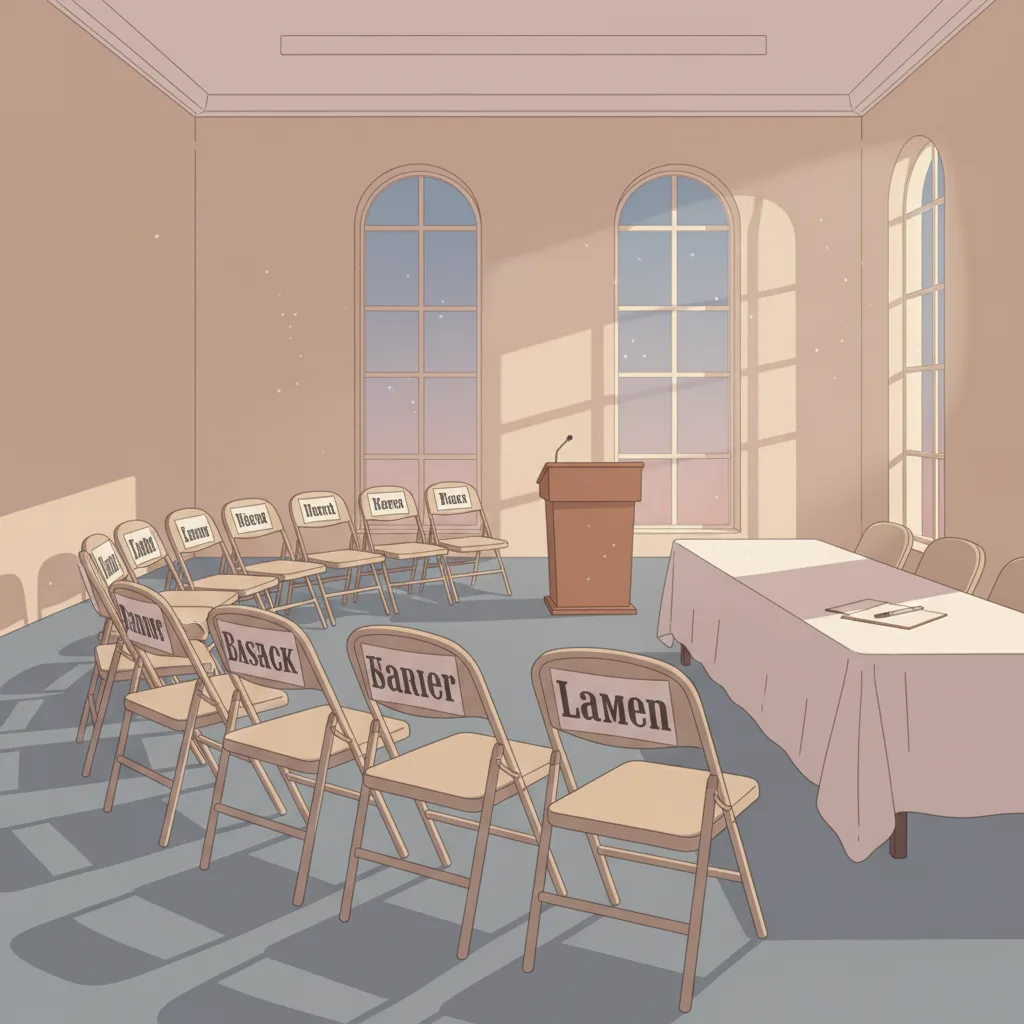
An empty town hall meeting room with rows of folding chairs facing a small lectern, half the chairs occupied by name placards and half empty.
代替データ — この決断に関する直接的な後悔調査は存在しません。比率は後悔を直接尋ねる質問ではなく、満足度スコアとアクセス障壁のデータから導出されています。以下の注意事項を参照してください。

行動への後悔

地域の市民政府に関与する

16%

市民参加者の後悔に関する直接的な調査は存在しない。示されているのは Gilovich-Medvec の長期の行動後悔基準値(人々の16%が、非行動ではなく行動を人生で唯一最大の後悔として挙げる)――市民参加者の間で測定された率ではなく、一般的な構造的基準値である

地方公聴会に出席する米国成人(成人の約9%)。推定はGilovich-Medvecの長期行動後悔基底率をこの自己選択サブグループに適用

遡及的、長期

不作為への後悔

地域の統治の外に留まる

53%

労働者の53%が会議で発言しなかったことを後悔している(市民的沈黙に最も近い類推。直接的な市民の後悔調査は特定されていない)

米国、英国、フランス、ドイツの労働者 — コミュニティ/統治の場で意見を述べないことに対する最も近い利用可能な類似物として使用

遡及的、固定された時間枠なし

この選択を後悔した割合

inaction dominates — 不作為が優勢 — 多くは行動しなかったことを後悔しています。

関連する決断

意味的に類似する決断 — 同じ領域、異なるトレードオフ。

lifestyle

抗議活動 vs. 沈黙

この選択を後悔した割合

不作為が優勢

不作為の後悔が3.3倍高い

career直接

声を上げる

この選択を後悔した割合

不作為が優勢

不作為の後悔が1.4倍高い

lifestyle

自己成長 vs 惰性

この選択を後悔した割合

不作為が優勢

不作為の後悔が1.5倍高い

lifestyle

繊細な話を公開 vs. プライベートに保つ

この選択を後悔した割合

行動が優勢

行動の後悔が2.4倍高い

career

リモート vs オフィス

この選択を後悔した割合

不作為が優勢

不作為の後悔が1.8倍高い

lifestyle

Get an allotment

この選択を後悔した割合

不作為が優勢

不作為の後悔が4.8倍高い

lifestyle

高統制グループから離れる vs. 留まる

この選択を後悔した割合

不作為が優勢

不作為の後悔が3.3倍高い

lifestyle

変化を受け入れる

この選択を後悔した割合

不作為が優勢

不作為の後悔が3.3倍高い

The US Census Bureau and AmeriCorps’ 2023 Civic Engagement and Volunteering Supplement found that 28.3% of Americans aged 16 and over formally volunteered through an organization between September 2022 and September 2023, with roughly 9% (about 23.8 million adults) attending a local public meeting such as a school board or city council session. Median volunteer hours per volunteer fell from 40 in 2017 to 24 in 2023, even as participation rebounded from the pandemic trough. No nationally representative survey directly measures retrospective regret among people who served on local boards or attended local meetings. The action-side estimate of ~16% is anchored in Gilovich and Medvec’s foundational 1994 finding that, in long-term retrospection, only 16% of Americans identify an action — rather than an inaction — as their biggest life regret. Civic participation is a self-selected, identity-congruent activity, so true regret among engaged participants is plausibly lower than that base rate; 16% functions as a conservative upper bound. The Roese-Summerville 2005 meta-analysis identifies “self” and high-opportunity life domains as the categories where regret concentrates — domains where civic contribution sits squarely.

The closest available quantification of staying-silent regret comes from the Resume Now International Career Regrets Survey of 1,000 workers across the US, UK, France, and Germany, which found 53% regretted not speaking up in a meeting, compared with 38% who regretted having spoken up. Workplace voice suppression and civic absence are structurally similar choices: both involve declining to invest social or political effort in a setting where one has standing to speak. Civic silence is likely to generate at least as much long-term regret as workplace silence, because the affected outcomes — local school policy, zoning, public safety, neighborhood quality — are durable, visible, and reconstructable years after the decision window closes. Roese and Summerville’s meta-analysis of 11 regret-ranking datasets supports this directionally: regret concentrates in domains with high perceived opportunity for change and growth, and local civic engagement is one of the clearest non-economic opportunity domains in American adult life.

The limitations are substantial. No survey directly asks adults whether they regret not attending school board meetings or joining the HOA, and neither headline rate is measured on the relevant population facing the relevant decision. The 16% action-regret estimate carries Gilovich-Medvec’s baseline forward to a self-selected subgroup; the 53% inaction estimate borrows a workplace analog. Putnam’s “Bowling Alone” thesis provides theoretical backing for the decline in local civic life but does not measure regret. Adversarial contexts — HOAs known for power struggles, small towns with entrenched factions, school boards that have become political battlegrounds — likely produce substantially higher action regret than the headline rate suggests; no representative survey isolates those subsets. Real costs of engagement (time, social conflict, opportunity cost) fall unevenly: parents of young children, shift workers, and caregivers face higher participation costs than the headline numbers capture, and “not attending” sometimes reflects constraint rather than choice. The 37-point gap is directionally consistent with Gilovich-Medvec and Roese-Summerville but the absolute magnitudes should be held loosely. The direction of the finding — chronic civic absence is regretted more durably than chronic civic engagement — is supported by three independent literatures (action-versus-inaction regret, opportunity-domain concentration, workplace voice surveys) but cannot be confirmed by direct measurement on the relevant population.

出典: 行動

根拠台帳

以下の各数値は各出典が報告した内容であり、引用した原文の抜粋と算出方法を記載しています。リンクをクリックして直接確認できます。

1/2 件の出典が引用元と一字一句一致することを独立して検証済み

  1. [1] U.S. Census Bureau — New U.S. Census Bureau and AmeriCorps Research Tracks Virtual Volunteering for First Time
    New U.S. Census Bureau and AmeriCorps Research Tracks Virtual Volunteering for First Time
    統計値
    28.3% of Americans aged 16 and over formally volunteered through an organization between September 2022 and September 2023; 54.2% helped neighbors informally; median volunteer hours fell from 40 (2017) to 24 (2023)
    抜粋
    “"More than 75.7 million people, or 28.3% of Americans, formally volunteered through organizations between September 2022 and September 2023, a 5.1 percentage point increase over 2021. The rate remains 1.7 percentage points below pre-pandemic 2019 levels. About 54.2% of Americans helped their neighbors informally, up from 51.7% in 2019." ”
    出典データ
    2024-11-19
    アクセス日
    2026-05-30
    計算過程
    US Census Bureau / AmeriCorps Civic Engagement and Volunteering Supplement (CEV) of the September 2023 Current Population Survey, ~45,000 households per biennial cycle. Used as the denominator anchor for civic-participation prevalence: 28.3% of US adults formally volunteer, and roughly 9% (≈23.8 million) report attending a local public meeting such as a school board or city council session per separately reported AmeriCorps CEV figures. The 16% action-regret estimate is not measured directly in the CEV — it is constructed as the long-term action-regret base rate from Gilovich-Medvec (1994/1995), in which only 16% of people identify an action (versus 84% an inaction) as their biggest life regret. Applied to a self-selected high-commitment subgroup (people who chose to attend public meetings or serve on boards), this likely overestimates true regret.
  2. [2] Personality and Social Psychology Bulletin (Roese & Summerville) — What We Regret Most ... and Why 検証済み
    What We Regret Most ... and Why

    See all 14 Likelier entries citing this source →

    統計値
    Meta-analysis of 11 regret-ranking datasets: greatest regret concentrates in education, career, romance, parenting, self, and leisure — domains with high perceived opportunity; inaction regrets persist longer than action regrets
    抜粋
    “"Regrets of inaction ('Should have asked her out,' 'Should have become a dentist') are more psychologically 'open,' more imaginatively boundless." ”
    出典データ
    2005-09-01
    アクセス日
    2026-05-30
    検証
    グラウンディング監査の際、抜粋を引用元から独立して再取得し、原文と一字一句一致することを確認しました。
    計算過程
    Roese & Summerville (2005), PSPB 31(9), 1273-1285. Foundational meta-analytic finding that long-term retrospective regret is dominated by inactions, and that domains generating the most regret are those with high perceived opportunity. Civic engagement maps onto this self-actualization / social-meaning category. Used as the theoretical scaffolding for assigning a low long-term action-regret rate to people who chose to engage in local governance, since action regrets in opportunity-rich domains fade more quickly than inaction regrets.

出典: 不作為

根拠台帳

以下の各数値は各出典が報告した内容であり、引用した原文の抜粋と算出方法を記載しています。リンクをクリックして直接確認できます。

2/2 件の出典が引用元と一字一句一致することを独立して検証済み

  1. [1] Resume Now (International Career Regrets Survey) — The Road Not Taken: Greatest Career Regrets Revealed 検証済み
    The Road Not Taken: Greatest Career Regrets Revealed

    See all 8 Likelier entries citing this source →

    統計値
    53% of workers have regretted not speaking up in a meeting, compared to 38% who have regretted speaking up; 60% regret not asking for a raise; 58% regret staying at a job too long; 51% regret not asking for a promotion
    抜粋
    “"53% have regretted not speaking up in a meeting, compared to 38% who have regretted speaking up in a meeting." ”
    出典データ
    2024-03-01
    アクセス日
    2026-05-30
    検証
    グラウンディング監査の際、抜粋を引用元から独立して再取得し、原文と一字一句一致することを確認しました。
    計算過程
    Resume Now International Career Regrets Survey of 1,000 workers across the US, UK, France, and Germany, fielded January 2024. The 53% figure measures regret about not voicing an opinion in a professional meeting — the closest direct quantification of regretted civic-style silence. No nationally representative survey directly asks adults whether they regret not attending school board meetings, joining the HOA, or serving on town council. The 53% workplace-meeting analog is used as a conservative lower bound for civic silence regret, where the stakes (community policy, child welfare, neighborhood quality) are typically higher and the opportunity window more bounded.
  2. [2] Personality and Social Psychology Bulletin (APA) — What We Regret Most ... and Why 検証済み
    What We Regret Most ... and Why

    See all 14 Likelier entries citing this source →

    統計値
    Greatest regret in long-term retrospection concentrates in domains of high perceived opportunity — education, career, self-actualization; inaction regrets dominate
    抜粋
    “"People's biggest regrets are a reflection of where in life they see their largest opportunities; that is, where they see tangible prospects for change, growth, and renewal." ”
    出典データ
    2005-09-01
    アクセス日
    2026-05-30
    検証
    グラウンディング監査の際、抜粋を引用元から独立して再取得し、原文と一字一句一致することを確認しました。
    計算過程
    Roese & Summerville (2005) meta-analysis. The "self" domain ranked fifth of six in their analysis and includes self-concept, civic identity, and community contribution. Local civic participation maps onto this domain: the foregone opportunity to influence community outcomes (school curriculum, zoning, local budget) is reconstructable years later and likely durable. Used as theoretical anchor for the inaction-dominant pattern, alongside the workplace-voice proxy.

注意事項

全体を通じて代理測定。どちらの側にも「教育委員会/管理組合(HOA)/町議会の会議に出席したこと/しなかったことを後悔しているか」を尋ねた直接的な回顧調査は存在しない。行動側の16%は Gilovich-Medvec の長期の行動後悔基準値(研究5:米国人の16%が行動を人生最大の後悔として挙げる)であり、参加を選んだ、コミットメントの高い自己選択的な米国成人の下位集団に適用している。市民参加者は市民的アイデンティティと価値観の一致に基づいて自己選択するため、真の後悔はおそらく16%より低い。非行動側の53%は Resume Now の職場の発言に関する類推である。職場の会議と市民的統治は、賭けているもの、可逆性、アイデンティティの重みの点で異なる。構造的な類似性(言うべきことがある場において意見を発しないことを選ぶ、社会的コストを背景として)は類推を擁護可能にするが、正確ではない。AmeriCorps 2023 の CEV データは人口の枠組みを確立している――米国成人の約9%が地域の公開会議に出席し、28.3%が正式にボランティアをし、ボランティア時間の中央値は40時間(2017年)から24時間(2023年)に減少している――パンデミック後に参加率が回復してもなお、費やされる時間の実質的な減少である。37ポイントの差は Roese-Summerville と Gilovich-Medvec と方向的に整合的だが、絶対値は代理的な構築物である。Putnam の「Bowling Alone」の主張(1995年、2000年)は地域の市民参加の衰退に理論的支持を提供するが、後悔を直接測定してはいない。このジレンマは敵対的な文脈を除外している――権力闘争で悪名高い管理組合、根深い派閥のある小さな町――そこでは行動後悔が実質的に高くなりうる(この下位集団の代表的な調査は存在しない)。参加のコスト(時間、社会的対立、機会費用)は現実的で不均一に分布している。介護責任、シフト勤務、不安定な住居を抱える人々は、見出しの率が捉えるよりも高い参加コストに直面する。

生データ: /api/decisions.json

このデバイスで最近見た項目