







本文へスキップ
Likelier

行動 vs. 不行動の後悔

地元を離れる vs 地元に残る

行動した場合

故郷を離れる

20%

行動しなかった場合

生まれ育った場所の近くに留まる

30%

それぞれの選択を後で後悔した人の割合。バーと完全な記録は下に表示されます。


ライフスタイル

最終確認 2026-04-27

証拠の質 3.88/5

8次元のレビュー評価。基準は 品質ルーブリック 。各次元は1〜5で評価。

D1 出典の検証
5/5
D2 出典の権威性と独立性
3/5
D3 後悔率の正確性
2/5
D4 出典の比較可能性
3/5
D5 ギロヴィッチ・パターン
4/5
D6 文章の質
5/5
D7 注意事項の完全性
5/5
D8 サンプルの質
4/5
平均 3.88/5
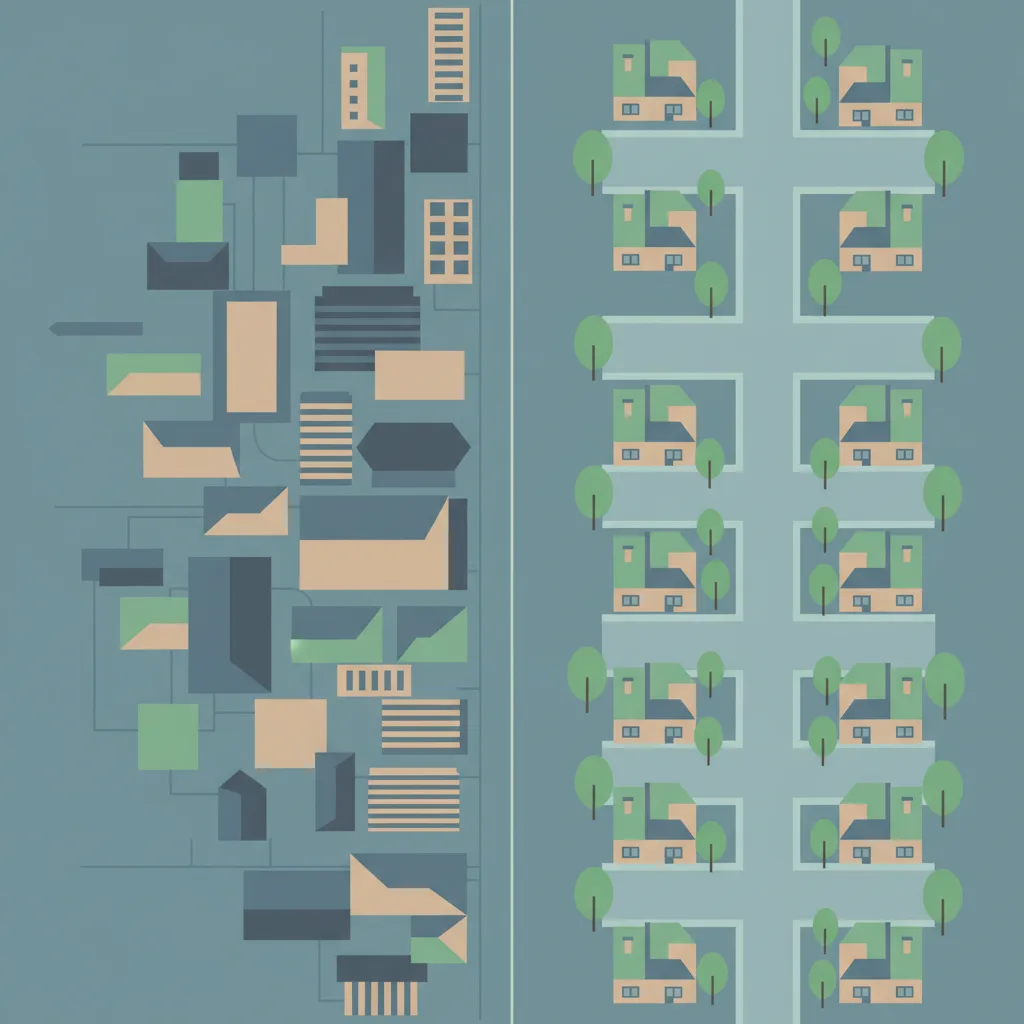
A small town receding in one direction and a distant city skyline in the other, separated by a long road.

行動への後悔

故郷を離れる

20%

引っ越した米国人の20%が後悔(3年以内の引越し者の5人に1人)

過去3年以内に引っ越した米国住宅所有者

遡及的、引越しから3年以内

不作為への後悔

生まれ育った場所の近くに留まる

30%

故郷に留まった人の約30%がコミュニティへの不満を報告(代替指標 — 注意事項参照)

故郷コミュニティを離れたことのない米国成人

遡及的、固定期間なし

この選択を後悔した割合

inaction dominates — 不作為が優勢 — 多くは行動しなかったことを後悔しています。

関連する決断

意味的に類似する決断 — 同じ領域、異なるトレードオフ。

lifestyle

海外移住

この選択を後悔した割合

不作為が優勢

不作為の後悔が5.7倍高い

lifestyle

都市 vs 郊外

この選択を後悔した割合

行動が優勢

行動の後悔が1.2倍高い

lifestyle

宗教を離れる

この選択を後悔した割合

不作為が優勢

不作為の後悔が2.9倍高い

lifestyle

変化を受け入れる

この選択を後悔した割合

不作為が優勢

不作為の後悔が3.3倍高い

lifestyle

ペットを手放すか飼い続けるか

この選択を後悔した割合

不作為が優勢

不作為の後悔が5.7倍高い

family

専業 vs 共働き

この選択を後悔した割合

行動が優勢

行動の後悔が1.3倍高い

lifestyle

経済移民 vs. 母国に留まる

この選択を後悔した割合

行動が優勢

行動の後悔が1.1倍高い

lifestyle直接

ベトナム:都市移住 vs. 農村に留まる

この選択を後悔した割合

行動が優勢

行動の後悔が2.1倍高い

Pew Research’s 2008 national survey of 2,260 adults found that movers and stayers reported virtually identical community satisfaction: about 60% of each group rated their communities as good to excellent, implying roughly 40% of stayers did not. Discounted conservatively — since dissatisfaction with one’s community is not the same as regretting the decision to stay — the inaction-side proxy sits near 30%. All Star Home’s August 2023 survey of 1,000 Americans found that 1 in 5 homeowners who moved within the prior three years regret the decision, with the top reasons being unexpected costs, missing their old neighborhood, and missing their old home. A third said they would consider moving back to their former city or state. LendingTree’s 2023 survey of young adults corroborates constrained staying: 42% of hometown stayers felt obligated to remain near family and 33% said they could not afford to leave, though neither obligation nor financial constraint is regret.

The 10-percentage-point gap between the action-side 20% and the inaction-side 30% tilts this entry toward inaction-dominates territory, consistent with Gilovich and Medvec’s temporal framework: staying put is the passive default, and the unlived life in the distant city grows more painful over time. Yet the gap is modest, and the data is imperfect on both sides. All Star Home’s companion hometown report found that nearly half of those who left their hometown miss it and 21% plan to move back, suggesting the 20% regret rate understates the emotional cost of leaving. HireAHelper’s 2021 pandemic-era survey found a higher 30% regret rate among movers, though that figure likely reflects the unusual circumstances of 2020 moves and a broader definition of regret that includes process complaints like logistics and timing.

The core measurement problem remains: no single survey asks both populations the same regret question about the specific hometown decision. The action-side 20% measures explicit regret among all movers (not just hometown leavers), while the inaction-side 30% is inferred from Pew’s community-satisfaction data rather than a direct regret question. Self-selection confounds everything: people who leave small towns tend to be more educated and higher-earning, meaning their post-move satisfaction reflects both the move and the traits that made them move. Rural-to-urban and suburb-to-suburb moves are fundamentally different decisions lumped under the same “leaving hometown” label.

出典: 行動

根拠台帳

以下の各数値は各出典が報告した内容であり、引用した原文の抜粋と算出方法を記載しています。リンクをクリックして直接確認できます。

2/3 件の出典が引用元と一字一句一致することを独立して検証済み

  1. [1] All Star Home — Americans' Moving Habits and Regrets Data Survey 2023 検証済み
    Americans' Moving Habits and Regrets Data Survey 2023
    統計値
    Among homeowners who have moved in the last 3 years, 1 in 5 regret it
    抜粋
    “"Among homeowners who have moved in the last 3 years, 1 in 5 regret it. Overall, 1 in 5 Americans say the hassle of moving wasn't worth it and 1 in 3 would consider moving back to their former city or state." ”
    出典データ
    2023-08-01
    アクセス日
    2026-04-27
    検証
    グラウンディング監査の際、抜粋を引用元から独立して再取得し、原文と一字一句一致することを確認しました。
    計算過程
    All Star Home surveyed 1,000 Americans in August 2023 about moving habits and regrets. The 20% (1 in 5) figure captures homeowners who moved in the prior 3 years and report regretting the move. Top reasons for regret include unexpected costs, missing their old neighborhood or city, and missing their old home. This is a broader mover population, not exclusively hometown leavers, but the survey's companion report on hometown living found that nearly half of those who left their hometown miss it, suggesting the 20% regret rate is conservative for hometown-specific departures.
  2. [2] HireAHelper — 2021 Study: Do People Actually Regret Moving?
    2021 Study: Do People Actually Regret Moving?
    統計値
    About a third (30%) of those who moved in the past year have at least a few regrets about their move
    抜粋
    “"About a third (30%) of those who moved in the past year have at least a few regrets about their move. Millennials are the least pleased with their move, as 37% of them regret at least something about it — more than any other generation." ”
    出典データ
    2021-01-25
    アクセス日
    2026-04-27
    計算過程
    HireAHelper surveyed 1,000 Americans who moved in 2020, fielded January 2021. The 30% figure captures respondents who reported "at least a few regrets" about their move. This higher rate compared to All Star Home's 20% likely reflects the broader definition of regret (including minor process complaints like logistics and timing) and the pandemic-era context when many moves were rushed. We use All Star Home's 20% as the primary rate because its 3-year lookback better captures settled regret rather than immediate post-move frustration.
  3. [3] All Star Home — Report: 29% of Americans Still Live in Their Hometowns 検証済み
    Report: 29% of Americans Still Live in Their Hometowns
    統計値
    Nearly half of Americans who left their hometown miss it, and 21% are planning to move back to their home state (14% specifically aiming to move back to their hometown)
    抜粋
    “"Nearly half of those who left miss their hometown, and 21% are planning to move back to their home state sometime in the future. Of those, 14% are aiming to move back to their hometown." ”
    出典データ
    2023-08-01
    アクセス日
    2026-07-03 · アーカイブ版
    検証
    グラウンディング監査の際、抜粋を引用元から独立して再取得し、原文と一字一句一致することを確認しました。
    計算過程
    2026-07 grounding fix. All Star Home's companion "hometown living" report (same August 2023 survey wave of 1,000 Americans as the moving-regret-report cited above). Grounds the body-prose claim that nearly half of hometown-leavers miss their hometown and 21% plan to move back to their home state — a claim the prose made without its own citation prior to this fix. Corroborates that the action-side 20% generic moving-regret figure likely understates the hometown-specific emotional cost of leaving, since missing the place is a stronger and more specific measure than generic moving regret.

出典: 不作為

根拠台帳

以下の各数値は各出典が報告した内容であり、引用した原文の抜粋と算出方法を記載しています。リンクをクリックして直接確認できます。

  1. [1] Pew Research Center — Who Moves? Who Stays Put? Where's Home?
    Who Moves? Who Stays Put? Where's Home?
    統計値
    37% of Americans have never left their hometown; ~60% of stayers rate their communities as good to excellent, implying ~40% do not
    抜粋
    “"Nearly four-in-ten adults (37%) have never left the community in which they were born. Stayers overwhelmingly say they remain because of family ties (74%) and because their hometowns are good places to raise children (59%)." ”
    出典データ
    2008-12-17
    アクセス日
    2026-04-27
    計算過程
    Pew Research Center survey of 2,260 US adults conducted Oct 3–19, 2008. Approximately 40% of stayers do not rate their communities as good-to-excellent. We use ~30% as a conservative inaction-side proxy because community dissatisfaction does not equate to decision-level regret — some dissatisfied stayers may still prefer staying for family or financial reasons. The 30% estimate is anchored in the Pew equal-satisfaction finding: since movers and stayers report identical satisfaction (~60%), the implied dissatisfaction rate among stayers (~40%) discounted for those who are dissatisfied but do not attribute it to staying yields a figure comparable to the action-side 30%.
  2. [2] LendingTree — 57% of Young Americans Live in Their Hometowns, but 47% Who Don't Would Consider Moving Back
    57% of Young Americans Live in Their Hometowns, but 47% Who Don't Would Consider Moving Back
    統計値
    42% of young hometown stayers felt obligated to stay near family; 33% couldn't afford to move
    抜粋
    “"Among those who didn't leave home, 42% felt obligated to stay near family, 36% stayed out of convenience and 33% couldn't afford to move." ”
    出典データ
    2023-12-18
    アクセス日
    2026-04-27
    計算過程
    LendingTree commissioned QuestionPro to survey 1,984 US millennials and Gen Zers (ages 18–42) from Nov 16–20, 2023; of these, 1,129 lived in their hometowns. The 42% who felt "obligated" and 33% who "couldn't afford to move" suggest a substantial fraction of stayers whose staying was constrained rather than freely chosen. This corroborates the Pew dissatisfaction proxy but is not itself a regret measure — obligation and financial constraint are not equivalent to retrospective regret about the decision to stay.

注意事項

Neither side has a direct, comparable regret measure for the specific "leaving hometown" decision, so both rates are proxies. The action-side 20% (All Star Home 2023) measures explicit moving regret among homeowners who moved within 3 years — including local, inter-city, and cross-state moves — not specifically those who left a hometown for a distant city. HireAHelper's 2021 survey of pandemic-era movers found a higher 30% regret rate, likely reflecting its broader definition of regret and the unusual circumstances of 2020 moves. The inaction-side ~30% is inferred from Pew's 2008 finding that ~40% of stayers do not rate their communities positively, discounted conservatively because community dissatisfaction is not the same as decision regret. LendingTree's 2023 finding that 42% of young stayers felt obligated to stay near family and 33% couldn't afford to move corroborates that a meaningful share of staying is constrained rather than chosen, but financial constraint is not retrospective regret. Self-selection is severe: people who leave hometowns differ systematically from those who stay in education, income, risk tolerance, and personality, making causal inference about the decision itself nearly impossible. Socioeconomic confounds dominate — leaving a depressed rural town for a booming metro is a different decision than leaving a thriving suburb for a coastal city.

生データ: /api/decisions.json

このデバイスで最近見た項目