

本文へスキップ
Likelier

行動 vs. 不行動の後悔

家族で一緒に食事するか、別々に急いで食べるか

行動した場合

家族そろって食事をとる

9.0%

行動しなかった場合

別々に・急いで食事をとる

62%

それぞれの選択を後で後悔した人の割合。バーと完全な記録は下に表示されます。


家族

最終確認 2026-04-26

証拠の質 4.13/5

8次元のレビュー評価。基準は 品質ルーブリック 。各次元は1〜5で評価。

D1 出典の検証
5/5
D2 出典の権威性と独立性
4/5
D3 後悔率の正確性
2/5
D4 出典の比較可能性
3/5
D5 ギロヴィッチ・パターン
5/5
D6 文章の質
5/5
D7 注意事項の完全性
5/5
D8 サンプルの質
4/5
平均 4.13/5
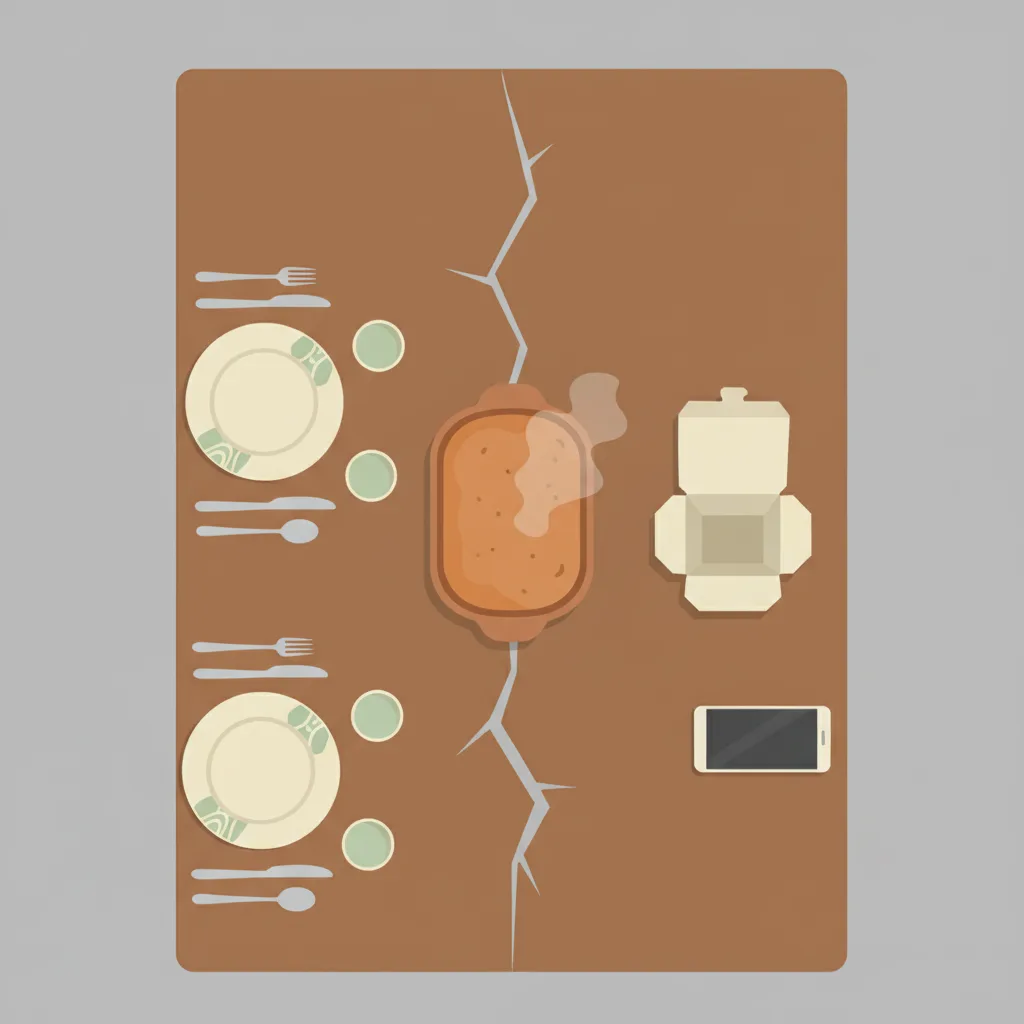
A dining table set for a family meal on one side, a counter with a lone takeout container on the other.

行動への後悔

家族そろって食事をとる

9.0%

親の9%は家族の食事をストレス軽減的だと感じない(代替指標)

米国成人、全国代表

遡及的、固定期間なし

不作為への後悔

別々に・急いで食事をとる

62%

親の62%がもっと頻繁に家族夕食をすればよかったと希望(願望ギャップ代替指標)

18歳未満の子を持つ米国親

遡及的、固定期間なし

この選択を後悔した割合

inaction dominates — 不作為が優勢 — 多くは行動しなかったことを後悔しています。

関連する決断

意味的に類似する決断 — 同じ領域、異なるトレードオフ。

family

私立 vs 公立

この選択を後悔した割合

不作為が優勢

不作為の後悔が3.2倍高い

family

専業 vs 共働き

この選択を後悔した割合

行動が優勢

行動の後悔が1.3倍高い

family

助ける vs. 自力で乗り越えさせる

この選択を後悔した割合

行動が優勢

行動の後悔が1.2倍高い

family

しつけ vs. 寛容

この選択を後悔した割合

不作為が優勢

不作為の後悔が2.4倍高い

lifestyle

頻繁な間食

この選択を後悔した割合

不作為が優勢

不作為の後悔が1.8倍高い

family

習い事 vs 自由遊び

この選択を後悔した割合

行動が優勢

行動の後悔が2.6倍高い

family

家族の人数

この選択を後悔した割合

不作為が優勢

不作為の後悔が2.6倍高い

family

老人ホーム vs. 在宅介護

この選択を後悔した割合

行動が優勢

行動の後悔が2.3倍高い

A YouGov poll found that 62% of parents with children under 18 wish they had family dinners more often — the dominant inaction-side signal in this entry. On the action side, a 2022 American Heart Association survey of 1,000 US adults found that 9% of parents do not report stress reduction from regular family meals — and 84% wish they could share meals more often. The resulting 7:1 ratio between inaction-side aspiration and action-side dissatisfaction is striking but relies on asymmetric measurements — one asks about stress relief, the other about aspirational frequency — so the exact magnitude should be handled with caution.

The downstream associations of infrequent family meals are better documented than the regret itself. Harrison et al.’s systematic review of 14 studies confirmed inverse associations between family meal frequency and depression, substance use, and suicidal ideation in adolescents. These are correlational findings subject to obvious confounding — families that manage regular dinners differ socioeconomically and structurally from those that don’t — but the consistency across studies and populations makes the direction of effect reasonably secure. The aspiration gap (wanting more family meals) likely reflects both genuine awareness of these benefits and cultural messaging about what “good families” do.

The counterweight is real but poorly quantified. A 2025 BMC Public Health review argued that the “family dinner ideal” places uneven pressure on low-income, single-parent, and shift-working households, and that evidence for what specifically about the shared meal produces benefits — as opposed to the general family stability it proxies — remains thin. Quality of interaction appears to matter more than mere co-presence at a table. The aspiration gap here likely reflects genuine loss when connection opportunities are forfeited, but some of the 62% who wish for more dinners may be responding to cultural expectation rather than lived deprivation. Neither rate is a direct regret measure, and both are flagged as proxies accordingly.

出典: 行動

根拠台帳

以下の各数値は各出典が報告した内容であり、引用した原文の抜粋と算出方法を記載しています。リンクをクリックして直接確認できます。

1/2 件の出典が引用元と一字一句一致することを独立して検証済み

  1. [1] American Heart Association / Wakefield Research — New survey: 91% of parents say their family is less stressed when they eat together
    New survey: 91% of parents say their family is less stressed when they eat together
    統計値
    91% of parents say their family is less stressed when they regularly connect over a meal; 84% wish they could share a meal together more often
    抜粋
    “"91 percent of parents notice their family is less stressed when they regularly connect over a meal. The survey also found that 84% of adults say they wish they could eat more meals with others." ”
    出典データ
    2022-10-10
    アクセス日
    2026-04-26
    計算過程
    Wakefield Research for AHA, 1,000 nationally representative US adults ages 18+, September 14–20 2022, online survey. MOE +/-3.1pp at 95% CI. The 9% who do not report stress reduction is the complement of the 91% headline. We use this as an upper-bound proxy for action-regret: among parents who do eat together, a small minority find no benefit. This is a satisfaction complement, not a regret measure — flagged as "(proxy)".
  2. [2] BMC Public Health — Unpacking family meals: state-of-the-art review critiquing the Western ideals, positioning and promotion of family meals 検証済み
    Unpacking family meals: state-of-the-art review critiquing the Western ideals, positioning and promotion of family meals
    統計値
    Family meal promotion reinforces unrealistic expectations on resource-pressured families; evidence on what specifically helps is limited
    抜粋
    “"Evidence surrounding what specifically about the family meal offers health benefits is limited, and family meals carry a level of moral value, evoking pressure for parents to 'achieve' a family meal ideal, unattainable for many." ”
    出典データ
    2025-02-11
    アクセス日
    2026-04-26
    検証
    グラウンディング監査の際、抜粋を引用元から独立して再取得し、原文と一字一句一致することを確認しました。
    計算過程
    Narrative review, not a prevalence study. Included to establish that the action side is not costless: logistical burden and social pressure are real downsides for some families. Does not supply its own regret percentage.

出典: 不作為

根拠台帳

以下の各数値は各出典が報告した内容であり、引用した原文の抜粋と算出方法を記載しています。リンクをクリックして直接確認できます。

1/2 件の出典が引用元と一字一句一致することを独立して検証済み

  1. [1] YouGov — Most parents wish they were having family dinners more often
    Most parents wish they were having family dinners more often
    統計値
    62% of parents with children under 18 wish they could have family dinners 'much more often' or 'somewhat more often'
    抜粋
    “"Roughly six in 10 (62%) parents with children under 18 say they would like to have family dinners 'much more often' or 'somewhat more often.' Parents of children and teenagers (87%) are especially likely to say they have a family dinner with all members of their home at least once a week." ”
    出典データ
    2019-10-28
    アクセス日
    2026-04-26
    計算過程
    YouGov online survey, 1,220 US adults (938 sharing a household), October 21–22 2019, weighted to be nationally representative. The 62% is among parents with children under 18 who wish dinners happened more often. This measures aspiration gap (wanting more of something you believe is good), not classical retrospective regret. Flagged as "(aspiration-gap proxy)".
  2. [2] Canadian Family Physician (Harrison et al.) — Systematic review of the effects of family meal frequency on psychosocial outcomes in youth 検証済み
    Systematic review of the effects of family meal frequency on psychosocial outcomes in youth
    統計値
    Frequent family meals are inversely associated with substance use, depression, suicidal ideation, and violent behaviour in adolescents
    抜粋
    “"Overall, results show that frequent family meals are inversely associated with disordered eating, alcohol and substance use, violent behaviour, and feelings of depression or thoughts of suicide in adolescents, and there is a positive relationship between frequent family meals and increased self-esteem and school success." ”
    出典データ
    2015-02-01
    アクセス日
    2026-04-26
    検証
    グラウンディング監査の際、抜粋を引用元から独立して再取得し、原文と一字一句一致することを確認しました。
    計算過程
    Systematic review of 14 studies from MEDLINE and PsycINFO (searches 1948–2011). Not a prevalence figure; included to establish the consequence basis for why parents aspire to more family meals — the downstream associations are well documented, though correlational and subject to confounding.

注意事項

Neither figure is a direct regret measurement — both are explicitly flagged as proxies in regret_display. The 9% action-side figure is the complement of parents who report stress reduction from family meals — a satisfaction-inversion proxy, not a measure of anyone saying "I regret eating together." The 62% inaction-side figure captures wishing for more dinners (aspiration gap), which is closer to cultural expectation than classical retrospective regret. No large-scale survey directly asks "do you regret not eating together as a family?" The AHA 2022 survey also found 84% wish they could share meals more often, corroborating the YouGov direction. The YouGov sample includes parents who already eat together regularly but want more, inflating the inaction rate relative to true never-did-it regret. The Harrison et al. systematic review on teen substance use (infrequent diners more likely to use tobacco) is correlational and subject to confounding: families that eat together differ from those that don't in ways beyond the meal itself. The BMC Public Health review notes that the "family dinner ideal" places disproportionate pressure on low-income and single-parent households, so the aspiration gap may partly reflect cultural norming rather than evidence of net harm from missed meals. The 7:1 ratio between inaction and action rates is directionally robust but overstates the true regret asymmetry given the weak proxy on the action side.

生データ: /api/decisions.json

このデバイスで最近見た項目