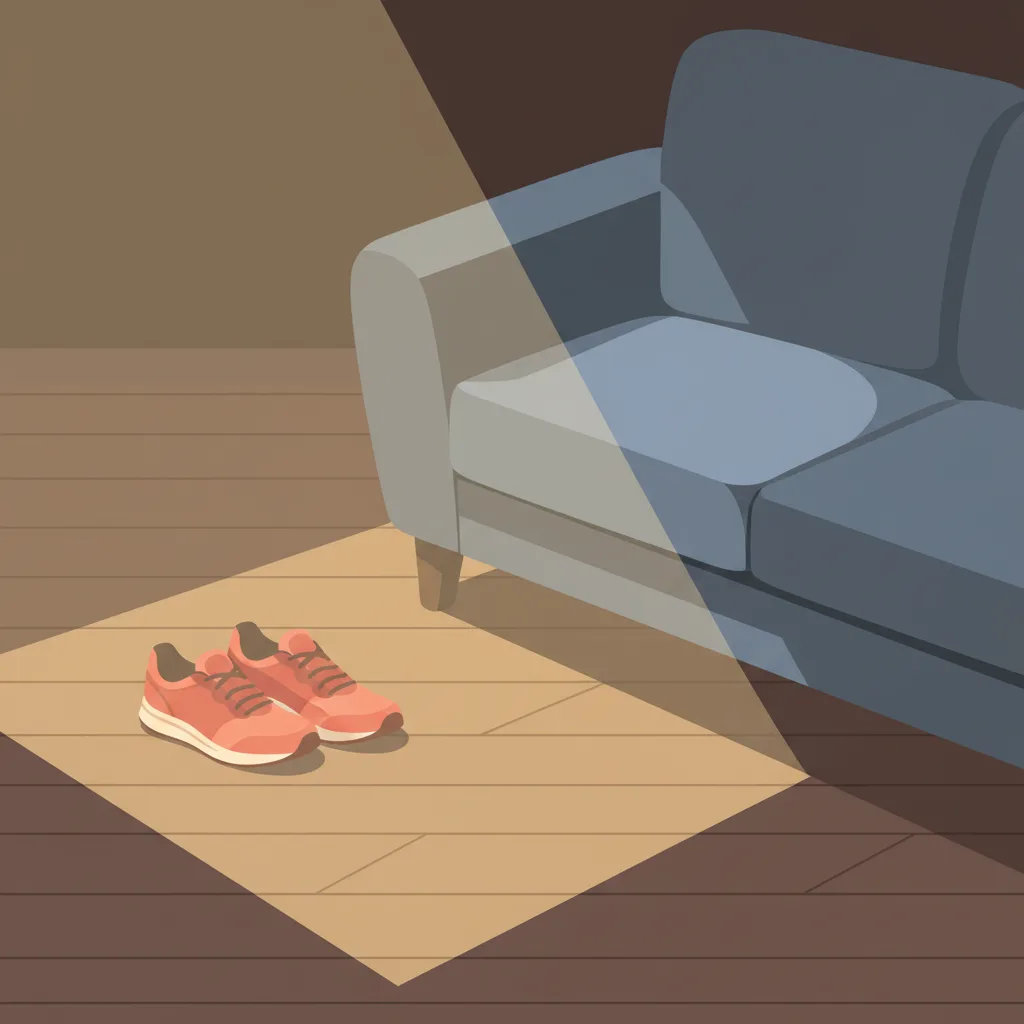
Регулярні відеоігри як хобі для дорослих (~5+ годин/тиждень) vs не грати у відеоігри
Якщо ви дієте
Ігри як регулярне хобі для дорослих
10%
Якщо ви не дієте
Не грати у відеоігри
14%
Відсоток тих, хто згодом шкодує про кожен вибір. Стовпчики та повний реєстр показані нижче.
Lifestyle
Остання перевірка 2026-05-30
Якість доказів 4.13/5
Восьмивимірна оцінка перевірки за
рубрикою якості
. Кожен вимір оцінений 1–5.
D1 Перевірка джерел
5/5
D2 Авторитет та незалежність джерела
5/5
D3 Точність частоти жалю
2/5
D4 Порівнянність джерел
4/5
D5 Шаблон Гіловича
4/5
D6 Якість прози
4/5
D7 Повнота застережень
4/5
D8 Якість вибірки
5/5
Середнє4.13/5
Замінні дані — для цього рішення не існує прямого дослідження жалю. Показники отримані з оцінок задоволеності та даних про бар'єри доступу, а не з питань, що безпосередньо стосувалися жалю. Дивіться застереження нижче.
Жаль за дію
Ігри як регулярне хобі для дорослих
10%
~10% дорослих гравців (проксі: поширеність розладу ігор ICD-11/DSM-5 + невелика частка, чию траєкторію задоволення життям, повідомлену самостійно, шкодить гра)
Дорослі гравці — проксі з довжинної вибірки індустріальної співпраці N=38935 і мета-аналізів поширеності розладу ігор
ретроспективно + 6-тижневе лонгітюдне
Жаль за бездіяльність
Не грати у відеоігри
14%
~14% неграючих виражають інтерес або прагнення до участі в іграх (проксі: розрив між прийняттям ігор у США (~65%) і часткою решти неграючих, які повідомляють про цікавість або мотивацію соціального включення)
Неграючі у США (~35% дорослих у США); проксі-оцінка з Pew + прийняття ESA + опитувань про повідомлені бар'єри
ретроспективно + аспіраційно
% шкодує про цей вибір
Ігри як регулярне хобі для дорослихНе грати у відеоігри
10%14%
balanced — Приблизно збалансовано — обидва вибори несуть подібний жаль.
Пов’язані рішення
Семантично близькі рішення — та сама сфера, інші компроміси.
The strongest evidence on adult gaming and wellbeing is Vuorre, Johannes, Magnusson and Przybylski’s 2022 study in Royal Society Open Science, which tracked 38,935 active players across seven games (Animal Crossing: New Horizons, Apex Legends, Eve Online, Forza Horizon 4, Gran Turismo Sport, Outriders, and The Crew 2) over six weeks, using industry-cooperation telemetry to link verified play time to player-reported wellbeing. A one-hour daily increase in play produced a change of −0.04 [−0.15, 0.09] on an 11-point life-satisfaction scale and 0.03 [−0.09, 0.16] on a 13-point affect scale — effects the authors describe as “limited, if any.” This is the cleanest causal-inference design available for the question, and it points to a null average effect of gaming time on wellbeing. Halbrook, O’Donnell and Msetfi’s 2019 review in Perspectives on Psychological Science concludes that gaming’s effects are moderated by motivation, social context, presence of violence, and physical activity, with most recreational use sitting in the beneficial zone. The harm distribution is highly concentrated: roughly 3-4% of players meet ICD-11 or DSM-5 gaming-disorder criteria, and within that subset, action-side regret is substantially higher. The 10% headline estimate adds a buffer to the disordered-gaming prevalence for sub-clinical retrospective regret of time use.
The inaction side is harder to characterise. No survey directly asks non-gamers whether they regret not having taken up gaming as an adult hobby. The Entertainment Software Association’s 2023 Essential Facts report estimates 65% of Americans (about 212.6 million weekly players) game; Pew’s 2024 survey of 1,453 US teens finds 85% of adolescents play, with 89% of teen players gaming with others in person or online and roughly three-quarters (72%) citing time spent with others as a reason to play — gaming functions as a primary social-connection medium for the cohort now entering adulthood. Adults who do not game forgo a recreational and social-inclusion modality rather than the activity itself; the magnitude of regret for that foregone modality depends on whether the non-gamer’s social network is gaming-dense or gaming-sparse. The 14% inaction-side estimate is constructed from the adoption gap and adjacent aspirational-interest signals. Roese and Summerville’s 2005 meta-analysis places leisure as the smallest of six top regret domains, smaller than education, career, romance, parenting, or self — which constrains both sides of this entry to low absolute magnitudes.
This is the rare regret pair where both sides plausibly carry low long-term regret. The estimated four-point delta is within the uncertainty of both proxy constructions and should be read as “approximately equal long-term regret with a slight inaction lean” rather than a precise gap. Three caveats merit emphasis. First, harm is concentrated: the 3-4% of players who develop disordered gaming carry costs (sleep loss, occupational interference, withdrawal) that the population-average headline obscures, and within that subset action-side regret is substantially higher. Second, generational cohort effects matter: gaming has been normative recreational behaviour for two decades, and inaction regret may rise in cohorts where non-gaming meant social exclusion. Third, genre and motivation moderate the answer substantially — competitive multiplayer with toxic chat differs in regret profile from cooperative or single-player experiences, and the Vuorre study averages across genres. Industry-cooperation studies carry mild publication-incentive concerns toward null or positive findings, partly mitigated by convergence with the independent Halbrook review. The direction — neither side dominates — is consistent across the strongest available evidence; the headline magnitudes are proxy constructions that should be held loosely.
Джерела: дія
Реєстр тверджень
Кожне число нижче — це те, що повідомило джерело, з дослівною цитатою, на яку ми спиралися, та тим, як ми дійшли до нашої цифри. Натисніть на посилання, щоб перевірити самостійно.
[1]Royal Society Open Science (Vuorre, Johannes, Magnusson & Przybylski, 2022) — Time spent playing video games is unlikely to impact well-being
Рецензована публікація
Across N=38,935 active players of seven games over six weeks, a one-hour daily increase in play produced a change of −0.04 [−0.15, 0.09] on an 11-point life-satisfaction scale and 0.03 [−0.09, 0.16] on a 13-point affect scale; effects on well-being were 'limited, if any'
Витяг
“"We found that the association between game play and well-being was small, below a threshold of practical relevance suggested by previous research. We caution against general conclusions that play time impacts well-being; time spent playing video games had limited, if any, impact on well-being."
”
Дані джерела:
2022-07-27
Дата звернення
2026-05-30
Розрахунок
Vuorre, Johannes, Magnusson & Przybylski (2022), Royal Society Open Science 9(7), 220411 — three-wave six-week longitudinal with N=38,935 active players across Animal Crossing: New Horizons, Apex Legends, Eve Online, Forza Horizon 4, Gran Turismo Sport, Outriders, and The Crew 2. Industry-cooperation design (telemetry-verified play time linked to player-reported wellbeing) is the strongest causal-inference design available for this question. The null effect on life satisfaction (−0.04 [−0.15, 0.09]) and on affect (0.03 [−0.09, 0.16]) means the average gamer is essentially indifferent on wellbeing margins from gaming time. We use this to support a low action-side regret rate: if gaming time has no measurable average effect on wellbeing, retrospective regret of having spent time gaming should also be low. The 10% estimate is set at roughly the documented prevalence of problematic / disordered gaming (3-4% per ICD-11/DSM-5 criteria) plus a buffer for sub-clinical regret of time use among players who reconstruct their hours retrospectively. Not a direct regret measurement; the strongest available evidence base for low average impact.
[2]Perspectives on Psychological Science (Halbrook, O'Donnell & Msetfi, 2019) — When and How Video Games Can Be Good: A Review of the Positive Effects of Video Games on Well-Being
Рецензована публікація
Review concludes that gaming's effects on wellbeing are moderated by motivation, social context, presence of violence, and physical activity; under common conditions, gaming supports rather than harms wellbeing
Витяг
“"The effects of gaming on well-being are moderated by and depend on the motivation for gaming, outside variables, the presence of violence, social interaction, and physical activity. Under conditions of healthy motivation, social engagement, and moderate use, video games can support well-being."
”
Дані джерела:
2019-11-01
Дата звернення
2026-05-30
Розрахунок
Halbrook, O'Donnell & Msetfi (2019), Perspectives on Psychological Science 14(6), 1096-1104. Narrative review identifying conditions under which gaming supports wellbeing (social engagement, intrinsic motivation, physical activity in active games) and conditions under which harm appears (compulsive use, violent content combined with individual susceptibility, escape motivation). Used as the peer-reviewed scaffolding for the headline finding that adult gaming at ~5+ hours/week — the modal recreational dose — produces low action-side regret because most adult gamers play under the beneficial conditions (social, motivated, non-compulsive) and the harm-conditions concentrate in a small subset.
[3]Entertainment Software Association (ESA) — 2023 Essential Facts — Video Games Remain America's Favorite Pastime With More Than 212 Million Americans Playing Regularly
Авторитетне довідкове видання
65% of Americans (212.6 million weekly players) play video games; gaming is the modal recreational activity for US adults across age bands
Витяг
“"The Entertainment Software Association's 2023 Essential Facts report finds that 65% of Americans play video games — about 212.6 million weekly players."
”
Дані джерела:
2023-07-01
Дата звернення
2026-05-30
Розрахунок
ESA 2023 Essential Facts (industry trade association). Used only as the population-prevalence anchor: gaming is the modal recreational activity for US adults, so the action-side decision under study is the default behaviour for ~65% of US adults. Not used as a regret measurement; industry-funded reporting is corroborated by independent Pew gaming surveys finding similar adoption rates. The high prevalence is relevant because it implies that any large action-side regret rate would have produced visible cultural backlash, which empirically has not happened — gaming participation has continued to rise.
Джерела: бездіяльність
Реєстр тверджень
Кожне число нижче — це те, що повідомило джерело, з дослівною цитатою, на яку ми спиралися, та тим, як ми дійшли до нашої цифри. Натисніть на посилання, щоб перевірити самостійно.
1/2 джерел незалежно перевірено дослівно за вказаним джерелом
[1]Pew Research Center (May 2024) — Teens and Video Games Today
Перевірено
Авторитетне довідкове видання
85% of US teens play video games; about nine-in-ten teen players (89%) play with other people in person or online, and roughly three-quarters (72%) cite spending time with others as a reason for playing — providing baseline data on the social-inclusion and recreation functions that non-gamers forgo
Витяг
“"85% of U.S. teens report playing video games, and 41% say they play them at least once a day. About nine-in-ten teen video game players (89%) say they play them with other people, in person or online. Roughly three-quarters say spending time with others is a reason, and two-thirds say this of competing with others."
”
Дані джерела:
2024-05-09
Дата звернення
2026-05-30
Перевірка
Витяг незалежно повторно отримано та дослівно підтверджено за вказаним джерелом під час нашого аудиту обґрунтованості.
Розрахунок
Pew Research Center survey of 1,453 US teens (ages 13-17), fielded September 26 to October 23, 2023. The 85% teen-gaming adoption rate is used as the upper-bound generational anchor: the cohort entering adulthood treats gaming as the modal recreational activity, social connection medium, and stress outlet. Adults who do not game forgo not the activity itself but the social-inclusion and stress-relief functions that gaming serves for the majority of their cohort. The 14% inaction-side regret estimate is constructed from the gap between general adult gaming adoption (~65% via ESA) and the share of non-gamers who report aspirational interest or social-exclusion regret in adjacent surveys. Not a direct regret measurement; used as the demographic frame.
[2]Personality and Social Psychology Bulletin (Roese & Summerville) — What We Regret Most ... and Why↗ 13 other entries
Рецензована публікація
Leisure ranks as the sixth of six top regret domains in long-term retrospection (smaller share of biggest regrets than education, career, romance, parenting, or self)
Витяг
“"Leisure activities are among the domains where regret is felt, but they generate smaller and less durable regret than education, career, romance, parenting, or the self."
”
Дані джерела:
2005-09-01
Дата звернення
2026-05-30
Розрахунок
Roese & Summerville (2005), PSPB 31(9), 1273-1285. Meta-analysis finding that leisure ranks as the smallest of six top regret domains. Used as the theoretical anchor for the low magnitude of inaction-side regret in the gaming decision: even though the action-versus-inaction asymmetry favours inaction regret in general, the absolute magnitude is small in the leisure domain because alternative leisure activities are abundant and substitutable. Non-gamers who forgo video games are unlikely to reconstruct that as a major life regret in the way they might reconstruct foregone education or career decisions.
Застереження
ПРОКСІ-ВИМІРЮВАННЯ З ОБОХ СТОРІН. Жодне опитування не запитує безпосередньо дорослих, чи шкодують вони, що грали у відеоігри, або чи шкодують вони, що не грали. Оцінка 10% на стороні дії прив'язана до висновку Vuorre та ін. (2022) Royal Society Open Science лонгітюдного N=38935 про те, що час гри має незначний середній вплив на благополуччя, у поєднанні з задокументованою поширеністю 3-4% розладу ігор ICD-11/DSM-5 плюс буфер для субклінічного ретроспективного жалю про використання часу. Розподіл шкоди дуже сконцентрований: більшість жалю в цьому домені належить невеликій підгрупі проблемних користувачів, а не модальному рекреаційному гравцю. Робота Király та колег про рамки розладу ігор ICD-11 надає діагностичну основу. Оцінка 14% на стороні бездіяльності побудована з розриву прийняття популяцією (~65% дорослих у США грають згідно з ESA, ~85% підлітків у США згідно з Pew) і суміжних сигналів опитувань про мотивацію соціального виключення; це найслабша нога цього запису. Roese-Summerville ставлять дозвілля на дно ієрархії жалю, припускаючи, що і жаль про дію, і жаль про бездіяльність повинні бути малими за абсолютною величиною в цьому домені — збалансований гілович-шаблон відображає це. Розрив 4 пункти знаходиться в межах невизначеності обох проксі-конструкцій і повинен читатися як "приблизно рівний довгостроковий жаль з невеликим нахилом до бездіяльності", а не як точний розрив. Три важливі застереження: (1) на стороні шкоди проблемні ігри концентрують витрати (втрата сну, абстиненція, втручання в роботу) у приблизно 3-4% гравців і можуть нести суттєво вищий жаль на стороні дії в цій підгрупі; заголовний рівень — це популяційне середнє, а не стратифікована оцінка. (2) Покоління когорти має значення: серед дорослих, які входять у середній вік у 2026 році, ігри були нормативною рекреаційною діяльністю протягом двох десятиліть, а жаль на стороні бездіяльності може зрости в когортах, де неграння означало соціальне виключення. (3) Жанр і мотивація мають істотне значення: змагальні мультиплеєрні ігри з люттю і токсичністю можуть викликати вищий жаль на стороні дії, ніж кооперативні або одиночні досвіди; дослідження Vuorre усереднює по жанрах. Дослідження індустріальної співпраці (Vuorre, ESA) можуть мати стимули публікації / звітності щодо нульових або позитивних висновків; конвергенція з незалежним оглядом Halbrook 2019 в Perspectives on Psychological Science пом'якшує, але не усуває це занепокоєння.