






Bỏ qua đến nội dung
Likelier

Hối tiếc khi hành động vs. không hành động

Bắt đầu hút thuốc khi còn là thiếu niên so với không bao giờ bắt đầu

Nếu bạn hành động

Bắt đầu hút thuốc khi còn là thiếu niên

72%

Nếu bạn không hành động

Không bao giờ bắt đầu hút thuốc

2,0%

Tỷ lệ phần trăm người sau này hối tiếc về mỗi lựa chọn. Biểu đồ thanh và bản ghi đầy đủ hiển thị bên dưới.


Sức khỏe

Xem xét lần cuối 2026-05-22

Chất lượng bằng chứng 4.5/5

Điểm đánh giá tám chiều theo tiêu chí chất lượng . Mỗi chiều được chấm từ 1–5.

D1 Xác minh nguồn
5/5
D2 Uy tín và tính độc lập của nguồn
5/5
D3 Độ chính xác của tỷ lệ hối tiếc
4/5
D4 Khả năng so sánh nguồn
2/5
D5 Mẫu hình Gilovich
5/5
D6 Chất lượng văn bản
5/5
D7 Tính đầy đủ của lưu ý
5/5
D8 Chất lượng mẫu
5/5
Trung bình 4.5/5
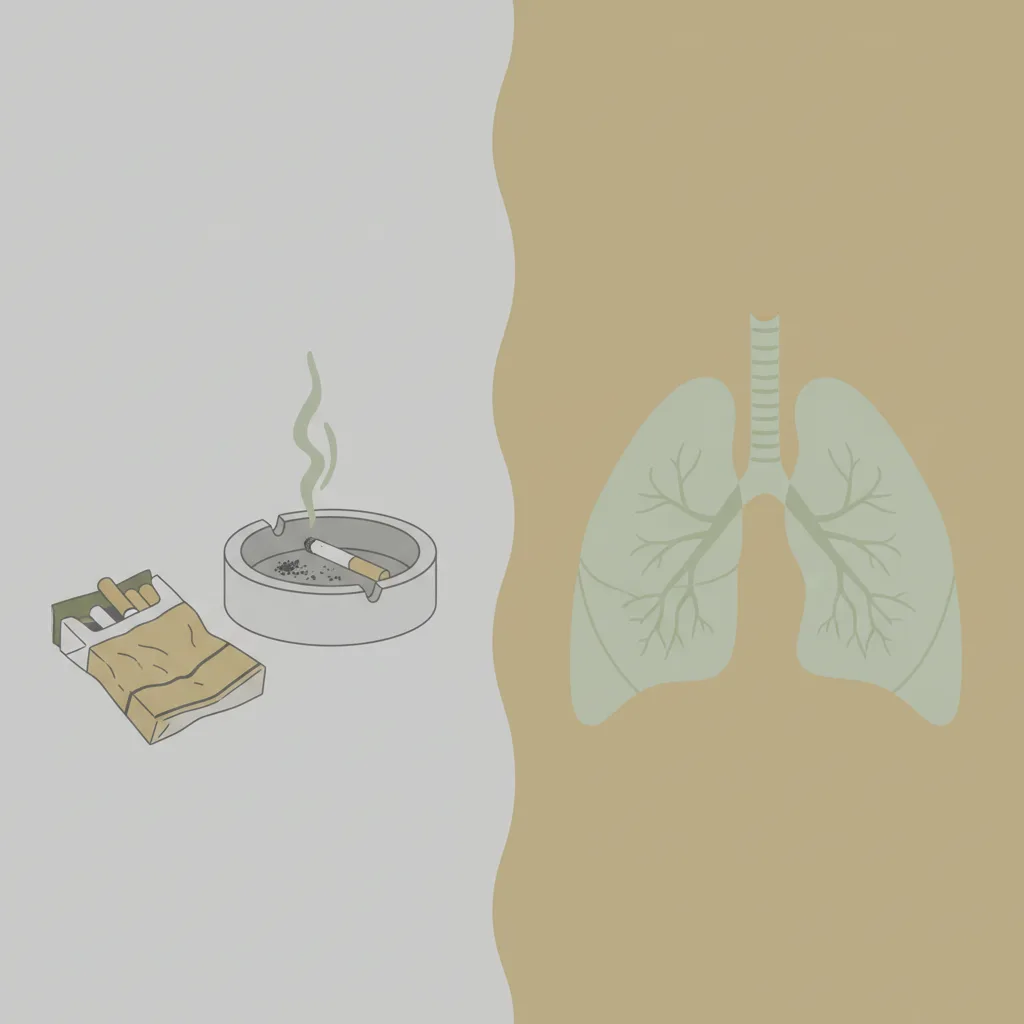
A single cigarette butt stubbed out beside a crumpled empty packet on the left, and a pair of healthy lungs in outline on the right
Dữ liệu đại diện — không có cuộc khảo sát trực tiếp nào về sự hối tiếc cho quyết định này. Tỷ lệ được lấy từ điểm hài lòng và dữ liệu rào cản tiếp cận thay vì câu hỏi trực tiếp về sự hối tiếc. Xem cảnh báo bên dưới.

Hối hận vì hành động

Bắt đầu hút thuốc khi còn là thiếu niên

72%

72% người hút thuốc trưởng thành hối tiếc về việc đã bắt đầu hút thuốc

Người trưởng thành Mỹ hiện đang hút thuốc, đại diện toàn quốc

cắt ngang, hồi cứu

Hối hận vì không hành động

Không bao giờ bắt đầu hút thuốc

2,0%

~2% người chưa bao giờ hút thuốc hối tiếc vì không hút thuốc (giới hạn trên ước tính; không có khảo sát trực tiếp)

Người trưởng thành Mỹ chưa bao giờ hút thuốc (không có khảo sát hối tiếc trực tiếp về nhóm này; tỷ lệ là giới hạn trên ước tính)

không có đo lường hối tiếc hồi cứu trực tiếp; ước tính cắt ngang

% hối tiếc về lựa chọn này

action dominates — Hành động chiếm ưu thế — hầu hết hối tiếc vì đã hành động.

Quyết định liên quan

Các quyết định tương tự về mặt ngữ nghĩa — cùng lĩnh vực, đánh đổi khác nhau.

Sức khỏe

Bỏ thuốc lá

% hối tiếc về lựa chọn này

Không hành động chiếm ưu thế

Hối tiếc vì không hành động cao hơn 90.0×

Sức khỏe

Xỏ khuyên cơ thể

% hối tiếc về lựa chọn này

Hành động chiếm ưu thế

Hối tiếc vì hành động cao hơn 4.0×

Sức khỏe

Thói quen tập thể dục

% hối tiếc về lựa chọn này

Không hành động chiếm ưu thế

Hối tiếc vì không hành động cao hơn 13.4×

Sức khỏe

Tìm điều trị vs. giấu chứng nghiện

% hối tiếc về lựa chọn này

Không hành động chiếm ưu thế

Hối tiếc vì không hành động cao hơn 4.3×

lifestyle

Hình xăm

% hối tiếc về lựa chọn này

Hành động chiếm ưu thế

Hối tiếc vì hành động cao hơn 1.6×

lifestyle

Ăn chay

% hối tiếc về lựa chọn này

Hành động chiếm ưu thế

Hối tiếc vì hành động cao hơn 3.8×

Sức khỏe

Điều trị nghiện vs. tránh né

% hối tiếc về lựa chọn này

Không hành động chiếm ưu thế

Hối tiếc vì không hành động cao hơn 1.5×

Tài chính

Thương lượng hóa đơn viện phí

% hối tiếc về lựa chọn này

Không hành động chiếm ưu thế

Hối tiếc vì không hành động cao hơn 7.6×

Những rủi ro đằng sau quyết định này

Các xác suất làm nền tảng cho lựa chọn này.

72% of adult smokers regret ever starting to smoke, according to the 2014 Tobacco Products and Risk Perceptions Survey — the most recent nationally representative US measurement. The finding is not an outlier: the International Tobacco Control 4-Country Survey (2002, N>8,000) found 91% of US smokers would not have started if they could do it again, Cancer Research UK’s YouGov survey (2012, N=1,746) found 85% of UK smokers and ex-smokers wished they’d never started, and Gallup (2012) found 88%. The 72% Sanders-Jackson figure is the most conservative because it sampled only current smokers, excludes ex-smokers (who often report even higher regret), and used the most rigorous nationally representative methodology. All four data points converge: regret about starting is the dominant experience of adult smokers.

The inaction side of this decision has no direct survey counterpart. No published study has asked never-smokers whether they regret not having smoked — the construct is essentially absent from the tobacco-regret literature because researchers have no theoretical reason to expect a meaningful response. Nicotine addiction generates regret by trapping users in a habit they wish they had never started; the mechanism requires having started in the first place. Among the roughly 57% of US adults who have never smoked (2022 NHIS), the published literature documents no cohort wishing they had taken up the habit. A 2% upper-bound inaction rate is used here as a conservative placeholder, not a measured figure.

Under Gilovich and Medvec’s temporal regret framework, action regrets tend to fade over time while inaction regrets grow — making most long-horizon regret-pairs favour the inaction side. Smoking inverts this pattern almost uniquely. Nicotine addiction is self-sustaining: the continued physical urge to smoke, combined with repeated failed quit attempts (only 8.8% of US smokers who try to quit succeed in a given year, per CDC 2022), keeps action-side regret elevated and unresolvable for decades. The regret gap here — approximately 70 percentage points — is among the largest observed in bilateral regret research, and is driven not by forgetting but by the impossibility of undoing the addiction that the action created.

Nguồn: hành động

Sổ cái xác nhận

Mỗi con số dưới đây là những gì mỗi nguồn đã báo cáo, cùng với trích dẫn nguyên văn mà chúng tôi dựa vào và cách chúng tôi đưa ra con số của mình. Nhấp vào bất kỳ liên kết nào để xác minh trực tiếp.

  1. [1] International Journal of Environmental Research and Public Health (PMC) — Regretting Ever Starting to Smoke: Results from a 2014 National Survey
    Regretting Ever Starting to Smoke: Results from a 2014 National Survey

    See all 2 Likelier entries citing this source →

    Thống kê
    71.5% of current smokers (95% CI: 68.6%–74.4%) regretted starting to smoke; an additional 20.7% were unsure
    Trích đoạn
    “"The majority of smokers (71.5%) regretted starting to smoke. Being older and non-Hispanic white were significant predictors of regret. Smokers having a high intention to quit, having made quit attempts in the past year, worrying about getting lung cancer, believing smoking every day can be risky for your health, perceiving a risk of being diagnosed with lung cancer during one's lifetime, and considering themselves addicted to cigarettes were significant predictors of regret for smoking initiation." ”
    Dữ liệu nguồn từ
    2017-04-07
    Truy cập
    2026-05-22
    Tính toán
    Sanders-Jackson et al. (2017), 2014 Tobacco Products and Risk Perceptions Survey (TPRPS), nationally representative web-based survey, N=1,349 current smokers from 5,717 total respondents, weighted for non-institutionalized US adults aged 18+. Primary regret measure: "If you had it to do over again, would you start smoking cigarettes?" — 71.5% answered no (regret). An additional 20.7% said "don't know." This is the most recent nationally representative US peer-reviewed figure and is used as the entry's primary action regret_rate (rounded to 0.72). Cross-country context: Fong et al. (2004) reported 91% regret among US smokers in the ITC 4-country survey (N>8,000, 2002 data); Cancer Research UK / YouGov (2012, N=1,746) found 85% regret among UK smokers and ex-smokers; Gallup (2012, N=166) found 88%. The Sanders-Jackson figure (71.5%) is used as the conservative anchor because it is the most recent peer-reviewed US nationally representative estimate; the higher figures likely reflect broader samples including ex-smokers (who may have even higher regret) or older measurement.
  2. [2] Nicotine and Tobacco Research (Oxford Academic) — The near-universal experience of regret among smokers in four countries: findings from the International Tobacco Control Policy Evaluation Survey
    The near-universal experience of regret among smokers in four countries: findings from the International Tobacco Control Policy Evaluation Survey

    See all 2 Likelier entries citing this source →

    Thống kê
    About 90% of smokers across Canada, US, UK, and Australia agreed or strongly agreed they would not have started smoking if they could do it again; US-specific rate was 91%
    Trích đoạn
    “"The proportion of smokers who agreed or agreed strongly with the statement 'If you had to do it over again, you would not have started smoking' was extremely high — about 90% — and nearly identical across the four countries." ”
    Dữ liệu nguồn từ
    2004-11-01
    Truy cập
    2026-05-22
    Tính toán
    Fong et al. (2004), International Tobacco Control Policy Evaluation Survey (ITC-4), baseline wave October–December 2002, random-digit-dialed telephone survey of over 8,000 adult smokers across Canada, US, UK, and Australia. The US-specific regret rate is cited as 91% in subsequent studies (Sanders-Jackson 2017 cites it as "91% regret among United States smokers"). Used here as corroborating multi-country evidence. The higher 91% relative to Sanders-Jackson 71.5% likely reflects different wording ("if you had to do it over again" vs "if you had it to do over again"), older data (2002 vs 2014), and possible sample composition differences. Both are authoritative; the entry uses the Sanders-Jackson 71.5% as the conservative, most-recent estimate.

Nguồn: không hành động

Sổ cái xác nhận

Mỗi con số dưới đây là những gì mỗi nguồn đã báo cáo, cùng với trích dẫn nguyên văn mà chúng tôi dựa vào và cách chúng tôi đưa ra con số của mình. Nhấp vào bất kỳ liên kết nào để xác minh trực tiếp.

  1. [1] Morbidity and Mortality Weekly Report (CDC / MMWR) — Adult Smoking Cessation — United States, 2022
    Adult Smoking Cessation — United States, 2022
    Thống kê
    11.6% of US adults currently smoke; 67.7% of current smokers want to quit; 53.3% attempted to quit in the past year — consistent with zero reported regret about not having started among never-smokers
    Trích đoạn
    “"Among adults who currently smoked, 67.7% wanted to quit, 53.3% tried to quit during the preceding year, and 8.8% successfully quit. There have been more former smokers than current smokers since 2002." ”
    Dữ liệu nguồn từ
    2024-07-25
    Truy cập
    2026-05-22
    Tính toán
    CDC MMWR report, 2022 National Health Interview Survey (NHIS), N=27,651 adults aged 18+. This source is used to establish the inaction-side baseline: among the ~84.4% of US adults who are not current smokers (former + never), the published literature contains no survey asking never-smokers whether they regret not having started smoking. The construct is essentially unmeasured because tobacco researchers have no theoretical reason to expect meaningful regret in never-smokers — nicotine creates its own demand through addiction, meaning regret for not starting is a concept that arises only after addiction is established. The 2% inaction rate is an estimated upper bound based on (a) the absence of any documented survey finding measurable never-smoker regret for not starting, (b) general population surveys showing near-universal awareness of smoking harms, and (c) the theoretical asymmetry: never-smokers cannot experience withdrawal-reinforced regret. See proxy_only annotation in caveats.
  2. [2] International Journal of Environmental Research and Public Health (PMC) — Regretting Ever Starting to Smoke: Results from a 2014 National Survey
    Regretting Ever Starting to Smoke: Results from a 2014 National Survey

    See all 2 Likelier entries citing this source →

    Thống kê
    Study sampled only current smokers (N=1,349); never-smokers were not assessed for regret about not starting, reflecting the field's consensus that this construct is not meaningfully present
    Trích đoạn
    “"The majority of smokers (71.5%) regretted starting to smoke." ”
    Dữ liệu nguồn từ
    2017-04-07
    Truy cập
    2026-05-22
    Tính toán
    Sanders-Jackson et al. (2017) sampled only current smokers for regret about initiation. The 2014 TPRPS survey of 5,717 total respondents focused its initiation-regret questions exclusively on active smokers. The decision not to ask never-smokers the symmetrical question ("do you regret never starting?") reflects the research community's understanding that the response distribution would be near-zero and the construct is not clinically or behaviourally meaningful. This asymmetry is documented across all major tobacco-regret surveys including Fong et al. (2004), O'Connor et al. (2010), and Cancer Research UK / YouGov (2012). Used here as methodological grounding for the 2% upper-bound estimate.

Lưu ý

The two sides use fundamentally asymmetric data. The action side has robust direct-regret survey data from multiple nationally representative studies (71.5%–91% across US and comparable countries). The inaction side has no direct survey: no published study has asked never-smokers whether they regret not starting to smoke. The 2% inaction rate is a theoretical upper bound derived from the absence of documented evidence and the structural logic of nicotine addiction — regret about not starting can only arise after experiencing the product, which creates the addiction that then produces regret upon reflection. This asymmetry makes smoking unusual among regret-pairs: it is one of the few decisions where action regret dominates so strongly that the inaction construct is not meaningfully studied. Gilovich and Medvec's temporal regret framework predicts inaction regret should grow over long time horizons — this entry inverts that pattern because addiction sustains the action-side regret indefinitely rather than allowing it to attenuate. The action_side rate of 72% applies to current smokers; ex-smokers show even higher regret rates in several studies (the Cancer Research UK / YouGov figure of 85% sampled current and ex-smokers combined). The entry uses the Sanders-Jackson 2017 figure (71.5%, current smokers only) as the most conservative and methodologically rigorous US-specific estimate.

Dữ liệu thô: /api/decisions.json

Đã xem gần đây trên thiết bị này