Qualità delle prove 4.75/5
Punteggio di revisione su otto dimensioni rispetto alla griglia di qualità . Ogni dimensione valutata da 1 a 5.
- D1 Ancoraggio alle fonti
- 5/5
- D2 Autorità delle fonti
- 5/5
- D3 Aritmetica
- 3/5
- D4 Incertezza
- 5/5
- D5 Ambito
- 5/5
- D6 Prosa
- 5/5
- D7 Onestà sulla percezione
- 5/5
- D8 Completezza degli avvertimenti
- 5/5
≈ Probabile come
Percepito
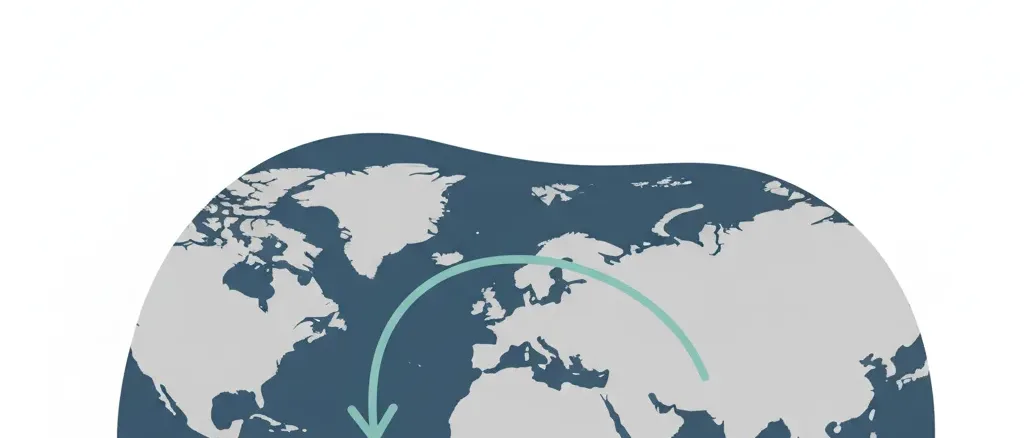
La Circolazione Meridionale di Rovesciamento Atlantica non è un'espressione di uso comune, e il suo potenziale collasso ha acquisito visibilità mainstream solo di recente. La copertura mediatica popolare tende a oscillare tra la minimizzazione («gli scienziati dicono che il nastro trasportatore oceanico sta rallentando») e il catastrofismo (titoli che evocano il film «The Day After Tomorrow», la cui rappresentazione di un congelamento istantaneo era fantascienza). Il concetto di punti di non ritorno della circolazione oceanica è entrato in una più ampia consapevolezza pubblica dopo il rapporto IPCC del 2021 e di nuovo dopo che un contestato studio del 2023 ha previsto un collasso potenzialmente a metà secolo. Il Survey of American Fears della Chapman University non monitora specificamente la consapevolezza dell'AMOC; dati più ampi sull'ansia climatica suggeriscono che circa il 48 % degli americani riferisce di avere paura o molta paura del riscaldamento globale e del cambiamento climatico (Chapman 2024), ma i punti di non ritorno specifici come l'AMOC non sono disaggregati. Il rischio si colloca da qualche parte tra l'attivamente temuto e il largamente non riconosciuto.
Stima approssimativa: ~47,7 % degli adulti statunitensi riferisce di avere «paura» o «molta paura» del riscaldamento globale e del cambiamento climatico in senso ampio (Chapman University Survey, Wave 10, 2024) — non esistono dati di sondaggio specifici sull'AMOC
Effettivo
~5 % di probabilità di collasso improvviso dell'AMOC prima del 2100 (IPCC «molto improbabile» = 0–10 %, coerente con SROCC 2019 / AR6)
Popolazione globale — il collasso dell'AMOC è un evento a scala planetaria senza una probabilità specifica per popolazione
Mostra calcolo
L'IPCC AR6 WG1 (2021) ha valutato che l'AMOC «molto probabilmente» declinerà nel corso del 21° secolo, con «media confidenza che il declino non comporterà un collasso improvviso prima del 2100». L'SPM (B.2.7) dell'IPCC SROCC (2019) è la valutazione che applica il termine di probabilità calibrato «molto improbabile (media confidenza)» a un collasso dell'AMOC. Linguaggio calibrato dell'IPCC: «molto improbabile» = 0–10 % di probabilità. Usando il 5 % come punto medio di quell'intervallo si ottiene la cifra di riferimento. Questa è una probabilità di evento civilizzazionale, non una probabilità di morte personale: il collasso dell'AMOC non ucciderebbe nessuno istantaneamente, ma innescherebbe una cascata di conseguenze (cali della temperatura invernale europea di 5-15 °C, accelerazione dell'innalzamento del livello del mare sulla costa orientale degli USA, disruzione della fascia di precipitazioni tropicali) la cui mortalità indiretta nell'arco di decenni sarebbe sostanziale. Gli studi basati sulle osservazioni producono stime significativamente più alte: Ditlevsen e Ditlevsen (2023, Nature Communications) hanno derivato una data centrale di collasso al 2057 con IC al 95 % di 2025-2095 da segnali statistici di allerta precoce in proxy di temperatura della superficie marina, implicando una probabilità >50 % entro una vita adulta di 50 anni. Smolders et al. (2024) hanno stimato la probabilità di collasso dell'AMOC prima del 2050 al 59 ± 17 % usando indicatori di salinità basati sulla fisica. Entrambi gli approcci sono contestati su basi metodologiche da diversi oceanografi di alto livello, e uno studio del 2025 con ensemble di 34 modelli (Baker et al., Nature) ha trovato l'AMOC resiliente al collasso in tutti gli scenari di forzante testati. L'ampia banda di incertezza (1-40 %) riflette questo genuino disaccordo scientifico, non una mera incertezza statistica attorno a una distribuzione nota. Le rifiniture del 2025 (aggiunte il 2026-06-14) precisano la questione della TEMPISTICA senza risolvere la probabilità: van Westen et al. (2025, JGR Oceans) collocano l'inizio del collasso attorno al 2063 (2026-2095, 25°-57° percentili) sotto SSP2-4.5 con una soglia di non ritorno prossima a ~2,5 °C, mentre Drijfhout et al. (2025, ERL) rilevano che nelle estensioni CMIP6 l'arresto completo del rovesciamento settentrionale si sviluppa dopo il 2100 nell'arco di 50-100 anni anche quando già impegnato. Questi restringono la stima centrale dell'inizio e rafforzano la distinzione inizio-vs-realizzazione, ma nessuno dei due è una rivalutazione di un'agenzia ufficiale, quindi la cifra di riferimento del 5 % ancorata all'IPCC e la banda 1-40 % sono mantenute invariate.
Avvertenze: La cifra di riferimento del 5 % segue il linguaggio calibrato «molto improbabile…
La cifra di riferimento del 5 % segue il linguaggio calibrato «molto improbabile» dell'IPCC (0-10 % di probabilità, media confidenza) — il termine «molto improbabile (media confidenza)» per il collasso dell'AMOC proviene dall'SPM (B.2.7) dell'IPCC SROCC (2019), con l'AR6 WG1 (2021) che lo ribadisce come «media confidenza che il declino non comporterà un collasso improvviso prima del 2100». La cifra di riferimento rappresenta l'ancora del consenso scientifico anziché l'intera gamma delle stime pubblicate. Gli studi basati sulle osservazioni (Ditlevsen 2023; Smolders et al. 2024) producono stime sostanzialmente più alte — 50-60 % di probabilità di collasso entro metà secolo — ma questi metodi sono contestati su rappresentatività dei proxy, lunghezza delle serie temporali e assunzioni dei modelli. Lo studio del 2025 con ensemble di 34 modelli di Baker et al. sostiene la resilienza dell'AMOC in tutti gli scenari testati, a supporto della valutazione «molto improbabile» dell'IPCC. Il dibattito scientifico è genuinamente irrisolto; la banda di incertezza (1-40 %) riflette questo anziché una mera incertezza statistica attorno a un parametro noto. Il «collasso» dell'AMOC in questa voce indica una riduzione improvvisa e auto-sostenuta verso uno stato drasticamente indebolito — non il graduale indebolimento (attualmente valutato come «molto probabile») già in corso. Le conseguenze del collasso si svilupperebbero nell'arco di anni-decenni, non da un giorno all'altro: le temperature invernali europee potrebbero calare di 5-15 °C su scale temporali di 10-30 anni, il livello del mare sulla costa orientale degli USA salirebbe di ulteriori 10-50 cm oltre le proiezioni di base, e i modelli di precipitazioni tropicali si sposterebbero sostanzialmente. La cifra nell'arco della vita è una probabilità che l'evento venga innescato, non che le sue conseguenze siano pienamente realizzate, nella vita dell'adulto di riferimento. Due studi del 2025 precisano la tempistica senza spostare la cifra di riferimento. Van Westen et al. (2025, JGR Oceans), analizzando 25 modelli climatici, stimano che il collasso dell'AMOC potrebbe iniziare entro il 2063 (intervallo 2026-2095) sotto uno scenario a emissioni intermedie ed entro il 2055 con emissioni elevate, con la soglia di non ritorno prossima a ~2,5 °C di riscaldamento globale — ma sottolineano che, una volta iniziato, raggiungere uno stato sostanzialmente più debole richiede più di 100 anni. Drijfhout et al. (2025, Environmental Research Letters), esaminando simulazioni CMIP6 estese oltre il 2100, rilevano che l'arresto completo del rovesciamento profondo settentrionale emerge dopo il 2100 in tutti i modelli ad alte emissioni (SSP5-8.5) eseguiti fino a quel punto, e nel 37 % dei modelli a emissioni intermedie entro il 2300. Questi rifiniscono la stima centrale dell'inizio rispetto all'allarme del singolo studio del 2023 ma rafforzano, anziché ribaltare, l'inquadramento sopra: un inizio a metà secolo sarebbe un impegno, non un collasso completato entro la vita di un adulto vivente.
Rischi correlati
Altri rischi su temi simili — per esplorare paure correlate.
Punto di non ritorno WAIS
Quali sono le probabilità che venga superato il punto di non ritorno della calotta glaciale dell'Antartide Occidentale durante la tua vita?

Catastrofe governo estremista
Quali sono le probabilità che un governo estremista politico rovini catastroficamente il tuo paese?

Morte per cambiamento climatico
Quali sono le probabilità di morire a causa degli effetti del cambiamento climatico?



Impatto di asteroide
Quali sono le probabilità di morire per l'impatto di un asteroide o una cometa?


Morte da bufera
Quali sono le probabilità di morire in una tempesta invernale grave o bufera di neve?
Scegli lo sfidante
The Atlantic Meridional Overturning Circulation is the vast network of ocean currents that transports warm surface water northward through the Atlantic and returns cold, deep water southward — the system responsible for northwestern Europe’s mild climate relative to its latitude. IPCC AR6 (2021) assessed that AMOC will “very likely” decline over the 21st century, with “medium confidence that the decline will not involve an abrupt collapse before 2100.” The earlier IPCC SROCC (2019) is the assessment that applied the calibrated “very unlikely (medium confidence)” likelihood term to an AMOC collapse — where “very unlikely” denotes a 0-10% probability. Using the midpoint of that calibrated range gives a ~5% lifetime probability of abrupt collapse before 2100. Caesar and colleagues (2018, Nature) documented that AMOC has already weakened by approximately 15% since the mid-twentieth century, using an independent sea-surface temperature fingerprinting approach that is consistent with RAPID array direct measurements begun in 2004.
The scientific debate is unusually polarised. Observation-based early-warning studies (Boers 2021, Nature Climate Change; Ditlevsen 2023, Nature Communications; van Westen 2024, Science Advances) identify statistical and physical signals consistent with AMOC approaching a tipping threshold, with Ditlevsen’s contested analysis predicting collapse most likely between 2025 and 2095. These findings imply a much higher probability than the IPCC consensus — in some estimates, 50-60% before mid-century. The counterargument came in February 2025 from Baker et al. (Nature), whose 34-model ensemble found AMOC resilient to collapse under all tested forcing scenarios, with Southern Ocean wind-driven upwelling sustaining the circulation even under extreme greenhouse gas concentrations. The IPCC’s “very unlikely” assessment rests primarily on this model-ensemble evidence. Both camps are publishing in leading peer-reviewed journals; the discrepancy is not a matter of one side being wrong in an obvious way.
Should AMOC collapse occur, the consequences within the following few decades would be substantial. Van Westen et al.’s consequence modelling projects European winter temperature drops of 5-15°C across northwestern Europe, with London’s average winter temperature falling from roughly 7°C to near 2°C and Oslo’s to well below -10°C. Sea level on the US East Coast would rise by an additional 10-50 cm above baseline sea level rise projections, as the ocean surface that AMOC currently depresses would rebound northward. The Amazon rainforest would face additional drying as tropical rainfall patterns shift. These are not immediate effects but decadal-to-century timescale consequences of a threshold crossing that, if it occurs, would likely be irreversible on any timescale relevant to human planning.
Curiosità correlate
L'IPCC AR6 valuta un collasso improvviso dell'AMOC prima del 2100 come "molto improbabile", una probabilità di circa il 5 per cento. Diversi studi basati su osservazioni sostengono che le probabilità siano più alte, e la fascia di incertezza è ampia.
Registro delle fonti
Ogni numero qui sotto è ciò che ciascuna fonte ha riportato, con la citazione testuale su cui ci siamo basati e come siamo arrivati alla nostra cifra. Clicca su qualsiasi link per verificare direttamente.
-
[1] Intergovernmental Panel on Climate Change (IPCC), Working Group I, Sixth Assessment Report — Climate Change 2021: The Physical Science Basis — Chapter 9: Ocean, Cryosphere and Sea Level Change
Climate Change 2021: The Physical Science Basis — Chapter 9: Ocean, Cryosphere and Sea Level ChangeSee all 2 Likelier entries citing this source →
- Statistica
AMOC will 'very likely' decline over the 21st century for all SSP scenarios; there is 'medium confidence' that the decline will not involve an abrupt collapse before 2100- Estratto
“"The Atlantic Meridional Overturning Circulation (AMOC) will very likely decline over the 21st century for all SSP scenarios. There is medium confidence that the decline will not involve an abrupt collapse before 2100." ”
- Dati originali da
- 2021-08-09
- Consultato
- 2026-05-09 · copia archiviata
- Calcolo
- AR6 WG1 Ch9 does not itself assign a numerical probability, nor does it use the "very unlikely" likelihood term for AMOC collapse — it states only "medium confidence that the decline will not involve an abrupt collapse before 2100." The "very unlikely (medium confidence)" characterization of an AMOC collapse is the IPCC SROCC (2019) SPM B.2.7 assessment (see the SROCC source below), which AR6 Ch9 is consistent with. Under the IPCC calibrated-language scale "very unlikely" = 0-10% probability; 5% is taken as the midpoint of that SROCC-defined range for the headline. The IPCC does not give a numerical probability; 5% is the author's interpretation of the calibrated-language midpoint. The 59-year adult lifetime window (age 18 to 77) maps roughly onto the "before 2100" horizon.
-
[2] Intergovernmental Panel on Climate Change (IPCC), SROCC 2019 — Special Report on the Ocean and Cryosphere in a Changing Climate — Summary for Policymakers (section B.2.7)
Special Report on the Ocean and Cryosphere in a Changing Climate — Summary for Policymakers (section B.2.7)- Statistica
AMOC is projected to weaken in the 21st century under all RCPs ('very likely'), although a collapse is 'very unlikely' (medium confidence)- Estratto
“"The AMOC is projected to weaken in the 21st century under all RCPs (very likely), although a collapse is very unlikely (medium confidence)." ”
- Dati originali da
- 2019-09-25
- Consultato
- 2026-07-11 · copia archiviata
- Calcolo
- This SROCC SPM statement (B.2.7) is the IPCC assessment that actually applies the "very unlikely (medium confidence)" likelihood term to an AMOC collapse. It is the grounding for the headline: under IPCC calibrated language "very unlikely" = 0-10% probability, and 5% is taken as the midpoint of that range. AR6 WG1 Ch9 (2021) restated this as "medium confidence that the decline will not involve an abrupt collapse before 2100," consistent with SROCC but without repeating the "very unlikely" term. Neither report gives a numerical probability; the 5% midpoint is the author's interpretation of the SROCC-stated calibrated-language range.
-
[3] Nature — Caesar, Rahmstorf et al., 2018 — Observed fingerprint of a weakening Atlantic Ocean overturning circulation
Observed fingerprint of a weakening Atlantic Ocean overturning circulation- Statistica
AMOC has weakened by approximately 3 ± 1 sverdrups (around 15%) since the mid-20th century, revealed by characteristic sea-surface temperature fingerprint- Estratto
“"The AMOC has weakened by about 3 ± 1 sverdrups (around 15 per cent) since the mid-twentieth century, revealed by a characteristic spatial and seasonal sea-surface temperature 'fingerprint' — consisting of a pattern of cooling in the subpolar Atlantic Ocean and warming in the Gulf Stream region." ”
- Dati originali da
- 2018-04-11
- Consultato
- 2026-05-09 · copia archiviata
- Calcolo
- Caesar et al. 2018 is the observational foundation for the AMOC weakening narrative. The 15% weakening since the mid-20th century is separate from the collapse-probability question — weakening and collapse are different states, and the IPCC projects continued weakening with high confidence even while assessing collapse as very unlikely. This source establishes that AMOC is not stable at its current state, providing the background against which collapse probability must be assessed.
- Indipendenza
- Caesar et al. use an independent SST-based fingerprinting approach developed separately from the RAPID array direct measurements (which began in 2004) and from the statistical early-warning methods of Boers 2021 and Ditlevsen 2023. The three methodologies corroborate each other on the weakening trend.
-
[4] Nature Communications — Ditlevsen and Ditlevsen, 2023 — Warning of a forthcoming collapse of the Atlantic meridional overturning circulation
Warning of a forthcoming collapse of the Atlantic meridional overturning circulation- Statistica
Statistical early-warning signals in SST proxies predict central AMOC collapse in 2057 (95% CI: 2025-2095); method is contested by multiple senior oceanographers- Estratto
“"Data-driven estimators for the time of tipping predict a potential AMOC collapse mid-century under the current emission scenario, with a 95% confidence interval of 2025–2095." ”
- Dati originali da
- 2023-07-25
- Consultato
- 2026-05-09 · copia archiviata
- Calcolo
- Ditlevsen 2023 derives its estimate from statistical early-warning signals (variance and autocorrelation growth) in North Atlantic SST proxies interpreted as fingerprints of approaching instability. The method is contested: Prof. Penny Holliday (National Oceanography Centre) stated "sea surface temperature of the North Atlantic subpolar gyre is not a clear indicator of the state of the AMOC"; Prof. Niklas Boers (TU Munich) argued "uncertainties in the heavily oversimplified model assumptions... are too high"; Dr. Levke Caesar (Univ. Bremen) stated "the resulting time series are too short." This source represents the upper bound of the scientific plausibility range and is not the headline figure, but it anchors the upper end of the uncertainty band.
- Indipendenza
- Ditlevsen 2023 is methodologically distinct from the IPCC's model-ensemble approach and from Caesar 2018's SST fingerprinting. It is included to represent the range of scientific opinion rather than as an independent confirmation of any single estimate.
-
[5] Science Advances — van Westen, Kliphuis and Dijkstra, 2024 — Physics-based early warning signal shows that AMOC is on tipping course
Physics-based early warning signal shows that AMOC is on tipping course- Statistica
Freshwater transport indicator (F_ovS) shows significant negative trend over past 40 years, consistent with AMOC approaching tipping point; European temperature drops of 5-15°C projected in collapse scenario- Estratto
“"Reanalysis products indicate that the present-day AMOC is on route to tipping... Temperature trends exceed 1°C per decade across northwestern Europe during collapse." ”
- Dati originali da
- 2024-02-09
- Consultato
- 2026-05-09 · copia archiviata
- Calcolo
- Van Westen 2024 uses a physics-based indicator (minimum of AMOC-induced freshwater transport, F_ovS) rather than statistical proxies. It finds a statistically significant negative trend of -1.20 mSv/year over the past 40 years, consistent with approach to tipping, but explicitly states inability to determine when tipping would occur. The consequence model run shows London's average winter temperature falling to ~1.9°C (from ~7°C today) and Oslo's to -16.5°C. These are consequences of full collapse, not of the current trajectory in isolation.
- Indipendenza
- Van Westen et al. use a different indicator (F_ovS from ocean reanalysis products) than Ditlevsen 2023 (SST statistical signals) or Caesar 2018 (SST fingerprinting), providing genuinely independent physics-based evidence for AMOC approaching instability.
-
[6] Nature — Baker et al. (Met Office and University of Exeter), 2025 — Continued Atlantic overturning circulation even under climate extremes
Continued Atlantic overturning circulation even under climate extremes- Statistica
34-model ensemble finds AMOC resilient to collapse under all tested greenhouse gas and freshwater forcing scenarios; Southern Ocean wind-driven upwelling sustains circulation- Estratto
“"The AMOC is resilient to extreme greenhouse gas and North Atlantic freshwater forcings across 34 climate models." ”
- Dati originali da
- 2025-02-19
- Consultato
- 2026-05-09 · copia archiviata
- Calcolo
- Baker et al. 2025 is the primary model-based counterargument. The 34-model ensemble finds that Southern Ocean upwelling — not captured in the observation-based early-warning studies — sustains AMOC circulation even under extreme forcing. This mechanism explains why most CMIP climate models do not show AMOC collapse this century, which IPCC AR6 uses as the primary basis for its "very unlikely" assessment. Baker 2025 is cited here as a materially important dissenting view that anchors the lower end of the uncertainty range. The discrepancy between the observation-based (Ditlevsen, Boers, van Westen) and model-based (Baker, IPCC) views is the fundamental unresolved debate in AMOC science.
- Indipendenza
- Baker et al. is methodologically opposed to the observation-based early-warning literature — it uses fully coupled climate models rather than statistical signals — and its conclusion directly contradicts the observation-based studies. Both methodologies are active areas of peer-reviewed research; neither has been refuted.
-
[7] Journal of Geophysical Research: Oceans — van Westen, Kliphuis and Dijkstra, 2025 — Physics-Based Indicators for the Onset of an AMOC Collapse Under Climate Change
Physics-Based Indicators for the Onset of an AMOC Collapse Under Climate Change- Statistica
25-model analysis estimates AMOC collapse could begin by 2063 (2026-2095, 25th-57th percentiles) under SSP2-4.5, or by 2055 (2023-2076) under SSP5-8.5; tipping threshold near ~2.5C global warming- Estratto
“"An analysis consisting of 25 different climate models shows that the AMOC could begin to collapse by 2063 (from 2026 to 2095, 25th to 57th percentiles) under an intermediate emission scenario (SSP2-4.5), or by 2055 (from 2023 to 2076, 25th to 75th percentiles) under a high-end emission scenario (SSP5-8.5). When the AMOC collapses, the Northwestern European climate changes drastically and this will likely induce severe societal impacts." ”
- Dati originali da
- 2025-08-24
- Consultato
- 2026-06-14 · copia archiviata
- Calcolo
- Van Westen et al. 2025 (JGR Oceans, Vol 130 Issue 8) develops a buoyancy-flux physics-based indicator for the ONSET of AMOC tipping — the moment the system becomes committed, not the moment a weakened state is reached. The paper's body places the multimodel-mean tipping threshold near ~2.5C of global warming above pre-industrial (the abstract states the onset years; the 2.5C / +2.48C figure is in the results text, paraphrased here, not in the verbatim excerpt). Critically, the paper states that once collapse begins it "takes more than 100 years to reach a substantially weaker state" — so a ~2063 onset under SSP2-4.5 describes a committed trajectory, not consequences realised within a focal adult's lifetime. This refines collapse TIMING relative to the contested 2023 single-study alarm but does not itself yield a numerical lifetime probability, so the 5% headline is unchanged; the result is recorded as a caveat and an assumptions addendum.
- Indipendenza
- Van Westen 2025 (JGR) uses a buoyancy-flux onset indicator across 25 CMIP-class models — distinct from both the SSP-extension shutdown framing of the 2025 ERL CMIP6 study and the F_ovS reanalysis indicator of van Westen 2024 (Science Advances). It sits between the observation-based alarm and the model-based resilience views.