Qualità delle prove 4.5/5
Punteggio di revisione su otto dimensioni rispetto alla griglia di qualità . Ogni dimensione valutata da 1 a 5.
- D1 Ancoraggio alle fonti
- 4/5
- D2 Autorità delle fonti
- 5/5
- D3 Aritmetica
- 5/5
- D4 Incertezza
- 4/5
- D5 Ambito
- 4/5
- D6 Prosa
- 5/5
- D7 Onestà sulla percezione
- 4/5
- D8 Completezza degli avvertimenti
- 5/5
≈ Probabile come
Percepito
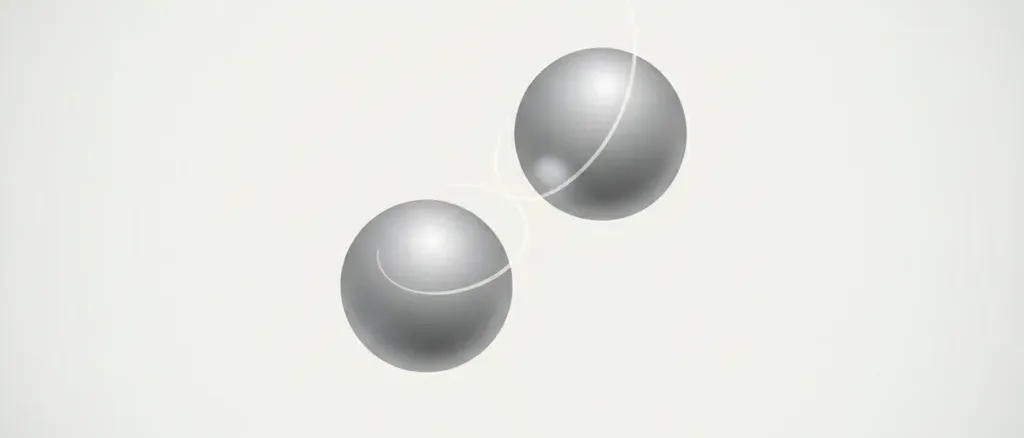
I set di magneti giocattolo e i magneti decorativi ad alta potenza sono stati commercializzati come giocattoli da scrivania per adulti e prodotti antistress, ma il pericolo quando un bambino ingoia più magneti non è ben compreso dalla maggior parte dei genitori. Il modello mentale pubblico dominante tratta l'ingestione di magneti come l'ingestione di una moneta — sgradevole ma che si risolve da sé. Ciò che non è ampiamente noto è che il meccanismo è fondamentalmente diverso per due o più magneti ad alta potenza: si attraggono a vicenda attraverso diverse anse intestinali, creando un punto di pressione che può causare ischemia, perforazione, volvolo e necrosi intestinale entro poche ore. Middelberg e colleghi (2022) hanno trovato che quasi la metà dei genitori il cui bambino è stato trattato per lesione da magnete ad alta potenza riteneva che i magneti ad alta potenza fossero giocattoli per bambini, e solo il 7 % sapeva che i magneti erano stati precedentemente ritirati dal mercato dalla CPSC. Il pericolo è sostanzialmente sottovalutato rispetto alle pile a bottone, nonostante ricoveri i bambini a un tasso di circa 20 volte superiore.
Stima approssimativa: La maggior parte dei genitori non ha un numero per questo pericolo; quasi la metà, in un sondaggio post-incidente, riteneva che i magneti ad alta potenza fossero giocattoli per bambini (Middelberg 2022)
Fonte: intuizione editoriale, non sondata
Effettivo
~300-400 ricoveri all'anno tra i bambini statunitensi per ingestione di più magneti ad alta potenza
bambini statunitensi di 0-14 anni, ricovero per ingestione di più magneti ad alta potenza
Mostra calcolo
La CPSC ha stimato 26.600 visite al pronto soccorso correlate a magneti dal 2010 al 2021 in tutte le età 0-17 (Federal Register, settembre 2022). Dopo l'annullamento della norma, nel 2017-2020, le visite annue al pronto soccorso erano circa 2.300-2.400/anno specificamente per i magneti ad alta potenza. Middelberg et al. (2022, Pediatrics), il più grande studio di coorte clinico (596 casi confermati di magneti ad alta potenza in 25 ospedali pediatrici, 2017-2019), ha trovato che il 55,7 % ha richiesto il ricovero e il 95 % dei casi erano bambini sotto i 14 anni. Applicando il tasso di ricovero del 56 % a ~2.400 visite al pronto soccorso per magneti ad alta potenza all'anno si ottengono circa 300-400 ricoveri all'anno per il periodo post-rientro. I bambini statunitensi di 0-14 anni sono circa 61 milioni (Census). Rischio cumulativo nell'arco della finestra di 15 anni: 300-400 ricoveri/anno × 15 anni / 61.000.000 ≈ 7,4-9,8 × 10⁻⁵, ovvero circa da 1 su 10.000 a 1 su 14.000. Il dato principale usa 1 su 12.000 come punto medio. Strickland et al. (2020, JPGN) hanno trovato indipendentemente circa 1.094 casi di «escalation delle cure» per magneti multipli nel 2017-2019 (stima NEISS ponderata), coerente con 350-400 esiti gravi all'anno. Una nuova norma CPSC (16 CFR Part 1262) è entrata in vigore in ottobre 2022; il suo effetto sui tassi di casi non è ancora quantificabile dai dati pubblicati.
Avvertenze: Il dato principale di 1 su 12.000 si riferisce al ricovero per ingestione di più…
Il dato principale di 1 su 12.000 si riferisce al ricovero per ingestione di più magneti ad alta potenza durante la finestra infantile 0-14. Gli esiti fatali sono circa due ordini di grandezza più rari — circa 1 su 13 milioni per bambino (5 decessi statunitensi confermati in ~17 anni contro una popolazione di 61 milioni di bambini di 0-14 anni). Il pericolo riguarda specificamente più magneti (o un magnete più un oggetto metallico): l'ingestione di un singolo magnete si risolve quasi universalmente da sé. Questa distinzione è critica sia per la gestione clinica sia per la comunicazione del rischio ai genitori. L'intervallo di probabilità è sensibile al ciclo normativo: i casi erano ~2.300/anno prima della norma CPSC del 2014, sono calati durante il periodo della norma (2015-2016), sono risaliti a ~2.300-2.400/anno dopo che la norma è stata annullata nel 2016, e la nuova norma federale del 2022 (16 CFR Part 1262) ha un effetto sconosciuto ma potenzialmente sostanziale sui tassi futuri di casi. La stima di 300-400 ricoveri riflette il periodo post-annullamento della norma e pre-nuova norma (2017-2022); i tassi post-2022 potrebbero essere più bassi se la nuova norma raggiunge una migliore conformità di quella annullata. Il pericolo dei magneti si colloca in una posizione insolita rispetto alle altre voci di questo sito: il tasso di ricovero (~1 su 12.000) è circa 20 volte il tasso di lesione grave da pile a bottone (~1 su 250.000), nonostante le pile a bottone ricevano una comunicazione di salute pubblica e un'attenzione normativa sostanzialmente maggiori. Il divario di disponibilità è in parte spiegato dall'età media più alta dei pazienti nel pericolo dei magneti (7,5 anni, Middelberg) rispetto alla popolazione prevalentemente di bambini piccoli per le pile a bottone.
Rischi correlati
Altri rischi su temi simili — per esplorare paure correlate.

Capsula di detersivo ingerita
Quali sono le probabilità che un bambino piccolo subisca una lesione grave ingoiando o schiacciando una capsula di detersivo?

Pila a bottone
Quali sono le probabilità di un infortunio grave se un bambino ingerisce una pila a bottone?

Morte di bimbo rivolto in avanti
Un bambino piccolo rivolto in avanti ha davvero più probabilità di morire in un incidente d'auto?

Displasia dell'anca infantile non trat
Quali sono le probabilità di disabilità da displasia dell'anca infantile non trattata?
Bambino ingoia oggetto (PS)
Quante probabilità ci sono che un bambino piccolo ingoi un oggetto e abbia bisogno di cure mediche?

Bimbo ingerisce bustina di nicotina
Quanto è probabile che un bambino piccolo venga segnalato al centro antiveleni per aver ingerito una bustina di nicotina?
Caduta scale bambino
Quali sono le probabilita che un bambino piccolo subisca un infortunio grave cadendo dalle scale?
Scegli lo sfidante
A single swallowed magnet is almost never a serious emergency. Two or more high-powered magnets swallowed at different times — or a magnet swallowed separately from a metal object — are a different problem entirely. When two neodymium magnets are in different loops of intestine, they attract each other strongly across the bowel wall, creating a pressure point that can cause ischemia, perforation, volvulus, and bowel necrosis within hours. Middelberg et al. (2022, Pediatrics), the largest clinical cohort of high-powered magnet injuries — 596 confirmed cases across 25 children’s hospitals over 2017-2019 — found that 55.7% required hospitalization, 46.3% required endoscopy, surgery, or both, and 9.6% had life-threatening morbidity including bowel obstruction, perforation, fistulae, and volvulus. The first documented US pediatric death from high-powered magnet ingestion occurred in a 20-month-old child in 2005/2006; CPSC has confirmed five US deaths since then.
The regulatory history is a study in how consumer product safety can fail at the enforcement stage. CPSC documented 20 serious cases between 2003 and 2006, including 15 bowel perforations and one death. Case counts climbed sharply over the following decade as high-powered neodymium magnet sets (marketed as “Buckyballs,” “Zen Magnets,” and dozens of similar brands) became popular adult desk toys. CPSC published a federal safety rule in 2014 limiting the flux strength of consumer magnets. The rule took effect in 2015, and annual ED visit rates fell. In 2016, the US Court of Appeals for the Tenth Circuit vacated the rule, finding the CPSC’s supporting findings inadequately explained. High-powered magnets returned to market in 2017. By 2017-2019, Strickland and colleagues (2020, JPGN) documented a five-fold increase in multiple-magnet escalation of care and a hospitalization rate of 37.7%. A new federal rule (16 CFR Part 1262) was unanimously adopted by CPSC in September 2022 with a broader product scope than the vacated rule, but post-enforcement case data are not yet published.
The counter-intuitive finding from comparing magnet and button-battery entries is worth stating directly. Button batteries receive substantially more public-health communication and regulatory attention than high-powered magnets. Yet the hospitalization rate for the magnet hazard — roughly 1 in 12,000 children over the 0-14 window — is approximately 20 times higher than the severe-injury rate for button batteries (1 in 250,000 over the 0-6 window). The difference is explained partly by the older age distribution for magnets (median 7.5 years, Middelberg) relative to button batteries (peak age 2 years), which means magnet exposure is more likely to occur in older children who appear less at-risk, and partly by the complexity of the mechanism, which is not intuitive to parents or to emergency physicians who may initially interpret an X-ray showing two overlapping metallic densities as a coin swallowing rather than a two-magnet emergency.
Curiosità correlate
Circa 1 bambino su 90 negli USA finisce al pronto soccorso per un oggetto ingoiato prima dei 6 anni, di solito una moneta, e dall'80 al 90% passa da solo. Le eccezioni che infrangono la regola del passaggio spontaneo: le pile a bottone, che perforano in poche ore, e più magneti insieme, che schiacciano l'intestino.
Il ricovero per aver ingerito più magneti potenti si verifica in circa ~1 su 12,000 per bambino negli USA nella fascia 0-14 anni. In un'indagine post-incidente, quasi metà dei caregiver credeva ancora che i magneti fossero giocattoli per bambini.
Registro delle fonti
Ogni numero qui sotto è ciò che ciascuna fonte ha riportato, con la citazione testuale su cui ci siamo basati e come siamo arrivati alla nostra cifra. Clicca su qualsiasi link per verificare direttamente.
-
[1] Pediatrics — Middelberg et al. (IMPACT of Magnets Research Collaborative), Nationwide Children's Hospital, 2022 — High-Powered Magnet Exposures in Children: A Multi-Center Cohort Study
High-Powered Magnet Exposures in Children: A Multi-Center Cohort Study- Statistica
596 patients confirmed high-powered magnet exposure (25 children's hospitals, 2017-2019); 55.7% hospitalized; 46.3% required endoscopy/surgery; 9.6% had life-threatening morbidity; 95% of care was for children under 14; median age 7.5 years; nearly half of caregivers believed high-powered magnets were children's toys- Estratto
“"Nearly 600 cases of high-powered magnet-related injuries in the three years after high-powered magnets re-entered the US market (2017 to 2019)... the majority (56%) of children being treated for high-powered magnet-related injuries required hospitalization... nearly one in ten had a potentially life-threatening injury such as bowel obstruction, perforation, infection, bleeding, fistulae or volvulus... 95% of care in this study was for children under 14 years of age... almost half of caregivers believed high-powered magnets were children's toys." ”
- Dati originali da
- 2022-02-01
- Consultato
- 2026-05-09 · copia archiviata
- Calcolo
- The 56% hospitalization rate from 596 confirmed cases across 25 children's hospitals is the primary clinical outcome rate. Applying this to the CPSC's nationally estimated ~600/yr high-powered magnet ED visits gives ~336 hospitalizations/yr. The 9.6% life-threatening morbidity rate (57/596) translates to approximately 57 life-threatening events per year nationally from high-powered magnet ingestion alone.
- Indipendenza
- Middelberg et al. use a prospective multi-center cohort design distinct from the NEISS-based population estimates of Strickland 2020 and the CPSC product-incident database. The clinical outcome rates (hospitalization, surgical intervention, life-threatening morbidity) are empirically measured rather than derived from administrative codes.
-
[2] Journal of Pediatric Gastroenterology and Nutrition — Strickland, Reeves, Krishnamurthy, Bhatt, Mahajan, Abbas, 2020 — Magnet Ingestions in Children Presenting to Emergency Departments in the United States, 2009–2019: A Problem in Flux
Magnet Ingestions in Children Presenting to Emergency Departments in the United States, 2009–2019: A Problem in Flux- Statistica
23,756 weighted NEISS-estimated pediatric magnet-ingestion ED visits 2009-2019; hospitalization rate rose to 37.7% in 2017-2019 (post-rule-vacated period); 5-fold increase in multiple-magnet escalation of care (estimated 1,094 cases) over 2017-2019; annual case increase averaged 6.1%- Estratto
“"An estimated 23,756 children (59% males, 42% < 5 years old) presented with a [suspected magnet ingestion] from 2009 to 2019 with an average annual case increase of 6.1%... From 2017 to 2019, there was a greater proportion of small/round type magnet ingestions and multiple magnet ingestions, and... a 5-fold increase in the escalation of care for multiple magnet ingestions (estimated n = 1,094; CI 505-1,686)." ”
- Dati originali da
- 2020-12-01
- Consultato
- 2026-05-09 · copia archiviata
- Calcolo
- 1,094 escalation-of-care multiple-magnet cases over 2017-2019 (3 years) ≈ 365/yr — consistent with the ~300-400 hospitalization estimate derived from Middelberg's clinical hospitalization rate applied to CPSC's annual ED visit count. Strickland's NEISS-based approach provides an independent population-level estimate that corroborates the Middelberg clinical-cohort approach.
- Indipendenza
- Strickland et al. use NEISS (National Electronic Injury Surveillance System), a statistically representative sample of US EDs maintained by CPSC, yielding nationally weighted estimates. This is methodologically independent of the Middelberg multi-center clinical cohort and of the CPSC product-incident administrative database.
-
[3] CDC Morbidity and Mortality Weekly Report, December 8, 2006, Vol. 55, No. 48 — Gastrointestinal Injuries from Magnet Ingestion in Children — United States, 2003–2006
Gastrointestinal Injuries from Magnet Ingestion in Children — United States, 2003–2006- Statistica
20 CPSC-identified serious magnet GI injury cases (2003-2006); 19 required surgery; 75% had bowel perforation; 1 death (first documented US fatality); all cases involved multiple magnets attracting through intestinal loops- Estratto
“"Since 2003, CPSC has identified one death and 19 other serious cases involving magnets with this type of unusual strength, representing a range of injuries including intestinal perforations (15 cases), obstruction (4), volvulus (3), and peritonitis (4)... The magnets had magnetically joined across two loops of intestine, causing a volvulus that compromised the blood supply to the bowel and led to necrosis, perforation, and sepsis." ”
- Dati originali da
- 2006-12-08
- Consultato
- 2026-05-09 · copia archiviata
- Calcolo
- This MMWR report established the mechanism: all 20 serious cases involved multiple magnets (or magnets plus a metal object) attracted through the bowel wall. Single-magnet ingestion was not represented in the serious-outcome cases. The 75% bowel-perforation rate in this early clinical case series is consistent with the 9.6% life-threatening morbidity rate in Middelberg 2022 — both measure the outcome rate in cases reaching surgical review, which is a selected severe subset. The first US death (a 20-month-old child, 2005/2006) is documented in this report.
-
[4] US Consumer Product Safety Commission, Federal Register, September 21, 2022 — Safety Standard for Magnets, 16 CFR Part 1262
Safety Standard for Magnets, 16 CFR Part 1262- Statistica
26,600 magnet-related ED visits 2010-2021 (NEISS estimate); 7-8 deaths involving hazardous magnets since 2005 (5 confirmed US deaths); 124 documented surgical cases (2010-2020); new rule requires flux index <50 kG²mm² for all consumer magnet products fitting small-parts cylinder- Estratto
“"CPSC estimates 26,600 magnet ingestions were treated in hospital ERs from 2010 through 2021, and cases have been rising annually since 2018. CPSC is aware of seven deaths involving the ingestion of hazardous magnets (including two outside of the United States)." ”
- Dati originali da
- 2022-09-21
- Consultato
- 2026-05-09 · copia archiviata
- Calcolo
- 26,600 ED visits / 12 years ≈ 2,217/yr on average. Five confirmed US deaths across ~17 years (2005-2022) ≈ 0.3/yr — a low annual fatality rate that translates to approximately 1 in 13 million per child over the 0-14 window. The new federal rule (effective October 2022) applies to all consumer products with separable magnets fitting the small-parts cylinder, not just the "magnet sets" definition that the vacated 2014 rule covered. Post-enforcement case data are not yet available in peer-reviewed literature.