Qualité des preuves 4.75/5
Score d’évaluation en huit dimensions selon la grille de qualité . Chaque dimension notée de 1 à 5.
- D1 Ancrage des sources
- 5/5
- D2 Autorité des sources
- 5/5
- D3 Arithmétique
- 3/5
- D4 Incertitude
- 5/5
- D5 Portée
- 5/5
- D6 Prose
- 5/5
- D7 Honnêteté sur la perception
- 5/5
- D8 Complétude des réserves
- 5/5
≈ Aussi probable que
Perçu
La circulation méridienne de retournement atlantique n'est pas une expression courante, et son effondrement potentiel n'a acquis une visibilité grand public que récemment. La couverture médiatique tend à osciller entre le rejet (« les scientifiques disent que le tapis roulant océanique ralentit ») et le catastrophisme (des titres invoquant le film « Le Jour d'après », dont la représentation d'un gel instantané relevait de la fiction scientifique). Le concept de points de bascule de la circulation océanique est entré dans la conscience publique plus large après le rapport du GIEC de 2021, puis de nouveau après qu'un article contesté de 2023 a prédit un effondrement potentiellement au milieu du siècle. L'enquête sur les peurs américaines de l'Université Chapman ne suit pas spécifiquement la connaissance de l'AMOC ; des données plus larges sur l'anxiété climatique suggèrent qu'environ 48 % des Américains se déclarent effrayés ou très effrayés par le réchauffement planétaire et le changement climatique (Chapman 2024), mais les points de bascule spécifiques comme l'AMOC ne sont pas ventilés. Le risque se situe quelque part entre activement redouté et largement méconnu.
Estimation approximative : ~47,7 % des adultes américains se déclarent « effrayés » ou « très effrayés » par le réchauffement planétaire et le changement climatique en général (enquête de l'Université Chapman, vague 10, 2024) — il n'existe aucune donnée d'enquête spécifique à l'AMOC
Réel
~5 % de probabilité d'effondrement brutal de l'AMOC avant 2100 (GIEC « très improbable » = 0–10 %, cohérent avec SROCC 2019 / AR6)
Population mondiale — l'effondrement de l'AMOC est un événement à l'échelle planétaire sans probabilité propre à une population
Voir le calcul
Le GIEC AR6 WG1 (2021) a évalué que l'AMOC déclinera « très probablement » au cours du XXIe siècle, avec une « confiance moyenne dans le fait que ce déclin n'impliquera pas un effondrement brutal avant 2100 ». Le RSP (B.2.7) du SROCC du GIEC (2019) est l'évaluation qui applique le terme calibré de vraisemblance « très improbable (confiance moyenne) » à un effondrement de l'AMOC. Langage calibré du GIEC : « très improbable » = probabilité de 0–10 %. En prenant 5 % comme point médian de cette fourchette, on obtient le chiffre principal. Il s'agit d'une probabilité d'événement civilisationnel, pas d'une probabilité de décès personnelle : un effondrement de l'AMOC ne tuerait personne instantanément, mais déclencherait une cascade de conséquences (chute des températures hivernales européennes de 5-15 °C, accélération de l'élévation du niveau de la mer sur la côte est des États-Unis, perturbation de la ceinture de précipitations tropicales) dont la mortalité indirecte sur des décennies serait substantielle. Les études fondées sur l'observation produisent des estimations nettement plus élevées : Ditlevsen et Ditlevsen (2023, Nature Communications) ont dérivé une date centrale d'effondrement de 2057 avec un IC à 95 % de 2025-2095 à partir de signaux statistiques d'alerte précoce dans des indicateurs indirects de température de surface de la mer, impliquant une probabilité >50 % au cours d'une vie adulte de 50 ans. Smolders et al. (2024) ont estimé la probabilité d'effondrement de l'AMOC avant 2050 à 59 ± 17 % à l'aide d'indicateurs de salinité fondés sur la physique. Les deux approches sont contestées sur le plan méthodologique par plusieurs océanographes chevronnés, et une étude d'ensemble à 34 modèles de 2025 (Baker et al., Nature) a trouvé l'AMOC résiliente à l'effondrement dans tous les scénarios de forçage testés. La large fourchette d'incertitude (1-40 %) reflète ce véritable désaccord scientifique, et non une simple incertitude statistique autour d'une distribution connue. Des affinements de 2025 (ajoutés le 2026-06-14) précisent la question du CALENDRIER sans résoudre celle de la probabilité : van Westen et al. (2025, JGR Oceans) placent le début de l'effondrement vers 2063 (2026-2095, 25e-57e percentiles) sous SSP2-4.5 avec un seuil de bascule proche de ~2,5 °C, tandis que Drijfhout et al. (2025, ERL) constatent que dans les extensions CMIP6 l'arrêt complet du retournement nord se déroule après 2100 sur 50-100 ans même lorsqu'il est engagé plus tôt. Ceux-ci resserrent l'estimation centrale du début et renforcent la distinction entre début et réalisation, mais ni l'un ni l'autre n'est une réévaluation d'une agence officielle, si bien que le chiffre principal de 5 % ancré sur le GIEC et la fourchette de 1-40 % sont conservés inchangés.
Réserves : Le chiffre principal de 5 % découle du langage calibré « très improbable » du GI…
Le chiffre principal de 5 % découle du langage calibré « très improbable » du GIEC (probabilité de 0-10 %, confiance moyenne) — le terme « très improbable (confiance moyenne) » pour l'effondrement de l'AMOC provient du RSP (B.2.7) du SROCC du GIEC (2019), AR6 WG1 (2021) le reformulant en « confiance moyenne dans le fait que le déclin n'impliquera pas un effondrement brutal avant 2100 ». Le chiffre principal représente l'ancrage du consensus scientifique plutôt que l'éventail complet des estimations publiées. Les études fondées sur l'observation (Ditlevsen 2023 ; Smolders et al. 2024) donnent des estimations nettement plus élevées — 50-60 % de probabilité d'effondrement d'ici le milieu du siècle — mais ces méthodes sont contestées sur la représentativité des indicateurs indirects, la longueur des séries temporelles et les hypothèses des modèles. L'étude d'ensemble à 34 modèles de Baker et al. 2025 plaide pour la résilience de l'AMOC dans tous les scénarios testés, appuyant l'évaluation « très improbable » du GIEC. Le débat scientifique n'est véritablement pas tranché ; la fourchette d'incertitude (1-40 %) reflète cela plutôt qu'une simple incertitude statistique autour d'un paramètre connu. Dans cette fiche, l'« effondrement » de l'AMOC désigne une réduction brutale et auto-entretenue vers un état radicalement affaibli — pas l'affaiblissement graduel (actuellement évalué comme « très probable ») déjà en cours. Les conséquences d'un effondrement se déploieraient sur des années à des décennies, pas du jour au lendemain : les températures hivernales européennes pourraient chuter de 5-15 °C sur des échelles de 10-30 ans, le niveau de la mer sur la côte est des États-Unis s'élèverait de 10-50 cm supplémentaires au-dessus des projections de référence, et les régimes de précipitations tropicales se déplaceraient substantiellement. Le chiffre sur la vie est une probabilité que l'événement soit déclenché, pas que ses conséquences soient pleinement réalisées, au cours de la vie de l'adulte considéré. Deux études de 2025 précisent le calendrier sans déplacer le chiffre principal. Van Westen et al. (2025, JGR Oceans), analysant 25 modèles climatiques, estiment que l'effondrement de l'AMOC pourrait commencer d'ici 2063 (fourchette 2026-2095) sous un scénario d'émissions intermédiaires et d'ici 2055 sous de fortes émissions, avec le seuil de bascule proche de ~2,5 °C de réchauffement planétaire — mais soulignent qu'une fois amorcé, atteindre un état substantiellement plus faible prend plus de 100 ans. Drijfhout et al. (2025, Environmental Research Letters), examinant des simulations CMIP6 prolongées au-delà de 2100, constatent que l'arrêt complet du retournement profond nord émerge après 2100 dans tous les modèles à fortes émissions (SSP5-8.5) poussés aussi loin, et dans 37 % des modèles à émissions intermédiaires d'ici 2300. Ceux-ci affinent l'estimation centrale du début par rapport à l'alarme de l'étude unique de 2023 tout en renforçant, plutôt qu'en renversant, le cadrage ci-dessus : un début au milieu du siècle serait un engagement, pas un effondrement achevé au cours de la vie d'un adulte vivant.
Risques connexes
D'autres risques sur des thèmes similaires — pour explorer des peurs connexes.
Point de bascule WAIS
Quelles sont les chances que le point de basculement de la calotte glaciaire de l'Antarctique occidental soit franchi de votre vivant ?

Catastrophe gouvernement extrémiste
Quelles sont les chances qu'un gouvernement extrémiste politique ruine catastrophiquement votre pays ?

Décès liés au changement climatique
Quelles sont les chances de mourir des effets du changement climatique ?



Impact d'astéroïde
Quelles sont les probabilités de mourir d'un impact d'astéroïde ou de comète ?


Mort par blizzard
Quelles sont les chances de mourir dans une tempête hivernale sévère ou un blizzard ?
Choisir le comparé
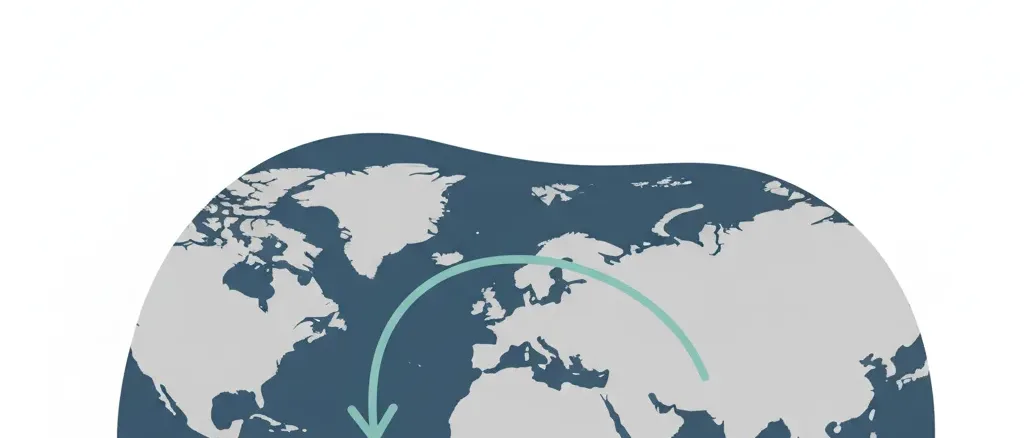
The Atlantic Meridional Overturning Circulation is the vast network of ocean currents that transports warm surface water northward through the Atlantic and returns cold, deep water southward — the system responsible for northwestern Europe’s mild climate relative to its latitude. IPCC AR6 (2021) assessed that AMOC will “very likely” decline over the 21st century, with “medium confidence that the decline will not involve an abrupt collapse before 2100.” The earlier IPCC SROCC (2019) is the assessment that applied the calibrated “very unlikely (medium confidence)” likelihood term to an AMOC collapse — where “very unlikely” denotes a 0-10% probability. Using the midpoint of that calibrated range gives a ~5% lifetime probability of abrupt collapse before 2100. Caesar and colleagues (2018, Nature) documented that AMOC has already weakened by approximately 15% since the mid-twentieth century, using an independent sea-surface temperature fingerprinting approach that is consistent with RAPID array direct measurements begun in 2004.
The scientific debate is unusually polarised. Observation-based early-warning studies (Boers 2021, Nature Climate Change; Ditlevsen 2023, Nature Communications; van Westen 2024, Science Advances) identify statistical and physical signals consistent with AMOC approaching a tipping threshold, with Ditlevsen’s contested analysis predicting collapse most likely between 2025 and 2095. These findings imply a much higher probability than the IPCC consensus — in some estimates, 50-60% before mid-century. The counterargument came in February 2025 from Baker et al. (Nature), whose 34-model ensemble found AMOC resilient to collapse under all tested forcing scenarios, with Southern Ocean wind-driven upwelling sustaining the circulation even under extreme greenhouse gas concentrations. The IPCC’s “very unlikely” assessment rests primarily on this model-ensemble evidence. Both camps are publishing in leading peer-reviewed journals; the discrepancy is not a matter of one side being wrong in an obvious way.
Should AMOC collapse occur, the consequences within the following few decades would be substantial. Van Westen et al.’s consequence modelling projects European winter temperature drops of 5-15°C across northwestern Europe, with London’s average winter temperature falling from roughly 7°C to near 2°C and Oslo’s to well below -10°C. Sea level on the US East Coast would rise by an additional 10-50 cm above baseline sea level rise projections, as the ocean surface that AMOC currently depresses would rebound northward. The Amazon rainforest would face additional drying as tropical rainfall patterns shift. These are not immediate effects but decadal-to-century timescale consequences of a threshold crossing that, if it occurs, would likely be irreversible on any timescale relevant to human planning.
Pour aller plus loin
Le GIEC AR6 juge un effondrement abrupt de l'AMOC avant 2100 "très improbable", soit une probabilité d'environ 5 pour cent. Plusieurs études fondées sur l'observation estiment les chances plus élevées, et la fourchette d'incertitude est large.
Registre des sources
Chaque chiffre ci-dessous correspond à ce que la source a rapporté, avec la citation textuelle sur laquelle nous nous sommes appuyés et la méthode de calcul. Cliquez sur un lien pour vérifier directement.
-
[1] Intergovernmental Panel on Climate Change (IPCC), Working Group I, Sixth Assessment Report — Climate Change 2021: The Physical Science Basis — Chapter 9: Ocean, Cryosphere and Sea Level Change
Climate Change 2021: The Physical Science Basis — Chapter 9: Ocean, Cryosphere and Sea Level ChangeSee all 2 Likelier entries citing this source →
- Statistique
AMOC will 'very likely' decline over the 21st century for all SSP scenarios; there is 'medium confidence' that the decline will not involve an abrupt collapse before 2100- Extrait
“"The Atlantic Meridional Overturning Circulation (AMOC) will very likely decline over the 21st century for all SSP scenarios. There is medium confidence that the decline will not involve an abrupt collapse before 2100." ”
- Données source de
- 2021-08-09
- Consulté le
- 2026-05-09 · copie archivée
- Calcul
- AR6 WG1 Ch9 does not itself assign a numerical probability, nor does it use the "very unlikely" likelihood term for AMOC collapse — it states only "medium confidence that the decline will not involve an abrupt collapse before 2100." The "very unlikely (medium confidence)" characterization of an AMOC collapse is the IPCC SROCC (2019) SPM B.2.7 assessment (see the SROCC source below), which AR6 Ch9 is consistent with. Under the IPCC calibrated-language scale "very unlikely" = 0-10% probability; 5% is taken as the midpoint of that SROCC-defined range for the headline. The IPCC does not give a numerical probability; 5% is the author's interpretation of the calibrated-language midpoint. The 59-year adult lifetime window (age 18 to 77) maps roughly onto the "before 2100" horizon.
-
[2] Intergovernmental Panel on Climate Change (IPCC), SROCC 2019 — Special Report on the Ocean and Cryosphere in a Changing Climate — Summary for Policymakers (section B.2.7)
Special Report on the Ocean and Cryosphere in a Changing Climate — Summary for Policymakers (section B.2.7)- Statistique
AMOC is projected to weaken in the 21st century under all RCPs ('very likely'), although a collapse is 'very unlikely' (medium confidence)- Extrait
“"The AMOC is projected to weaken in the 21st century under all RCPs (very likely), although a collapse is very unlikely (medium confidence)." ”
- Données source de
- 2019-09-25
- Consulté le
- 2026-07-11 · copie archivée
- Calcul
- This SROCC SPM statement (B.2.7) is the IPCC assessment that actually applies the "very unlikely (medium confidence)" likelihood term to an AMOC collapse. It is the grounding for the headline: under IPCC calibrated language "very unlikely" = 0-10% probability, and 5% is taken as the midpoint of that range. AR6 WG1 Ch9 (2021) restated this as "medium confidence that the decline will not involve an abrupt collapse before 2100," consistent with SROCC but without repeating the "very unlikely" term. Neither report gives a numerical probability; the 5% midpoint is the author's interpretation of the SROCC-stated calibrated-language range.
-
[3] Nature — Caesar, Rahmstorf et al., 2018 — Observed fingerprint of a weakening Atlantic Ocean overturning circulation
Observed fingerprint of a weakening Atlantic Ocean overturning circulation- Statistique
AMOC has weakened by approximately 3 ± 1 sverdrups (around 15%) since the mid-20th century, revealed by characteristic sea-surface temperature fingerprint- Extrait
“"The AMOC has weakened by about 3 ± 1 sverdrups (around 15 per cent) since the mid-twentieth century, revealed by a characteristic spatial and seasonal sea-surface temperature 'fingerprint' — consisting of a pattern of cooling in the subpolar Atlantic Ocean and warming in the Gulf Stream region." ”
- Données source de
- 2018-04-11
- Consulté le
- 2026-05-09 · copie archivée
- Calcul
- Caesar et al. 2018 is the observational foundation for the AMOC weakening narrative. The 15% weakening since the mid-20th century is separate from the collapse-probability question — weakening and collapse are different states, and the IPCC projects continued weakening with high confidence even while assessing collapse as very unlikely. This source establishes that AMOC is not stable at its current state, providing the background against which collapse probability must be assessed.
- Indépendance
- Caesar et al. use an independent SST-based fingerprinting approach developed separately from the RAPID array direct measurements (which began in 2004) and from the statistical early-warning methods of Boers 2021 and Ditlevsen 2023. The three methodologies corroborate each other on the weakening trend.
-
[4] Nature Communications — Ditlevsen and Ditlevsen, 2023 — Warning of a forthcoming collapse of the Atlantic meridional overturning circulation
Warning of a forthcoming collapse of the Atlantic meridional overturning circulation- Statistique
Statistical early-warning signals in SST proxies predict central AMOC collapse in 2057 (95% CI: 2025-2095); method is contested by multiple senior oceanographers- Extrait
“"Data-driven estimators for the time of tipping predict a potential AMOC collapse mid-century under the current emission scenario, with a 95% confidence interval of 2025–2095." ”
- Données source de
- 2023-07-25
- Consulté le
- 2026-05-09 · copie archivée
- Calcul
- Ditlevsen 2023 derives its estimate from statistical early-warning signals (variance and autocorrelation growth) in North Atlantic SST proxies interpreted as fingerprints of approaching instability. The method is contested: Prof. Penny Holliday (National Oceanography Centre) stated "sea surface temperature of the North Atlantic subpolar gyre is not a clear indicator of the state of the AMOC"; Prof. Niklas Boers (TU Munich) argued "uncertainties in the heavily oversimplified model assumptions... are too high"; Dr. Levke Caesar (Univ. Bremen) stated "the resulting time series are too short." This source represents the upper bound of the scientific plausibility range and is not the headline figure, but it anchors the upper end of the uncertainty band.
- Indépendance
- Ditlevsen 2023 is methodologically distinct from the IPCC's model-ensemble approach and from Caesar 2018's SST fingerprinting. It is included to represent the range of scientific opinion rather than as an independent confirmation of any single estimate.
-
[5] Science Advances — van Westen, Kliphuis and Dijkstra, 2024 — Physics-based early warning signal shows that AMOC is on tipping course
Physics-based early warning signal shows that AMOC is on tipping course- Statistique
Freshwater transport indicator (F_ovS) shows significant negative trend over past 40 years, consistent with AMOC approaching tipping point; European temperature drops of 5-15°C projected in collapse scenario- Extrait
“"Reanalysis products indicate that the present-day AMOC is on route to tipping... Temperature trends exceed 1°C per decade across northwestern Europe during collapse." ”
- Données source de
- 2024-02-09
- Consulté le
- 2026-05-09 · copie archivée
- Calcul
- Van Westen 2024 uses a physics-based indicator (minimum of AMOC-induced freshwater transport, F_ovS) rather than statistical proxies. It finds a statistically significant negative trend of -1.20 mSv/year over the past 40 years, consistent with approach to tipping, but explicitly states inability to determine when tipping would occur. The consequence model run shows London's average winter temperature falling to ~1.9°C (from ~7°C today) and Oslo's to -16.5°C. These are consequences of full collapse, not of the current trajectory in isolation.
- Indépendance
- Van Westen et al. use a different indicator (F_ovS from ocean reanalysis products) than Ditlevsen 2023 (SST statistical signals) or Caesar 2018 (SST fingerprinting), providing genuinely independent physics-based evidence for AMOC approaching instability.
-
[6] Nature — Baker et al. (Met Office and University of Exeter), 2025 — Continued Atlantic overturning circulation even under climate extremes
Continued Atlantic overturning circulation even under climate extremes- Statistique
34-model ensemble finds AMOC resilient to collapse under all tested greenhouse gas and freshwater forcing scenarios; Southern Ocean wind-driven upwelling sustains circulation- Extrait
“"The AMOC is resilient to extreme greenhouse gas and North Atlantic freshwater forcings across 34 climate models." ”
- Données source de
- 2025-02-19
- Consulté le
- 2026-05-09 · copie archivée
- Calcul
- Baker et al. 2025 is the primary model-based counterargument. The 34-model ensemble finds that Southern Ocean upwelling — not captured in the observation-based early-warning studies — sustains AMOC circulation even under extreme forcing. This mechanism explains why most CMIP climate models do not show AMOC collapse this century, which IPCC AR6 uses as the primary basis for its "very unlikely" assessment. Baker 2025 is cited here as a materially important dissenting view that anchors the lower end of the uncertainty range. The discrepancy between the observation-based (Ditlevsen, Boers, van Westen) and model-based (Baker, IPCC) views is the fundamental unresolved debate in AMOC science.
- Indépendance
- Baker et al. is methodologically opposed to the observation-based early-warning literature — it uses fully coupled climate models rather than statistical signals — and its conclusion directly contradicts the observation-based studies. Both methodologies are active areas of peer-reviewed research; neither has been refuted.
-
[7] Journal of Geophysical Research: Oceans — van Westen, Kliphuis and Dijkstra, 2025 — Physics-Based Indicators for the Onset of an AMOC Collapse Under Climate Change
Physics-Based Indicators for the Onset of an AMOC Collapse Under Climate Change- Statistique
25-model analysis estimates AMOC collapse could begin by 2063 (2026-2095, 25th-57th percentiles) under SSP2-4.5, or by 2055 (2023-2076) under SSP5-8.5; tipping threshold near ~2.5C global warming- Extrait
“"An analysis consisting of 25 different climate models shows that the AMOC could begin to collapse by 2063 (from 2026 to 2095, 25th to 57th percentiles) under an intermediate emission scenario (SSP2-4.5), or by 2055 (from 2023 to 2076, 25th to 75th percentiles) under a high-end emission scenario (SSP5-8.5). When the AMOC collapses, the Northwestern European climate changes drastically and this will likely induce severe societal impacts." ”
- Données source de
- 2025-08-24
- Consulté le
- 2026-06-14 · copie archivée
- Calcul
- Van Westen et al. 2025 (JGR Oceans, Vol 130 Issue 8) develops a buoyancy-flux physics-based indicator for the ONSET of AMOC tipping — the moment the system becomes committed, not the moment a weakened state is reached. The paper's body places the multimodel-mean tipping threshold near ~2.5C of global warming above pre-industrial (the abstract states the onset years; the 2.5C / +2.48C figure is in the results text, paraphrased here, not in the verbatim excerpt). Critically, the paper states that once collapse begins it "takes more than 100 years to reach a substantially weaker state" — so a ~2063 onset under SSP2-4.5 describes a committed trajectory, not consequences realised within a focal adult's lifetime. This refines collapse TIMING relative to the contested 2023 single-study alarm but does not itself yield a numerical lifetime probability, so the 5% headline is unchanged; the result is recorded as a caveat and an assumptions addendum.
- Indépendance
- Van Westen 2025 (JGR) uses a buoyancy-flux onset indicator across 25 CMIP-class models — distinct from both the SSP-extension shutdown framing of the 2025 ERL CMIP6 study and the F_ovS reanalysis indicator of van Westen 2024 (Science Advances). It sits between the observation-based alarm and the model-based resilience views.