Qualidade das evidências 4.25/5
Pontuação de revisão em oito dimensões segundo a grelha de qualidade . Cada dimensão pontuada de 1 a 5.
- D1 Ancoragem nas fontes
- 4/5
- D2 Autoridade das fontes
- 5/5
- D3 Aritmética
- 4/5
- D4 Incerteza
- 4/5
- D5 Âmbito
- 4/5
- D6 Prosa
- 4/5
- D7 Honestidade sobre a perceção
- 4/5
- D8 Completude das ressalvas
- 5/5
● seus fatores — clique neste risco ▾ para revelar
- Os seus fatores
≈ Tão provável quanto
Percebido
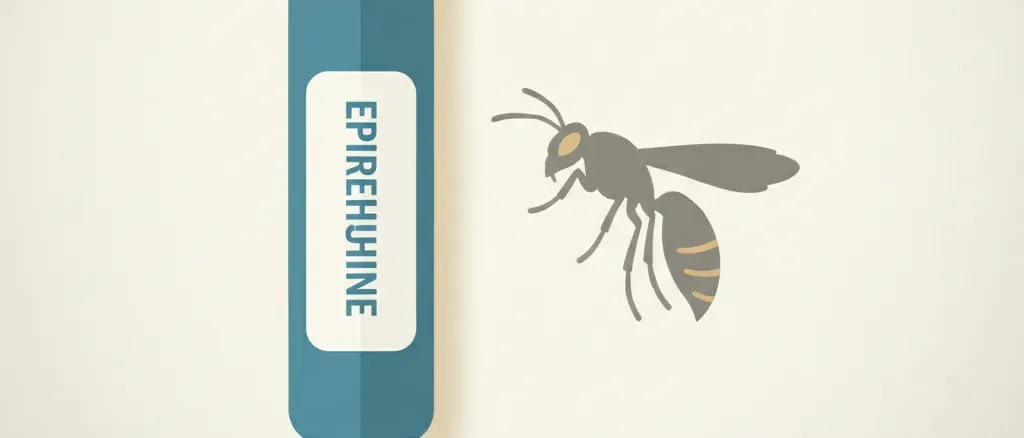
A anafilaxia por picada tem um perfil de perceção invulgar: as pessoas que trazem um autoinjetor de epinefrina conhecem o seu risco preciso e tendem a avaliá-lo com exatidão, enquanto a maioria das pessoas que nunca reagiram assume que o seu historial de «já fui picado antes, e correu bem» as torna essencialmente seguras. A evidência não sustenta essa segunda leitura: cerca de metade de todas as reações fatais a picadas nos EUA ocorrem em pessoas sem historial anterior de uma resposta alérgica sistémica.
Estimativa aproximada: os adultos não alérgicos tendem a estimar um risco pessoal quase nulo; a taxa real ao longo da vida é de cerca de 1 em 50 para reações graves
Fonte: intuição editorial, não pesquisado
Real
~3 % dos adultos dos EUA relatam uma reação alérgica sistémica a uma picada ao longo da vida
adultos dos EUA
Mostrar cálculo
Golden (Immunology and Allergy Clinics of North America, 2007, PMC1961691) e a ACAAI reportam ambos que as reações alérgicas sistémicas a picadas ocorrem em aproximadamente 3 % dos adultos dos EUA ao longo da vida. A cifra de 3 % (≈7,8 milhões de 260 milhões de adultos) é o numerador defensável mais amplo — inclui respostas sistémicas apenas de urticária, além da anafilaxia cardiovascular ou respiratória completa. A subfração que cumpre a definição clínica mais estrita de anafilaxia (Grau III–IV de Müller: hipotensão, broncospasmo ou perda de consciência, exigindo epinefrina) é aproximadamente dois terços das reações sistémicas em adultos, produzindo uma probabilidade ao longo da vida de cerca de 2 % (~1 em 50). O valor normalizado de 0,02 é usado porque a pergunta questiona especificamente a anafilaxia que exige epinefrina e não as reações apenas de urticária. Os limites de incerteza abrangem o teto pleno de 3 % e um piso conservador de 1 % correspondente à prevalência de alergia ao veneno diagnosticada.
Ressalvas: A cifra de 3 % ao longo da vida abrange todas as reações sistémicas a picadas em…
A cifra de 3 % ao longo da vida abrange todas as reações sistémicas a picadas em adultos dos EUA, incluindo episódios mais ligeiros apenas de urticária que podem não exigir epinefrina. A anafilaxia cardiovascular/respiratória estrita (o cenário em que um autoinjetor de epinefrina é genuinamente salvador) é uma subfração, aqui estimada em ~2 % ao longo da vida. O risco é muito não uniforme: os indivíduos com reações sistémicas anteriores enfrentam uma probabilidade de 25–70 % de reagir de novo numa nova picada, enquanto os que completaram a imunoterapia com veneno reduzem o seu risco em ~95 %. Notavelmente, cerca de metade de todas as reações fatais a picadas nos EUA ocorrem em pessoas sem historial anterior de alergia sistémica — pelo que um historial de «nunca tive uma reação má» ao longo da vida não elimina o risco, apenas coloca a pessoa na porção de menor risco da distribuição populacional.
Riscos relacionados
Outros riscos sobre temas semelhantes — para explorar medos relacionados.

Picada de abelha
Quais são as chances de ser morto por uma picada de abelha, vespa ou marimbondo?

Engolir abelha ou vespa
Quais são as chances de engolir acidentalmente uma abelha ou vespa viva e sofrer uma reação fatal das vias aéreas?

Coleira de gato
Qual é a probabilidade de um gato sofrer lesões graves ou morrer por causa da coleira?
Alergia alimentar na vida adulta
Quais são as chances de desenvolver alergia alimentar na fase adulta?



Mordida de cachorro (não fatal)
Quais são as probabilidades de ser mordido por um cachorro (não fatal)?

Ovos de aranha em bananas
Qual a probabilidade de encontrar ovos de aranha perigosos numa banana?
Escolha o comparado
About 3% of US adults will experience a systemic allergic reaction to a bee or wasp sting at some point in their life — roughly 1 in 33. The subset that meets the clinical threshold for anaphylaxis (cardiovascular or respiratory involvement: hypotension, bronchospasm, or loss of consciousness) sits at roughly 2% lifetime, or about 1 in 50. These are not exotic numbers; for comparison, the lifetime probability of dying in a car crash is around 1 in 93, so sting-triggered anaphylaxis is in the same order of magnitude as one of the most-cited benchmark risks in everyday life.
What makes this fear tractable is that it has a highly effective treatment: epinephrine given promptly converts what would otherwise be a life-threatening event into one with very low fatality. The ~220,000 annual US emergency department visits for sting allergic reactions resolve with ~62 deaths per year — a case fatality rate around 0.03% among those who reach an ED. The gap between “systemic anaphylaxis event” and “death from it” is almost entirely explained by access to and timing of epinephrine. The practical implication for the roughly 1–2% of adults with a confirmed venom allergy is straightforward: carrying a prescribed auto-injector and knowing how to use it transforms the risk profile substantially.
A finding worth flagging: per the allergy literature, roughly half of fatal sting reactions in the US occur in people with no prior history of a systemic allergic response. This does not mean the average person should carry an epi-pen — the absolute risk per sting for a non-allergic adult is still very small — but it does mean that a lifetime record of uneventful stings is not a reliable signal of permanent safety. First systemic reactions can and do occur in middle age and beyond, with no warning from prior sting tolerance. Anyone who develops more than local swelling after a sting warrants allergy evaluation.
Curiosidades relacionadas
Cerca de ~3% dos adultos nos EUA relatam, em algum momento, uma reação alérgica sistêmica a picada de inseto — ~1 em 50 ao longo da vida. Não alérgicos presumem risco quase nulo, mas a maioria das reações atinge pessoas sem histórico prévio.
Registro de evidências
Cada número abaixo é o que cada fonte relatou, com a citação literal em que nos baseamos e como chegamos ao nosso valor. Clique em qualquer link para verificar diretamente.
1/3 fontes verificadas de forma independente palavra por palavra em relação à fonte citada
-
[1] Immunology and Allergy Clinics of North America (Golden DBK) / PubMed Central — Insect Sting Anaphylaxis
Insect Sting AnaphylaxisSee all 2 Likelier entries citing this source →
- Estatística
Systemic allergic reactions reported by up to 3% of US adults; ≥50 fatal sting reactions per year; ~half of fatal reactions occur with no prior history- Trecho
“"Systemic allergic reactions are reported by up to 3% of adults, and almost 1% of children have a medical history of severe sting reactions … At least 50 fatal sting reactions occur each year in the United States … Half of all fatal reactions occur with no history of previous sting reactions." ”
- Dados da fonte de
- 2007-05-01
- Acessado
- 2026-05-04 · cópia arquivada
- Cálculo
- Primary source for the 3% lifetime systemic reaction prevalence. The normalized value of 0.02 uses the ~2/3 severe-within-systemic fraction (Grade III–IV, epi-requiring) to arrive at a ~2% lifetime probability.
- Independência
- Draws from clinical allergy and venom-IgE serology literature, independent of death-certificate or NEISS ED-visit data streams.
-
[2] American Academy of Family Physicians / American Family Physician — Stinging Insect Allergy
Stinging Insect AllergySee all 2 Likelier entries citing this source →
- Estatística
Systemic allergic reactions to insect stings occur in about 1% of children and 3% of adults; at least 50 fatal reactions per year in the US; half of sting-related deaths occur with the first systemic reaction- Trecho
“"Systemic allergic reactions to insect stings are estimated to occur in about 1 percent of children and 3 percent of adults … At least 50 fatal reactions to insect stings are reported each year in the United States, and many sting fatalities may not be recognized … Studies have shown that one half of sting-related deaths occur with the first systemic reaction." ”
- Dados da fonte de
- 2003-06-15
- Acessado
- 2026-05-04 · cópia arquivada
- Cálculo
- Independently corroborates the 3% adult systemic-reaction prevalence used for the native numerator (this AAFP review gives "about 1 percent of children and 3 percent of adults"). It also corroborates the Golden 2007 fatality framing: at least 50 fatal reactions per year in the US, with one half of sting-related deaths occurring with the first systemic reaction — supporting the caveat that a record of uneventful stings is not proof of permanent safety.
- Independência
- AAFP review drawing on epidemiological literature independent of the Golden 2007 PMC source above.
-
[3] Scientific Reports (Nature) / Zhang, Wang, Quan, Yan, Zeng, Fang, Yang — A prediction nomogram for mortality in patients following wasp stings: a retrospective study Verificado
A prediction nomogram for mortality in patients following wasp stings: a retrospective study- Estatística
Hymenoptera stings prompt approximately 220,000 US emergency department visits per year and cause an average of 62 deaths annually, a case-fatality rate of roughly 0.03% among those who reach an ED- Trecho
“"Annually, Hymenoptera stings prompt approximately 220,000 emergency department visits and cause an average of 62 deaths in the United States, making stings from hornets, wasps, and bees the deadliest of all venomous animal encounters." ”
- Dados da fonte de
- 2024-10-31
- Acessado
- 2026-07-03 · cópia arquivada
- Verificação
- Trecho obtido novamente de forma independente e confirmado palavra por palavra em relação à fonte citada durante nossa auditoria de fundamentação.
- Cálculo
- Source for the ED-visit and case-fatality figures in the body text: 62 deaths / 220,000 ED visits ≈ 0.028%, rounded to "around 0.03%." The article attributes the underlying US figure to Forrester, Weiser & Forrester, "An update on fatalities due to venomous and nonvenomous animals in the United States (2008-2015)," Wilderness Environ Med 29 (2018): 36-44.
- Independência
- Draws on ED-visit surveillance (via the cited Forrester et al. 2018 fatality review) rather than the clinical allergy/venom-IgE literature used by the Golden and AAFP sources above.