Qualidade das evidências 4.63/5
Pontuação de revisão em oito dimensões segundo a grelha de qualidade . Cada dimensão pontuada de 1 a 5.
- D1 Ancoragem nas fontes
- 5/5
- D2 Autoridade das fontes
- 5/5
- D3 Aritmética
- 4/5
- D4 Incerteza
- 4/5
- D5 Âmbito
- 5/5
- D6 Prosa
- 5/5
- D7 Honestidade sobre a perceção
- 4/5
- D8 Completude das ressalvas
- 5/5
● seus fatores — clique neste risco ▾ para revelar
- Os seus fatores
≈ Tão provável quanto

Percebido
Balançar as crianças pelos braços, descer um escorregador em conjunto e transportá-las aos ombros parecem brincadeiras e seguros — uma lesão parece um desfecho improvável de uma brincadeira normal de vínculo. As atividades são suficientemente comuns para que a maioria dos pais as tenha feito todas várias vezes sem incidente, o que reforça a intuição de que o dano é essencialmente hipotético. Os mecanismos específicos pelos quais cada atividade pode causar lesão não são amplamente conhecidos.
Fonte: intuição editorial, não pesquisado
Real
~6 em cada 10 000 crianças com menos de 6 anos por ano chegam a um serviço de urgência com pronação dolorosa (subluxação da cabeça do rádio)
Crianças dos EUA dos 0 aos 5 anos
Encontros médios na vida: ~59 (1/yr × 59 yr)
Mostrar cálculo
A taxa de urgências baseada no NEISS de 6 em cada 10 000 crianças ≤6 anos/ano (Rangan et al. 2021) é um limite inferior — conta apenas os casos tratados em urgências. As estimativas ao nível comunitário da literatura clínica (Aberdeen, 1990, amplamente citada) situam a verdadeira taxa de acontecimentos em aproximadamente 1 % por ano (10 em cada 1 000) para as crianças na janela de risco máximo. O risco máximo é dos 1 aos 4 anos (aproximadamente 3 anos de exposição significativa); o ligamento anular fortalece-se de forma acentuada depois dos 5 anos. Estimativa central: 1 % × 3 anos = 3 %, com um limite inferior usando a taxa apenas do NEISS (0,6/1 000 × 3 = 0,18 %, arredondado para 0,012 como limite inferior conservador de cauda única) e um limite superior incluindo um ligeiro subdiagnóstico (2 %/ano × 3 = 6 %). Âmbito: subgroup_lifetime (primeira infância, não a vida adulta).
Ressalvas: A pronação dolorosa é normalmente tratada com uma simples manobra de redução man…
A pronação dolorosa é normalmente tratada com uma simples manobra de redução manual que demora segundos e não requer sedação, gesso ou anestesia; a maioria das crianças retoma o uso normal do braço poucos minutos após a redução. A condição não envolve uma verdadeira fratura. As fraturas por escorregador ao colo são menos comuns em termos absolutos, mas clinicamente mais consequentes — a fratura da tíbia requer normalmente gesso durante 3–6 semanas. Estas atividades não são inerentemente perigosas em qualquer ocasião dada: o risco por episódio é baixo, e a maioria das crianças que são balançadas pelos braços ou levadas por um escorregador ao colo de um dos pais nunca se magoará. O principal fator de risco para a pronação dolorosa é a idade inferior a 3 anos, quando a cabeça do rádio ainda não está totalmente desenvolvida. Levar aos ombros e às cavalitas acarreta risco de queda se o adulto perder o equilíbrio, mas não está bem estabelecida nenhuma taxa de lesão específica baseada na população para estas atividades.
Riscos relacionados
Outros riscos sobre temas semelhantes — para explorar medos relacionados.

Lesão na cabeça por queda
Quais são as probabilidades de uma criança sofrer uma lesão grave na cabeça ou nos olhos por causa de uma queda?
Lesão brinquedo na emergência (criança)
Qual é a probabilidade de uma criança precisar de atendimento de emergência por lesão relacionada a brinquedo?
Queda de escadas crianca
Qual e a probabilidade de uma crianca pequena sofrer uma lesao grave ao cair de escadas?

Diagnóstico de autismo
Quais são as chances de seu filho ser diagnosticado com transtorno do espectro autista?

Complicações da cesárea
Quais são as chances de complicações graves em uma cesárea vs parto vaginal?
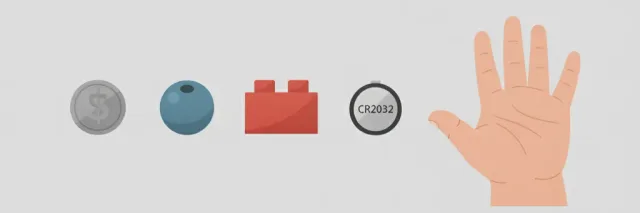
Criança engole objeto (PS)
Qual é a probabilidade de uma criança pequena engolir um objeto e precisar de atendimento médico?
Morte por co-sleeping
Quais são as chances de um bebê morrer por co-sleeping ou compartilhamento de cama?
Escolha o comparado
The most thoroughly documented injury from common childhood play activities is nursemaid’s elbow (radial head subluxation) — a partial dislocation of the elbow caused when the arm is pulled sharply or swung while the forearm is pronated. In US emergency departments, children aged six and under present with this injury at a rate of approximately 6 per 10,000 per year (NEISS data, 2004–2018), though this is a floor: community studies place the true incidence closer to 1% per year across the peak-risk window of ages one to four, since many reductions occur at primary care or, after the first episode, at home. The condition accounts for more than 20% of upper extremity injuries in young children and is one of the most common reasons a toddler is brought to an emergency department with a painful or unmoving arm. Swinging a child by the hands or wrists is an explicitly named mechanism alongside pulling and lifting by one arm.
A less widely known but better-controlled finding concerns the family slide. A NEISS-based study of 12,686 playground slide injuries in children aged five and under (2002–2015, Jennissen et al., Injury Epidemiology 2018) found that children riding on an adult’s lap had 49.5 times higher odds of a lower leg or ankle fracture than children sliding solo (OR 49.5, 95% CI 31.7–77.4). The mechanism is counterintuitive: the slide looks safe because the parent is behind and in control, but if the child’s foot catches the edge or inner wall of the slide chute, the adult’s momentum continues forward while the child’s lower leg is held in place, generating a torsional force sufficient to fracture the tibia. An earlier case series (Gaffney, Journal of Pediatric Orthopedics 2009) found that all eight tibia fractures sustained on playground slides in an eleven-month review occurred while the child was on an adult’s lap — none occurred during independent sliding.
Risk for nursemaid’s elbow is concentrated in the first three years of life: the annular ligament is immature during this period, and the radial head can slip beneath it with traction forces that would be inconsequential in an older child. After age five, the ligament strengthens markedly and the injury becomes rare. Once the subluxation occurs, the recurrence rate is approximately 20%, meaning the annular ligament remains a weak point until it matures. Treatment is a closed reduction — a specific rotation of the forearm performed in seconds without sedation — and most children resume normal arm use within minutes. For piggyback or shoulder-carry, the documented risk is primarily from falls if the adult loses balance; no injury-specific epidemiology comparable to nursemaid’s elbow data exists for this activity.
Curiosidades relacionadas
Cerca de 3 em cada 100 crianças têm cotovelo de babá antes dos 6 anos, uma subluxação da cabeça do rádio causada por um puxão súbito no braço ao balançar ou levantar a criança. Parece alarmante, mas o médico costuma recolocá-lo em segundos, sem danos duradouros.
Registro de evidências
Cada número abaixo é o que cada fonte relatou, com a citação literal em que nos baseamos e como chegamos ao nosso valor. Clique em qualquer link para verificar diretamente.
3/4 fontes verificadas de forma independente palavra por palavra em relação à fonte citada
-
[1] European Journal of Orthopaedic Surgery & Traumatology — Trends and epidemiology of radial head subluxation in the United States from 2004 to 2018 Verificado
Trends and epidemiology of radial head subluxation in the United States from 2004 to 2018- Estatística
6.03 per 10,000 children ≤6 years per year (ED-treated); ~253,578 total cases 2004–2018- Trecho
“"The overall annual rate of RHS per 10,000 children ≤ 6 years was 6.03 (95% CI = 4.85–7.58). The rate significantly increased from 5.18 (95% CI 2.96–7.39) in 2004 to 7.69 (95% CI = 4.63–10.75) in 2018. An estimated total 253,578 children 6 years or younger were treated for RHS." ”
- Dados da fonte de
- 2021-08-01
- Acessado
- 2026-05-02 · cópia arquivada
- Verificação
- Trecho obtido novamente de forma independente e confirmado palavra por palavra em relação à fonte citada durante nossa auditoria de fundamentação.
- Cálculo
- NEISS national sample, 2004–2018. The rate of 6.03 per 10,000/year is used as the native numerator (6) per 10,000 denominator. This is an ED-treated rate only; community-level incidence (including primary care and self-resolved reductions) is higher. Pulling mechanisms accounted for 36.2% of cases, swinging and similar arm-traction mechanisms for the remainder alongside falls. The native figure intentionally uses the conservative ED rate; the normalized central estimate uses the higher 1%/year community-level figure (Aberdeen-origin, cited in clinical literature) over 3 peak-risk years.
-
[2] Injury Epidemiology (Springer) — Playground slide-related injuries in preschool children: increased risk of lower extremity injuries when riding on laps
Playground slide-related injuries in preschool children: increased risk of lower extremity injuries when riding on laps- Estatística
OR 49.5 (95% CI 31.7–77.4) for lower leg/ankle fracture when child rides on adult's lap vs. riding solo- Trecho
“"When a young child is going down a slide on the lap of another person, their foot may catch on the slide's surfaces including the inner side or bottom of the slide. The lower leg can then twist and be pulled backward as both proceed down the slide. Children identified as riding on another person's lap had 43 times higher odds (OR 43.0, 95% CI 32.0–58.0) of lower extremity injury versus other body parts, and 49.5 times higher odds (95% CI 31.7–77.4) of lower leg/ankle fracture compared with other fracture locations." ”
- Dados da fonte de
- 2018-04-09
- Acessado
- 2026-05-02 · cópia arquivada
- Cálculo
- NEISS-based study of 12,686 playground slide injuries in children ≤5 years (2002–2015), estimating >350,000 total US slide injuries in the period. Lap-riding was documented in 644 cases (5% of total), with infants most affected (34% of under-1s, 15% of 1-year-olds). The OR of 49.5 for lower leg/ankle fracture is used as the effect-size anchor for the lap-slide paragraph in prose. Not used in the native→normalized arithmetic (which uses nursemaid's elbow as the primary axis) but establishes the lap-slide fracture risk as the secondary quantified finding.
-
[3] Gaffney JT — Journal of Pediatric Orthopedics, 2009 — Tibia fractures in children sustained on a playground slide Verificado
Tibia fractures in children sustained on a playground slide- Estatística
8 of 58 tibia fractures (13.8%) reviewed over an 11-month period were sustained on a playground slide; all 8 occurred while the child rode down on an adult's lap, none while sliding independently- Trecho
“"During the period of study, 58 fractures of the tibia were found. Eight (13.8%) of the tibia fractures were sustained while playing on a playground slide... All tibia fractures associated with playing on a slide were sustained while going down the slide on the lap of an adult. None of the 8 children studied went down the slide alone." ”
- Dados da fonte de
- 2009-09-01
- Acessado
- 2026-07-03 · cópia arquivada
- Verificação
- Trecho obtido novamente de forma independente e confirmado palavra por palavra em relação à fonte citada durante nossa auditoria de fundamentação.
- Cálculo
- Single-institution case series (Gaffney, 2009) reviewing all tibia fractures presenting over an 11-month period; 8 of 58 (13.8%) were slide-related, and all 8 occurred while the child rode down the slide on an adult's lap rather than independently. Used in body prose as a second, independent confirmation of the lap-riding mechanism established in the larger Jennissen et al. (2018) NEISS-based study; not used in the native/normalized arithmetic, which is anchored on the nursemaid's-elbow NEISS rate.
- Independência
- Single-institution case-series chart review, methodologically independent of the national NEISS-based surveillance study (Jennissen et al. 2018) and of the StatPearls nursemaid's-elbow reference.
-
[4] NCBI Bookshelf / StatPearls — Nursemaid Elbow — StatPearls Verificado
Nursemaid Elbow — StatPearls- Estatística
Represents >20% of upper extremity injuries in children; recurrence rate ~20%; resolves with closed reduction in seconds- Trecho
“"Radial head subluxation (RHS) is common in children 1 to 4 years of age and represents more than 20% of upper extremity injuries in children. The injury occurs when a child is swung around by the arms, or lifted by one arm. Recurrence rate is approximately 20%. Treatment involves closed reduction, and this can be performed in a few seconds without sedation. It occurs less commonly in children older than the age of 5 because the annular ligament strengthens with age." ”
- Dados da fonte de
- 2024-01-01
- Acessado
- 2026-05-02 · cópia arquivada
- Verificação
- Trecho obtido novamente de forma independente e confirmado palavra por palavra em relação à fonte citada durante nossa auditoria de fundamentação.
- Cálculo
- Used to establish: (1) swinging by arms as a named mechanism of nursemaid's elbow, (2) recurrence rate of ~20% quoted in the personal_factor_multipliers section, (3) that the condition accounts for >20% of upper extremity injuries in children, (4) age boundary (resolves after 5) underlying the 3-year peak window used in normalized assumptions. Not used in the primary arithmetic; supports narrative claims.