Chất lượng bằng chứng 4.75/5
Điểm đánh giá tám chiều theo tiêu chí chất lượng . Mỗi chiều được chấm từ 1–5.
- D1 Cơ sở nguồn
- 5/5
- D2 Uy tín nguồn
- 5/5
- D3 Tính toán
- 3/5
- D4 Sự không chắc chắn
- 5/5
- D5 Phạm vi
- 5/5
- D6 Văn bản
- 5/5
- D7 Sự trung thực về nhận thức
- 5/5
- D8 Tính đầy đủ của lưu ý
- 5/5
≈ Khả năng tương đương
Nhận thức
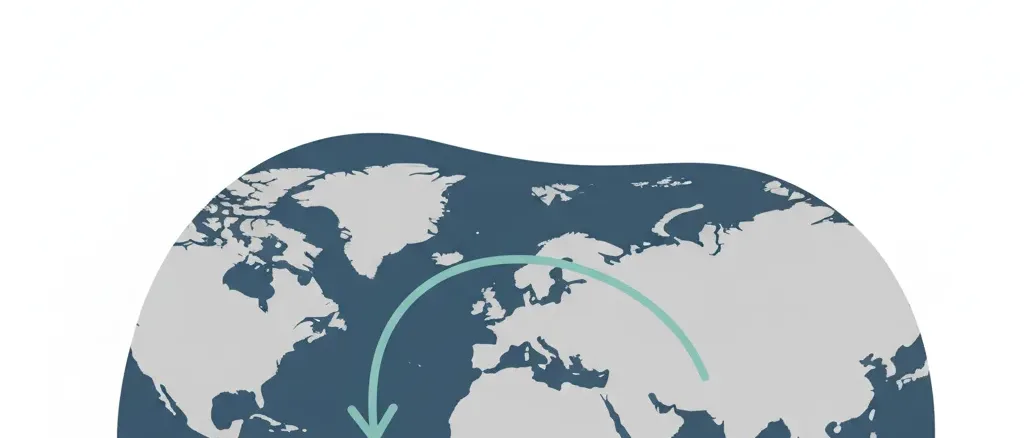
Hoàn lưu Đảo ngược Kinh tuyến Đại Tây Dương không phải là cụm từ quen thuộc, và khả năng sụp đổ của nó chỉ mới gần đây được chú ý rộng rãi. Truyền thông đại chúng có xu hướng dao động giữa xem nhẹ («các nhà khoa học nói băng chuyền đại dương đang chậm lại») và thảm họa hóa (các tiêu đề gợi nhắc bộ phim «The Day After Tomorrow», mà cảnh đóng băng tức thời của nó là hư cấu khoa học). Khái niệm điểm tới hạn của hoàn lưu đại dương đi vào nhận thức công chúng rộng hơn sau báo cáo IPCC năm 2021 và một lần nữa sau khi một bài báo gây tranh cãi năm 2023 dự đoán khả năng sụp đổ vào khoảng giữa thế kỷ. Khảo sát Nỗi sợ của Người Mỹ của Đại học Chapman không theo dõi riêng nhận thức về AMOC; dữ liệu lo âu khí hậu rộng hơn cho thấy khoảng 48 % người Mỹ báo cáo sợ hoặc rất sợ hiện tượng nóng lên toàn cầu và biến đổi khí hậu (Chapman 2024), nhưng các điểm tới hạn cụ thể như AMOC không được tách riêng. Rủi ro nằm ở đâu đó giữa việc bị sợ hãi tích cực và phần lớn không được nhận ra.
Ước tính sơ bộ: ~47,7 % người trưởng thành Mỹ báo cáo 'sợ' hoặc 'rất sợ' hiện tượng nóng lên toàn cầu và biến đổi khí hậu nói chung (Khảo sát Đại học Chapman, Đợt 10, 2024) — không tồn tại dữ liệu khảo sát riêng cho AMOC
Thực tế
~5 % xác suất AMOC sụp đổ đột ngột trước năm 2100 (IPCC 'rất khó xảy ra' = 0–10 %, nhất quán với SROCC 2019 / AR6)
Dân số toàn cầu — AMOC sụp đổ là sự kiện ở quy mô hành tinh, không có xác suất riêng theo nhóm dân số
Hiện cách tính
IPCC AR6 WG1 (2021) đánh giá rằng AMOC sẽ suy giảm 'rất có khả năng' trong suốt thế kỷ 21, với 'độ tin cậy trung bình rằng sự suy giảm sẽ không bao gồm một cuộc sụp đổ đột ngột trước năm 2100.' IPCC SROCC (2019) SPM (B.2.7) là đánh giá áp dụng thuật ngữ khả năng đã hiệu chỉnh 'rất khó xảy ra (độ tin cậy trung bình)' cho một cuộc sụp đổ AMOC. Ngôn ngữ đã hiệu chỉnh của IPCC: 'rất khó xảy ra' = 0–10 % xác suất. Dùng 5 % làm trung điểm của khoảng đó cho ra con số chính. Đây là xác suất của một sự kiện văn minh, không phải xác suất tử vong cá nhân: AMOC sụp đổ sẽ không giết chết ai ngay lập tức, nhưng sẽ kích hoạt một chuỗi hậu quả (nhiệt độ mùa đông ở châu Âu giảm 5-15°C, tăng tốc độ dâng mực nước biển ở Bờ Đông nước Mỹ, gián đoạn vành đai mưa nhiệt đới) mà tỷ lệ tử vong gián tiếp qua nhiều thập niên sẽ là đáng kể. Các nghiên cứu dựa trên quan trắc cho ra ước tính cao hơn đáng kể: Ditlevsen và Ditlevsen (2023, Nature Communications) suy ra một mốc sụp đổ trung tâm là năm 2057 với CI 95 % là 2025-2095 từ các tín hiệu cảnh báo sớm thống kê trong các chỉ dấu nhiệt độ bề mặt biển, ngụ ý xác suất >50 % trong vòng một đời trưởng thành 50 năm. Smolders et al. (2024) ước tính xác suất AMOC sụp đổ trước năm 2050 là 59 ± 17 % bằng các chỉ báo độ mặn dựa trên vật lý. Cả hai cách tiếp cận đều bị nhiều nhà hải dương học kỳ cựu tranh luận về mặt phương pháp, và một nghiên cứu tổ hợp 34 mô hình năm 2025 (Baker et al., Nature) phát hiện AMOC có sức chống chịu với sụp đổ dưới mọi kịch bản cưỡng bức được thử nghiệm. Dải bất định rộng (1-40 %) phản ánh sự bất đồng khoa học thực sự này, không đơn thuần là bất định thống kê quanh một phân phối đã biết. Các tinh chỉnh năm 2025 (bổ sung 2026-06-14) làm sắc nét câu hỏi về THỜI ĐIỂM mà không giải quyết được xác suất: van Westen et al. (2025, JGR Oceans) đặt thời điểm khởi phát sụp đổ gần năm 2063 (2026-2095, phân vị thứ 25-57) theo SSP2-4.5 với ngưỡng tới hạn gần ~2,5C, trong khi Drijfhout et al. (2025, ERL) phát hiện rằng trong các phần mở rộng CMIP6, sự ngừng hoàn toàn của hoàn lưu đảo ngược phía bắc diễn ra sau năm 2100 trong khoảng 50-100 năm ngay cả khi đã cam kết sớm hơn. Những kết quả này thắt chặt ước tính khởi phát trung tâm và củng cố sự phân biệt giữa khởi phát và hiện thực hóa, nhưng không cái nào là đánh giá lại của cơ quan chính thức, nên con số chính 5 % neo theo IPCC và dải 1-40 % được giữ nguyên.
Lưu ý: Con số chính 5 % tuân theo ngôn ngữ đã hiệu chỉnh 'rất khó xảy ra' của IPCC (0-1…
Con số chính 5 % tuân theo ngôn ngữ đã hiệu chỉnh 'rất khó xảy ra' của IPCC (0-10 % xác suất, độ tin cậy trung bình) — thuật ngữ 'rất khó xảy ra (độ tin cậy trung bình)' cho sụp đổ AMOC đến từ IPCC SROCC (2019) SPM (B.2.7), với AR6 WG1 (2021) diễn đạt lại thành 'độ tin cậy trung bình rằng sự suy giảm sẽ không bao gồm một cuộc sụp đổ đột ngột trước năm 2100.' Con số chính đại diện cho điểm neo đồng thuận khoa học chứ không phải toàn bộ dải các ước tính đã công bố. Các nghiên cứu dựa trên quan trắc (Ditlevsen 2023; Smolders et al. 2024) cho ra ước tính cao hơn đáng kể — 50-60 % xác suất sụp đổ vào khoảng giữa thế kỷ — nhưng các phương pháp này bị tranh luận về tính đại diện của chỉ dấu, độ dài chuỗi thời gian, và các giả định mô hình. Nghiên cứu tổ hợp 34 mô hình của Baker et al. 2025 lập luận cho sức chống chịu của AMOC dưới mọi kịch bản được thử nghiệm, ủng hộ đánh giá 'rất khó xảy ra' của IPCC. Cuộc tranh luận khoa học thực sự chưa ngã ngũ; dải bất định (1-40 %) phản ánh điều này chứ không đơn thuần là bất định thống kê quanh một tham số đã biết. 'Sụp đổ' AMOC trong mục này có nghĩa là sự suy giảm đột ngột, tự duy trì đến một trạng thái suy yếu nghiêm trọng — không phải sự suy yếu dần dần (hiện được đánh giá là 'rất có khả năng') vốn đã đang diễn ra. Hậu quả của sụp đổ sẽ diễn ra qua nhiều năm đến nhiều thập niên, không phải qua một đêm: nhiệt độ mùa đông ở châu Âu có thể giảm 5-15°C trong các thang thời gian 10-30 năm, mực nước biển ở Bờ Đông nước Mỹ sẽ dâng thêm 10-50 cm so với dự báo cơ sở, và các mô hình mưa nhiệt đới sẽ dịch chuyển đáng kể. Con số trọn đời là xác suất rằng sự kiện được kích hoạt, không phải rằng các hậu quả của nó được hiện thực hóa hoàn toàn, trong đời của người trưởng thành trọng tâm. Hai nghiên cứu năm 2025 làm sắc nét thời điểm mà không dịch chuyển con số chính. Van Westen et al. (2025, JGR Oceans), phân tích 25 mô hình khí hậu, ước tính AMOC sụp đổ có thể bắt đầu vào năm 2063 (khoảng 2026-2095) theo một kịch bản phát thải trung bình và vào năm 2055 theo phát thải cao, với ngưỡng tới hạn gần ~2,5C nóng lên toàn cầu — nhưng nhấn mạnh rằng một khi đã bắt đầu, để đạt một trạng thái suy yếu đáng kể phải mất hơn 100 năm. Drijfhout et al. (2025, Environmental Research Letters), xem xét các mô phỏng CMIP6 kéo dài sau năm 2100, phát hiện sự ngừng hoàn toàn của hoàn lưu đảo ngược sâu phía bắc xuất hiện sau năm 2100 trong tất cả các mô hình phát thải cao (SSP5-8.5) chạy đến mốc đó, và trong 37 % các mô hình phát thải trung bình vào năm 2300. Những kết quả này tinh chỉnh ước tính khởi phát trung tâm so với cảnh báo đơn nghiên cứu năm 2023 nhưng củng cố, chứ không lật đổ, khung diễn giải ở trên: một khởi phát vào giữa thế kỷ sẽ là một cam kết, không phải một cuộc sụp đổ hoàn tất trong đời của một người trưởng thành đang sống.
Rủi ro liên quan
Các rủi ro khác về chủ đề tương tự — để khám phá những nỗi sợ liên quan.
Điểm bùng phát WAIS
Xác suất vượt qua điểm bùng phát của Tảng băng Tây Nam Cực trong đời bạn là bao nhiêu?

Thảm họa chính phủ cực đoan
Khả năng một chính phủ cực đoan chính trị hủy hoại đất nước bạn một cách thảm khốc là bao nhiêu?






Chết do bão tuyết
Xác suất tử vong trong bão tuyết hoặc bão mùa đông nghiêm trọng là bao nhiêu?
Chọn đối thủ
The Atlantic Meridional Overturning Circulation is the vast network of ocean currents that transports warm surface water northward through the Atlantic and returns cold, deep water southward — the system responsible for northwestern Europe’s mild climate relative to its latitude. IPCC AR6 (2021) assessed that AMOC will “very likely” decline over the 21st century, with “medium confidence that the decline will not involve an abrupt collapse before 2100.” The earlier IPCC SROCC (2019) is the assessment that applied the calibrated “very unlikely (medium confidence)” likelihood term to an AMOC collapse — where “very unlikely” denotes a 0-10% probability. Using the midpoint of that calibrated range gives a ~5% lifetime probability of abrupt collapse before 2100. Caesar and colleagues (2018, Nature) documented that AMOC has already weakened by approximately 15% since the mid-twentieth century, using an independent sea-surface temperature fingerprinting approach that is consistent with RAPID array direct measurements begun in 2004.
The scientific debate is unusually polarised. Observation-based early-warning studies (Boers 2021, Nature Climate Change; Ditlevsen 2023, Nature Communications; van Westen 2024, Science Advances) identify statistical and physical signals consistent with AMOC approaching a tipping threshold, with Ditlevsen’s contested analysis predicting collapse most likely between 2025 and 2095. These findings imply a much higher probability than the IPCC consensus — in some estimates, 50-60% before mid-century. The counterargument came in February 2025 from Baker et al. (Nature), whose 34-model ensemble found AMOC resilient to collapse under all tested forcing scenarios, with Southern Ocean wind-driven upwelling sustaining the circulation even under extreme greenhouse gas concentrations. The IPCC’s “very unlikely” assessment rests primarily on this model-ensemble evidence. Both camps are publishing in leading peer-reviewed journals; the discrepancy is not a matter of one side being wrong in an obvious way.
Should AMOC collapse occur, the consequences within the following few decades would be substantial. Van Westen et al.’s consequence modelling projects European winter temperature drops of 5-15°C across northwestern Europe, with London’s average winter temperature falling from roughly 7°C to near 2°C and Oslo’s to well below -10°C. Sea level on the US East Coast would rise by an additional 10-50 cm above baseline sea level rise projections, as the ocean surface that AMOC currently depresses would rebound northward. The Amazon rainforest would face additional drying as tropical rainfall patterns shift. These are not immediate effects but decadal-to-century timescale consequences of a threshold crossing that, if it occurs, would likely be irreversible on any timescale relevant to human planning.
Thông tin liên quan
IPCC AR6 đánh giá việc AMOC sụp đổ đột ngột trước 2100 là "rất khó xảy ra", xác suất khoảng 5 phần trăm. Một số nghiên cứu dựa trên quan trắc cho rằng khả năng cao hơn, và dải bất định rất rộng.
Sổ cái xác nhận
Mỗi con số dưới đây là những gì mỗi nguồn đã báo cáo, cùng với trích dẫn nguyên văn mà chúng tôi dựa vào và cách chúng tôi đưa ra con số của mình. Nhấp vào bất kỳ liên kết nào để xác minh trực tiếp.
-
[1] Intergovernmental Panel on Climate Change (IPCC), Working Group I, Sixth Assessment Report — Climate Change 2021: The Physical Science Basis — Chapter 9: Ocean, Cryosphere and Sea Level Change
Climate Change 2021: The Physical Science Basis — Chapter 9: Ocean, Cryosphere and Sea Level ChangeSee all 2 Likelier entries citing this source →
- Thống kê
AMOC will 'very likely' decline over the 21st century for all SSP scenarios; there is 'medium confidence' that the decline will not involve an abrupt collapse before 2100- Trích đoạn
“"The Atlantic Meridional Overturning Circulation (AMOC) will very likely decline over the 21st century for all SSP scenarios. There is medium confidence that the decline will not involve an abrupt collapse before 2100." ”
- Dữ liệu nguồn từ
- 2021-08-09
- Truy cập
- 2026-05-09 · bản sao lưu trữ
- Tính toán
- AR6 WG1 Ch9 does not itself assign a numerical probability, nor does it use the "very unlikely" likelihood term for AMOC collapse — it states only "medium confidence that the decline will not involve an abrupt collapse before 2100." The "very unlikely (medium confidence)" characterization of an AMOC collapse is the IPCC SROCC (2019) SPM B.2.7 assessment (see the SROCC source below), which AR6 Ch9 is consistent with. Under the IPCC calibrated-language scale "very unlikely" = 0-10% probability; 5% is taken as the midpoint of that SROCC-defined range for the headline. The IPCC does not give a numerical probability; 5% is the author's interpretation of the calibrated-language midpoint. The 59-year adult lifetime window (age 18 to 77) maps roughly onto the "before 2100" horizon.
-
[2] Intergovernmental Panel on Climate Change (IPCC), SROCC 2019 — Special Report on the Ocean and Cryosphere in a Changing Climate — Summary for Policymakers (section B.2.7)
Special Report on the Ocean and Cryosphere in a Changing Climate — Summary for Policymakers (section B.2.7)- Thống kê
AMOC is projected to weaken in the 21st century under all RCPs ('very likely'), although a collapse is 'very unlikely' (medium confidence)- Trích đoạn
“"The AMOC is projected to weaken in the 21st century under all RCPs (very likely), although a collapse is very unlikely (medium confidence)." ”
- Dữ liệu nguồn từ
- 2019-09-25
- Truy cập
- 2026-07-11 · bản sao lưu trữ
- Tính toán
- This SROCC SPM statement (B.2.7) is the IPCC assessment that actually applies the "very unlikely (medium confidence)" likelihood term to an AMOC collapse. It is the grounding for the headline: under IPCC calibrated language "very unlikely" = 0-10% probability, and 5% is taken as the midpoint of that range. AR6 WG1 Ch9 (2021) restated this as "medium confidence that the decline will not involve an abrupt collapse before 2100," consistent with SROCC but without repeating the "very unlikely" term. Neither report gives a numerical probability; the 5% midpoint is the author's interpretation of the SROCC-stated calibrated-language range.
-
[3] Nature — Caesar, Rahmstorf et al., 2018 — Observed fingerprint of a weakening Atlantic Ocean overturning circulation
Observed fingerprint of a weakening Atlantic Ocean overturning circulation- Thống kê
AMOC has weakened by approximately 3 ± 1 sverdrups (around 15%) since the mid-20th century, revealed by characteristic sea-surface temperature fingerprint- Trích đoạn
“"The AMOC has weakened by about 3 ± 1 sverdrups (around 15 per cent) since the mid-twentieth century, revealed by a characteristic spatial and seasonal sea-surface temperature 'fingerprint' — consisting of a pattern of cooling in the subpolar Atlantic Ocean and warming in the Gulf Stream region." ”
- Dữ liệu nguồn từ
- 2018-04-11
- Truy cập
- 2026-05-09 · bản sao lưu trữ
- Tính toán
- Caesar et al. 2018 is the observational foundation for the AMOC weakening narrative. The 15% weakening since the mid-20th century is separate from the collapse-probability question — weakening and collapse are different states, and the IPCC projects continued weakening with high confidence even while assessing collapse as very unlikely. This source establishes that AMOC is not stable at its current state, providing the background against which collapse probability must be assessed.
- Độc lập
- Caesar et al. use an independent SST-based fingerprinting approach developed separately from the RAPID array direct measurements (which began in 2004) and from the statistical early-warning methods of Boers 2021 and Ditlevsen 2023. The three methodologies corroborate each other on the weakening trend.
-
[4] Nature Communications — Ditlevsen and Ditlevsen, 2023 — Warning of a forthcoming collapse of the Atlantic meridional overturning circulation
Warning of a forthcoming collapse of the Atlantic meridional overturning circulation- Thống kê
Statistical early-warning signals in SST proxies predict central AMOC collapse in 2057 (95% CI: 2025-2095); method is contested by multiple senior oceanographers- Trích đoạn
“"Data-driven estimators for the time of tipping predict a potential AMOC collapse mid-century under the current emission scenario, with a 95% confidence interval of 2025–2095." ”
- Dữ liệu nguồn từ
- 2023-07-25
- Truy cập
- 2026-05-09 · bản sao lưu trữ
- Tính toán
- Ditlevsen 2023 derives its estimate from statistical early-warning signals (variance and autocorrelation growth) in North Atlantic SST proxies interpreted as fingerprints of approaching instability. The method is contested: Prof. Penny Holliday (National Oceanography Centre) stated "sea surface temperature of the North Atlantic subpolar gyre is not a clear indicator of the state of the AMOC"; Prof. Niklas Boers (TU Munich) argued "uncertainties in the heavily oversimplified model assumptions... are too high"; Dr. Levke Caesar (Univ. Bremen) stated "the resulting time series are too short." This source represents the upper bound of the scientific plausibility range and is not the headline figure, but it anchors the upper end of the uncertainty band.
- Độc lập
- Ditlevsen 2023 is methodologically distinct from the IPCC's model-ensemble approach and from Caesar 2018's SST fingerprinting. It is included to represent the range of scientific opinion rather than as an independent confirmation of any single estimate.
-
[5] Science Advances — van Westen, Kliphuis and Dijkstra, 2024 — Physics-based early warning signal shows that AMOC is on tipping course
Physics-based early warning signal shows that AMOC is on tipping course- Thống kê
Freshwater transport indicator (F_ovS) shows significant negative trend over past 40 years, consistent with AMOC approaching tipping point; European temperature drops of 5-15°C projected in collapse scenario- Trích đoạn
“"Reanalysis products indicate that the present-day AMOC is on route to tipping... Temperature trends exceed 1°C per decade across northwestern Europe during collapse." ”
- Dữ liệu nguồn từ
- 2024-02-09
- Truy cập
- 2026-05-09 · bản sao lưu trữ
- Tính toán
- Van Westen 2024 uses a physics-based indicator (minimum of AMOC-induced freshwater transport, F_ovS) rather than statistical proxies. It finds a statistically significant negative trend of -1.20 mSv/year over the past 40 years, consistent with approach to tipping, but explicitly states inability to determine when tipping would occur. The consequence model run shows London's average winter temperature falling to ~1.9°C (from ~7°C today) and Oslo's to -16.5°C. These are consequences of full collapse, not of the current trajectory in isolation.
- Độc lập
- Van Westen et al. use a different indicator (F_ovS from ocean reanalysis products) than Ditlevsen 2023 (SST statistical signals) or Caesar 2018 (SST fingerprinting), providing genuinely independent physics-based evidence for AMOC approaching instability.
-
[6] Nature — Baker et al. (Met Office and University of Exeter), 2025 — Continued Atlantic overturning circulation even under climate extremes
Continued Atlantic overturning circulation even under climate extremes- Thống kê
34-model ensemble finds AMOC resilient to collapse under all tested greenhouse gas and freshwater forcing scenarios; Southern Ocean wind-driven upwelling sustains circulation- Trích đoạn
“"The AMOC is resilient to extreme greenhouse gas and North Atlantic freshwater forcings across 34 climate models." ”
- Dữ liệu nguồn từ
- 2025-02-19
- Truy cập
- 2026-05-09 · bản sao lưu trữ
- Tính toán
- Baker et al. 2025 is the primary model-based counterargument. The 34-model ensemble finds that Southern Ocean upwelling — not captured in the observation-based early-warning studies — sustains AMOC circulation even under extreme forcing. This mechanism explains why most CMIP climate models do not show AMOC collapse this century, which IPCC AR6 uses as the primary basis for its "very unlikely" assessment. Baker 2025 is cited here as a materially important dissenting view that anchors the lower end of the uncertainty range. The discrepancy between the observation-based (Ditlevsen, Boers, van Westen) and model-based (Baker, IPCC) views is the fundamental unresolved debate in AMOC science.
- Độc lập
- Baker et al. is methodologically opposed to the observation-based early-warning literature — it uses fully coupled climate models rather than statistical signals — and its conclusion directly contradicts the observation-based studies. Both methodologies are active areas of peer-reviewed research; neither has been refuted.
-
[7] Journal of Geophysical Research: Oceans — van Westen, Kliphuis and Dijkstra, 2025 — Physics-Based Indicators for the Onset of an AMOC Collapse Under Climate Change
Physics-Based Indicators for the Onset of an AMOC Collapse Under Climate Change- Thống kê
25-model analysis estimates AMOC collapse could begin by 2063 (2026-2095, 25th-57th percentiles) under SSP2-4.5, or by 2055 (2023-2076) under SSP5-8.5; tipping threshold near ~2.5C global warming- Trích đoạn
“"An analysis consisting of 25 different climate models shows that the AMOC could begin to collapse by 2063 (from 2026 to 2095, 25th to 57th percentiles) under an intermediate emission scenario (SSP2-4.5), or by 2055 (from 2023 to 2076, 25th to 75th percentiles) under a high-end emission scenario (SSP5-8.5). When the AMOC collapses, the Northwestern European climate changes drastically and this will likely induce severe societal impacts." ”
- Dữ liệu nguồn từ
- 2025-08-24
- Truy cập
- 2026-06-14 · bản sao lưu trữ
- Tính toán
- Van Westen et al. 2025 (JGR Oceans, Vol 130 Issue 8) develops a buoyancy-flux physics-based indicator for the ONSET of AMOC tipping — the moment the system becomes committed, not the moment a weakened state is reached. The paper's body places the multimodel-mean tipping threshold near ~2.5C of global warming above pre-industrial (the abstract states the onset years; the 2.5C / +2.48C figure is in the results text, paraphrased here, not in the verbatim excerpt). Critically, the paper states that once collapse begins it "takes more than 100 years to reach a substantially weaker state" — so a ~2063 onset under SSP2-4.5 describes a committed trajectory, not consequences realised within a focal adult's lifetime. This refines collapse TIMING relative to the contested 2023 single-study alarm but does not itself yield a numerical lifetime probability, so the 5% headline is unchanged; the result is recorded as a caveat and an assumptions addendum.
- Độc lập
- Van Westen 2025 (JGR) uses a buoyancy-flux onset indicator across 25 CMIP-class models — distinct from both the SSP-extension shutdown framing of the 2025 ERL CMIP6 study and the F_ovS reanalysis indicator of van Westen 2024 (Science Advances). It sits between the observation-based alarm and the model-based resilience views.