Chất lượng bằng chứng 4.75/5
Điểm đánh giá tám chiều theo tiêu chí chất lượng . Mỗi chiều được chấm từ 1–5.
- D1 Cơ sở nguồn
- 4/5
- D2 Uy tín nguồn
- 5/5
- D3 Tính toán
- 5/5
- D4 Sự không chắc chắn
- 5/5
- D5 Phạm vi
- 5/5
- D6 Văn bản
- 5/5
- D7 Sự trung thực về nhận thức
- 4/5
- D8 Tính đầy đủ của lưu ý
- 5/5
≈ Khả năng tương đương

Nhận thức
Viên giặt có màu sắc rực rỡ, nhỏ gọn và mềm — những đặc tính cũng mô tả một loại đồ chơi trẻ em. Cha mẹ có con nhỏ biết mơ hồ rằng viên giặt nguy hiểm, nhưng phần lớn hình dung điều này như «khóa các sản phẩm tẩy rửa lại» chứ không phải như một tình huống khẩn cấp gấp về thời gian với một hồ sơ mức độ nghiêm trọng cụ thể. Việc truyền thông đưa tin về trào lưu mạng xã hội «Tide Pod Challenge» (2018) tạm thời nâng cao nhận thức về độc tính của viên giặt, nhưng trong bối cảnh thanh thiếu niên cố tình ăn chúng chứ không phải trẻ nhỏ vô tình nuốt phải. Mối nguy cơ bản — rằng một viên giặt chứa chất tẩy rửa kiềm nồng độ cao có thể gây ức chế hô hấp, bỏng hóa chất thực quản, ức chế hệ thần kinh trung ương (CNS) và hôn mê ngay cả khi nuốt lượng nhỏ — không được hiểu phổ biến. Mối nguy được biết về mặt định hướng (cha mẹ biết viên giặt nguy hiểm) nhưng hồ sơ mức độ nghiêm trọng của nó, so với bột giặt/nước giặt truyền thống, bị đánh giá thấp đáng kể.
Ước tính sơ bộ: Hầu hết cha mẹ nhận thức rằng nên để viên giặt ngoài tầm với nhưng không có một con số cho mối nguy này; khoảng cách trong mô hình nhận thức nằm ở mức độ nghiêm trọng (nguy cơ nhập viện và hôn mê) so với một vụ ngộ độc nhẹ
Nguồn: trực giác của biên tập viên, không được thăm dò
Thực tế
~427 cuộc gọi phơi nhiễm trên mỗi 1 triệu trẻ em Mỹ dưới 6 tuổi mỗi năm (Gaw và cộng sự 2023, thời kỳ sau tiêu chuẩn)
Trẻ em Mỹ tuổi 0-5, các cuộc gọi phơi nhiễm đến Trung tâm Chống độc (NPDS), dữ liệu 2022
Hiện cách tính
Gaw và cộng sự (2023, Clinical Toxicology) báo cáo 427,4 cuộc gọi phơi nhiễm trên mỗi 1 triệu trẻ em Mỹ dưới 6 tuổi mỗi năm trong năm 2022, dựa trên Hệ thống Dữ liệu Chống độc Quốc gia (NPDS). Đây là các cuộc gọi trong đó một đứa trẻ bị phơi nhiễm với viên giặt — nuốt, tiếp xúc da, hoặc phơi nhiễm mắt — và một phụ huynh hoặc người chăm sóc đã liên hệ Trung tâm Chống độc. Trong số các phơi nhiễm đơn chất, 6 % dẫn đến các kết cục y tế nghiêm trọng (nhập viện, nhập ICU, hoặc can thiệp hô hấp). Tỷ lệ kết cục nghiêm trọng mỗi năm: 427,4 × 0,06 = 25,6 trên 100.000 trẻ em dưới 6 tuổi mỗi năm. Tính gộp qua cửa sổ sáu năm rủi ro cao nhất (tuổi 0-5): 25,6 × 6 / 100.000 = 0,1536 trên 1.000 = khoảng 1 trên 6.500. Tỷ lệ riêng cho nhập viện (dùng tỷ lệ nhập viện 4,47 % từ nghiên cứu Nationwide Children's năm 2014) cho ra 427,4 × 0,0447 × 6 / 1.000.000 ≈ 1 trên 8.700. Mọi con số là mức trung bình trên toàn dân số Mỹ qua cả các hộ gia đình dùng và không dùng viên giặt. Ở những hộ gia đình chủ động dùng viên giặt, tỷ lệ trên mỗi trẻ cao hơn khoảng 4-5 lần (với mức độ thâm nhập viên giặt vào hộ gia đình Mỹ ~20-25 %). Tiêu chuẩn an toàn tự nguyện (ASTM F3159-15, áp dụng năm 2015) đã giảm tỷ lệ chấn thương ED ở trẻ em 49-62 % so với đỉnh trước tiêu chuẩn (Lovegrove và cộng sự 2020); tỷ lệ hiện tại phản ánh thời kỳ sau tiêu chuẩn. Không có ca tử vong nhi khoa nào được ghi nhận trong nghiên cứu theo chiều dọc NPDS 2014-2022; tử vong ở trẻ em do nuốt viên giặt, dù được báo cáo trong tài liệu ca bệnh trước đó, là cực kỳ hiếm.
Lưu ý: Con số 1 trên 6.500 đại diện cho các kết cục y tế nghiêm trọng (nhập viện, ICU, …
Con số 1 trên 6.500 đại diện cho các kết cục y tế nghiêm trọng (nhập viện, ICU, can thiệp hô hấp) trong cửa sổ rủi ro cao nhất tuổi 0-5, trên toàn bộ dân số trẻ em Mỹ bao gồm cả các hộ gia đình không có viên giặt. Ở một hộ gia đình chủ động dùng viên giặt, tỷ lệ trên mỗi trẻ cao hơn khoảng 4-5 lần. «Kết cục y tế nghiêm trọng» trong giám sát NPDS bao gồm một phổ từ theo dõi ICU đến hôn mê và đặt nội khí quản — nó không đòi hỏi một kết cục tử vong. 9 ca tử vong trong giám sát theo chiều dọc 2014-2022 đều là người lớn trên 70 tuổi; không có ca tử vong nhi khoa nào xuất hiện trong bộ dữ liệu đó, dù các báo cáo ca bệnh trước đó, trước thời kỳ tiêu chuẩn an toàn tự nguyện, có bao gồm các ca tử vong nhi khoa. Tỷ lệ năm 2022 (427,4/triệu) thấp hơn đáng kể so với đỉnh trước tiêu chuẩn nhưng vẫn còn cao; tiêu chuẩn ASTM tự nguyện (2015) gắn với việc giảm 49-62 % tỷ lệ chấn thương ED, nhưng việc nuốt viên giặt vẫn tiếp diễn ở mức khoảng một cuộc gọi mỗi 44 phút trên toàn quốc. Mục này bao gồm tất cả các đường phơi nhiễm — nuốt, phơi nhiễm mắt và tiếp xúc da — nhưng nuốt mang mức độ nghiêm trọng cao nhất. Phơi nhiễm mắt gây bỏng hóa chất cần rửa nhưng hiếm khi có tác động toàn thân. So với việc nuốt pin cúc: viên giặt gây ra nhiều phơi nhiễm hơn nhưng ít kết cục nghiêm trọng hơn trên mỗi phơi nhiễm; pin cúc gây ra ít phơi nhiễm hơn nhiều nhưng có tỷ lệ kết cục thảm khốc trong phân nhóm lithium cỡ 20mm+.
Rủi ro liên quan
Các rủi ro khác về chủ đề tương tự — để khám phá những nỗi sợ liên quan.





Loạn sản xương hông trẻ sơ sinh
Tỷ lệ tàn tật do loạn sản xương hông ở trẻ sơ sinh không được điều trị là bao nhiêu?

Trẻ nuốt gói nicotine
Khả năng một trẻ nhỏ bị báo cáo lên trung tâm chống độc vì nuốt một gói nicotine là bao nhiêu?

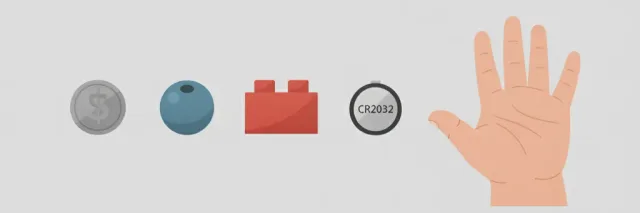
Trẻ nuốt dị vật (cấp cứu)
Xác suất một đứa trẻ nhỏ nuốt phải dị vật và cần được chăm sóc y tế là bao nhiêu?
Chọn đối thủ
Laundry detergent pods contain concentrated alkaline cleaning agents in a formulation with substantially less water than traditional liquid detergent, packaged in a thin water-soluble membrane that dissolves on contact with a wet surface — including the inside of a toddler’s mouth. When a child bites or squeezes a pod, the membrane ruptures and deposits the full concentrated dose of surfactant, builder, and enzyme directly onto mucosal tissue. The result is not an ordinary detergent exposure: Davis and colleagues (2016, Pediatrics) found that laundry pod exposures were associated with 4.8 to 23.5 times higher odds of hospitalization and 6.9 to 71.3 times higher odds of intubation than traditional detergent exposures in children. Both deaths in their 2013-2014 dataset were pod-associated; neither was from traditional detergent.
Gaw et al. (2023, Clinical Toxicology), analysing 114,826 exposure calls to US Poison Control Centers from 2014 to 2022, found that children under 6 account for 87% of all laundry pod exposures and the current annual exposure rate is 427 calls per million US children under 6. Six percent of single-substance exposures result in serious medical outcomes. Compounded across the six-year peak-risk window (ages 0-5), roughly 1 in 6,500 US children experience a serious medical outcome from a laundry pod exposure. In households that use pods, the rate is approximately four to five times higher. No confirmed pediatric deaths appear in the 2014-2022 surveillance dataset, though pediatric fatalities were reported in earlier case literature before the voluntary safety standard era.
The ASTM F3159-15 voluntary standard, published in October 2015, required compression resistance of at least 300 Newtons, a bitter aversive agent in the soluble film, and child-resistant outer packaging. Lovegrove et al. (2020, American Journal of Public Health) found the standard was associated with a 49-62% reduction in child ED injury rates, estimating it prevented 9,200 to 23,000 ED-treated injuries over 2015-2018. The current exposure rate (one Poison Control call every 44 minutes nationally) represents the floor of the voluntary-standard era. Mandatory PPPA-compliant child-resistant packaging, which some researchers and paediatricians have called for, has not been implemented; the persistence of exposures at this rate reflects the limits of voluntary measures and the ongoing challenge that the pods’ physical properties — compact, brightly coloured, soft, slightly translucent — remain similar to attractive objects in a toddler’s environment.
Thông tin liên quan
Khoảng 1 trên 6.500 trẻ Mỹ từ 0-5 tuổi gặp hậu quả y tế nghiêm trọng do tiếp xúc với viên giặt. Cha mẹ biết để viên giặt xa tầm tay nhưng đánh giá thấp mức độ nặng: viên giặt cô đặc có thể gây bỏng đường thở và hôn mê, không chỉ là khó chịu dạ dày nhẹ.
Sổ cái xác nhận
Mỗi con số dưới đây là những gì mỗi nguồn đã báo cáo, cùng với trích dẫn nguyên văn mà chúng tôi dựa vào và cách chúng tôi đưa ra con số của mình. Nhấp vào bất kỳ liên kết nào để xác minh trực tiếp.
1/5 nguồn được xác minh độc lập đúng từng chữ so với nguồn được trích dẫn
-
[1] Clinical Toxicology — Gaw, Center for Injury Research and Policy, Nationwide Children's Hospital, 2023 — Longitudinal trends in liquid laundry detergent packet exposures: 2014–2022 Đã xác minh
Longitudinal trends in liquid laundry detergent packet exposures: 2014–2022- Thống kê
114,826 total NPDS exposure calls (2014-2022); children under 6 account for 87% of calls; 2022 rate 427.4 per million children under 6; 6% serious medical outcomes; 9 deaths (all adults over 70); one call every 44 minutes in most recent 3-year period- Trích đoạn
“"Many families don't realize how toxic these highly concentrated laundry detergent packets can be... 114,826 total NPDS exposure calls, January 2014-December 2022... children under 6 [accounted for] 87% of all exposures... Annual rate (2022): 427.4 exposures per 1 million children under 6... 6% of single-substance exposures resulted in serious medical outcomes... 9 deaths over the 9-year period — all adults; 7 were over age 70; no child deaths." ”
- Dữ liệu nguồn từ
- 2023-12-15
- Truy cập
- 2026-05-09 · bản sao lưu trữ
- Xác minh
- Trích đoạn đã được tải lại độc lập và xác nhận đúng từng chữ so với nguồn được trích dẫn trong quá trình kiểm định căn cứ của chúng tôi.
- Tính toán
- 427.4/million/year is the primary exposure rate used for native numerator. The 6% serious-outcome rate is applied to this to compute normalized lifetime figure: 427.4 × 0.06 × 6 years / 1,000,000 = 0.0001537 ≈ 1 in 6,500. The 9 deaths in 2014-2022 were all adults; no confirmed pediatric deaths in this systematic surveillance period, although earlier case reports document pediatric deaths before the voluntary safety standard era.
-
[2] American Journal of Public Health — Lovegrove et al., 2020 — Impact of the Voluntary Safety Standard for Liquid Laundry Packets on Child Injuries Treated in US Hospital Emergency Departments, 2012–2018
Impact of the Voluntary Safety Standard for Liquid Laundry Packets on Child Injuries Treated in US Hospital Emergency Departments, 2012–2018- Thống kê
ASTM F3159-15 voluntary standard associated with 49-62% reduction in child ED injury rate; prevented 9,200-23,000 ED-treated injuries (2015-2018); ED visit rate fell from peak ~5,700/year to ~3,340/year by 2018- Trích đoạn
“"The voluntary standard may have reduced the child injury rate by 49.4% to 61.6% from levels that would have been expected in the absence of the voluntary standard... [and] may have prevented 9,200 to 23,000 ED-treated injuries from 2015 to 2018." ”
- Dữ liệu nguồn từ
- 2020-07-01
- Truy cập
- 2026-05-09 · bản sao lưu trữ
- Tính toán
- The pre-standard peak of ~5,700 child ED visits/year and post-standard ~3,340/year (2018) reflect the effect of ASTM F3159-15 (compression resistance ≥300 N, bitter aversive agent, child-resistant outer packaging). The current rate in Gaw 2023 (2022 data) has continued to decline modestly from the 2018 level. Lovegrove provides the trajectory context showing that the current hazard profile is substantially improved from the pre-standard peak but has not reached zero.
- Độc lập
- Lovegrove et al. use NEISS-based ED visit data from the CDC WISQARS system, which is methodologically independent of Gaw et al.'s NPDS call-based surveillance. The two approaches measure different endpoints (ED visits vs. poison control calls) and confirm each other's order of magnitude.
-
[3] CDC Morbidity and Mortality Weekly Report, October 12, 2012 — Health Hazards Associated with Laundry Detergent Pods — United States, May–June 2012
Health Hazards Associated with Laundry Detergent Pods — United States, May–June 2012- Thống kê
80% of children under 5 exposed to pods had minor, moderate, or major adverse effects; significantly higher vomiting (55% vs 34%), drowsiness/lethargy (7% vs 2%) than non-pod detergent exposure- Trích đoạn
“"Among children aged ≤5 years, a significantly greater proportion of those exposed to laundry detergent from pods had gastrointestinal and respiratory adverse health effects and mental status changes... 80% of pod-exposed children under 5 had adverse effects vs 63% for non-pod exposures." ”
- Dữ liệu nguồn từ
- 2012-10-12
- Truy cập
- 2026-05-09 · bản sao lưu trữ
- Tính toán
- This is the earliest CDC surveillance report on pod-specific toxicity in children, establishing the pre-standard baseline for severity comparison. The 80% adverse-effect rate vs. 63% for non-pod detergents, and the notably higher drowsiness/lethargy (7% vs. 2%), documented the CNS-depression component of pod toxicity that distinguishes it from ordinary detergent exposure. Used here for severity context rather than for current rate estimation.
-
[4] Pediatrics — Davis, Casavant, Spiller, Chounthirath & Smith, 2016 — Pediatric Exposures to Laundry and Dishwasher Detergents in the United States: 2013-2014
Pediatric Exposures to Laundry and Dishwasher Detergents in the United States: 2013-2014- Thống kê
Laundry pod exposures vs. traditional detergent: OR 3.9-8.2 for clinical effects; OR 4.8-23.5 for hospitalisation; OR 6.9-71.3 for intubation; OR 8.4-22.6 for serious medical outcome; 2 deaths associated with pods vs. zero with traditional detergent (2013-2014)- Trích đoạn
“"The odds of clinical effects (3.9-8.2), hospitalisation (4.8-23.5), intubation (6.9-71.3), and serious medical outcomes (8.4-22.6) were significantly higher for laundry detergent packet exposures than for other types of detergent." ”
- Dữ liệu nguồn từ
- 2016-06-20
- Truy cập
- 2026-05-09 · bản sao lưu trữ
- Tính toán
- Davis et al. is the head-to-head comparison that quantifies how much more dangerous pods are than traditional detergent — the source for the "5-8x more dangerous" claims in public health communications. The intubation OR upper bound of 71.3 is the most striking single figure: it means that in the most severe scenarios, pod exposure was associated with intubation at a rate up to 71 times higher than traditional detergent exposure. This source anchors the severity framing rather than the rate calculation.
- Độc lập
- Davis et al. draw from the 2013-2014 NPDS data among children under 6 using a comparison of pod vs. non-pod detergent outcomes. Methodologically distinct from the longitudinal trend analyses of Gaw 2023 and the ED-visit-based approach of Lovegrove 2020.
-
[5] Nationwide Children's Hospital, Center for Injury Research and Policy — New Study Finds Liquid Laundry Detergent Packet Exposure Burden among Young Children Remains; Increase in Exposures among Older Children, Teens, and Adults
New Study Finds Liquid Laundry Detergent Packet Exposure Burden among Young Children Remains; Increase in Exposures among Older Children, Teens, and Adults- Thống kê
Researchers recommend that all liquid laundry detergent packet packaging be made PPPA-compliant and that each packet be individually wrapped in child-resistant packaging, beyond the current voluntary ASTM standard- Trích đoạn
“"Requiring that all liquid laundry detergent packet packaging be PPPA-compliant would be an important next step in reducing child access to these products." "Each laundry packet should be individually wrapped with child-resistant packaging, which would provide important layers of protection for this highly toxic product." ”
- Dữ liệu nguồn từ
- 2024-01-22
- Truy cập
- 2026-07-03 · bản sao lưu trữ
- Tính toán
- Institutional press release accompanying the Gaw et al. (2023) Clinical Toxicology study (source above), issued by the same research group (Nationwide Children's Hospital Center for Injury Research and Policy). Cited only to substantiate the body text's closing claim that mandatory Poison Prevention Packaging Act (PPPA)-compliant, individually wrapped child-resistant packaging — beyond the current voluntary ASTM standard — is a specific recommendation researchers have made; not used for the headline exposure-rate arithmetic, which rests on the peer-reviewed Gaw et al. statistic above.
- Độc lập
- Same research group and underlying dataset as the Gaw et al. (2023) peer-reviewed source above; included separately because the policy-recommendation language (PPPA compliance) appears in the institutional press release rather than the journal excerpt already quoted.