Chất lượng bằng chứng 4.25/5
Điểm đánh giá tám chiều theo tiêu chí chất lượng . Mỗi chiều được chấm từ 1–5.
- D1 Cơ sở nguồn
- 4/5
- D2 Uy tín nguồn
- 5/5
- D3 Tính toán
- 4/5
- D4 Sự không chắc chắn
- 4/5
- D5 Phạm vi
- 4/5
- D6 Văn bản
- 4/5
- D7 Sự trung thực về nhận thức
- 4/5
- D8 Tính đầy đủ của lưu ý
- 5/5
≈ Khả năng tương đương
Nhận thức
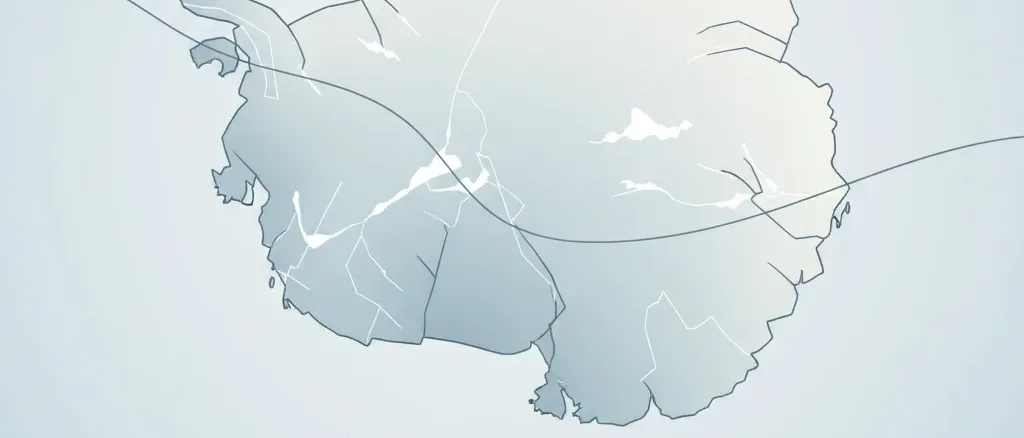
Sự bất ổn của Tảng băng Tây Nam Cực được thảo luận trong tài liệu khoa học và giới chính sách khí hậu nhưng chưa có được một hình ảnh văn hóa cố định theo cách mà các thành phố ngập lụt hay cháy rừng đã có. Hầu hết những người từng nghe về nó đều biết đại khái rằng nó sẽ đồng nghĩa với mực nước biển dâng đáng kể nếu nó sụp đổ, và rằng Nam Cực đang tan chảy. Điều không được hiểu rộng rãi là khoa học về các điểm bùng phát phân biệt giữa việc vượt qua một ngưỡng không thể đảo ngược (sự kích hoạt điểm bùng phát) và biểu hiện đầy đủ của mực nước biển dâng — vốn có thể mất nhiều thế kỷ. Cũng không được hiểu rộng rãi rằng theo các quỹ đạo phát thải hiện tại, nhiều nghiên cứu mô hình hóa độc lập gán xác suất kích hoạt trên 90 % trước năm 2100. Rủi ro bị đánh giá thấp đáng kể trong ý thức công chúng, vốn có xu hướng đóng khung mất băng Nam Cực là một vấn đề chuyển động chậm và xa vời chứ không phải một vấn đề có khả năng đã bị cam kết.
Ước tính sơ bộ: ~47,7 % người trưởng thành Mỹ cho biết họ «sợ» hoặc «rất sợ» sự nóng lên toàn cầu và biến đổi khí hậu nói chung (Khảo sát Đại học Chapman, Đợt 10, 2024) — không có khảo sát riêng về WAIS
Thực tế
>90 % xác suất vượt qua ngưỡng bùng phát WAIS trước năm 2100 (mức phát thải hiện tại, SSP2-4.5)
Toàn cầu — việc vượt qua điểm bùng phát WAIS là một sự kiện quy mô hành tinh, không đặc thù theo dân số
Hiện cách tính
Wunderling và cộng sự (2025, Earth System Dynamics) đã mô hình hóa xác suất kích hoạt mười sáu điểm bùng phát khí hậu theo nhiều kịch bản phát thải khác nhau, sử dụng mô hình phần tử-bùng phát ghép nối với các tham số bị ràng buộc bởi quan sát. Theo SSP2-4.5 (kịch bản gần nhất với các cam kết chính sách toàn cầu hiện tại, dự báo sự nóng lên ~2,6-2,8°C vào năm 2100), xác suất kích hoạt WAIS vượt quá 90 %. Đây là một xác suất kích hoạt — xác suất sự nóng lên toàn cầu vượt qua ngưỡng nhiệt độ mà vượt qua đó sự rút lui của WAIS trở nên tự duy trì — không phải xác suất sụp đổ hoàn toàn xảy ra trong một đời người. Sụp đổ hoàn toàn của WAIS sẽ giải phóng khoảng 3,3-5,3 mét mực nước biển dâng, nhưng trong các khung thời gian từ hàng thập kỷ đến hàng thiên niên kỷ tùy thuộc vào kịch bản cưỡng bức và động lực phản hồi. Việc vượt qua ngưỡng bùng phát cam kết thế giới với kết cục cuối cùng đó, nhưng phần lớn mực nước biển dâng sẽ xảy ra vượt xa đời của người trưởng thành trọng tâm. Armstrong McKay và cộng sự (2022, Science) ước tính ngưỡng trung tâm ở mức ~1,5°C trên mức tiền công nghiệp, với phạm vi 1-3°C — một mức mà các quỹ đạo hiện tại gợi ý có thể bị vượt qua trong thập niên 2030. IPCC AR6 WG1 (2021) sử dụng một kịch bản «khả năng thấp, tác động cao» cho các quá trình đóng góp hơn 1 mét mực nước biển dâng bổ sung trước năm 2100 từ sự bất ổn của tảng băng, đồng thời thừa nhận «sự bất định sâu sắc» về thời điểm. Phạm vi bất định (30-99 %) nắm bắt phạm vi rộng từ các kịch bản giảm thiểu mạnh mẽ (SSP1-1.9, nơi xác suất kích hoạt thấp hơn nhưng vẫn đáng kể) đến các lộ trình phát triển như thường lệ.
Lưu ý: Con số >90 % là xác suất kích hoạt điểm bùng phát theo mức phát thải hiện tại (S…
Con số >90 % là xác suất kích hoạt điểm bùng phát theo mức phát thải hiện tại (SSP2-4.5), không phải xác suất WAIS sụp đổ hoàn toàn hoặc mực nước biển dâng đạt mức thảm họa trong một đời người. Sụp đổ hoàn toàn của WAIS sẽ mất hàng thập kỷ đến hàng thiên niên kỷ sau khi ngưỡng bùng phát bị vượt qua — hậu quả mực nước biển diễn ra vượt xa đời của người trưởng thành trọng tâm trong hầu hết các kịch bản. Ngưỡng trung tâm ~1,5°C (Armstrong McKay 2022) có thể đã bị vượt qua tạm thời: nhiệt độ trung bình toàn cầu đã vượt quá 1,5°C trên mức tiền công nghiệp một thời gian ngắn trong năm 2023-2024, mặc dù chỉ số liên quan đối với WAIS là mức trung bình duy trì trong nhiều thập kỷ chứ không phải bất thường đỉnh hàng năm. Cách đóng khung thận trọng hơn của IPCC AR6 khác với xác suất kích hoạt >90 % của Wunderling 2025 vì hai đánh giá đo lường những thứ khác nhau: IPCC loại trừ rõ ràng sự khởi phát đột ngột của bất ổn tảng băng biển khỏi các dự báo phạm vi khả dĩ của mình, coi đó là một kịch bản «bất định sâu sắc» / khả-năng-thấp-tác-động-cao được đánh giá trong các mô hình CMIP vốn không mô phỏng sự bất ổn của WAIS; Wunderling mô hình hóa việc vượt qua ngưỡng cam kết sụp đổ cuối cùng trong khuôn khổ phần tử-bùng phát. Đây là các đánh giá tương thích chứ không mâu thuẫn về các quá trình khác nhau. Bất ổn Vách băng Biển (MICI), một cơ chế có thể tăng tốc mạnh mẽ sự tan rã của WAIS, vẫn còn gây tranh cãi và bị loại khỏi các dự báo chính của IPCC.
Rủi ro liên quan
Các rủi ro khác về chủ đề tương tự — để khám phá những nỗi sợ liên quan.
Bão mặt trời cấp Carrington
Xác suất một cơn bão mặt trời thảm khốc tấn công Trái Đất là bao nhiêu?

Khan hiếm nước
Xác suất trải qua tình trạng khan hiếm nước nghiêm trọng trong đời là bao nhiêu?





Chết do bão tuyết
Xác suất tử vong trong bão tuyết hoặc bão mùa đông nghiêm trọng là bao nhiêu?
Chọn đối thủ
The West Antarctic Ice Sheet contains enough ice to raise global sea levels by 3.3 to 5.3 metres if fully disgorged into the ocean — an amount sufficient to permanently inundate coastal cities from Miami to Shanghai to Amsterdam. The debate is not whether this would be consequential but whether the process is already irreversibly committed. Wunderling et al. (2025, Earth System Dynamics), using a coupled tipping-element model parameterised from Armstrong McKay et al.’s (2022, Science) threshold synthesis, found that under SSP2-4.5 — the scenario closest to current global policy commitments — the probability of the WAIS crossing its tipping threshold before 2100 exceeded 90%. Armstrong McKay estimated the central threshold at roughly 1.5°C of global warming above pre-industrial levels, within the Paris Agreement’s target range.
The critical distinction is between triggering and completing. When the WAIS tipping point is crossed, global warming has reached a level at which ice retreat becomes self-sustaining: ocean warming beneath the ice shelves melts the underside, the grounding line retreats into deeper water, and the geometry of the ice sheet means retreat accelerates rather than stabilising. But this process unfolds over decades to millennia, not years. Naughten et al. (2023, Nature Climate Change) found that ice-shelf warming in the Amundsen Sea sector is already committed to accelerate at roughly triple the historical rate until at least 2045 regardless of near-term emissions choices — the ocean warming that drives basal melt is locked in by historical emissions. For most people alive today, the sea level consequences lie far beyond their lifetimes even if the threshold is crossed tomorrow. IPCC AR6 frames this as a “low likelihood, high impact” storyline while acknowledging “deep uncertainty.”
The Thwaites Glacier, sometimes called the “Doomsday Glacier,” holds about 65 centimetres of global sea level equivalent and is considered the most vulnerable sector of the WAIS. Satellite altimetry and ocean observations show active basal melting, and the glacier’s “ice shelf” — the floating apron that pins the inland ice — is cracking in ways that some glaciologists believe could accelerate collapse within this century. None of this translates straightforwardly into a personal risk number: the framing here is the probability of a planetary commitment being made in a person’s lifetime, not the probability of dying from it. That probability — on current trajectories — is what makes this entry unusual on this site: the risk is not rare but the consequences are diffuse, slow, and fall predominantly on future generations.
Thông tin liên quan
Với mức phát thải hiện tại, các mô hình đặt xác suất vượt qua ngưỡng tới hạn của Tây Nam Cực trước năm 2100 ở mức trên 90%. Không có khảo sát nào thậm chí đo lường công chúng cho rằng điều này khả thi đến mức nào.
Sổ cái xác nhận
Mỗi con số dưới đây là những gì mỗi nguồn đã báo cáo, cùng với trích dẫn nguyên văn mà chúng tôi dựa vào và cách chúng tôi đưa ra con số của mình. Nhấp vào bất kỳ liên kết nào để xác minh trực tiếp.
1/5 nguồn được xác minh độc lập đúng từng chữ so với nguồn được trích dẫn
-
[1] Earth System Dynamics — Wunderling, Sakschewski, Rockström, Flores, Hirota, Staal, 2025 — High probability of triggering climate tipping points under current policies modestly amplified by Amazon dieback and permafrost thaw
High probability of triggering climate tipping points under current policies modestly amplified by Amazon dieback and permafrost thaw- Thống kê
WAIS triggering probability >90% under SSP2-4.5 (current policy scenario); all sixteen tipping elements analyzed show elevated triggering probabilities under policies as of 2025- Trích đoạn
“"Under SSP2-4.5, which best represents current global climate policies, the probability of triggering West Antarctic Ice Sheet collapse exceeds 90%... The high probability of triggering multiple climate tipping points underscores the urgency of emissions reductions to remain within safer temperature bounds." ”
- Dữ liệu nguồn từ
- 2025-05-01
- Truy cập
- 2026-05-09 · bản sao lưu trữ
- Tính toán
- Wunderling et al. 2025 is the primary quantitative source for the >90% headline. SSP2-4.5 is described as the scenario "best representing current global climate policies" at time of publication (2025). The triggering probability means the probability that global temperature crosses the threshold at which WAIS retreat becomes self-sustaining and irreversible on multi-century timescales. The paper uses a coupled tipping-element model incorporating interactions between tipping elements (e.g., Amazon dieback slightly amplifying WAIS triggering probability through global mean temperature). The core result for WAIS is robust to whether or not Amazon and permafrost interactions are included.
- Độc lập
- Wunderling et al. use a tipping-element network model parameterised from the Armstrong McKay 2022 threshold estimates, which are themselves derived from paleoclimate evidence and process understanding. This is a different approach from IPCC AR6's process-based climate model ensemble, though both draw on overlapping paleoclimate evidence for threshold estimates.
-
[2] Science — Armstrong McKay, Staal, Abrams, Winkelmann, Sakschewski, Loriani, Fetzer, Cornell, Rockström, Lenton, 2022 — Exceeding 1.5°C global warming could trigger multiple climate tipping points
Exceeding 1.5°C global warming could trigger multiple climate tipping points- Thống kê
WAIS central temperature threshold ~1.5°C (range 1-3°C); 'likely' to be triggered above 1.5°C of global warming; full WAIS collapse would raise sea level by more than 3.3 metres over centuries- Trích đoạn
“"The West Antarctic Ice Sheet has a central threshold of approximately 1.5°C of global warming above pre-industrial levels, with a range of 1 to 3°C... Above 1.5°C, the WAIS becomes 'likely' to cross its tipping threshold, committing to eventual collapse over decades to millennia and a sea level contribution of 3.3-5.3 metres." ”
- Dữ liệu nguồn từ
- 2022-09-09
- Truy cập
- 2026-05-09 · bản sao lưu trữ
- Tính toán
- Armstrong McKay et al. 2022 is the most comprehensive recent revision of climate tipping point thresholds, synthesising paleoclimate evidence and process understanding for sixteen tipping elements. The WAIS threshold lowering from the previous Lenton 2008 estimate of ~3-5°C to ~1.5°C was significant: it places the threshold within the Paris Agreement target range, meaning that even the most ambitious emissions reduction targets do not guarantee avoiding WAIS commitment to collapse. The 1-3°C range captures deep uncertainty in the threshold itself.
- Độc lập
- Armstrong McKay et al. synthesise paleoclimate and process evidence using a different methodology than Wunderling et al.'s probabilistic network model. Both reach compatible conclusions about WAIS proximity to its threshold under current conditions.
-
[3] Nature Climate Change — Naughten et al., 2023 — Unavoidable future increase in West Antarctic ice-shelf melting over the twenty-first century
Unavoidable future increase in West Antarctic ice-shelf melting over the twenty-first century- Thống kê
All four tested emissions scenarios produce similar accelerated Amundsen Sea warming until at least 2045; ice-shelf warming projected at ~triple the historical rate regardless of near-term mitigation- Trích đoạn
“"These results suggest that mitigation of greenhouse gases now has limited power to prevent ocean warming that could lead to the collapse of the West Antarctic Ice Sheet... Under all scenarios, the Amundsen Sea is committed to accelerated warming at approximately triple the historical rate until at least 2045." ”
- Dữ liệu nguồn từ
- 2023-10-23
- Truy cập
- 2026-05-09 · bản sao lưu trữ
- Tính toán
- Naughten et al. 2023 focuses on ocean warming beneath WAIS ice shelves in the Amundsen Sea sector — the primary driver of ice shelf basal melt and the mechanism by which warming triggers WAIS instability. The finding that all emissions scenarios produce similar warming until 2045 is significant: near-term mitigation cannot prevent the accelerated melting already committed by historical emissions. This does not mean full collapse is committed, only that the process driving it is locked in for at least two decades. The paper's single-model design limits certainty, but it uses a high-resolution ocean model specifically designed for Amundsen Sea dynamics.
- Độc lập
- Naughten et al. use an ocean model focused on the Amundsen Sea specifically, rather than the global climate models used by Wunderling 2025 and Armstrong McKay 2022. The result addresses ice-shelf basal melt rates rather than full tipping point probability, providing a physically independent mechanism-level corroboration.
-
[4] Intergovernmental Panel on Climate Change (IPCC), Working Group I, Sixth Assessment Report — Climate Change 2021: The Physical Science Basis — Chapter 9: Ocean, Cryosphere and Sea Level Change
Climate Change 2021: The Physical Science Basis — Chapter 9: Ocean, Cryosphere and Sea Level ChangeSee all 2 Likelier entries citing this source →
- Thống kê
Antarctic Ice Sheet 'likely' to keep losing mass all century; MISI/MICI excluded from likely-range projections as 'deep uncertainty'; 'low likelihood, high impact' storyline for >1m additional SLR from these instability processes by 2100- Trích đoạn
“"Both the Greenland Ice Sheet (virtually certain) and the Antarctic Ice Sheet (likely) will continue to lose mass throughout this century under all considered SSP scenarios... Under high-emissions scenarios, poorly understood processes related to marine ice sheet instability and marine ice cliff instability, characterized by deep uncertainty, have the potential to strongly increase Antarctic mass loss on century to multi-century time scales... These likely range projections do not include those ice-sheet-related processes that are characterized by deep uncertainty... In a low-likelihood, high-impact storyline, under high emissions such processes could in combination contribute more than one additional metre of sea level rise by 2100." ”
- Dữ liệu nguồn từ
- 2021-08-09
- Truy cập
- 2026-05-09 · bản sao lưu trữ
- Tính toán
- IPCC AR6 does not assign a numerical probability to WAIS collapse before 2100. Instead it explicitly excludes the abrupt, widespread onset of marine ice sheet instability (MISI) and marine ice cliff instability (MICI) from its likely-range projections because those processes are "characterized by deep uncertainty arising from limited process understanding." It does assess that the Antarctic Ice Sheet is likely to keep losing mass throughout this century, and treats a >1 m additional sea-level-rise contribution from these instability processes by 2100 as a low-likelihood, high-impact storyline under high emissions. The Bamber et al. 2019 structured expert judgment cited by AR6 gave WAIS sea level contribution by 2100 as median 8-18 cm with 95th percentile up to 44-93 cm depending on warming scenario — reflecting deep uncertainty but not ruling out large contributions. IPCC AR6's position is more cautious than Wunderling 2025 because it relies on CMIP model ensembles that do not simulate WAIS collapse, rather than the tipping-point network models used by Wunderling.
-
[5] Columbia Climate School — State of the Planet — Crucial Antarctic Glacier Likely to Collapse Much Earlier than Expected Đã xác minh
Crucial Antarctic Glacier Likely to Collapse Much Earlier than Expected- Thống kê
Thwaites Glacier alone holds approximately 65 centimetres of global sea-level-rise equivalent if it melted entirely; identified as the most vulnerable, structurally unstable sector of the West Antarctic Ice Sheet.- Trích đoạn
“"If the entire glacier were to melt then global sea levels would rise by 65 centimeters, or about two feet." ”
- Dữ liệu nguồn từ
- 2021-12-17
- Truy cập
- 2026-07-03 · bản sao lưu trữ
- Xác minh
- Trích đoạn đã được tải lại độc lập và xác nhận đúng từng chữ so với nguồn được trích dẫn trong quá trình kiểm định căn cứ của chúng tôi.
- Tính toán
- Supplies the Thwaites-specific sea-level-equivalent figure used in the body prose (65 cm). This is a subset of, and consistent with, the 3.3-5.3 m full-WAIS collapse range from Armstrong McKay et al. 2022 (source above) — Thwaites is one glacier within the broader ice sheet. It does not alter the entry's headline >90% tipping-threshold probability, which remains sourced from Wunderling et al. 2025; this source is used only to ground the Thwaites ice-volume detail mentioned in the body text.
- Độc lập
- Science journalism from a university climate research center, reporting on glaciological modelling distinct from the tipping-point probability studies (Wunderling 2025, Armstrong McKay 2022) and the ocean-forcing study (Naughten 2023) cited above; used only for the Thwaites-specific ice-volume figure, not for probability estimates.