Chất lượng bằng chứng 4.25/5
Điểm đánh giá tám chiều theo tiêu chí chất lượng . Mỗi chiều được chấm từ 1–5.
- D1 Cơ sở nguồn
- 4/5
- D2 Uy tín nguồn
- 5/5
- D3 Tính toán
- 4/5
- D4 Sự không chắc chắn
- 4/5
- D5 Phạm vi
- 4/5
- D6 Văn bản
- 4/5
- D7 Sự trung thực về nhận thức
- 4/5
- D8 Tính đầy đủ của lưu ý
- 5/5
● yếu tố của bạn — nhấp vào rủi ro này ▾ để hiển thị
- Yếu tố của bạn
≈ Khả năng tương đương
Nhận thức
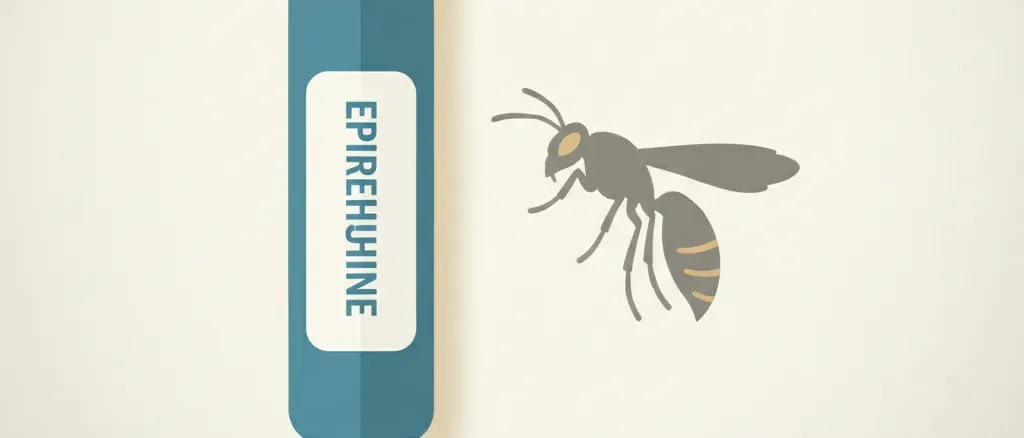
Sốc phản vệ do vết đốt có một hồ sơ nhận thức bất thường: những người mang theo bút tiêm tự động epinephrine biết chính xác rủi ro của mình và có xu hướng nắm giữ nó một cách chính xác, trong khi hầu hết những người chưa từng phản ứng cho rằng thành tích trọn đời «đã từng bị đốt trước đây, không sao cả» khiến họ về cơ bản an toàn. Bằng chứng không ủng hộ cách hiểu thứ hai đó: khoảng một nửa tổng số phản ứng đốt gây tử vong ở Hoa Kỳ xảy ra ở những người không có tiền sử phản ứng dị ứng toàn thân trước đó.
Ước tính sơ bộ: những người trưởng thành không dị ứng có xu hướng đoán rủi ro cá nhân gần như bằng không; tỷ lệ trọn đời thực tế là khoảng 1 trên 50 đối với các phản ứng nghiêm trọng
Nguồn: trực giác của biên tập viên, không được thăm dò
Thực tế
~3 % người trưởng thành Mỹ báo cáo một phản ứng dị ứng toàn thân với vết đốt trong đời
người trưởng thành Mỹ
Hiện cách tính
Golden (Immunology and Allergy Clinics of North America, 2007, PMC1961691) và ACAAI đều báo cáo rằng các phản ứng dị ứng toàn thân với vết đốt xảy ra ở khoảng 3 % người trưởng thành Mỹ trong đời họ. Con số 3 % (≈7,8 triệu trong số 260 triệu người trưởng thành) là tử số có thể bảo vệ rộng nhất — nó bao gồm các phản ứng toàn thân chỉ có mày đay ngoài sốc phản vệ tim mạch hoặc hô hấp đầy đủ. Phần nhỏ đáp ứng định nghĩa lâm sàng chặt chẽ hơn về sốc phản vệ (Müller Độ III–IV: hạ huyết áp, co thắt phế quản, hoặc mất ý thức, cần epinephrine) là khoảng hai phần ba các phản ứng toàn thân ở người lớn, cho ra xác suất trọn đời khoảng 2 % (~1 trên 50). Giá trị chuẩn hóa 0,02 được sử dụng vì câu hỏi cụ thể hỏi về sốc phản vệ cần epinephrine chứ không phải các phản ứng chỉ có mày đay. Các ranh giới bất định bao quanh trần 3 % đầy đủ và sàn thận trọng 1 % tương ứng với tỷ lệ dị ứng nọc độc được chẩn đoán.
Lưu ý: Con số trọn đời 3 % bao gồm tất cả các phản ứng đốt toàn thân ở người trưởng thà…
Con số trọn đời 3 % bao gồm tất cả các phản ứng đốt toàn thân ở người trưởng thành Mỹ, bao gồm các đợt nhẹ hơn chỉ có mày đay có thể không cần epinephrine. Sốc phản vệ tim mạch/hô hấp nghiêm ngặt (kịch bản nơi bút epinephrine thực sự cứu sống) là một phần nhỏ, được ước tính ở đây là ~2 % trọn đời. Rủi ro rất không đồng đều: những người có phản ứng toàn thân trước đó đối mặt với khả năng 25–70 % phản ứng lại khi bị đốt lại, trong khi những người đã hoàn thành liệu pháp miễn dịch nọc độc giảm rủi ro của họ khoảng ~95 %. Đáng chú ý, khoảng một nửa tổng số phản ứng đốt gây tử vong ở Hoa Kỳ xảy ra ở những người không có tiền sử dị ứng toàn thân trước đó — nên một thành tích trọn đời «chưa bao giờ phản ứng xấu» không loại bỏ rủi ro, nó chỉ chuyển một người vào phần rủi ro thấp hơn của phân bố dân số.
Rủi ro liên quan
Các rủi ro khác về chủ đề tương tự — để khám phá những nỗi sợ liên quan.


Nuốt phải ong
Xác suất vô tình nuốt phải ong sống và bị phản ứng đường thở nguy hiểm là bao nhiêu?

Dị ứng thực phẩm ở người lớn
Xác suất phát triển dị ứng thực phẩm khi đã trưởng thành là bao nhiêu?




Chọn đối thủ
About 3% of US adults will experience a systemic allergic reaction to a bee or wasp sting at some point in their life — roughly 1 in 33. The subset that meets the clinical threshold for anaphylaxis (cardiovascular or respiratory involvement: hypotension, bronchospasm, or loss of consciousness) sits at roughly 2% lifetime, or about 1 in 50. These are not exotic numbers; for comparison, the lifetime probability of dying in a car crash is around 1 in 93, so sting-triggered anaphylaxis is in the same order of magnitude as one of the most-cited benchmark risks in everyday life.
What makes this fear tractable is that it has a highly effective treatment: epinephrine given promptly converts what would otherwise be a life-threatening event into one with very low fatality. The ~220,000 annual US emergency department visits for sting allergic reactions resolve with ~62 deaths per year — a case fatality rate around 0.03% among those who reach an ED. The gap between “systemic anaphylaxis event” and “death from it” is almost entirely explained by access to and timing of epinephrine. The practical implication for the roughly 1–2% of adults with a confirmed venom allergy is straightforward: carrying a prescribed auto-injector and knowing how to use it transforms the risk profile substantially.
A finding worth flagging: per the allergy literature, roughly half of fatal sting reactions in the US occur in people with no prior history of a systemic allergic response. This does not mean the average person should carry an epi-pen — the absolute risk per sting for a non-allergic adult is still very small — but it does mean that a lifetime record of uneventful stings is not a reliable signal of permanent safety. First systemic reactions can and do occur in middle age and beyond, with no warning from prior sting tolerance. Anyone who develops more than local swelling after a sting warrants allergy evaluation.
Thông tin liên quan
Khoảng ~3% người lớn ở Mỹ cho biết từng có phản ứng dị ứng toàn thân với một vết đốt côn trùng vào lúc nào đó — tức khoảng ~1 trên 50 cả đời. Người lớn không dị ứng thường cho rằng rủi ro của mình gần như bằng không, nhưng phần lớn phản ứng xảy ra ở người không có tiền sử.
Sổ cái xác nhận
Mỗi con số dưới đây là những gì mỗi nguồn đã báo cáo, cùng với trích dẫn nguyên văn mà chúng tôi dựa vào và cách chúng tôi đưa ra con số của mình. Nhấp vào bất kỳ liên kết nào để xác minh trực tiếp.
1/3 nguồn được xác minh độc lập đúng từng chữ so với nguồn được trích dẫn
-
[1] Immunology and Allergy Clinics of North America (Golden DBK) / PubMed Central — Insect Sting Anaphylaxis
Insect Sting AnaphylaxisSee all 2 Likelier entries citing this source →
- Thống kê
Systemic allergic reactions reported by up to 3% of US adults; ≥50 fatal sting reactions per year; ~half of fatal reactions occur with no prior history- Trích đoạn
“"Systemic allergic reactions are reported by up to 3% of adults, and almost 1% of children have a medical history of severe sting reactions … At least 50 fatal sting reactions occur each year in the United States … Half of all fatal reactions occur with no history of previous sting reactions." ”
- Dữ liệu nguồn từ
- 2007-05-01
- Truy cập
- 2026-05-04 · bản sao lưu trữ
- Tính toán
- Primary source for the 3% lifetime systemic reaction prevalence. The normalized value of 0.02 uses the ~2/3 severe-within-systemic fraction (Grade III–IV, epi-requiring) to arrive at a ~2% lifetime probability.
- Độc lập
- Draws from clinical allergy and venom-IgE serology literature, independent of death-certificate or NEISS ED-visit data streams.
-
[2] American Academy of Family Physicians / American Family Physician — Stinging Insect Allergy
Stinging Insect AllergySee all 2 Likelier entries citing this source →
- Thống kê
Systemic allergic reactions to insect stings occur in about 1% of children and 3% of adults; at least 50 fatal reactions per year in the US; half of sting-related deaths occur with the first systemic reaction- Trích đoạn
“"Systemic allergic reactions to insect stings are estimated to occur in about 1 percent of children and 3 percent of adults … At least 50 fatal reactions to insect stings are reported each year in the United States, and many sting fatalities may not be recognized … Studies have shown that one half of sting-related deaths occur with the first systemic reaction." ”
- Dữ liệu nguồn từ
- 2003-06-15
- Truy cập
- 2026-05-04 · bản sao lưu trữ
- Tính toán
- Independently corroborates the 3% adult systemic-reaction prevalence used for the native numerator (this AAFP review gives "about 1 percent of children and 3 percent of adults"). It also corroborates the Golden 2007 fatality framing: at least 50 fatal reactions per year in the US, with one half of sting-related deaths occurring with the first systemic reaction — supporting the caveat that a record of uneventful stings is not proof of permanent safety.
- Độc lập
- AAFP review drawing on epidemiological literature independent of the Golden 2007 PMC source above.
-
[3] Scientific Reports (Nature) / Zhang, Wang, Quan, Yan, Zeng, Fang, Yang — A prediction nomogram for mortality in patients following wasp stings: a retrospective study Đã xác minh
A prediction nomogram for mortality in patients following wasp stings: a retrospective study- Thống kê
Hymenoptera stings prompt approximately 220,000 US emergency department visits per year and cause an average of 62 deaths annually, a case-fatality rate of roughly 0.03% among those who reach an ED- Trích đoạn
“"Annually, Hymenoptera stings prompt approximately 220,000 emergency department visits and cause an average of 62 deaths in the United States, making stings from hornets, wasps, and bees the deadliest of all venomous animal encounters." ”
- Dữ liệu nguồn từ
- 2024-10-31
- Truy cập
- 2026-07-03 · bản sao lưu trữ
- Xác minh
- Trích đoạn đã được tải lại độc lập và xác nhận đúng từng chữ so với nguồn được trích dẫn trong quá trình kiểm định căn cứ của chúng tôi.
- Tính toán
- Source for the ED-visit and case-fatality figures in the body text: 62 deaths / 220,000 ED visits ≈ 0.028%, rounded to "around 0.03%." The article attributes the underlying US figure to Forrester, Weiser & Forrester, "An update on fatalities due to venomous and nonvenomous animals in the United States (2008-2015)," Wilderness Environ Med 29 (2018): 36-44.
- Độc lập
- Draws on ED-visit surveillance (via the cited Forrester et al. 2018 fatality review) rather than the clinical allergy/venom-IgE literature used by the Golden and AAFP sources above.