Chất lượng bằng chứng 4.63/5
Điểm đánh giá tám chiều theo tiêu chí chất lượng . Mỗi chiều được chấm từ 1–5.
- D1 Cơ sở nguồn
- 5/5
- D2 Uy tín nguồn
- 5/5
- D3 Tính toán
- 4/5
- D4 Sự không chắc chắn
- 4/5
- D5 Phạm vi
- 5/5
- D6 Văn bản
- 5/5
- D7 Sự trung thực về nhận thức
- 4/5
- D8 Tính đầy đủ của lưu ý
- 5/5
● yếu tố của bạn — nhấp vào rủi ro này ▾ để hiển thị
- Yếu tố của bạn
≈ Khả năng tương đương

Nhận thức
Đu đưa trẻ bằng tay, cùng trượt xuống cầu trượt và cõng trên vai đều mang lại cảm giác vui vẻ và an toàn — chấn thương có vẻ như một kết cục khó xảy ra của trò chơi gắn kết bình thường. Các hoạt động này đủ phổ biến đến mức hầu hết cha mẹ đã làm tất cả chúng nhiều lần mà không có sự cố gì, điều này củng cố trực giác rằng tác hại về cơ bản chỉ là giả định. Các cơ chế cụ thể mà qua đó mỗi hoạt động có thể gây chấn thương thì không được biết đến rộng rãi.
Nguồn: trực giác của biên tập viên, không được thăm dò
Thực tế
~6 trên 10.000 trẻ em dưới 6 tuổi mỗi năm đến phòng cấp cứu với trật khớp khuỷu tay ở trẻ (bán trật chỏm quay - radial head subluxation)
Trẻ em Mỹ từ 0–5 tuổi
Số lần gặp trung bình trọn đời: ~59 (1/yr × 59 yr)
Hiện cách tính
Tỷ lệ cấp cứu dựa trên NEISS là 6 trên 10.000 trẻ em ≤6 tuổi/năm (Rangan và cộng sự 2021) là một biên dưới — nó chỉ đếm các ca được điều trị tại phòng cấp cứu. Các ước tính ở cấp cộng đồng từ tài liệu lâm sàng (Aberdeen, 1990, được trích dẫn rộng rãi) đặt tỷ lệ sự kiện thực sự vào khoảng 1 % mỗi năm (10 trên 1.000) cho trẻ em trong cửa sổ nguy cơ đỉnh điểm. Nguy cơ đỉnh điểm là tuổi 1–4 (khoảng 3 năm phơi nhiễm đáng kể); dây chằng vòng khỏe lên rõ rệt sau 5 tuổi. Ước tính trung tâm: 1 % × 3 năm = 3 %, với biên dưới dùng tỷ lệ chỉ-NEISS (0,6/1.000 × 3 = 0,18 %, làm tròn thành 0,012 cho biên dưới một-phía thận trọng) và biên trên bao gồm chẩn đoán thiếu nhẹ (2 %/năm × 3 = 6 %). Phạm vi: subgroup_lifetime (thời thơ ấu sớm, không phải trọn đời người trưởng thành).
Lưu ý: Trật khớp khuỷu tay ở trẻ thường được điều trị bằng một thao tác nắn chỉnh thủ c…
Trật khớp khuỷu tay ở trẻ thường được điều trị bằng một thao tác nắn chỉnh thủ công đơn giản chỉ mất vài giây và không cần gây mê an thần, bó bột hay gây tê; hầu hết trẻ em sử dụng lại cánh tay bình thường trong vòng vài phút sau khi nắn. Tình trạng này không liên quan đến một gãy xương thật sự. Gãy xương do trượt cầu trượt trong lòng ít gặp hơn về con số tuyệt đối nhưng có hậu quả lâm sàng nặng hơn — gãy xương chày thường cần bó bột 3–6 tuần. Các hoạt động này về bản chất không nguy hiểm trong bất kỳ dịp cụ thể nào: nguy cơ mỗi lần là thấp, và hầu hết trẻ em bị đu đưa bằng tay hoặc được đưa xuống cầu trượt trong lòng cha mẹ sẽ không bao giờ bị thương. Yếu tố nguy cơ chính đối với trật khớp khuỷu tay ở trẻ là tuổi dưới 3, khi chỏm quay chưa phát triển hoàn toàn. Cõng trên vai và cõng kiểu piggyback mang nguy cơ ngã nếu người lớn mất thăng bằng, nhưng không có tỷ lệ chấn thương dựa trên dân số cụ thể nào được xác lập rõ ràng cho các hoạt động này.
Rủi ro liên quan
Các rủi ro khác về chủ đề tương tự — để khám phá những nỗi sợ liên quan.

Trẻ ngã chấn thương đầu
Xác suất một đứa trẻ bị chấn thương nghiêm trọng ở đầu hoặc mắt do ngã là bao nhiêu?

Chấn thương đồ chơi cần cấp cứu (trẻ em)
Khả năng một đứa trẻ phải đến phòng cấp cứu vì chấn thương liên quan đến đồ chơi là bao nhiêu?




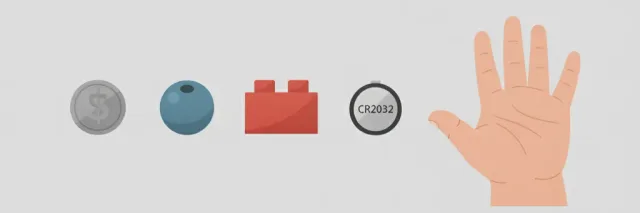
Trẻ nuốt dị vật (cấp cứu)
Xác suất một đứa trẻ nhỏ nuốt phải dị vật và cần được chăm sóc y tế là bao nhiêu?

Tử vong do ngủ chung
Tỷ lệ trẻ sơ sinh tử vong do ngủ chung giường hoặc chia sẻ giường là bao nhiêu?
Chọn đối thủ
The most thoroughly documented injury from common childhood play activities is nursemaid’s elbow (radial head subluxation) — a partial dislocation of the elbow caused when the arm is pulled sharply or swung while the forearm is pronated. In US emergency departments, children aged six and under present with this injury at a rate of approximately 6 per 10,000 per year (NEISS data, 2004–2018), though this is a floor: community studies place the true incidence closer to 1% per year across the peak-risk window of ages one to four, since many reductions occur at primary care or, after the first episode, at home. The condition accounts for more than 20% of upper extremity injuries in young children and is one of the most common reasons a toddler is brought to an emergency department with a painful or unmoving arm. Swinging a child by the hands or wrists is an explicitly named mechanism alongside pulling and lifting by one arm.
A less widely known but better-controlled finding concerns the family slide. A NEISS-based study of 12,686 playground slide injuries in children aged five and under (2002–2015, Jennissen et al., Injury Epidemiology 2018) found that children riding on an adult’s lap had 49.5 times higher odds of a lower leg or ankle fracture than children sliding solo (OR 49.5, 95% CI 31.7–77.4). The mechanism is counterintuitive: the slide looks safe because the parent is behind and in control, but if the child’s foot catches the edge or inner wall of the slide chute, the adult’s momentum continues forward while the child’s lower leg is held in place, generating a torsional force sufficient to fracture the tibia. An earlier case series (Gaffney, Journal of Pediatric Orthopedics 2009) found that all eight tibia fractures sustained on playground slides in an eleven-month review occurred while the child was on an adult’s lap — none occurred during independent sliding.
Risk for nursemaid’s elbow is concentrated in the first three years of life: the annular ligament is immature during this period, and the radial head can slip beneath it with traction forces that would be inconsequential in an older child. After age five, the ligament strengthens markedly and the injury becomes rare. Once the subluxation occurs, the recurrence rate is approximately 20%, meaning the annular ligament remains a weak point until it matures. Treatment is a closed reduction — a specific rotation of the forearm performed in seconds without sedation — and most children resume normal arm use within minutes. For piggyback or shoulder-carry, the documented risk is primarily from falls if the adult loses balance; no injury-specific epidemiology comparable to nursemaid’s elbow data exists for this activity.
Thông tin liên quan
Khoảng 3 trên 100 trẻ bị trật khớp khuỷu do kéo tay trước 6 tuổi, một dạng bán trật chỏm xương quay do giật mạnh cánh tay khi đu hoặc nhấc trẻ lên. Trông có vẻ đáng sợ nhưng bác sĩ thường nắn lại chỉ trong vài giây mà không để lại di chứng.
Sổ cái xác nhận
Mỗi con số dưới đây là những gì mỗi nguồn đã báo cáo, cùng với trích dẫn nguyên văn mà chúng tôi dựa vào và cách chúng tôi đưa ra con số của mình. Nhấp vào bất kỳ liên kết nào để xác minh trực tiếp.
3/4 nguồn được xác minh độc lập đúng từng chữ so với nguồn được trích dẫn
-
[1] European Journal of Orthopaedic Surgery & Traumatology — Trends and epidemiology of radial head subluxation in the United States from 2004 to 2018 Đã xác minh
Trends and epidemiology of radial head subluxation in the United States from 2004 to 2018- Thống kê
6.03 per 10,000 children ≤6 years per year (ED-treated); ~253,578 total cases 2004–2018- Trích đoạn
“"The overall annual rate of RHS per 10,000 children ≤ 6 years was 6.03 (95% CI = 4.85–7.58). The rate significantly increased from 5.18 (95% CI 2.96–7.39) in 2004 to 7.69 (95% CI = 4.63–10.75) in 2018. An estimated total 253,578 children 6 years or younger were treated for RHS." ”
- Dữ liệu nguồn từ
- 2021-08-01
- Truy cập
- 2026-05-02 · bản sao lưu trữ
- Xác minh
- Trích đoạn đã được tải lại độc lập và xác nhận đúng từng chữ so với nguồn được trích dẫn trong quá trình kiểm định căn cứ của chúng tôi.
- Tính toán
- NEISS national sample, 2004–2018. The rate of 6.03 per 10,000/year is used as the native numerator (6) per 10,000 denominator. This is an ED-treated rate only; community-level incidence (including primary care and self-resolved reductions) is higher. Pulling mechanisms accounted for 36.2% of cases, swinging and similar arm-traction mechanisms for the remainder alongside falls. The native figure intentionally uses the conservative ED rate; the normalized central estimate uses the higher 1%/year community-level figure (Aberdeen-origin, cited in clinical literature) over 3 peak-risk years.
-
[2] Injury Epidemiology (Springer) — Playground slide-related injuries in preschool children: increased risk of lower extremity injuries when riding on laps
Playground slide-related injuries in preschool children: increased risk of lower extremity injuries when riding on laps- Thống kê
OR 49.5 (95% CI 31.7–77.4) for lower leg/ankle fracture when child rides on adult's lap vs. riding solo- Trích đoạn
“"When a young child is going down a slide on the lap of another person, their foot may catch on the slide's surfaces including the inner side or bottom of the slide. The lower leg can then twist and be pulled backward as both proceed down the slide. Children identified as riding on another person's lap had 43 times higher odds (OR 43.0, 95% CI 32.0–58.0) of lower extremity injury versus other body parts, and 49.5 times higher odds (95% CI 31.7–77.4) of lower leg/ankle fracture compared with other fracture locations." ”
- Dữ liệu nguồn từ
- 2018-04-09
- Truy cập
- 2026-05-02 · bản sao lưu trữ
- Tính toán
- NEISS-based study of 12,686 playground slide injuries in children ≤5 years (2002–2015), estimating >350,000 total US slide injuries in the period. Lap-riding was documented in 644 cases (5% of total), with infants most affected (34% of under-1s, 15% of 1-year-olds). The OR of 49.5 for lower leg/ankle fracture is used as the effect-size anchor for the lap-slide paragraph in prose. Not used in the native→normalized arithmetic (which uses nursemaid's elbow as the primary axis) but establishes the lap-slide fracture risk as the secondary quantified finding.
-
[3] Gaffney JT — Journal of Pediatric Orthopedics, 2009 — Tibia fractures in children sustained on a playground slide Đã xác minh
Tibia fractures in children sustained on a playground slide- Thống kê
8 of 58 tibia fractures (13.8%) reviewed over an 11-month period were sustained on a playground slide; all 8 occurred while the child rode down on an adult's lap, none while sliding independently- Trích đoạn
“"During the period of study, 58 fractures of the tibia were found. Eight (13.8%) of the tibia fractures were sustained while playing on a playground slide... All tibia fractures associated with playing on a slide were sustained while going down the slide on the lap of an adult. None of the 8 children studied went down the slide alone." ”
- Dữ liệu nguồn từ
- 2009-09-01
- Truy cập
- 2026-07-03 · bản sao lưu trữ
- Xác minh
- Trích đoạn đã được tải lại độc lập và xác nhận đúng từng chữ so với nguồn được trích dẫn trong quá trình kiểm định căn cứ của chúng tôi.
- Tính toán
- Single-institution case series (Gaffney, 2009) reviewing all tibia fractures presenting over an 11-month period; 8 of 58 (13.8%) were slide-related, and all 8 occurred while the child rode down the slide on an adult's lap rather than independently. Used in body prose as a second, independent confirmation of the lap-riding mechanism established in the larger Jennissen et al. (2018) NEISS-based study; not used in the native/normalized arithmetic, which is anchored on the nursemaid's-elbow NEISS rate.
- Độc lập
- Single-institution case-series chart review, methodologically independent of the national NEISS-based surveillance study (Jennissen et al. 2018) and of the StatPearls nursemaid's-elbow reference.
-
[4] NCBI Bookshelf / StatPearls — Nursemaid Elbow — StatPearls Đã xác minh
Nursemaid Elbow — StatPearls- Thống kê
Represents >20% of upper extremity injuries in children; recurrence rate ~20%; resolves with closed reduction in seconds- Trích đoạn
“"Radial head subluxation (RHS) is common in children 1 to 4 years of age and represents more than 20% of upper extremity injuries in children. The injury occurs when a child is swung around by the arms, or lifted by one arm. Recurrence rate is approximately 20%. Treatment involves closed reduction, and this can be performed in a few seconds without sedation. It occurs less commonly in children older than the age of 5 because the annular ligament strengthens with age." ”
- Dữ liệu nguồn từ
- 2024-01-01
- Truy cập
- 2026-05-02 · bản sao lưu trữ
- Xác minh
- Trích đoạn đã được tải lại độc lập và xác nhận đúng từng chữ so với nguồn được trích dẫn trong quá trình kiểm định căn cứ của chúng tôi.
- Tính toán
- Used to establish: (1) swinging by arms as a named mechanism of nursemaid's elbow, (2) recurrence rate of ~20% quoted in the personal_factor_multipliers section, (3) that the condition accounts for >20% of upper extremity injuries in children, (4) age boundary (resolves after 5) underlying the 3-year peak window used in normalized assumptions. Not used in the primary arithmetic; supports narrative claims.