Kualitas bukti 4.75/5
Skor tinjauan delapan dimensi terhadap rubrik kualitas . Setiap dimensi dinilai 1–5.
- D1 Dasar sumber
- 5/5
- D2 Otoritas sumber
- 5/5
- D3 Aritmetika
- 3/5
- D4 Ketidakpastian
- 5/5
- D5 Cakupan
- 5/5
- D6 Prosa
- 5/5
- D7 Kejujuran persepsi
- 5/5
- D8 Kelengkapan peringatan
- 5/5
≈ Sama mungkinnya dengan
Dipersepsikan
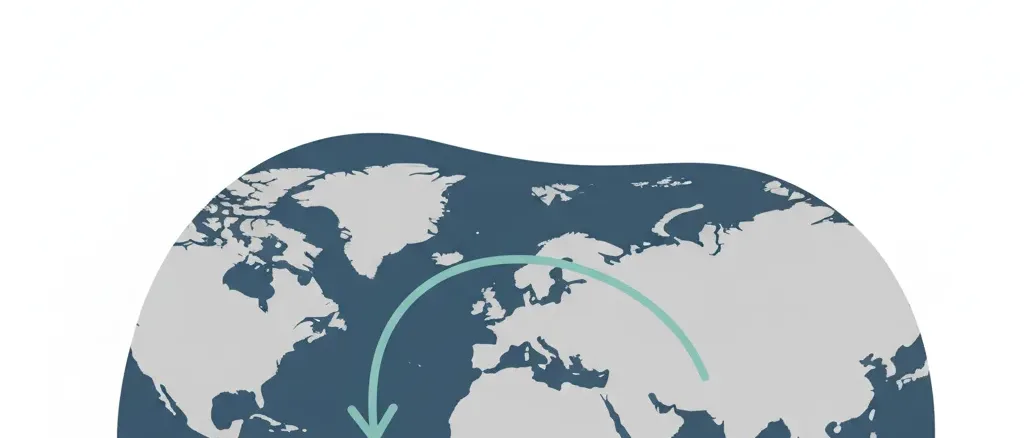
Atlantic Meridional Overturning Circulation bukanlah istilah sehari-hari, dan potensi keruntuhannya baru belakangan ini memperoleh visibilitas arus utama. Liputan populer cenderung berayun antara pengabaian («ilmuwan mengatakan sabuk konveyor laut sedang melambat») dan katastrofisme (berita utama yang mengangkat film «The Day After Tomorrow», yang penggambaran pembekuan seketikanya adalah fiksi ilmiah). Konsep titik kritis sirkulasi laut memasuki kesadaran publik yang lebih luas setelah laporan IPCC 2021 dan kembali setelah sebuah makalah kontroversial pada 2023 memperkirakan keruntuhan berpotensi terjadi pada pertengahan abad. Survey of American Fears dari Chapman University tidak melacak kesadaran akan AMOC secara khusus; data kecemasan iklim yang lebih luas menunjukkan kira-kira 48 % warga Amerika melaporkan merasa takut atau sangat takut terhadap pemanasan global dan perubahan iklim (Chapman 2024), tetapi titik-titik kritis spesifik seperti AMOC tidak dipilah. Risiko ini berada di antara ditakuti secara aktif dan sebagian besar tidak dikenali.
Perkiraan kasar: ~47,7 % orang dewasa AS melaporkan merasa «takut» atau «sangat takut» terhadap pemanasan global dan perubahan iklim secara umum (Chapman University Survey, Wave 10, 2024) — tidak ada data survei khusus AMOC
Aktual
~5 % probabilitas keruntuhan mendadak AMOC sebelum 2100 (IPCC «sangat tidak mungkin» = 0–10 %, SROCC 2019 / AR6 konsisten)
Populasi global — keruntuhan AMOC adalah peristiwa berskala planet tanpa probabilitas spesifik populasi
Tampilkan perhitungan
IPCC AR6 WG1 (2021) menilai bahwa AMOC «sangat mungkin» menurun sepanjang abad ke-21, dengan «keyakinan sedang bahwa penurunan tersebut tidak akan melibatkan keruntuhan mendadak sebelum 2100». IPCC SROCC (2019) SPM (B.2.7) adalah penilaian yang menerapkan istilah kemungkinan terkalibrasi «sangat tidak mungkin (keyakinan sedang)» pada keruntuhan AMOC. Bahasa terkalibrasi IPCC: «sangat tidak mungkin» = probabilitas 0–10 %. Menggunakan 5 % sebagai titik tengah rentang tersebut menghasilkan angka utama. Ini adalah probabilitas peristiwa peradaban, bukan probabilitas kematian pribadi: keruntuhan AMOC tidak akan langsung membunuh siapa pun, tetapi akan memicu rangkaian konsekuensi (penurunan suhu musim dingin Eropa sebesar 5-15°C, percepatan kenaikan permukaan laut di Pantai Timur AS, gangguan sabuk curah hujan tropis) yang mortalitas tak langsungnya selama beberapa dekade akan substansial. Studi berbasis observasi menghasilkan estimasi yang jauh lebih tinggi: Ditlevsen dan Ditlevsen (2023, Nature Communications) menurunkan tanggal keruntuhan sentral 2057 dengan 95 % CI dari 2025-2095 berdasarkan sinyal peringatan dini statistik pada proksi suhu permukaan laut, menyiratkan probabilitas >50 % dalam masa hidup dewasa 50 tahun. Smolders et al. (2024) memperkirakan probabilitas keruntuhan AMOC sebelum 2050 sebesar 59 ± 17 % menggunakan indikator salinitas berbasis fisika. Kedua pendekatan dipersoalkan atas dasar metodologis oleh sejumlah ahli oseanografi senior, dan sebuah studi ansambel 34-model pada 2025 (Baker et al., Nature) menemukan AMOC tahan terhadap keruntuhan di bawah semua skenario pemaksaan yang diuji. Pita ketidakpastian yang lebar (1-40 %) mencerminkan ketidaksepakatan ilmiah yang sesungguhnya ini, bukan sekadar ketidakpastian statistik di sekitar distribusi yang diketahui. Penyempurnaan 2025 (ditambahkan 2026-06-14) mempertajam pertanyaan WAKTU tanpa menyelesaikan probabilitasnya: van Westen et al. (2025, JGR Oceans) menempatkan awitan keruntuhan mendekati 2063 (2026-2095, persentil ke-25–ke-57) di bawah SSP2-4.5 dengan ambang titik kritis mendekati ~2,5C, sementara Drijfhout et al. (2025, ERL) menemukan bahwa dalam perluasan CMIP6 penghentian penuh overturning utara berlangsung setelah 2100 selama 50-100 tahun bahkan ketika telah terkomit lebih awal. Ini memperketat estimasi awitan sentral dan memperkuat pembedaan awitan-vs-realisasi, tetapi keduanya bukan penilaian ulang badan resmi, sehingga angka utama berbasis IPCC 5 % dan pita 1-40 % dipertahankan tanpa perubahan.
Catatan: Angka utama 5 % mengikuti bahasa terkalibrasi IPCC «sangat tidak mungkin» (proba…
Angka utama 5 % mengikuti bahasa terkalibrasi IPCC «sangat tidak mungkin» (probabilitas 0-10 %, keyakinan sedang) — istilah «sangat tidak mungkin (keyakinan sedang)» untuk keruntuhan AMOC berasal dari IPCC SROCC (2019) SPM (B.2.7), dengan AR6 WG1 (2021) menyatakannya kembali sebagai «keyakinan sedang bahwa penurunan tersebut tidak akan melibatkan keruntuhan mendadak sebelum 2100». Angka utama mewakili jangkar konsensus ilmiah alih-alih rentang penuh estimasi yang dipublikasikan. Studi berbasis observasi (Ditlevsen 2023; Smolders et al. 2024) menghasilkan estimasi yang jauh lebih tinggi — probabilitas keruntuhan 50-60 % pada pertengahan abad — tetapi metode-metode ini dipersoalkan atas keterwakilan proksi, panjang deret waktu, dan asumsi model. Studi ansambel 34-model Baker et al. 2025 berpendapat AMOC tahan di bawah semua skenario yang diuji, mendukung penilaian «sangat tidak mungkin» IPCC. Perdebatan ilmiah benar-benar belum terselesaikan; pita ketidakpastian (1-40 %) mencerminkan hal ini alih-alih sekadar ketidakpastian statistik di sekitar parameter yang diketahui. «Keruntuhan» AMOC dalam entri ini berarti pengurangan mendadak yang berkelanjutan sendiri menuju keadaan yang melemah secara dramatis — bukan pelemahan bertahap (saat ini dinilai «sangat mungkin») yang sudah berlangsung. Konsekuensi keruntuhan akan terungkap selama bertahun-tahun hingga beberapa dekade, bukan dalam semalam: suhu musim dingin Eropa dapat turun 5-15°C selama rentang waktu 10-30 tahun, permukaan laut di Pantai Timur AS akan naik tambahan 10-50 cm di atas proyeksi dasar, dan pola curah hujan tropis akan bergeser secara substansial. Angka seumur hidup adalah probabilitas bahwa peristiwa tersebut terpicu, bukan bahwa konsekuensinya sepenuhnya terwujud, dalam masa hidup orang dewasa fokal. Dua studi 2025 mempertajam waktu tanpa menggeser angka utama. Van Westen et al. (2025, JGR Oceans), menganalisis 25 model iklim, memperkirakan keruntuhan AMOC dapat dimulai pada 2063 (rentang 2026-2095) di bawah skenario emisi menengah dan pada 2055 di bawah emisi tinggi, dengan ambang titik kritis mendekati ~2,5C pemanasan global — tetapi menekankan bahwa begitu dimulai, mencapai keadaan yang jauh lebih lemah membutuhkan lebih dari 100 tahun. Drijfhout et al. (2025, Environmental Research Letters), memeriksa simulasi CMIP6 yang diperluas melampaui 2100, menemukan penghentian penuh overturning dalam utara muncul setelah 2100 di semua model emisi tinggi (SSP5-8.5) yang dijalankan sejauh itu, dan di 37 % model emisi menengah pada 2300. Ini menyempurnakan estimasi awitan sentral relatif terhadap alarm studi tunggal 2023 namun memperkuat, alih-alih membalikkan, kerangka di atas: awitan pertengahan abad akan menjadi komitmen, bukan keruntuhan yang selesai dalam masa hidup orang dewasa yang masih hidup.
Risiko terkait
Risiko lain dengan tema serupa — untuk menjelajahi ketakutan terkait.
Titik balik WAIS
Berapa kemungkinan titik balik Lapisan Es Antartika Barat dilampaui dalam masa hidup Anda?

Katastrofi Pemerintahan Ekstremis
Berapa kemungkinan pemerintahan ekstremis politik menghancurkan negara Anda secara katastropik?






Pilih penantang
The Atlantic Meridional Overturning Circulation is the vast network of ocean currents that transports warm surface water northward through the Atlantic and returns cold, deep water southward — the system responsible for northwestern Europe’s mild climate relative to its latitude. IPCC AR6 (2021) assessed that AMOC will “very likely” decline over the 21st century, with “medium confidence that the decline will not involve an abrupt collapse before 2100.” The earlier IPCC SROCC (2019) is the assessment that applied the calibrated “very unlikely (medium confidence)” likelihood term to an AMOC collapse — where “very unlikely” denotes a 0-10% probability. Using the midpoint of that calibrated range gives a ~5% lifetime probability of abrupt collapse before 2100. Caesar and colleagues (2018, Nature) documented that AMOC has already weakened by approximately 15% since the mid-twentieth century, using an independent sea-surface temperature fingerprinting approach that is consistent with RAPID array direct measurements begun in 2004.
The scientific debate is unusually polarised. Observation-based early-warning studies (Boers 2021, Nature Climate Change; Ditlevsen 2023, Nature Communications; van Westen 2024, Science Advances) identify statistical and physical signals consistent with AMOC approaching a tipping threshold, with Ditlevsen’s contested analysis predicting collapse most likely between 2025 and 2095. These findings imply a much higher probability than the IPCC consensus — in some estimates, 50-60% before mid-century. The counterargument came in February 2025 from Baker et al. (Nature), whose 34-model ensemble found AMOC resilient to collapse under all tested forcing scenarios, with Southern Ocean wind-driven upwelling sustaining the circulation even under extreme greenhouse gas concentrations. The IPCC’s “very unlikely” assessment rests primarily on this model-ensemble evidence. Both camps are publishing in leading peer-reviewed journals; the discrepancy is not a matter of one side being wrong in an obvious way.
Should AMOC collapse occur, the consequences within the following few decades would be substantial. Van Westen et al.’s consequence modelling projects European winter temperature drops of 5-15°C across northwestern Europe, with London’s average winter temperature falling from roughly 7°C to near 2°C and Oslo’s to well below -10°C. Sea level on the US East Coast would rise by an additional 10-50 cm above baseline sea level rise projections, as the ocean surface that AMOC currently depresses would rebound northward. The Amazon rainforest would face additional drying as tropical rainfall patterns shift. These are not immediate effects but decadal-to-century timescale consequences of a threshold crossing that, if it occurs, would likely be irreversible on any timescale relevant to human planning.
Fakta terkait
IPCC AR6 menilai runtuhnya AMOC secara mendadak sebelum 2100 sebagai "sangat tidak mungkin", peluang sekitar 5 percent. Sejumlah studi berbasis pengamatan berpendapat peluangnya lebih tinggi, dan rentang ketidakpastiannya lebar.
Buku besar klaim
Setiap angka di bawah ini adalah apa yang dilaporkan masing-masing sumber, dengan kutipan kata demi kata yang kami andalkan dan bagaimana kami sampai pada angka kami. Klik tautan mana saja untuk memverifikasi langsung.
-
[1] Intergovernmental Panel on Climate Change (IPCC), Working Group I, Sixth Assessment Report — Climate Change 2021: The Physical Science Basis — Chapter 9: Ocean, Cryosphere and Sea Level Change
Climate Change 2021: The Physical Science Basis — Chapter 9: Ocean, Cryosphere and Sea Level ChangeSee all 2 Likelier entries citing this source →
- Statistik
AMOC will 'very likely' decline over the 21st century for all SSP scenarios; there is 'medium confidence' that the decline will not involve an abrupt collapse before 2100- Kutipan
“"The Atlantic Meridional Overturning Circulation (AMOC) will very likely decline over the 21st century for all SSP scenarios. There is medium confidence that the decline will not involve an abrupt collapse before 2100." ”
- Data sumber dari
- 2021-08-09
- Diakses
- 2026-05-09 · salinan arsip
- Perhitungan
- AR6 WG1 Ch9 does not itself assign a numerical probability, nor does it use the "very unlikely" likelihood term for AMOC collapse — it states only "medium confidence that the decline will not involve an abrupt collapse before 2100." The "very unlikely (medium confidence)" characterization of an AMOC collapse is the IPCC SROCC (2019) SPM B.2.7 assessment (see the SROCC source below), which AR6 Ch9 is consistent with. Under the IPCC calibrated-language scale "very unlikely" = 0-10% probability; 5% is taken as the midpoint of that SROCC-defined range for the headline. The IPCC does not give a numerical probability; 5% is the author's interpretation of the calibrated-language midpoint. The 59-year adult lifetime window (age 18 to 77) maps roughly onto the "before 2100" horizon.
-
[2] Intergovernmental Panel on Climate Change (IPCC), SROCC 2019 — Special Report on the Ocean and Cryosphere in a Changing Climate — Summary for Policymakers (section B.2.7)
Special Report on the Ocean and Cryosphere in a Changing Climate — Summary for Policymakers (section B.2.7)- Statistik
AMOC is projected to weaken in the 21st century under all RCPs ('very likely'), although a collapse is 'very unlikely' (medium confidence)- Kutipan
“"The AMOC is projected to weaken in the 21st century under all RCPs (very likely), although a collapse is very unlikely (medium confidence)." ”
- Data sumber dari
- 2019-09-25
- Diakses
- 2026-07-11 · salinan arsip
- Perhitungan
- This SROCC SPM statement (B.2.7) is the IPCC assessment that actually applies the "very unlikely (medium confidence)" likelihood term to an AMOC collapse. It is the grounding for the headline: under IPCC calibrated language "very unlikely" = 0-10% probability, and 5% is taken as the midpoint of that range. AR6 WG1 Ch9 (2021) restated this as "medium confidence that the decline will not involve an abrupt collapse before 2100," consistent with SROCC but without repeating the "very unlikely" term. Neither report gives a numerical probability; the 5% midpoint is the author's interpretation of the SROCC-stated calibrated-language range.
-
[3] Nature — Caesar, Rahmstorf et al., 2018 — Observed fingerprint of a weakening Atlantic Ocean overturning circulation
Observed fingerprint of a weakening Atlantic Ocean overturning circulation- Statistik
AMOC has weakened by approximately 3 ± 1 sverdrups (around 15%) since the mid-20th century, revealed by characteristic sea-surface temperature fingerprint- Kutipan
“"The AMOC has weakened by about 3 ± 1 sverdrups (around 15 per cent) since the mid-twentieth century, revealed by a characteristic spatial and seasonal sea-surface temperature 'fingerprint' — consisting of a pattern of cooling in the subpolar Atlantic Ocean and warming in the Gulf Stream region." ”
- Data sumber dari
- 2018-04-11
- Diakses
- 2026-05-09 · salinan arsip
- Perhitungan
- Caesar et al. 2018 is the observational foundation for the AMOC weakening narrative. The 15% weakening since the mid-20th century is separate from the collapse-probability question — weakening and collapse are different states, and the IPCC projects continued weakening with high confidence even while assessing collapse as very unlikely. This source establishes that AMOC is not stable at its current state, providing the background against which collapse probability must be assessed.
- Independensi
- Caesar et al. use an independent SST-based fingerprinting approach developed separately from the RAPID array direct measurements (which began in 2004) and from the statistical early-warning methods of Boers 2021 and Ditlevsen 2023. The three methodologies corroborate each other on the weakening trend.
-
[4] Nature Communications — Ditlevsen and Ditlevsen, 2023 — Warning of a forthcoming collapse of the Atlantic meridional overturning circulation
Warning of a forthcoming collapse of the Atlantic meridional overturning circulation- Statistik
Statistical early-warning signals in SST proxies predict central AMOC collapse in 2057 (95% CI: 2025-2095); method is contested by multiple senior oceanographers- Kutipan
“"Data-driven estimators for the time of tipping predict a potential AMOC collapse mid-century under the current emission scenario, with a 95% confidence interval of 2025–2095." ”
- Data sumber dari
- 2023-07-25
- Diakses
- 2026-05-09 · salinan arsip
- Perhitungan
- Ditlevsen 2023 derives its estimate from statistical early-warning signals (variance and autocorrelation growth) in North Atlantic SST proxies interpreted as fingerprints of approaching instability. The method is contested: Prof. Penny Holliday (National Oceanography Centre) stated "sea surface temperature of the North Atlantic subpolar gyre is not a clear indicator of the state of the AMOC"; Prof. Niklas Boers (TU Munich) argued "uncertainties in the heavily oversimplified model assumptions... are too high"; Dr. Levke Caesar (Univ. Bremen) stated "the resulting time series are too short." This source represents the upper bound of the scientific plausibility range and is not the headline figure, but it anchors the upper end of the uncertainty band.
- Independensi
- Ditlevsen 2023 is methodologically distinct from the IPCC's model-ensemble approach and from Caesar 2018's SST fingerprinting. It is included to represent the range of scientific opinion rather than as an independent confirmation of any single estimate.
-
[5] Science Advances — van Westen, Kliphuis and Dijkstra, 2024 — Physics-based early warning signal shows that AMOC is on tipping course
Physics-based early warning signal shows that AMOC is on tipping course- Statistik
Freshwater transport indicator (F_ovS) shows significant negative trend over past 40 years, consistent with AMOC approaching tipping point; European temperature drops of 5-15°C projected in collapse scenario- Kutipan
“"Reanalysis products indicate that the present-day AMOC is on route to tipping... Temperature trends exceed 1°C per decade across northwestern Europe during collapse." ”
- Data sumber dari
- 2024-02-09
- Diakses
- 2026-05-09 · salinan arsip
- Perhitungan
- Van Westen 2024 uses a physics-based indicator (minimum of AMOC-induced freshwater transport, F_ovS) rather than statistical proxies. It finds a statistically significant negative trend of -1.20 mSv/year over the past 40 years, consistent with approach to tipping, but explicitly states inability to determine when tipping would occur. The consequence model run shows London's average winter temperature falling to ~1.9°C (from ~7°C today) and Oslo's to -16.5°C. These are consequences of full collapse, not of the current trajectory in isolation.
- Independensi
- Van Westen et al. use a different indicator (F_ovS from ocean reanalysis products) than Ditlevsen 2023 (SST statistical signals) or Caesar 2018 (SST fingerprinting), providing genuinely independent physics-based evidence for AMOC approaching instability.
-
[6] Nature — Baker et al. (Met Office and University of Exeter), 2025 — Continued Atlantic overturning circulation even under climate extremes
Continued Atlantic overturning circulation even under climate extremes- Statistik
34-model ensemble finds AMOC resilient to collapse under all tested greenhouse gas and freshwater forcing scenarios; Southern Ocean wind-driven upwelling sustains circulation- Kutipan
“"The AMOC is resilient to extreme greenhouse gas and North Atlantic freshwater forcings across 34 climate models." ”
- Data sumber dari
- 2025-02-19
- Diakses
- 2026-05-09 · salinan arsip
- Perhitungan
- Baker et al. 2025 is the primary model-based counterargument. The 34-model ensemble finds that Southern Ocean upwelling — not captured in the observation-based early-warning studies — sustains AMOC circulation even under extreme forcing. This mechanism explains why most CMIP climate models do not show AMOC collapse this century, which IPCC AR6 uses as the primary basis for its "very unlikely" assessment. Baker 2025 is cited here as a materially important dissenting view that anchors the lower end of the uncertainty range. The discrepancy between the observation-based (Ditlevsen, Boers, van Westen) and model-based (Baker, IPCC) views is the fundamental unresolved debate in AMOC science.
- Independensi
- Baker et al. is methodologically opposed to the observation-based early-warning literature — it uses fully coupled climate models rather than statistical signals — and its conclusion directly contradicts the observation-based studies. Both methodologies are active areas of peer-reviewed research; neither has been refuted.
-
[7] Journal of Geophysical Research: Oceans — van Westen, Kliphuis and Dijkstra, 2025 — Physics-Based Indicators for the Onset of an AMOC Collapse Under Climate Change
Physics-Based Indicators for the Onset of an AMOC Collapse Under Climate Change- Statistik
25-model analysis estimates AMOC collapse could begin by 2063 (2026-2095, 25th-57th percentiles) under SSP2-4.5, or by 2055 (2023-2076) under SSP5-8.5; tipping threshold near ~2.5C global warming- Kutipan
“"An analysis consisting of 25 different climate models shows that the AMOC could begin to collapse by 2063 (from 2026 to 2095, 25th to 57th percentiles) under an intermediate emission scenario (SSP2-4.5), or by 2055 (from 2023 to 2076, 25th to 75th percentiles) under a high-end emission scenario (SSP5-8.5). When the AMOC collapses, the Northwestern European climate changes drastically and this will likely induce severe societal impacts." ”
- Data sumber dari
- 2025-08-24
- Diakses
- 2026-06-14 · salinan arsip
- Perhitungan
- Van Westen et al. 2025 (JGR Oceans, Vol 130 Issue 8) develops a buoyancy-flux physics-based indicator for the ONSET of AMOC tipping — the moment the system becomes committed, not the moment a weakened state is reached. The paper's body places the multimodel-mean tipping threshold near ~2.5C of global warming above pre-industrial (the abstract states the onset years; the 2.5C / +2.48C figure is in the results text, paraphrased here, not in the verbatim excerpt). Critically, the paper states that once collapse begins it "takes more than 100 years to reach a substantially weaker state" — so a ~2063 onset under SSP2-4.5 describes a committed trajectory, not consequences realised within a focal adult's lifetime. This refines collapse TIMING relative to the contested 2023 single-study alarm but does not itself yield a numerical lifetime probability, so the 5% headline is unchanged; the result is recorded as a caveat and an assumptions addendum.
- Independensi
- Van Westen 2025 (JGR) uses a buoyancy-flux onset indicator across 25 CMIP-class models — distinct from both the SSP-extension shutdown framing of the 2025 ERL CMIP6 study and the F_ovS reanalysis indicator of van Westen 2024 (Science Advances). It sits between the observation-based alarm and the model-based resilience views.