Kualitas bukti 4.63/5
Skor tinjauan delapan dimensi terhadap rubrik kualitas . Setiap dimensi dinilai 1–5.
- D1 Dasar sumber
- 4/5
- D2 Otoritas sumber
- 5/5
- D3 Aritmetika
- 5/5
- D4 Ketidakpastian
- 4/5
- D5 Cakupan
- 5/5
- D6 Prosa
- 5/5
- D7 Kejujuran persepsi
- 4/5
- D8 Kelengkapan peringatan
- 5/5
● faktor Anda — klik risiko ini ▾ untuk menampilkan
- Faktor Anda
≈ Sama mungkinnya dengan
Dipersepsikan
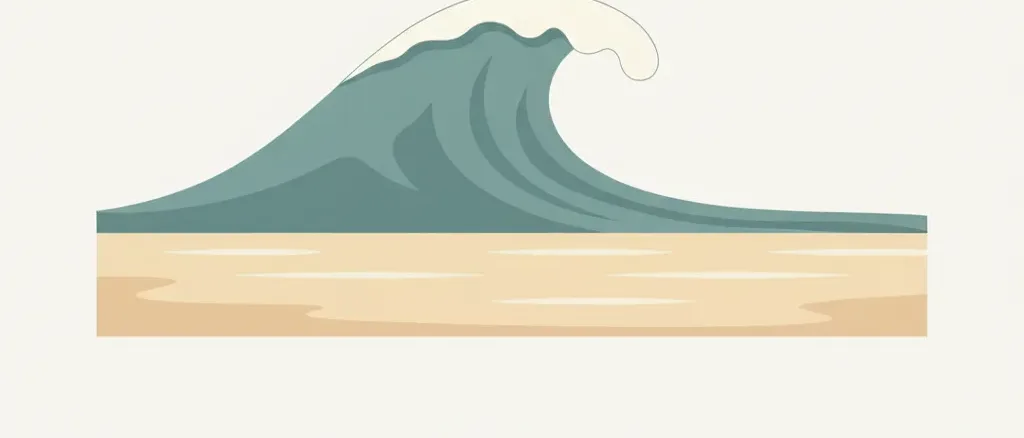
Imajinasi publik cenderung membebankan bahaya laut pada visual yang paling dramatis: ombak raksasa yang menyapu dermaga, atau perenang yang meronta melawan dinding ombak. Serangan hiu menarik perhatian media secara tidak proporsional meskipun hanya menyebabkan sekitar 1-2 kematian per tahun di AS. Mekanisme tenggelam di laut yang sebenarnya dominan justru tak terlihat oleh sebagian besar pengunjung pantai: saluran air sempit yang mengalir ke arah laut yang disebut arus rip, yang dapat menyeret bahkan perenang kuat menjauh dari pantai dengan kecepatan melebihi 8 kaki per detik. Populasi kedua (orang yang berdiri di garis pantai berbatu Pasifik) tewas akibat sneaker wave yang datang tanpa peringatan yang jelas. Tidak satu pun mekanisme ini menyerupai skenario bencana ombak ala Hollywood, dan tidak satu pun terbantu oleh intuisi «Saya bisa berenang, jadi saya baik-baik saja».
Perkiraan kasar: Sebagian besar pengunjung pantai meremehkan risiko arus rip dan melebih-lebihkan skenario ombak dramatis; perenang kuat sering merasa kebal
Sumber: intuisi redaksi, bukan hasil survei
Aktual
~150 kematian tenggelam di zona ombak dan laut per tahun (AS, non-perahu)
Penduduk AS, semua usia, tenggelam di laut/zona ombak non-perahu
Tampilkan perhitungan
Basis data kematian zona ombak National Weather Service mencatat 99 kematian zona ombak pada 2025 (dikonfirmasi setahun penuh) dan rata-rata 10 tahun sekitar 71/tahun (diakui sebagai penghitungan yang kurang akibat kesalahan klasifikasi dan kasus yang tidak dilaporkan). Estimasi NHESS Brewster dkk. (2019) yang ditinjau sejawat, berdasarkan data penyebab penyelamatan USLA dari 1997-2016, menyimpulkan lebih dari 100 kematian tenggelam per tahun disebabkan oleh arus rip saja. Dengan menambahkan kematian akibat ombak tinggi dan sneaker wave yang dilacak NWS (~20-30/tahun) serta tenggelam di laut yang terjadi di luar area cakupan penjaga pantai, estimasi sentral ~150 kematian tenggelam di zona ombak dan laut terbuka per tahun dapat dipertahankan sebagai titik tengah antara angka NWS yang diakui kurang-hitung (~71-99) dan ekstrapolasi batas atas NHESS (~130-150 untuk arus rip saja). Tenggelam terkait perahu dikecualikan (dihitung dalam statistik boating rekreasi USCG). Diterapkan pada populasi orang dewasa AS sekitar 258 juta dengan horizon sisa hidup 59 tahun: laju tahunan = 150 / 258.000.000 = 5,81e-7; probabilitas seumur hidup = 1-(1-5,81e-7)^59 ≈ 3,43e-5, atau sekitar 1 dari 29.000. Ini adalah angka rata-rata populasi; pengunjung pantai, penduduk pesisir, dan perenang laut menghadapi laju yang jauh lebih tinggi, sementara mayoritas orang dewasa AS yang jarang atau tidak pernah masuk ombak laut menghadapi laju lebih rendah. Gunakan personal_factor_multipliers untuk kalibrasi.
Catatan: Estimasi sentral ~150 kematian tenggelam di laut/zona ombak per tahun adalah inf…
Estimasi sentral ~150 kematian tenggelam di laut/zona ombak per tahun adalah inferensi dari berbagai sumber yang tidak sempurna, bukan satu angka resmi tunggal. Basis data zona ombak NWS (~71-99/tahun) secara eksplisit diakui sebagai penghitungan yang kurang; estimasi NHESS yang ditinjau sejawat (>100/tahun untuk arus rip saja) adalah ekstrapolasi dari fraksi penyebab penyelamatan USLA, bukan sensus mortalitas langsung. CDC WISQARS tidak menerbitkan kategori ICD-10 «tenggelam di laut» yang bersih terpisah dari tenggelam di perairan alami lainnya; pembagian jenis badan air tersedia dalam basis data WISQARS lengkap tetapi tidak diringkas dalam lembar fakta standar yang menghadap publik. Tenggelam terkait perahu dikecualikan (lihat entri recreational-boating-drowning). Kematian akibat sneaker wave di garis pantai Pasifik merupakan mekanisme terpisah yang memengaruhi non-perenang dan tidak boleh disamakan dengan tenggelam di zona ombak. Angka seumur hidup berlaku untuk rata-rata populasi orang dewasa AS; angka ini secara substansial meremehkan risiko bagi siapa pun yang secara rutin masuk ombak laut.
Risiko terkait
Risiko lain dengan tema serupa — untuk menjelajahi ketakutan terkait.

Kematian saat snorkeling
Berapa peluang kematian saat snorkeling dalam perjalanan liburan yang khas?


Tenggelam dari perahu
Berapa kemungkinan tenggelam setelah jatuh dari perahu rekreasi atau kapal pesiar?

Anak tenggelam di kolam
Berapa kemungkinan cedera tenggelam di kolam renang yang memerlukan perawatan darurat untuk anak di bawah 4 tahun?

Loncat air dangkal cedera tulang
Berapa kemungkinan cedera tulang belakang permanen karena meloncat kepala lebih dulu ke air dangkal?

Pilih penantang
The dominant ocean-drowning mechanism in the United States is not a dramatic wave. It is a rip current: a narrow, fast-moving channel of water flowing seaward through a break in a sandbar or around a jetty. Rip currents account for roughly 80 percent of lifeguard rescues at US ocean beaches and, by the best peer-reviewed estimate, more than 100 drowning deaths per year in the United States (Brewster et al., 2019, Natural Hazards and Earth System Sciences). The NOAA National Weather Service surf-zone fatality database counted 99 deaths in 2025 across rip current, high surf, and sneaker-wave categories, and explicitly notes this figure is an undercount due to reporting gaps and misclassification. A reasonable central estimate for total non-boating ocean drowning deaths in the US is approximately 150 per year, producing a population-average lifetime probability of about 1 in 29,000 for a US adult. That is roughly 21 times rarer than all-cause drowning (~1 in 1,400 lifetime) and reflects the fact that most Americans have limited ocean exposure. For a regular surfer or ocean swimmer, the effective rate is meaningfully higher.
Sneaker waves represent a distinct and often underappreciated mechanism. On the Pacific Northwest and Northern California coastlines (Oregon, Washington, and the coast north of San Francisco), waves can arrive at shoreline viewpoints and rocky beaches with little warning, sweeping fully clothed, non-swimming visitors into cold water. The NWS attributes more West Coast deaths to sneaker waves than to all other combined weather hazards in those regions. The physics differs from surf-zone rip currents: the affected person is usually not attempting to swim, may be standing on rock or sand well above the waterline, and has no survival skill available once swept in. A peer-reviewed catalogue of sneaker-wave events on the Oregon and Northern California coast (García-Medina et al., 2018, Natural Hazards) covering 2005 through 2017 puts the associated death toll at more than 20. These deaths are geographically concentrated and affect a different population from the Florida and Gulf Coast drownings that dominate the national statistics.
What actually determines individual ocean drowning risk is a combination of exposure, behavior, and competence. At USLA-affiliated guarded beaches, the USLA calculates the per-visit drowning probability at 1 in 18 million, a number so small it reflects both the protective effect of lifeguards and the self-selection of people who go to managed beaches. At unguarded beaches the risk is approximately five times higher. Alcohol is the most consistently identified modifiable risk factor, present in up to 70 percent of adult recreational water deaths (CDC). Inability to swim or low water competency is the primary victim characteristic in rip-current drownings: roughly 40 million US adults cannot swim, and the transition from pool to ocean introduces currents, turbulence, and fatigue that pool competence does not prepare for. The standard rip current escape (swimming parallel to shore until clear of the seaward flow, then angling back at a diagonal) is not intuitive, is rarely rehearsed, and fails under panic or exhaustion. Knowing it reduces risk; following it under stress is the harder part.
Fakta terkait
Peluang rata-rata populasi orang dewasa AS tenggelam di ombak pantai atau laut lepas sekitar 1 in 29,000 seumur hidup. Mekanisme dominannya adalah arus seret yang tak terlihat, bukan ombak raksasa yang dramatis, dan hiu menewaskan sekitar 1-2 orang per tahun secara nasional.
Buku besar klaim
Setiap angka di bawah ini adalah apa yang dilaporkan masing-masing sumber, dengan kutipan kata demi kata yang kami andalkan dan bagaimana kami sampai pada angka kami. Klik tautan mana saja untuk memverifikasi langsung.
2/4 sumber diverifikasi secara independen kata demi kata terhadap sumber terkutip
-
[1] NOAA National Weather Service — Surf Zone Fatalities in the United States: National Weather Service Terverifikasi
Surf Zone Fatalities in the United States: National Weather Service- Statistik
99 surf-zone fatalities in 2025 (full year); 10-year NOAA average approximately 71/year; three tracked hazard categories: rip current, high surf, sneaker wave- Kutipan
“"Rip currents cause a large percentage of the surf zone fatalities in the United States. Typically, a victim of a surf zone hazard is a male between the ages of 10-29, and most of the fatalities occur during the months of June and July and in the NWS Southern Region. Accurately tracking these types of fatalities is difficult because so many go unreported and undocumented." ”
- Data sumber dari
- 2025-12-31
- Diakses
- 2026-05-10 · salinan arsip
- Verifikasi
- Kutipan diambil ulang secara independen dan dikonfirmasi kata demi kata terhadap sumber terkutip selama audit pendasaran kami.
- Perhitungan
- NWS explicitly states the 10-year average (~71/year) is an undercount due to reporting gaps. The 2025 full-year total of 99 deaths across rip current, high surf, and sneaker wave categories is used as the lower-bound anchor. The NWS counts only deaths occurring in NWS forecast areas with surf-zone advisories; ocean drownings in unmonitored locations are excluded. The 99 figure ÷ 258M US adults = 3.84e-7 annual per-capita rate; lifetime (59 yr): 1-(1-3.84e-7)^59 ≈ 2.27e-5. Used as lower anchor; central estimate (~150/yr) reflects additional ocean drownings outside NWS coverage.
- Independensi
- NWS surf-zone fatality database draws from local NWS office incident reports, not from CDC NCHS death-certificate data. The two datasets are methodologically independent and serve as cross-checks; CDC records the manner of death and water-body type (partially), while NWS records the meteorological/oceanographic hazard type.
-
[2] Natural Hazards and Earth System Sciences (Copernicus / EGU) — Estimations of rip current rescues and drowning in the United States Terverifikasi
Estimations of rip current rescues and drowning in the United States- Statistik
Rip currents account for 81.9% of rescues on US surf beaches (75.3% East Coast, 84.7% West Coast); estimated >100 fatal rip-current drownings per year in the United States- Kutipan
“"Rip currents are the primary cause of 81.9% of rescues on surf beaches... Using this value as a proxy when examining overall surf beach drowning fatalities, it is suggested that more than 100 fatal drownings per year occur due to rip currents in the United States." ”
- Data sumber dari
- 2019-02-15
- Diakses
- 2026-05-10 · salinan arsip
- Verifikasi
- Kutipan diambil ulang secara independen dan dikonfirmasi kata demi kata terhadap sumber terkutip selama audit pendasaran kami.
- Perhitungan
- Brewster et al. (2019) analyzed USLA rescue-cause data from 1997-2016 (19-year series). Applying the 81.9% rip-current fraction to total US surf-beach drownings implies rip currents alone account for >100 deaths/year. This peer-reviewed estimate is the strongest single source for the rip-current component of ocean drowning mortality. Adding non-rip- current surf deaths (high surf, sneaker waves, shore-break) produces the ~150/yr central estimate used for the normalized figure. The USLA independently publishes the ~100/yr rip-current estimate on its rip current safety page, consistent with this study.
- Independensi
- Brewster et al. use USLA agency-reported rescue data, a different primary source than NWS incident reports or CDC death certificates. The three data streams (NWS, USLA/NHESS, CDC WISQARS) are methodologically independent and converge on an ocean/surf-zone drowning total in the 100-200/year range.
-
[3] United States Lifesaving Association — Rip Currents: United States Lifesaving Association
Rip Currents: United States Lifesaving Association- Statistik
Rip currents responsible for approximately 100 drownings per year in the US and over 80% of lifeguard rescues; USLA estimates 1-in-18-million drowning risk per beach visit at USLA-affiliated guarded beaches- Kutipan
“"The United States Lifesaving Association estimates that rip currents are responsible for about 100 drownings each year in the United States. Rip currents account for over 80% of lifeguard rescues." ”
- Data sumber dari
- 2024-01-01
- Diakses
- 2026-05-10 · salinan arsip
- Perhitungan
- USLA's published 1-in-18-million per-visit figure (guarded beaches, 10-year average) is used as the protective lower bound. The USLA estimates 400M+ beach visits per year at affiliated guarded beaches. At 1 in 18M per visit, expected deaths = 400M / 18M ≈ 22/yr, which is the guarded-beach subset. USLA also states the risk is ~5x higher at unguarded beaches, yielding approximately 110/yr from the guarded+unguarded extrapolation, consistent with the NHESS >100 rip-current estimate. The ~100 rip-current figure from USLA is used as the primary rip-current estimate; the full ocean total of ~150/yr adds high surf and sneaker wave deaths tracked by NWS.
- Independensi
- USLA is the primary professional lifeguard standards organization; its rescue statistics are compiled from member agency reports, distinct from NWS weather-hazard reports and CDC mortality data.
-
[4] Natural Hazards (Springer) — García-Medina, Özkan-Haller, Ruggiero, Holman & Nicolini — Analysis and catalogue of sneaker waves in the US Pacific Northwest between 2005 and 2017
Analysis and catalogue of sneaker waves in the US Pacific Northwest between 2005 and 2017- Statistik
Peer-reviewed catalogue of sneaker-wave events on the Oregon and Northern California coast, 2005-2017; secondary reporting on the study puts the associated fatality count at approximately 29 over the period (15 Oregon, 14 Northern California)- Kutipan
“"Sneaker waves are responsible for many casualties and beach rescues." ”
- Data sumber dari
- 2018-11-01
- Diakses
- 2026-07-03 · salinan arsip
- Perhitungan
- García-Medina et al. (2018) catalogue sneaker-wave events on the Oregon and Northern California coast from 2005-2017, classifying them by setting (structures, semi-enclosed beaches, open-coast beaches). The paper is the primary academic source for the sneaker-wave mechanism discussed in the body text; the ~29-fatality count (15 Oregon, 14 Northern California) cited in the body is drawn from secondary reporting on the study's findings, since the full peer-reviewed text sits behind a publisher paywall. Not used in the native/normalized ocean-drowning calculation, which relies on the NWS/NHESS/USLA figures above.
- Independensi
- Independent academic hazard-catalogue study (Oregon State University-affiliated authors), distinct from the NWS, NHESS/Brewster rip-current, and USLA sources used for the rest of this entry's ocean-drowning estimate.