Kualitas bukti 4.5/5
Skor tinjauan delapan dimensi terhadap rubrik kualitas . Setiap dimensi dinilai 1–5.
- D1 Dasar sumber
- 4/5
- D2 Otoritas sumber
- 5/5
- D3 Aritmetika
- 5/5
- D4 Ketidakpastian
- 4/5
- D5 Cakupan
- 4/5
- D6 Prosa
- 5/5
- D7 Kejujuran persepsi
- 4/5
- D8 Kelengkapan peringatan
- 5/5
≈ Sama mungkinnya dengan
Dipersepsikan
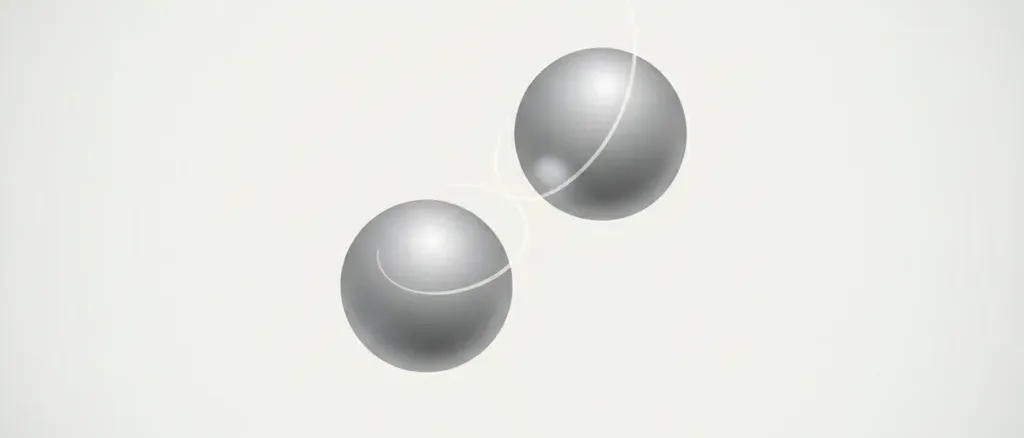
Set magnet mainan dan magnet kuat dekoratif telah dipasarkan sebagai mainan meja dewasa dan produk pereda stres, tetapi bahaya ketika seorang anak menelan beberapa magnet tidak dipahami dengan baik oleh sebagian besar orang tua. Model mental publik yang dominan memperlakukan penelanan magnet seperti menelan koin — tidak menyenangkan tetapi sembuh sendiri. Yang tidak banyak diketahui adalah bahwa mekanismenya secara fundamental berbeda untuk dua atau lebih magnet kuat: mereka saling menarik melintasi lengkung usus yang berbeda, menciptakan titik tekanan yang dapat menyebabkan iskemia, perforasi, volvulus, dan nekrosis usus dalam hitungan jam. Middelberg dan kolega (2022) menemukan bahwa hampir separuh pengasuh yang anaknya dirawat karena cedera magnet kuat percaya bahwa magnet kuat adalah mainan anak-anak, dan hanya 7 % yang tahu bahwa magnet tersebut sebelumnya telah ditarik dari pasar oleh CPSC. Bahaya ini sangat diremehkan dibandingkan dengan baterai kancing, meskipun merawat inap anak sekitar 20 kali lipat lajunya.
Perkiraan kasar: Sebagian besar orang tua tidak memiliki angka untuk bahaya ini; hampir separuh dalam survei pasca-insiden percaya bahwa magnet kuat adalah mainan anak-anak (Middelberg 2022)
Sumber: intuisi redaksi, bukan hasil survei
Aktual
~300-400 rawat inap per tahun pada anak-anak AS akibat penelanan beberapa magnet kuat
anak-anak AS usia 0-14, rawat inap akibat penelanan beberapa magnet kuat
Tampilkan perhitungan
CPSC memperkirakan 26.600 kunjungan UGD terkait magnet dari 2010-2021 di semua usia 0-17 (Federal Register, September 2022). Setelah aturan dibatalkan pada 2017-2020, kunjungan UGD tahunan kira-kira 2.300-2.400/tahun khusus untuk magnet kuat. Middelberg et al. (2022, Pediatrics), studi kohort klinis terbesar (596 kasus magnet kuat terkonfirmasi di 25 rumah sakit anak, 2017-2019), menemukan 55,7 % memerlukan rawat inap dan 95 % kasus adalah anak-anak di bawah 14 tahun. Menerapkan tingkat rawat inap 56 % pada ~2.400 kunjungan UGD magnet kuat/tahun menghasilkan kira-kira 300-400 rawat inap per tahun untuk periode pasca-masuk-kembali. Anak-anak AS usia 0-14 berjumlah kira-kira 61 juta (Sensus). Risiko kumulatif selama jendela 15 tahun: 300-400 rawat inap/tahun × 15 tahun / 61.000.000 ≈ 7,4-9,8 × 10⁻⁵, atau kira-kira 1 dari 10.000 hingga 1 dari 14.000. Angka utama menggunakan 1 dari 12.000 sebagai titik tengah. Strickland et al. (2020, JPGN) secara independen menemukan kira-kira 1.094 kasus «eskalasi perawatan» multi-magnet selama 2017-2019 (estimasi NEISS tertimbang), konsisten dengan 350-400 hasil serius per tahun. Aturan CPSC baru (16 CFR Part 1262) berlaku pada Oktober 2022; efeknya terhadap laju kasus belum dapat dikuantifikasi dari data terpublikasi.
Catatan: Angka utama 1-dari-12.000 mengacu pada rawat inap akibat penelanan beberapa magn…
Angka utama 1-dari-12.000 mengacu pada rawat inap akibat penelanan beberapa magnet kuat selama jendela masa kanak-kanak 0-14. Hasil fatal kira-kira dua orde besaran lebih jarang — kira-kira 1 dari 13 juta per anak (5 kematian AS terkonfirmasi selama ~17 tahun terhadap populasi 61 juta anak usia 0-14). Bahaya ini secara spesifik tentang beberapa magnet (atau satu magnet ditambah benda logam): penelanan satu magnet hampir universal sembuh sendiri. Perbedaan ini sangat penting baik untuk manajemen klinis maupun komunikasi risiko kepada orang tua. Rentang probabilitas sensitif terhadap siklus regulasi: kasus ~2.300/tahun sebelum aturan CPSC 2014, turun selama periode aturan (2015-2016), melonjak kembali ke ~2.300-2.400/tahun setelah aturan dibatalkan pada 2016, dan aturan federal baru 2022 (16 CFR Part 1262) memiliki efek yang tidak diketahui tetapi berpotensi substansial terhadap laju kasus mendatang. Estimasi 300-400 rawat inap mencerminkan periode pasca-aturan-dibatalkan, pra-aturan-baru (2017-2022); laju pasca-2022 mungkin lebih rendah jika aturan baru mencapai kepatuhan yang lebih baik daripada yang dibatalkan. Bahaya magnet berada pada posisi yang tidak biasa dibandingkan dengan entri lain di situs ini: tingkat rawat inap (~1 dari 12.000) kira-kira 20 kali tingkat cedera serius baterai kancing (~1 dari 250.000), meskipun baterai kancing menerima jauh lebih banyak komunikasi kesehatan-publik dan perhatian regulasi. Kesenjangan ketersediaan sebagian dijelaskan oleh usia pasien rata-rata magnet yang lebih tua (7,5 tahun, Middelberg) versus populasi yang didominasi balita untuk baterai kancing.
Risiko terkait
Risiko lain dengan tema serupa — untuk menjelajahi ketakutan terkait.

Menelan kapsul deterjen
Berapa kemungkinan balita cedera serius karena menelan atau memencet kapsul deterjen?
Kematian balita menghadap depan
Apakah balita yang duduk menghadap depan benar-benar lebih berisiko meninggal dalam kecelakaan mobil?

Displasia panggul bayi tidak diobati
Berapa kemungkinan disabilitas akibat displasia panggul bayi yang tidak diobati?
Anak telan benda (UGD)
Berapa kemungkinan anak kecil menelan benda dan membutuhkan perawatan medis?

Anak menelan kantong nikotin
Seberapa besar kemungkinan seorang anak kecil dilaporkan ke pusat racun karena menelan kantong nikotin?
Jatuh dari tangga (balita)
Berapa peluang balita mengalami cedera serius akibat jatuh dari tangga?
Pilih penantang
A single swallowed magnet is almost never a serious emergency. Two or more high-powered magnets swallowed at different times — or a magnet swallowed separately from a metal object — are a different problem entirely. When two neodymium magnets are in different loops of intestine, they attract each other strongly across the bowel wall, creating a pressure point that can cause ischemia, perforation, volvulus, and bowel necrosis within hours. Middelberg et al. (2022, Pediatrics), the largest clinical cohort of high-powered magnet injuries — 596 confirmed cases across 25 children’s hospitals over 2017-2019 — found that 55.7% required hospitalization, 46.3% required endoscopy, surgery, or both, and 9.6% had life-threatening morbidity including bowel obstruction, perforation, fistulae, and volvulus. The first documented US pediatric death from high-powered magnet ingestion occurred in a 20-month-old child in 2005/2006; CPSC has confirmed five US deaths since then.
The regulatory history is a study in how consumer product safety can fail at the enforcement stage. CPSC documented 20 serious cases between 2003 and 2006, including 15 bowel perforations and one death. Case counts climbed sharply over the following decade as high-powered neodymium magnet sets (marketed as “Buckyballs,” “Zen Magnets,” and dozens of similar brands) became popular adult desk toys. CPSC published a federal safety rule in 2014 limiting the flux strength of consumer magnets. The rule took effect in 2015, and annual ED visit rates fell. In 2016, the US Court of Appeals for the Tenth Circuit vacated the rule, finding the CPSC’s supporting findings inadequately explained. High-powered magnets returned to market in 2017. By 2017-2019, Strickland and colleagues (2020, JPGN) documented a five-fold increase in multiple-magnet escalation of care and a hospitalization rate of 37.7%. A new federal rule (16 CFR Part 1262) was unanimously adopted by CPSC in September 2022 with a broader product scope than the vacated rule, but post-enforcement case data are not yet published.
The counter-intuitive finding from comparing magnet and button-battery entries is worth stating directly. Button batteries receive substantially more public-health communication and regulatory attention than high-powered magnets. Yet the hospitalization rate for the magnet hazard — roughly 1 in 12,000 children over the 0-14 window — is approximately 20 times higher than the severe-injury rate for button batteries (1 in 250,000 over the 0-6 window). The difference is explained partly by the older age distribution for magnets (median 7.5 years, Middelberg) relative to button batteries (peak age 2 years), which means magnet exposure is more likely to occur in older children who appear less at-risk, and partly by the complexity of the mechanism, which is not intuitive to parents or to emergency physicians who may initially interpret an X-ray showing two overlapping metallic densities as a coin swallowing rather than a two-magnet emergency.
Fakta terkait
Sekitar 1 dari 90 anak di AS mengalami kunjungan UGD karena menelan benda sebelum usia 6 tahun — biasanya koin, dan 80-90% keluar dengan sendirinya. Pengecualian yang melanggar aturan benda akan keluar: baterai kancing, yang membakar dalam hitungan jam, dan banyak magnet, yang menjepit usus.
Rawat inap akibat menelan beberapa magnet kuat terjadi sekitar ~1 dari 12,000 per anak di AS selama rentang usia 0-14 tahun. Dalam satu survei pascainsiden, hampir separuh pengasuh masih mengira magnet itu mainan anak.
Buku besar klaim
Setiap angka di bawah ini adalah apa yang dilaporkan masing-masing sumber, dengan kutipan kata demi kata yang kami andalkan dan bagaimana kami sampai pada angka kami. Klik tautan mana saja untuk memverifikasi langsung.
-
[1] Pediatrics — Middelberg et al. (IMPACT of Magnets Research Collaborative), Nationwide Children's Hospital, 2022 — High-Powered Magnet Exposures in Children: A Multi-Center Cohort Study
High-Powered Magnet Exposures in Children: A Multi-Center Cohort Study- Statistik
596 patients confirmed high-powered magnet exposure (25 children's hospitals, 2017-2019); 55.7% hospitalized; 46.3% required endoscopy/surgery; 9.6% had life-threatening morbidity; 95% of care was for children under 14; median age 7.5 years; nearly half of caregivers believed high-powered magnets were children's toys- Kutipan
“"Nearly 600 cases of high-powered magnet-related injuries in the three years after high-powered magnets re-entered the US market (2017 to 2019)... the majority (56%) of children being treated for high-powered magnet-related injuries required hospitalization... nearly one in ten had a potentially life-threatening injury such as bowel obstruction, perforation, infection, bleeding, fistulae or volvulus... 95% of care in this study was for children under 14 years of age... almost half of caregivers believed high-powered magnets were children's toys." ”
- Data sumber dari
- 2022-02-01
- Diakses
- 2026-05-09 · salinan arsip
- Perhitungan
- The 56% hospitalization rate from 596 confirmed cases across 25 children's hospitals is the primary clinical outcome rate. Applying this to the CPSC's nationally estimated ~600/yr high-powered magnet ED visits gives ~336 hospitalizations/yr. The 9.6% life-threatening morbidity rate (57/596) translates to approximately 57 life-threatening events per year nationally from high-powered magnet ingestion alone.
- Independensi
- Middelberg et al. use a prospective multi-center cohort design distinct from the NEISS-based population estimates of Strickland 2020 and the CPSC product-incident database. The clinical outcome rates (hospitalization, surgical intervention, life-threatening morbidity) are empirically measured rather than derived from administrative codes.
-
[2] Journal of Pediatric Gastroenterology and Nutrition — Strickland, Reeves, Krishnamurthy, Bhatt, Mahajan, Abbas, 2020 — Magnet Ingestions in Children Presenting to Emergency Departments in the United States, 2009–2019: A Problem in Flux
Magnet Ingestions in Children Presenting to Emergency Departments in the United States, 2009–2019: A Problem in Flux- Statistik
23,756 weighted NEISS-estimated pediatric magnet-ingestion ED visits 2009-2019; hospitalization rate rose to 37.7% in 2017-2019 (post-rule-vacated period); 5-fold increase in multiple-magnet escalation of care (estimated 1,094 cases) over 2017-2019; annual case increase averaged 6.1%- Kutipan
“"An estimated 23,756 children (59% males, 42% < 5 years old) presented with a [suspected magnet ingestion] from 2009 to 2019 with an average annual case increase of 6.1%... From 2017 to 2019, there was a greater proportion of small/round type magnet ingestions and multiple magnet ingestions, and... a 5-fold increase in the escalation of care for multiple magnet ingestions (estimated n = 1,094; CI 505-1,686)." ”
- Data sumber dari
- 2020-12-01
- Diakses
- 2026-05-09 · salinan arsip
- Perhitungan
- 1,094 escalation-of-care multiple-magnet cases over 2017-2019 (3 years) ≈ 365/yr — consistent with the ~300-400 hospitalization estimate derived from Middelberg's clinical hospitalization rate applied to CPSC's annual ED visit count. Strickland's NEISS-based approach provides an independent population-level estimate that corroborates the Middelberg clinical-cohort approach.
- Independensi
- Strickland et al. use NEISS (National Electronic Injury Surveillance System), a statistically representative sample of US EDs maintained by CPSC, yielding nationally weighted estimates. This is methodologically independent of the Middelberg multi-center clinical cohort and of the CPSC product-incident administrative database.
-
[3] CDC Morbidity and Mortality Weekly Report, December 8, 2006, Vol. 55, No. 48 — Gastrointestinal Injuries from Magnet Ingestion in Children — United States, 2003–2006
Gastrointestinal Injuries from Magnet Ingestion in Children — United States, 2003–2006- Statistik
20 CPSC-identified serious magnet GI injury cases (2003-2006); 19 required surgery; 75% had bowel perforation; 1 death (first documented US fatality); all cases involved multiple magnets attracting through intestinal loops- Kutipan
“"Since 2003, CPSC has identified one death and 19 other serious cases involving magnets with this type of unusual strength, representing a range of injuries including intestinal perforations (15 cases), obstruction (4), volvulus (3), and peritonitis (4)... The magnets had magnetically joined across two loops of intestine, causing a volvulus that compromised the blood supply to the bowel and led to necrosis, perforation, and sepsis." ”
- Data sumber dari
- 2006-12-08
- Diakses
- 2026-05-09 · salinan arsip
- Perhitungan
- This MMWR report established the mechanism: all 20 serious cases involved multiple magnets (or magnets plus a metal object) attracted through the bowel wall. Single-magnet ingestion was not represented in the serious-outcome cases. The 75% bowel-perforation rate in this early clinical case series is consistent with the 9.6% life-threatening morbidity rate in Middelberg 2022 — both measure the outcome rate in cases reaching surgical review, which is a selected severe subset. The first US death (a 20-month-old child, 2005/2006) is documented in this report.
-
[4] US Consumer Product Safety Commission, Federal Register, September 21, 2022 — Safety Standard for Magnets, 16 CFR Part 1262
Safety Standard for Magnets, 16 CFR Part 1262- Statistik
26,600 magnet-related ED visits 2010-2021 (NEISS estimate); 7-8 deaths involving hazardous magnets since 2005 (5 confirmed US deaths); 124 documented surgical cases (2010-2020); new rule requires flux index <50 kG²mm² for all consumer magnet products fitting small-parts cylinder- Kutipan
“"CPSC estimates 26,600 magnet ingestions were treated in hospital ERs from 2010 through 2021, and cases have been rising annually since 2018. CPSC is aware of seven deaths involving the ingestion of hazardous magnets (including two outside of the United States)." ”
- Data sumber dari
- 2022-09-21
- Diakses
- 2026-05-09 · salinan arsip
- Perhitungan
- 26,600 ED visits / 12 years ≈ 2,217/yr on average. Five confirmed US deaths across ~17 years (2005-2022) ≈ 0.3/yr — a low annual fatality rate that translates to approximately 1 in 13 million per child over the 0-14 window. The new federal rule (effective October 2022) applies to all consumer products with separable magnets fitting the small-parts cylinder, not just the "magnet sets" definition that the vacated 2014 rule covered. Post-enforcement case data are not yet available in peer-reviewed literature.