Kualitas bukti 4.38/5
Skor tinjauan delapan dimensi terhadap rubrik kualitas . Setiap dimensi dinilai 1–5.
- D1 Dasar sumber
- 5/5
- D2 Otoritas sumber
- 5/5
- D3 Aritmetika
- 3/5
- D4 Ketidakpastian
- 4/5
- D5 Cakupan
- 5/5
- D6 Prosa
- 4/5
- D7 Kejujuran persepsi
- 4/5
- D8 Kelengkapan peringatan
- 5/5
● faktor Anda — klik risiko ini ▾ untuk menampilkan
- Faktor Anda
≈ Sama mungkinnya dengan
Dipersepsikan
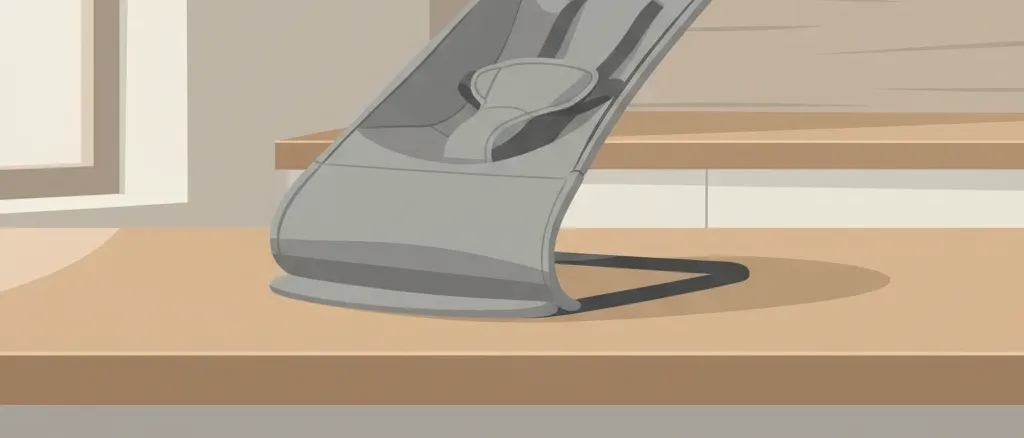
Menaruh bayi di kursi bouncer di atas meja dapur atau meja makan agar mereka bisa menonton orang tua memasak adalah praktik rutin, dan sebagian besar orang tua menganggapnya tidak berbahaya. Kursinya tampak stabil, bayi terikat sabuk, dan ketinggiannya tampak sedang. Label produk memperingatkan untuk digunakan hanya di lantai, tetapi sebagian besar orang tua entah tidak membaca peringatan itu atau membacanya lalu mengabaikannya karena stabilitas kursi yang terlihat. Laporan kasus Claydon (1996) dan standar bouncer CPSC 2018 sama-sama bertumpu pada mekanisme yang sama: titik pivot pusat bouncer mengubah bahkan jatuh pendek menjadi benturan kepala berkecepatan lebih tinggi daripada yang diprediksi oleh ketinggian saja, sehingga kalibrasi intuitif «cuma dua kaki» keliru dengan cara geometris tertentu yang biasanya tidak terpikirkan orang tua.
Perkiraan kasar: ~1 dari 10.000 per penggunaan di permukaan yang tinggi
Sumber: intuisi redaksi, bukan hasil survei
Aktual
347 insiden kursi bouncer (termasuk 12 kematian dan 54 cedera) dilaporkan ke CPSC, Januari 2006-Juli 2016
bayi AS usia 0-6 bulan yang terpapar kursi bouncer dan rocker, 2006-2016
Tampilkan perhitungan
347 insiden termasuk 12 kematian dan 54 cedera dilaporkan ke CPSC Januari 2006 sampai Juli 2016 (CPSC, 2018-03-23). Rilis CPSC mencatat bahwa mekanisme kematian dominan adalah sesak napas ketika bayi tanpa sabuk pengaman berbalik atau ketika bouncer terguling ke permukaan lunak seperti tempat tidur dewasa dan boks bayi. Standar federal baru yang berlaku 19 Maret 2018 (16 CFR 1229, memuat ASTM F2167) ditulis untuk menangani bahaya ini. Penyebut diperkirakan dari volume penjualan: kategori bouncer berjalan pada kira-kira 2-3 juta unit AS per tahun, menghasilkan sekitar 21 juta unit selama periode pelaporan 10,5 tahun. Risiko seumur hidup per bayi pengguna bouncer untuk insiden apa pun yang dilaporkan menjadi ~1 dari 60.000; hasil fatal pada ~1 dari 1,7 juta. Pelaporan insiden CPSC hampir pasti kurang menghitung jatuh yang tidak berujung pada perhatian medis, sehingga kedua tingkat adalah batas bawah alih-alih estimasi pusat.
Catatan: Total 347 insiden mencakup jendela 10,5 tahun dan mencakup kejadian di semua tin…
Total 347 insiden mencakup jendela 10,5 tahun dan mencakup kejadian di semua tingkat keparahan yang dilaporkan melalui saluran CPSC. Banyak jatuh bouncer — mungkin sebagian besar — tidak pernah sampai ke CPSC karena tidak memerlukan perawatan medis, sehingga tingkat per bayi pengguna bouncer adalah batas bawah alih-alih estimasi pusat. Penyebut diperkirakan dari volume penjualan dan pelaporan tingkat kategori; risiko per unit bisa meleset dengan faktor dua ke salah satu arah. Laporan kasus Claydon adalah satu kematian tunggal, bukan tingkat populasi, dan disertakan sebagai bukti mekanisme alih-alih sumber frekuensi. Unit pasca-2018 secara berarti lebih aman daripada unit pra-2018, tetapi sebagian besar bouncer yang digunakan — terutama unit bekas di pasar Polandia — diproduksi sebelum standar baru berlaku.
Risiko terkait
Risiko lain dengan tema serupa — untuk menjelajahi ketakutan terkait.

Kematian balita menghadap depan
Apakah balita yang duduk menghadap depan benar-benar lebih berisiko meninggal dalam kecelakaan mobil?

Kematian ayunan bayi
Berapa peluang bayi di ayunan bertenaga atau rocker meninggal karena strangulasi atau sesak napas?

Bayi tersedak tanpa pengawasan
Berapa kemungkinan darurat tersedak jika bayi makan tanpa pengawasan?

Kematian tempat tidur miring
Berapa peluang bayi yang ditempatkan di tempat tidur miring (Rock 'n Play dan sejenisnya) meninggal karena asfiksia posisional?


Bayi jatuh
Berapa kemungkinan cedera serius ketika bayi jatuh dari furnitur (sofa, tempat tidur, meja ganti popok)?
Cedera kursi roda bayi
Berapa peluang bayi di kursi roda bayi ditangani di unit gawat darurat karena cedera terkait kursi roda?
Pilih penantang
Across the 10.5 years from January 2006 to July 2016, CPSC documented 347 bouncer-seat incidents, including 12 fatalities and 54 injuries. The agency identified the dominant fatality mechanism as suffocation when unrestrained babies turned over or when bouncers tipped onto soft surfaces such as adult beds and cribs. Against an estimated 21 million bouncer units in circulation over that window, the per-infant lifetime risk works out to about 1 in 60,000 for any reported incident and roughly 1 in 1.7 million for a fatal outcome. The federal bouncer standard that took effect on March 19, 2018 (16 CFR 1229) was written specifically to address these failure modes.
What makes this entry sit in “underrated” territory is the gap between the visible stability of the product and the geometry of the worst-case event. The Claydon (1996) case report on a fatal extradural hemorrhage attributes the outcome not to fall height alone but to the bouncer’s central pivot point, which accelerates the head before impact. A fall from a kitchen counter is therefore not equivalent to a free fall of the same height from a flat platform — the pivot adds velocity in a direction that the linear height calibration most parents use does not predict. This is the technical reason the “use only on the floor” warning matters more than it visually suggests.
Where the number does not directly apply is the post-2018 US market and the EU market. Bouncers built to 16 CFR 1229 have stricter stability and tip- over requirements than pre-2018 units; the 1 in 60,000 incident rate is weighted toward older products in the surveillance window. Reclined cradles (leżaczki) sold in Poland and across the EU fall under EN 12790-1/-2:2023, a revised 2023 standard covering powered motion, electrical safety, and entrapment. Neither regulation removes the elevated-surface mechanism that drove most documented incidents — that one still depends on user behaviour, and the secondhand market in both regions keeps many pre-standard units in circulation.
Fakta terkait
Insiden kursi ayun yang dilaporkan terjadi pada sekitar 1 dari 60.000 bayi yang memakainya, dan kira-kira 1 dari 1,7 juta berakhir dengan kematian. Label "hanya di lantai" ada karena ayunannya mengubah jatuh pendek dari meja menjadi benturan kepala yang lebih cepat daripada yang disiratkan ketinggiannya.
Buku besar klaim
Setiap angka di bawah ini adalah apa yang dilaporkan masing-masing sumber, dengan kutipan kata demi kata yang kami andalkan dan bagaimana kami sampai pada angka kami. Klik tautan mana saja untuk memverifikasi langsung.
3/3 sumber diverifikasi secara independen kata demi kata terhadap sumber terkutip
-
[1] US Consumer Product Safety Commission — New Federal Standard to Improve Safety of Infant Bouncer Seats Takes Effect Terverifikasi
New Federal Standard to Improve Safety of Infant Bouncer Seats Takes Effect- Statistik
347 incidents involving bouncer seats reported to CPSC January 2006 to July 2016, including 12 fatalities and 54 injuries; suffocation from unrestrained babies turning over, or bouncers tipping onto soft surfaces (adult beds and cribs), was the dominant fatality mechanism; new federal standard effective March 19, 2018- Kutipan
“"Between January 1, 2006 and July 6, 2016, there were 347 incidents involving bouncer seats reported to CPSC, including 12 fatalities and 54 injuries. The major cause of reported fatalities was suffocation when unrestrained babies turned over in a bouncer or bouncers tipped over onto soft surfaces… when placed on adult beds and in cribs." ”
- Data sumber dari
- 2018-03-23
- Diakses
- 2026-05-31 · salinan arsip
- Verifikasi
- Kutipan diambil ulang secara independen dan dikonfirmasi kata demi kata terhadap sumber terkutip selama audit pendasaran kami.
- Perhitungan
- Canonical aggregate figure across the 10.5-year window. The CPSC release describes the standard generically as "a new federal standard… effective March 19, 2018" without naming the underlying ASTM identifier; the standard is 16 CFR 1229 incorporating ASTM F2167, but that specific pairing is not asserted by this source and is recorded here only as regulatory context.
-
[2] Pediatric Emergency Care (Claydon) — Fatal extradural hemorrhage following a fall from a baby bouncer Terverifikasi
Fatal extradural hemorrhage following a fall from a baby bouncer- Statistik
Case report: fatal extradural hemorrhage in an infant from an approximately 2-foot bouncer fall onto carpeted floor; pivoting mechanism amplifies impact- Kutipan
“"Pivoting about the central point provided by the seat of the bouncer obviously increased the momentum of the head before it struck the ground... serious head injuries can result from apparently minor falls... Prevention of infant deaths from accidental falls from baby equipment requires the maintaining of safety standards and adequate supervision of the infant." ”
- Data sumber dari
- 1996-12-01
- Diakses
- 2026-05-31 · salinan arsip
- Verifikasi
- Kutipan diambil ulang secara independen dan dikonfirmasi kata demi kata terhadap sumber terkutip selama audit pendasaran kami.
- Perhitungan
- Single case but mechanistically definitive: the bouncer's central pivot point converts a low fall (approximately 2 feet) into a higher-velocity head impact than the height alone would predict. This is the reason the "use only on the floor" warning is load-bearing rather than cosmetic — the pivot geometry breaks the intuitive linear-height calibration that parents would otherwise apply.
-
[3] SGS / European Committee for Standardization (CEN) — European Standard EN 12790 on Reclined Cradles Revised Terverifikasi
European Standard EN 12790 on Reclined Cradles Revised- Statistik
EN 12790-1/-2:2023 (published March 2023) splits the reclined-cradle standard into two age bands and adds requirements for powered motion, electrical safety, entrapment, cord entanglement, and packaging suffocation- Kutipan
“"EN 12790-1:2023 covers reclined cradles for children up to when they start to try to sit up. EN 12790-2:2023 covers reclined cradles for children up to when they start to stand up. New rules on sound-pressure level, powered motion, electrical safety, entrapment, cord entanglement, packaging suffocation." ”
- Data sumber dari
- 2023-03-01
- Diakses
- 2026-05-31 · salinan arsip
- Verifikasi
- Kutipan diambil ulang secara independen dan dikonfirmasi kata demi kata terhadap sumber terkutip selama audit pendasaran kami.
- Perhitungan
- EN 12790-1/-2:2023 governs reclined cradles (leżaczki) sold in Poland and across the EU, replacing EN 12790:2009. This standard covers reclined cradles broadly; CPSC's 16 CFR 1229 is the US sibling. Two different regulatory frames with similar harm-reduction focus. Neither removes the elevated-surface mechanism that dominates real-world incidents — both depend on user compliance with floor-only labelling.