Kualitas bukti 4.38/5
Skor tinjauan delapan dimensi terhadap rubrik kualitas . Setiap dimensi dinilai 1–5.
- D1 Dasar sumber
- 4/5
- D2 Otoritas sumber
- 5/5
- D3 Aritmetika
- 4/5
- D4 Ketidakpastian
- 4/5
- D5 Cakupan
- 5/5
- D6 Prosa
- 5/5
- D7 Kejujuran persepsi
- 3/5
- D8 Kelengkapan peringatan
- 5/5
≈ Sama mungkinnya dengan
Dipersepsikan
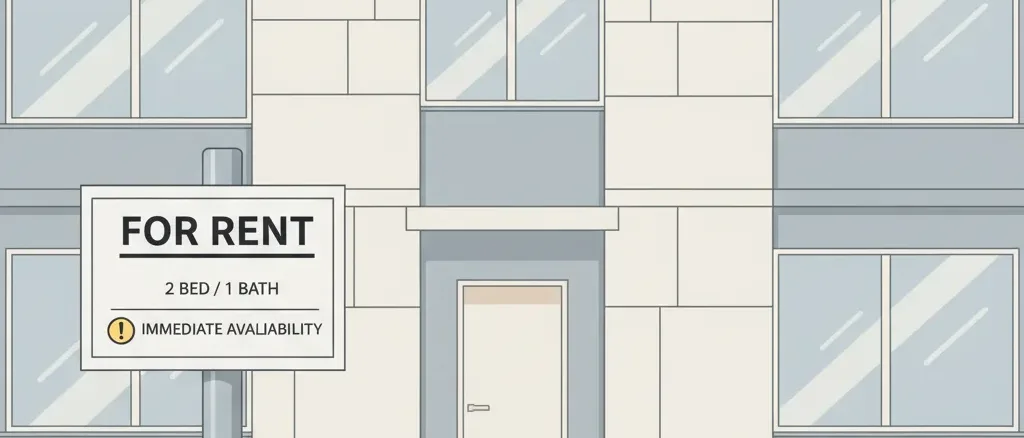
Dewasa muda yang mencari apartemen pertama mereka menemukan penipuan iklan sewa dengan cukup rutin, tetapi sedikit yang memiliki pemahaman kuantitatif tentang seberapa umum risikonya. Pola penipuan — iklan palsu, permintaan mendesak untuk deposit atau sewa bulan pertama, «pemilik» yang menghilang — secara luas diketahui tetapi sering kali tidak terasa pribadi sampai dialami. Perpindahan pencarian apartemen hampir sepenuhnya ke platform daring telah membuat penipuan lebih mudah dijalankan dalam skala besar: foto yang tampak sah yang diambil dari iklan asli, detail kontak palsu, dan taktik urgensi bergabung untuk menekan penyewa yang berada di bawah tekanan waktu nyata untuk mengamankan hunian.
Sumber: intuisi redaksi, bukan hasil survei
Aktual
~5 dari 100 penyewa AS yang mencari sewa secara daring kehilangan uang karena penipuan iklan palsu (seumur hidup)
orang dewasa AS yang menyewa secara daring atau mencari sewa secara daring (Apartment List 2018)
Tampilkan perhitungan
Survei Apartment List 2018 yang representatif secara nasional terhadap lebih dari 1.000 penyewa AS (1.126 responden nasional): diperkirakan 5,2 juta penyewa AS melaporkan kehilangan uang karena penipuan sewa. Di antara penyewa, 43,1 % menemukan iklan yang mereka curigai palsu dan 6,4 % kehilangan uang (≈5 % di ujung bawah yang digunakan di sini untuk derau pelaporan sendiri). Angka yang dinormalisasi (0,05 = 5 %) adalah tingkat kerugian seumur hidup di antara orang dewasa AS yang menyewa atau pernah menyewa secara daring. Ketidakpastian yang lebar mencerminkan metodologi pelaporan sendiri, variasi definisi («kehilangan uang» vs. «menemukan iklan mencurigakan»), dan evolusi cepat taktik penipuan. Rendah (0,02): ambang «kehilangan $500+» yang lebih sempit atau penyewa dengan kesadaran sebelumnya. Tinggi (0,10): pasar sewa yang ketat dan sangat langka di mana tekanan urgensi meningkatkan efektivitas penipuan (tingkat kerugian per-metro dari sumber bervariasi luas, hingga ~10-11 %).
Catatan: Angka 5 % berasal dari satu survei Apartment List 2018 dan mengandalkan pelapora…
Angka 5 % berasal dari satu survei Apartment List 2018 dan mengandalkan pelaporan sendiri. «Kehilangan uang» didefinisikan sendiri oleh responden — ini mungkin mencakup kerugian biaya aplikasi kecil bersama kerugian deposit besar. Lanskap penipuan terus berkembang seiring pencarian apartemen sepenuhnya pindah ke daring, yang mungkin mendorong tingkat di atas baseline 2018, tetapi tidak ada survei tingkat populasi pasca-2018 yang mengukur ulang tingkat kerugian seumur hidup. Tingkat «menemukan iklan mencurigakan» sebesar 43,1 % secara substansial melebihi tingkat «kehilangan uang» sebesar 5 %, menunjukkan sebagian besar penyewa berhasil mengidentifikasi dan menghindari penipuan — kelompok berisiko mungkin adalah mereka yang berada di bawah tekanan hunian akut di pasar yang ketat (pindah pertama, tekanan penggusuran, relokasi antarnegara bagian) di mana «uji tuntas» mahal. Ini dinyatakan [US-ONLY] karena survei seumur hidup penipuan sewa daring yang sebanding tidak ada untuk negara lain, meskipun fenomenanya tidak khas AS.
Risiko terkait
Risiko lain dengan tema serupa — untuk menjelajahi ketakutan terkait.

Penipuan terhadap lansia
Seberapa mungkin dewasa 60+ kehilangan uang karena penipuan keuangan di masa pensiun?

Kehilangan SNAP karena aturan 2025
Jika Anda menerima SNAP, seberapa besar kemungkinan Anda kehilangan tunjangan berdasarkan aturan kerja yang diperluas dalam undang-undang 2025?

Kematian karier nelayan komersial
Berapa peluang meninggal dunia saat bekerja sebagai nelayan komersial sepanjang karier?

Kerugian day-trading
Berapa peluang kerugian finansial yang signifikan dari perdagangan ritel aktif?

Katastrofi Pemerintahan Ekstremis
Berapa kemungkinan pemerintahan ekstremis politik menghancurkan negara Anda secara katastropik?

Kematian pilot tempur
Berapa peluang pilot tempur militer AS meninggal akibat kecelakaan penerbangan atau pertempuran sepanjang karier?

Amblesnya perumahan
Berapa kemungkinan pasar perumahan ambruk besar-besaran menghapus ekuitas rumah Anda?
Pilih penantang
Apartment List’s 2018 nationally representative survey of over 1,000 US renters found that 43.1% encountered a listing they suspected was fraudulent, and an estimated 5.2 million US renters — 6.4% of renters, roughly 1 in 20 — reported losing money to a rental scam. The typical pattern involves a fake listing (often with photos scraped from legitimate listings), a landlord who is conveniently unavailable to show the unit in person, and pressure to pay a deposit or first month’s rent before viewing. The scam is particularly effective because the victim is typically under real time pressure: apartment searches have deadlines, and the target demographic — first-time movers, students, young professionals — has fewer reference points for what the process should look like.
The FBI IC3 reported $145 million in losses from real estate and rental fraud in 2023, though most victims do not file federal complaints. FTC Consumer Sentinel data shows that people aged 18–29 were three times more likely than other adults to report losing money to a rental scam — 46% of monetary-loss reports came from that group — consistent with the higher frequency of apartment searching in early adulthood. The gap between the 43.1% “encountered a suspicious listing” rate and the 5% “lost money” rate is meaningful: most renters successfully identify scam listings. The at-risk group appears to be renters under acute pressure — those relocating to a new city without local knowledge, searching during peak-season scarcity, or navigating an online-only rental process without trusted local contacts who can verify a listing’s legitimacy.
The 5% loss-rate baseline comes from a single 2018 survey, and no comparable population-level study has re-measured it since. Because apartment searching has moved almost entirely online — where a fake listing can reuse photos scraped from real ones and reach many renters at low cost — the underlying baseline may understate current risk for first-time renters who lack the pattern-recognition experience to spot inconsistencies. That is a plausibility argument, not a measured figure: absent a newer survey, the 2018 rate remains the best available estimate for the lifetime loss rate among online renters.
Fakta terkait
Sekitar 1 dari 20 orang dewasa AS yang mencari sewaan secara daring melaporkan pernah kehilangan uang karena penipuan iklan palsu pada suatu saat. Jauh lebih banyak yang menemui iklan mencurigakan lalu mundur; yang merugi cenderung mereka yang berada di bawah tekanan hunian mendesak, ketika memverifikasi iklan terasa mahal.
Buku besar klaim
Setiap angka di bawah ini adalah apa yang dilaporkan masing-masing sumber, dengan kutipan kata demi kata yang kami andalkan dan bagaimana kami sampai pada angka kami. Klik tautan mana saja untuk memverifikasi langsung.
-
[1] Apartment List — Million Dollar Scam: Rental Fraud Costs 5.2 Million U.S. Renters
Million Dollar Scam: Rental Fraud Costs 5.2 Million U.S. Renters- Statistik
43.1% of renters encountered a listing they suspected was fraudulent; 6.4% of US renters (an estimated 5.2 million) lost money on a rental scam; 9.1% of renters aged 18–29 lost money- Kutipan
“"An estimated 43.1 percent of renters have encountered a listing they suspected was fraudulent, and 5.2 million U.S. renters have lost money from rental fraud. [...] 6.4 percent of U.S. renters lost money on a rental scam. [...] younger renters are more likely to experience rental fraud, with 9.1 percent of 18 to 29-year-old renters having lost money on a rental scam, compared to 6.4 percent of all renters." Based on "a nationally representative survey of over 1,000 U.S. renters." ”
- Data sumber dari
- 2018-04-25
- Diakses
- 2026-07-01 · salinan arsip
- Perhitungan
- Apartment List rental-fraud report (nationally representative survey of over 1,000 US renters). The 5.2M lifetime-loss figure equals the report's 6.4% money-loss rate among US renters. The 43.1% "encountered a suspicious listing" figure is not the same as "lost money" — the gap between these two rates reflects that most people recognize and avoid scams. The reported 6.4% money-loss rate is the basis for the native/normalized rate (rounded to ~5% at the low end of the reported range in this entry, given self-report noise); 18–29 renters lost money at 9.1%, nearly 1.5× the all-renter rate.
-
[2] Federal Trade Commission — Data Spotlight: Rental scams hit home with $65 million in reported losses
Data Spotlight: Rental scams hit home with $65 million in reported losses- Statistik
Since 2020, nearly 65,000 rental scams reported to the FTC with about $65 million in losses; median reported loss $1,000; people aged 18–29 were three times more likely than other adults to report losing money to a rental scam- Kutipan
“"Since 2020, people have reported nearly 65,000 rental scams to the FTC with about $65 million in losses. [...] People ages 18 to 29 were three times more likely than other adults to report losing money to a rental scam. [...] The median reported loss amount during this period was $1,000." ”
- Data sumber dari
- 2025-12-22
- Diakses
- 2026-06-30 · salinan arsip
- Perhitungan
- FTC Consumer Sentinel Network Data Spotlight, December 22, 2025. Aggregates rental-scam reports 2020–2025: ~65,000 reports, ~$65M reported losses, $1,000 median loss. Reports are a reported-only numerator with no population denominator, so this does not independently supply the 5% lifetime rate; the Apartment List survey remains the primary source for the native estimate. Used as corroboration that rental fraud is a documented, non-trivial category that disproportionately affects young adults — those aged 18–29 were three times more likely than other adults to report losing money to a rental scam, and 46% of monetary-loss reports came from the 18–29 group.
-
[3] Federal Bureau of Investigation Internet Crime Complaint Center (FBI IC3) — Internet Crime Report 2023
Internet Crime Report 2023- Statistik
In 2023 the FBI IC3 received 9,521 Real Estate complaints with about $145 million in losses; the IC3 'Real Estate' category is defined as 'Loss of funds from a real estate investment or fraud involving rental or timeshare property'- Kutipan
“"Real Estate: Loss of funds from a real estate investment or fraud involving rental or timeshare property." In 2023 the IC3 recorded 9,521 Real Estate complaints and approximately $145 million in reported losses under this crime-type category. ”
- Data sumber dari
- 2024-03-01
- Diakses
- 2026-07-01 · salinan arsip
- Perhitungan
- FBI IC3 2023 Internet Crime Report, "Real Estate" crime type (9,521 complaints, ~$145M reported losses). The IC3 "Real Estate" category covers real-estate investment loss plus rental and timeshare fraud, so it is broader than online fake-listing rental scams alone. The $145M loss figure is a reported-only numerator; most rental scam victims do not file IC3 complaints, so it supplies no population denominator. Used only as independent confirmation that rental-related fraud is a substantial, documented category.