Kualitas bukti 4.25/5
Skor tinjauan delapan dimensi terhadap rubrik kualitas . Setiap dimensi dinilai 1–5.
- D1 Dasar sumber
- 4/5
- D2 Otoritas sumber
- 5/5
- D3 Aritmetika
- 4/5
- D4 Ketidakpastian
- 4/5
- D5 Cakupan
- 4/5
- D6 Prosa
- 4/5
- D7 Kejujuran persepsi
- 4/5
- D8 Kelengkapan peringatan
- 5/5
● faktor Anda — klik risiko ini ▾ untuk menampilkan
- Faktor Anda
≈ Sama mungkinnya dengan
Dipersepsikan
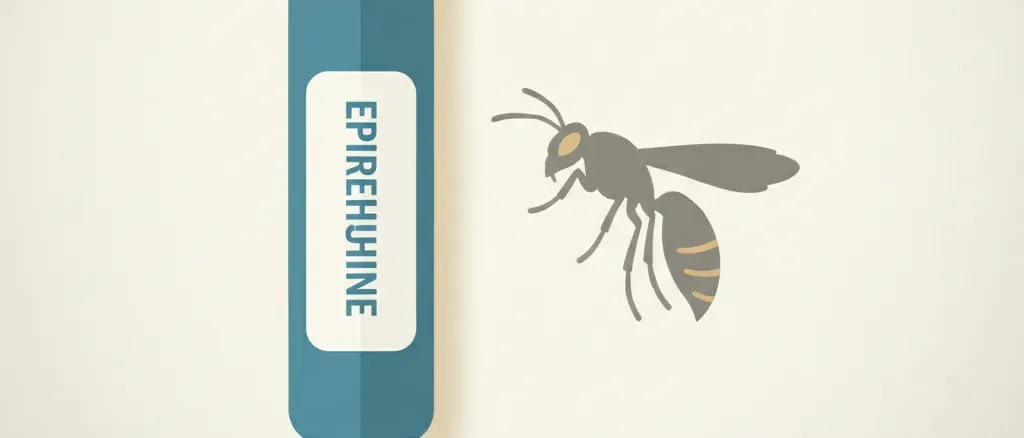
Anafilaksis akibat sengatan memiliki profil persepsi yang tidak biasa: orang yang membawa auto-injektor epinefrin mengetahui risikonya secara tepat dan cenderung menilainya akurat, sementara kebanyakan orang yang belum pernah bereaksi menganggap rekam jejak seumur hidup «pernah disengat, baik-baik saja» membuat mereka pada dasarnya aman. Bukti tidak mendukung pembacaan kedua itu: kira-kira separuh dari semua reaksi sengatan fatal di AS terjadi pada orang tanpa riwayat respons alergi sistemik sebelumnya.
Perkiraan kasar: orang dewasa non-alergi cenderung menebak risiko pribadi mendekati nol; angka seumur hidup sebenarnya kira-kira 1 dari 50 untuk reaksi berat
Sumber: intuisi redaksi, bukan hasil survei
Aktual
~3 % orang dewasa AS melaporkan reaksi alergi sistemik terhadap sengatan sepanjang hidup mereka
orang dewasa AS
Tampilkan perhitungan
Golden (Immunology and Allergy Clinics of North America, 2007, PMC1961691) dan ACAAI keduanya melaporkan bahwa reaksi alergi sistemik terhadap sengatan terjadi pada sekitar 3 % orang dewasa AS sepanjang hidup mereka. Angka 3 % (≈7,8 juta dari 260 juta orang dewasa) adalah pembilang terluas yang dapat dipertahankan — mencakup respons sistemik urtikaria-saja selain anafilaksis kardiovaskular atau pernapasan penuh. Sub-fraksi yang memenuhi definisi klinis anafilaksis yang lebih ketat (Müller Derajat III–IV: hipotensi, bronkospasme, atau kehilangan kesadaran, memerlukan epinefrin) kira-kira dua pertiga dari reaksi sistemik dewasa, menghasilkan probabilitas seumur hidup kira-kira 2 % (~1 dari 50). Nilai ternormalisasi 0,02 digunakan karena pertanyaan secara spesifik menanyakan anafilaksis yang memerlukan epinefrin alih-alih reaksi urtikaria-saja. Batas ketidakpastian membingkai plafon penuh 3 % dan lantai konservatif 1 % yang sesuai dengan prevalensi alergi bisa (venom) yang terdiagnosis.
Catatan: Angka seumur hidup 3 % mencakup semua reaksi sengatan sistemik pada orang dewasa…
Angka seumur hidup 3 % mencakup semua reaksi sengatan sistemik pada orang dewasa AS, termasuk episode urtikaria-saja yang lebih ringan yang mungkin tidak memerlukan epinefrin. Anafilaksis kardiovaskular/pernapasan yang ketat (skenario ketika epi-pen benar-benar menyelamatkan nyawa) adalah sub-fraksi, diperkirakan di sini sekitar 2 % seumur hidup. Risiko sangat tidak seragam: individu dengan reaksi sistemik sebelumnya menghadapi peluang 25–70 % untuk bereaksi lagi saat disengat ulang, sementara mereka yang telah menyelesaikan imunoterapi bisa mengurangi risikonya sekitar ~95 %. Yang penting, kira-kira separuh dari semua reaksi sengatan fatal di AS terjadi pada orang tanpa riwayat alergi sistemik sebelumnya — jadi rekam jejak seumur hidup «tidak pernah mengalami reaksi buruk» tidak menghilangkan risiko, melainkan hanya menggeser seseorang ke bagian populasi yang berisiko lebih rendah.
Risiko terkait
Risiko lain dengan tema serupa — untuk menjelajahi ketakutan terkait.


Menelan lebah atau tawon
Berapa kemungkinan tidak sengaja menelan lebah atau tawon hidup dan mengalami reaksi saluran napas yang mengancam jiwa?




Pilih penantang
About 3% of US adults will experience a systemic allergic reaction to a bee or wasp sting at some point in their life — roughly 1 in 33. The subset that meets the clinical threshold for anaphylaxis (cardiovascular or respiratory involvement: hypotension, bronchospasm, or loss of consciousness) sits at roughly 2% lifetime, or about 1 in 50. These are not exotic numbers; for comparison, the lifetime probability of dying in a car crash is around 1 in 93, so sting-triggered anaphylaxis is in the same order of magnitude as one of the most-cited benchmark risks in everyday life.
What makes this fear tractable is that it has a highly effective treatment: epinephrine given promptly converts what would otherwise be a life-threatening event into one with very low fatality. The ~220,000 annual US emergency department visits for sting allergic reactions resolve with ~62 deaths per year — a case fatality rate around 0.03% among those who reach an ED. The gap between “systemic anaphylaxis event” and “death from it” is almost entirely explained by access to and timing of epinephrine. The practical implication for the roughly 1–2% of adults with a confirmed venom allergy is straightforward: carrying a prescribed auto-injector and knowing how to use it transforms the risk profile substantially.
A finding worth flagging: per the allergy literature, roughly half of fatal sting reactions in the US occur in people with no prior history of a systemic allergic response. This does not mean the average person should carry an epi-pen — the absolute risk per sting for a non-allergic adult is still very small — but it does mean that a lifetime record of uneventful stings is not a reliable signal of permanent safety. First systemic reactions can and do occur in middle age and beyond, with no warning from prior sting tolerance. Anyone who develops more than local swelling after a sting warrants allergy evaluation.
Fakta terkait
Sekitar ~3% orang dewasa AS pernah melaporkan reaksi alergi sistemik terhadap sengatan serangga — ~1 dari 50 seumur hidup. Yang non-alergi mengira risikonya hampir nol, tetapi sebagian besar reaksi menimpa orang tanpa riwayat sebelumnya.
Buku besar klaim
Setiap angka di bawah ini adalah apa yang dilaporkan masing-masing sumber, dengan kutipan kata demi kata yang kami andalkan dan bagaimana kami sampai pada angka kami. Klik tautan mana saja untuk memverifikasi langsung.
1/3 sumber diverifikasi secara independen kata demi kata terhadap sumber terkutip
-
[1] Immunology and Allergy Clinics of North America (Golden DBK) / PubMed Central — Insect Sting Anaphylaxis
Insect Sting AnaphylaxisSee all 2 Likelier entries citing this source →
- Statistik
Systemic allergic reactions reported by up to 3% of US adults; ≥50 fatal sting reactions per year; ~half of fatal reactions occur with no prior history- Kutipan
“"Systemic allergic reactions are reported by up to 3% of adults, and almost 1% of children have a medical history of severe sting reactions … At least 50 fatal sting reactions occur each year in the United States … Half of all fatal reactions occur with no history of previous sting reactions." ”
- Data sumber dari
- 2007-05-01
- Diakses
- 2026-05-04 · salinan arsip
- Perhitungan
- Primary source for the 3% lifetime systemic reaction prevalence. The normalized value of 0.02 uses the ~2/3 severe-within-systemic fraction (Grade III–IV, epi-requiring) to arrive at a ~2% lifetime probability.
- Independensi
- Draws from clinical allergy and venom-IgE serology literature, independent of death-certificate or NEISS ED-visit data streams.
-
[2] American Academy of Family Physicians / American Family Physician — Stinging Insect Allergy
Stinging Insect AllergySee all 2 Likelier entries citing this source →
- Statistik
Systemic allergic reactions to insect stings occur in about 1% of children and 3% of adults; at least 50 fatal reactions per year in the US; half of sting-related deaths occur with the first systemic reaction- Kutipan
“"Systemic allergic reactions to insect stings are estimated to occur in about 1 percent of children and 3 percent of adults … At least 50 fatal reactions to insect stings are reported each year in the United States, and many sting fatalities may not be recognized … Studies have shown that one half of sting-related deaths occur with the first systemic reaction." ”
- Data sumber dari
- 2003-06-15
- Diakses
- 2026-05-04 · salinan arsip
- Perhitungan
- Independently corroborates the 3% adult systemic-reaction prevalence used for the native numerator (this AAFP review gives "about 1 percent of children and 3 percent of adults"). It also corroborates the Golden 2007 fatality framing: at least 50 fatal reactions per year in the US, with one half of sting-related deaths occurring with the first systemic reaction — supporting the caveat that a record of uneventful stings is not proof of permanent safety.
- Independensi
- AAFP review drawing on epidemiological literature independent of the Golden 2007 PMC source above.
-
[3] Scientific Reports (Nature) / Zhang, Wang, Quan, Yan, Zeng, Fang, Yang — A prediction nomogram for mortality in patients following wasp stings: a retrospective study Terverifikasi
A prediction nomogram for mortality in patients following wasp stings: a retrospective study- Statistik
Hymenoptera stings prompt approximately 220,000 US emergency department visits per year and cause an average of 62 deaths annually, a case-fatality rate of roughly 0.03% among those who reach an ED- Kutipan
“"Annually, Hymenoptera stings prompt approximately 220,000 emergency department visits and cause an average of 62 deaths in the United States, making stings from hornets, wasps, and bees the deadliest of all venomous animal encounters." ”
- Data sumber dari
- 2024-10-31
- Diakses
- 2026-07-03 · salinan arsip
- Verifikasi
- Kutipan diambil ulang secara independen dan dikonfirmasi kata demi kata terhadap sumber terkutip selama audit pendasaran kami.
- Perhitungan
- Source for the ED-visit and case-fatality figures in the body text: 62 deaths / 220,000 ED visits ≈ 0.028%, rounded to "around 0.03%." The article attributes the underlying US figure to Forrester, Weiser & Forrester, "An update on fatalities due to venomous and nonvenomous animals in the United States (2008-2015)," Wilderness Environ Med 29 (2018): 36-44.
- Independensi
- Draws on ED-visit surveillance (via the cited Forrester et al. 2018 fatality review) rather than the clinical allergy/venom-IgE literature used by the Golden and AAFP sources above.